15.04.2026
1395
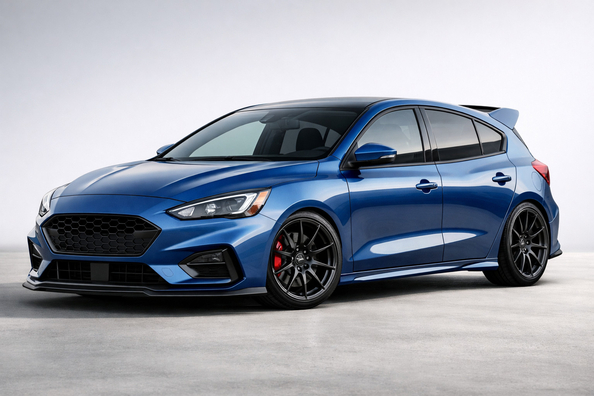
Ford as a tuning platform is interesting not “on average across the brand,” but in a few very specific bases. If you want an asphalt build with a solid power margin, you should be looking at the Mustang GT and Dark Horse; if you want a cheap, lively chassis — Focus ST and Fiesta ST; if you need a base for big wheels, mud tires, and getting off the pavement — Bronco and Ranger Raptor. Puma ST in this company is more of a quick daily crossover than a foundation for a deep project.
An important nuance: some of the figures below apply to the USA, some to Europe, so I’m not merging them into identical trim levels. For Ford, it’s more correct to compare not the official fuel consumption head-on, but the platform’s character, transmission type, chassis, and how much sense upgrades make specifically for your scenario.
Ford doesn’t have one universal “tuning” model. Mustang is a rear-wheel-drive coupe for those who want power, sound, and a big headroom for asphalt-focused upgrades. Focus ST and Fiesta ST are about lower mass, quicker chassis response, and a lower entry budget. Bronco Raptor and Ranger Raptor operate on a different plane: the priority there isn’t body styling, but ground clearance, approach/departure angles, suspension, and real durability off-road.
That’s why the answer to “what to buy for tuning” depends on the task. For the track or fast highway runs, Mustang is the more logical choice. For an emotional daily car that’s still not too hard to live with, Focus ST and Fiesta ST look stronger. For fishing trips, expeditions, camping, towing, and broken roads — Ranger Raptor, and for the roughest off-road scenario — Bronco Raptor. Puma ST is good when you want pace without a radical build.
In today’s tuning context, three waves matter most: 2005-2014, 2015-2023, and the current one from 2024 onward. The last two give the clearest choice between the 2,3 EcoBoost and 5,0 V8, a large parts market, and a solid chassis margin for road-oriented upgrades.
Focus ST matters in two modern generations — Focus III and Focus IV. Its strength isn’t status, but the fact that it’s one of the most lively front-wheel-drive platforms in the class. Fiesta ST is smaller and simpler, but often even more engaging on a twisty road thanks to the lighter body and shorter wheelbase. The latest Fiesta from 2017 and later is the most interesting for this scenario.
Bronco returned in 2021 as a fully fledged separate off-road story, while Ranger Raptor evolved from a niche pickup into a factory base for fast off-road driving. Puma ST, on the contrary, belongs to the new crossover wave from 2019: it has a sporty character, but the architecture is more about daily use than serious intervention.
When it comes to powertrains, the picture is very simple. Mustang is interesting either as a relatively sensible EcoBoost or as a full-on V8 project. Focus ST and Fiesta ST win not with an absolute power figure, but with how the front axle digests that power. Bronco Raptor and Ranger Raptor are already big turbo V6s and 10-speed automatics, where the character is dictated not only by the engine, but also by the transmission with all-wheel drive.
| Model | Engine | Power and torque | Gearbox and drivetrain | Practical takeaway |
|---|---|---|---|---|
| Mustang EcoBoost 2025 | 2,3 EcoBoost | 315 hp, 476 N·m | 10-speed automatic, rear-wheel drive | The calmest entry into Mustang, but not the main base for big power |
| Mustang GT 2025 | 5,0 V8 | 486 hp, 563 N·m | 6-speed manual or 10-speed automatic, rear-wheel drive | The most obvious road-going Ford for a serious project |
| Mustang Dark Horse 2025 | 5,0 V8 | 500 hp, 567 N·m | 6-speed manual or 10-speed automatic, rear-wheel drive | The most aggressive factory Mustang in this selection |
| Focus ST 2025 | 2,3 EcoBoost | 280 hp, 420 N·m with manual or 415 N·m with automatic | 6-speed manual or 7-speed automatic | One of the smartest bases if you want a lively chassis without a V8 budget |
| Fiesta ST | 1,5 EcoBoost | 200 hp, 320 N·m | 6-speed manual | A light car that feels faster than the numbers suggest |
| Bronco Raptor 2025 | 3,0 EcoBoost V6 | 418 hp, 598 N·m | 10-speed automatic, all-wheel drive | A base for a heavy off-road scenario, not for saving money |
| Ranger Raptor 2025 | 3,0 EcoBoost V6 | 405 hp, 583 N·m | 10-speed automatic, all-wheel drive | A compromise between pickup utility and real speed off-road |
| Puma ST and Puma ST Powershift | 1,5 EcoBoost or 1,0 mild hybrid | 200 hp, 320 N·m or 170 hp, 248 N·m | Depending on the version | A quick daily crossover, but not a platform for a big project |
If you strip away the marketing, the best engine headroom for tuning comes from the Mustang V8. The best ratio of cost to fun is in the Focus ST and Fiesta ST. The Raptor versions are bought not because they’re cheap to maintain, but because the factory has already done half of the expensive prep for the owner.
It’s the chassis that explains why these Fords feel so different. Mustang isn’t huge for its class: length 4812 mm, width 1915 mm, wheelbase 2718 mm, and a trunk of about 382 L. Fiesta ST feels shorter and lighter, so it wins where instant response matters. Focus ST is strong because it has an electronic limited-slip differential, a launch control system, and can be optioned with a track package featuring KW suspension and Brembo brakes.
Bronco Raptor and Ranger Raptor use different math. Here, ground clearance figures matter more than centimeters of length: 333 mm in Bronco Raptor and 272 mm in Ranger Raptor. Bronco wins with geometry and suspension travel; Ranger also benefits from remaining a pickup with a useful bed and towing capability.
| Model | Verified dimensions | Ground clearance | Trunk or cargo bed | What the running gear delivers |
|---|---|---|---|---|
| Mustang 2025 | 4812 x 1915 mm, wheelbase 2718 mm | Not listed separately in this selection | 382 L | Rear-wheel drive and a solid base for road upgrades |
| Focus ST | Exact figures depend on body style and market | Depends on the version | Not listed in this selection | Electronic limited-slip differential and a very strong front-wheel-drive chassis |
| Fiesta ST | 4091 x 1735 x 1487 mm | Depends on the market | Not listed in this selection | Short wheelbase and light body make the car very responsive to wheel and suspension upgrades |
| Bronco Raptor | For this variant, angles and suspension matter more than absolute length | 333 mm | 942 L | Locking differentials and adaptive off-road suspension |
| Ranger Raptor | Pickup architecture, focus on bed practicality | 272 mm | 1232 L cargo bed volume | Running gear for fast off-road driving plus towing up to 2500 kg |
| Puma ST | I’m not consolidating exact numbers here due to different versions | Depends on the market | MegaBox adds 80 L of usable volume | Crossover chassis where practicality matters more than big-tuning potential |
If you look specifically at the running gear, the most interesting Fords are the Mustang as a rear-wheel-drive base, Focus ST and Fiesta ST as sharp front-wheel-drive cars, and both Raptors as factory-prepped hardware. Puma ST stands apart here: good for pace, but not as rewarding for deep upgrades.
Comfort in these Fords has to be judged realistically. Mustang, especially with the V8, isn’t about quietness: noise, a firmer ride over imperfections, and a small trunk are a fair price for the character. Focus ST isn’t soft either, and on long trips passengers more often notice tire noise and the firmer suspension. Fiesta ST feels even more direct, so as the only family car it won’t suit everyone.
Bronco shouldn’t be bought with expectations of a normal urban crossover at all: it’s louder, rougher, and asks you to be forgiving about small day-to-day nuances. Ranger Raptor is calmer in daily life, but on the highway it’s still not as relaxed as a regular pickup. Puma ST, on the contrary, is the closest to the role of a normal daily driver. For safety, you need to check the exact trim and market, because Ford’s set of systems varies noticeably.
In real life, the key question is this: will you actually use the car’s potential that you’re paying for. Mustang GT and Dark Horse deliver a lot of emotion, but quickly remind you of themselves with fuel consumption, tires, and noise. Focus ST is probably the best compromise for someone who needs one car for work and for driving “for yourself.” Fiesta ST is even more fun, but on the used market it’s not worth the risk without a service history.
| Base | Pros | Cons | Who it fits and who it doesn’t |
|---|---|---|---|
| Mustang GT and Dark Horse | V8, rear-wheel drive, big headroom for upgrades, already fast from the factory | Noise, firmness, fuel consumption, trunk without much practicality in reserve | Fits those who want power and character; doesn’t fit those who need a calm all-round daily driver |
| Focus ST and Fiesta ST | Lively chassis, sensible budget, strong return from targeted upgrades | Lower comfort, higher noise, and with Fiesta the condition of the specific car matters | Fits drivers who value handling; doesn’t fit those who put comfort above everything |
| Bronco Raptor | Ground clearance, angles, lockers, readiness for serious off-road use | Loud, big, thirsty, often excessive in the city | Fits off-pavement trips and expeditions; doesn’t fit as “just a crossover” |
| Ranger Raptor | Balance between daily use, payload utility, and fast off-road capability | Fuel consumption, not the calmest behavior on the highway | Fits those who need a pickup with character; doesn’t fit if saving money is the priority |
| Puma ST | Quick daily car, useful cargo space, fewer everyday compromises | Less headroom for big tuning than a Mustang or ST hatches | Fits as a fast urban crossover; doesn’t fit as a base for a radical project |
In the end, the best Fords for tuning aren’t necessarily the most powerful. A successful project happens where the base architecture is already right: V8 and rear-wheel drive in Mustang, sharp chassis in the ST hatches, and ready-made off-road geometry in the Raptor models.
If you start from the brand catalog, it makes sense to look at Ford tuning and then narrow down to a specific platform. For the new Mustang, the most natural direction is spoilers for Mustang 2024+: it’s appropriate even on an almost stock car when you want a sharper look without touching the mechanics. For a pickup scenario, what’s far more useful isn’t decorative parts but off-road accessories for Ranger, because they’re what truly change the use case.
The main mistake with Ford is trying to turn a Puma ST or a regular crossover into what a Mustang, Focus ST, or Bronco can already do thanks to its base architecture. On hot hatches, the best approach is targeted selection of wheels, tires, brakes, and restrained aerodynamics. On Bronco and Ranger, protection, fender flares, cargo solutions, bed/canopy add-ons, and anything that genuinely helps off-road or on a trip makes sense.
In short, Ford has three genuinely interesting tuning directions: Mustang GT and Dark Horse for a powerful asphalt build, Focus ST and Fiesta ST for a lively and relatively affordable chassis, and Bronco and Ranger Raptor for off-road work. Puma ST is worth buying not as an “all-purpose blank canvas,” but as a quick and practical daily driver. This piece is based on real selection experience, practice, and real usage scenarios, so the conclusion is simple: the best Ford for tuning isn’t the one with the louder name, but the one whose factory base already matches your driving style.
| ✔ | Mustang GT and Dark Horse have rear-wheel drive, a V8, and a large upgrade potential, making them the easiest base for a powerful asphalt project. The article specifically notes that these versions offer the best engine headroom for tuning. |
| ✔ | Focus ST and Fiesta ST look practical for tuning thanks to their lively chassis and a relatively sensible entry budget. For everyday driving, this is one of the best combinations, as the car already drives well without expensive modifications. |
| ✔ | Focus ST has an electronic limited-slip differential and can get a track package with KW suspension and Brembo brakes. This makes it an interesting platform not only for the city, but also for more serious driving. |
| ✔ | Bronco Raptor and Ranger Raptor already come from the factory with ground clearance, all-wheel drive, locking differentials, and off-road-ready suspension. In other words, the owner gets a ready-made base for expeditions, towing, or fast driving on rough roads. |
| ✔ | Puma ST is for those who need a fast everyday crossover without a radical project. It has useful cargo space and fewer everyday compromises than more aggressive models. |
| ✘ | Mustang GT and Dark Horse are not very convenient as an all-around daily car: the article mentions noise, stiffness, fuel consumption, and a small trunk. That is the price of character and power, not a minor flaw. |
| ✘ | Focus ST and especially Fiesta ST have lower comfort, more noise, and depend more on the condition of a specific example. For calm everyday driving, this can be tiring if softness is the priority. |
| ✘ | Bronco Raptor is often excessive in the city: it is big, noisy, and thirsty. The article directly describes it as a car not meant to be just a crossover. |
| ✘ | Puma ST is not a rewarding base for a major power or chassis project. Its architecture is more about everyday use, so the margin for deep tuning is noticeably smaller here than in the Mustang or ST hatchbacks. |
Shipping to EU
Wholesale and retail
Own warehouse
Опис продукту
Подарунки не надаються при оформленні покупки у кредит під 0,01% або при покупці частинами.