19.06.2026
258
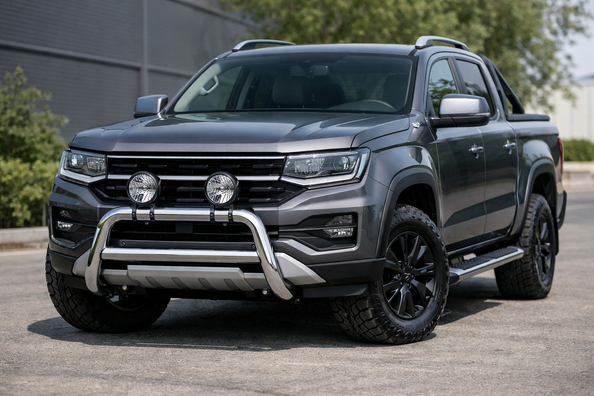
This upgrade plan is for a Volkswagen Amarok owner who’s torn between a front guard, a “whisker” bar, and a body kit—and wants to make the right first move. If the pickup is used in the city, for trips to the countryside, on dirt roads, tows a trailer, or regularly works on a construction site, the upgrade order will be different—and that’s exactly what determines what to fit up front.
On the older-generation Amarok, a light front element is often chosen mainly for looks. On the newer body, any serious front-end part quickly runs into sensors, the camera, bumper geometry, and added weight. That’s why it’s better to start not with metal on the nose, but with a clear task: do you need a visual accent, basic protection for everyday use, or preparation for regular demanding routes.
There are three different scenarios for the Amarok, and they are not interchangeable. The first is city and highway use, where a front upgrade is usually about a more put-together look and a slightly more practical front end. The second is work mode: dirt roads, construction sites, road shoulders, tools in the bed, sometimes a trailer. The third is regular trips where the stock front end and the car’s underside are genuinely at risk of contacting rocks, ruts, or harsh terrain.
This is where the key difference between a “whisker” bar, a decorative body kit, and a true heavy-duty guard shows up. A light front element can solve the styling question, but it won’t replace real preparation for bad roads. And for the Amarok 2023+, without the exact year, bumper type, and trim level, you shouldn’t buy any front part at random at all: compatibility with the camera, parking sensors, and safety logic must be checked before ordering.
On an Amarok, it’s more logical to spend the first budget on what truly changes how the vehicle performs. That means tires for your route, underbody protection, mud flaps and arch protection, and—if the pickup works like a pickup—bed protection. These items deliver daily benefits: fewer chances to damage the underside, better traction on dirt, less grime on the body, fewer scratches in the cargo area.
The reason is simple: even with the Amarok’s decent stock geometry, what becomes a problem first isn’t the lack of a chrome tube—it’s the surface under the wheels and the vulnerable points underneath. If the vehicle is often loaded or driven off asphalt, a bed liner or proper underbody protection can sometimes be more useful than any front-end decor.
Below is a short breakdown without marketing fog. It helps quickly separate what’s useful from what people buy only for the picture.
| Upgrade | Why it’s needed | Who it truly benefits |
|---|---|---|
| Tires for mixed surfaces | Improve grip on dirt, gravel, and wet roads, reduce the feeling of helplessness off asphalt | Those who regularly leave the highway, drive to the countryside, into fields, fishing spots, or tow a trailer |
| Underbody protection | Covers vulnerable components underneath from impacts with rocks, ruts, and hard obstacles | Those who drive on dirt, on construction sites, in the forest, or over broken access roads |
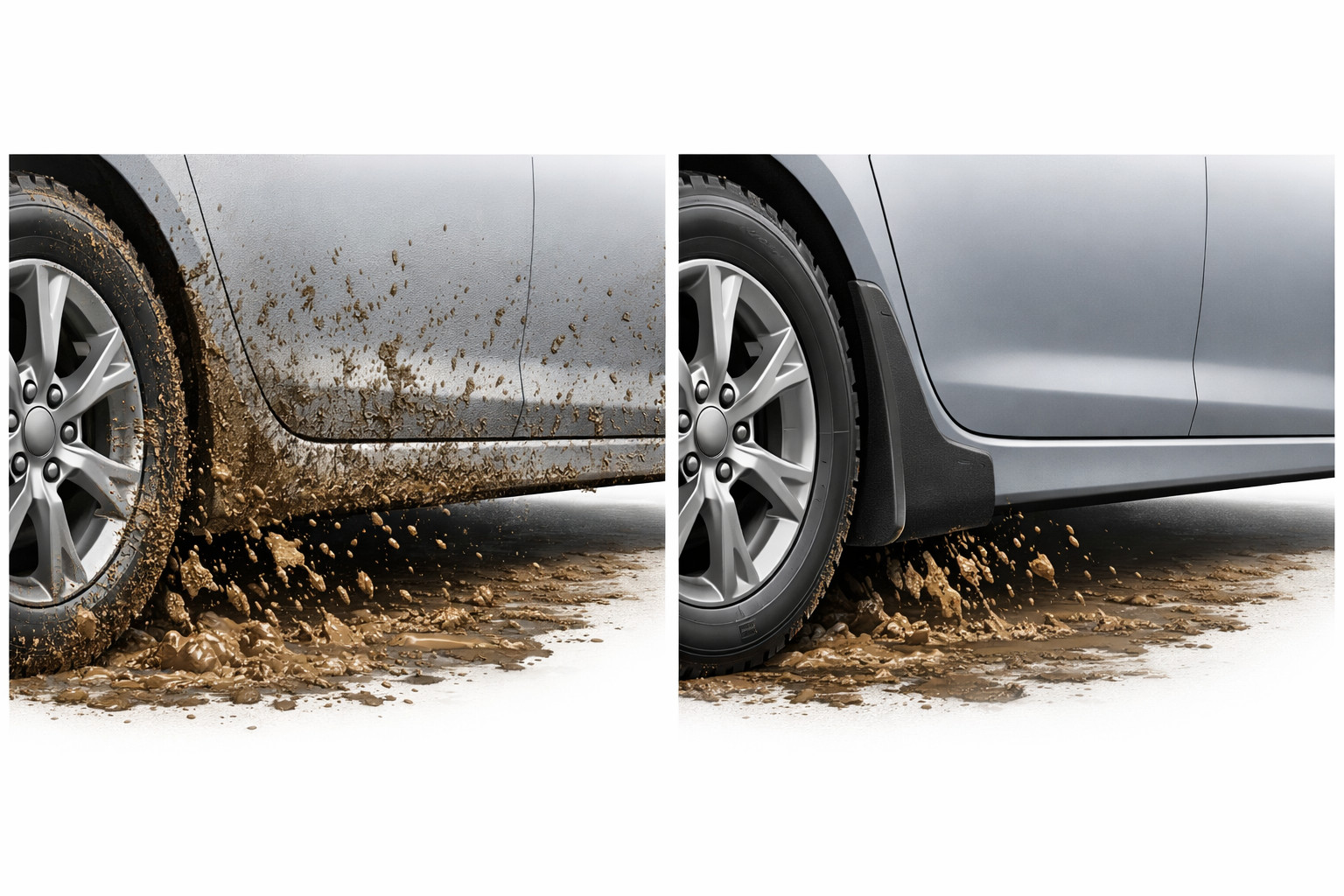
| Mud protection and arch liners | Less sand, water, and debris on sills and sides, easier to keep the body in working condition | Those who drive a lot in rain, on gravel, and in mud |
| Bed liner or cargo-area protection | Protects the pickup bed from scratches and wear under load | Those who carry tools, building materials, gear, or simply use the bed often |
| Front “whisker” bar or light hoop | Adds a cleaner, more cohesive look to the front and solves styling without moving into a heavy setup | Those who want a neat front accent, not heavy-duty reinforcement |
| Heavy-duty front solution | Makes sense where the stock front end is truly working at its limit and more serious preparation is needed | Those who regularly drive demanding routes and are ready for extra weight and more complex installation |
| Plastic body kit | Mainly changes the vehicle’s appearance | Those who are consciously building a look rather than solving a protection task |
DD Tuning expert comment: The most common mistake with the Amarok is to buy any tube for the front and assume the protection question is solved. If the vehicle truly goes off asphalt, without tires and underbody protection the benefit of such an upgrade will be small; if it’s driven in the city, a heavy front end just adds weight and cost. Also, always check compatibility with the bed cover, sensors, and the exact model year.
The second stage starts after the basics. If tires, the underside, and the cargo area are already handled, then you can decide what front element you actually need: a light “whisker” bar for a clean look, a more pronounced hoop, or a more complex solution for a heavier-use scenario. This stage often includes side steps if the Amarok is too tall for daily entry, or additional body accessories if the vehicle works a lot.
For the new Amarok, the second stage always starts not with the cart, but with checking the trim. The camera, parking sensors, bumper shape, and even the vehicle’s overall weight after retrofits can change whether the purchase makes sense. For the Amarok 2010-2022, the choice is simpler, but the rule is the same: the second stage is an addition to the practical base, not a replacement for it.
Plastic body kits, trims, bed hoops, decorative front elements, and some side solutions are perfectly fine purchases if you honestly understand their role. They can make the Amarok look more cohesive, make entry more convenient, or improve day-to-day usability—but you shouldn’t assign them heavy-duty properties they don’t have.
It’s also worth remembering items that are often confused by purpose. A bed hoop or styling elements for a pickup are mostly about looks, cargo-area organization, and compatibility with covers—not about front-end protection. So if the task is “be less afraid of broken access roads,” a comfort or decorative body kit is not the first candidate.
Most often, what’s bought in vain isn’t bad parts, but parts that don’t match the scenario. Typical mistakes look like this:
Another expensive mistake is a universal front part for a new Amarok without checking the electronics. If there’s a camera and sensors up front, an ill-considered choice may bring not protection, but extra installation work, relocation of equipment, and unnecessary costs.
It’s convenient to look here not by the catalog, but by the vehicle’s real lifestyle.
| Scenario | What to install first | What can be postponed | What’s optional |
|---|---|---|---|
| City, highway, occasional countryside trips | Tires for the season and route, mud protection, basic underside check | Front “whisker” bar or side steps | Heavy-duty front solution, massive body kit |
| Work pickup, tools, trailer | Underbody protection, cargo-area protection, practical tires | Front decor, exterior trims | Decorative chrome and image-only elements |
| Fields, forest, regular bad access roads | Tires, underbody protection, assessment of vehicle load and suspension condition | Light front element after the basic prep | Low plastic body kit |
| New Amarok with camera and sensors | Check compatibility of any front part first, then practical protection | Exterior decor if the task isn’t urgent | Universal heavy solutions without confirmed compatibility |
In short—without unnecessary spending and with a solid result—the plan looks like this:
More expensive front-end solutions are justified not when you want a “more serious” look, but when the Amarok regularly works in conditions where the stock front end and underside are genuinely under load. If the task is moderate, start with a simpler option and don’t overpay for weight and installation complexity.
The main filter here is simple: heavier and more expensive makes sense only when the route justifies it. For the new Amarok, add one more criterion—confirmed compatibility with the electronics and readiness for more complex installation. If you don’t see a regular need, it’s better to stay with a lighter configuration and invest in what truly works every day.
From a customer’s experience: An Amarok 2016 owner initially planned a massive front end “for protection,” but after reviewing his route it turned out the vehicle more often drives dirt roads with cargo than heavy off-road. In the end, he started with tires, underbody protection, and bed protection, and kept a lighter element up front without overloading the nose. The result proved more practical in daily use and didn’t require extra modifications.
For the Volkswagen Amarok, the right upgrade start almost never begins with a decorative body kit. First, take care of tires, the underside, and the vehicle’s working zones—then decide whether you truly need a front guard or if a light “whisker” bar is enough for a clean look.
If you stick to this logic, you won’t overpay for looks where you need function, and you won’t complicate the vehicle without a reason. This material is based on real selection experience, practice, and real usage scenarios—not on the catalog-driven urge to install everything at once.
| ✔ | It starts with the practical things that really affect daily use: tires, underbody protection, mud protection, and cargo area protection. This gives more benefit than installing a decorative front end without the basic setup. |
| ✔ | It helps match the upgrade to the specific Amarok use case — city, country house, working with cargo, or regular off-road driving. This lowers the chances of buying a part that does not fit the vehicle’s routes. |
| ✔ | It clearly distinguishes a light “mustache,” a decorative body kit, and a heavy-duty solution. This makes the choice easier: it is clear what is for looks and what makes sense as real protection. |
| ✔ | It emphasizes the importance of checking compatibility with the camera, parking sensors, bed cover, and the specific model year. For the new Amarok, this reduces the risk of a bad order and unnecessary installation. |
| ✔ | It provides a step-by-step upgrade plan: first basic protection and tires, then the front element. This order helps avoid overloading the vehicle with mass and costs without real need. |
| ✘ | A light front element or decorative body kit does not solve the protection issue on bad roads. If the vehicle drives on dirt roads or works with cargo, without tires and underbody protection the effect will be limited. |
| ✘ | Heavy-duty front solutions add weight and complicate installation. For city or moderate use, this may be unnecessary and may not provide a noticeable benefit. |
| ✘ | For the new Amarok, any front-end part requires a separate compatibility check with the electronics and bumper. Without this, it is easy to get extra costs for modification or equipment relocation. |
| ✘ | Plastic body kits and some decorative elements mostly change the appearance, but do not improve protection. If practicality is expected from them, the purchase will be unsuccessful. |
Shipping to EU
Wholesale and retail
Own warehouse
Опис продукту
Подарунки не надаються при оформленні покупки у кредит під 0,01% або при покупці частинами.