10.05.2026
545
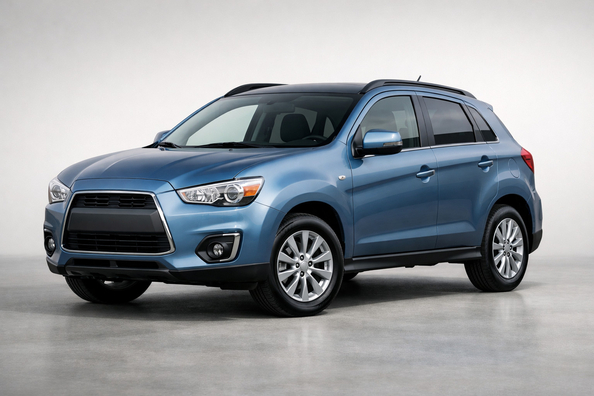

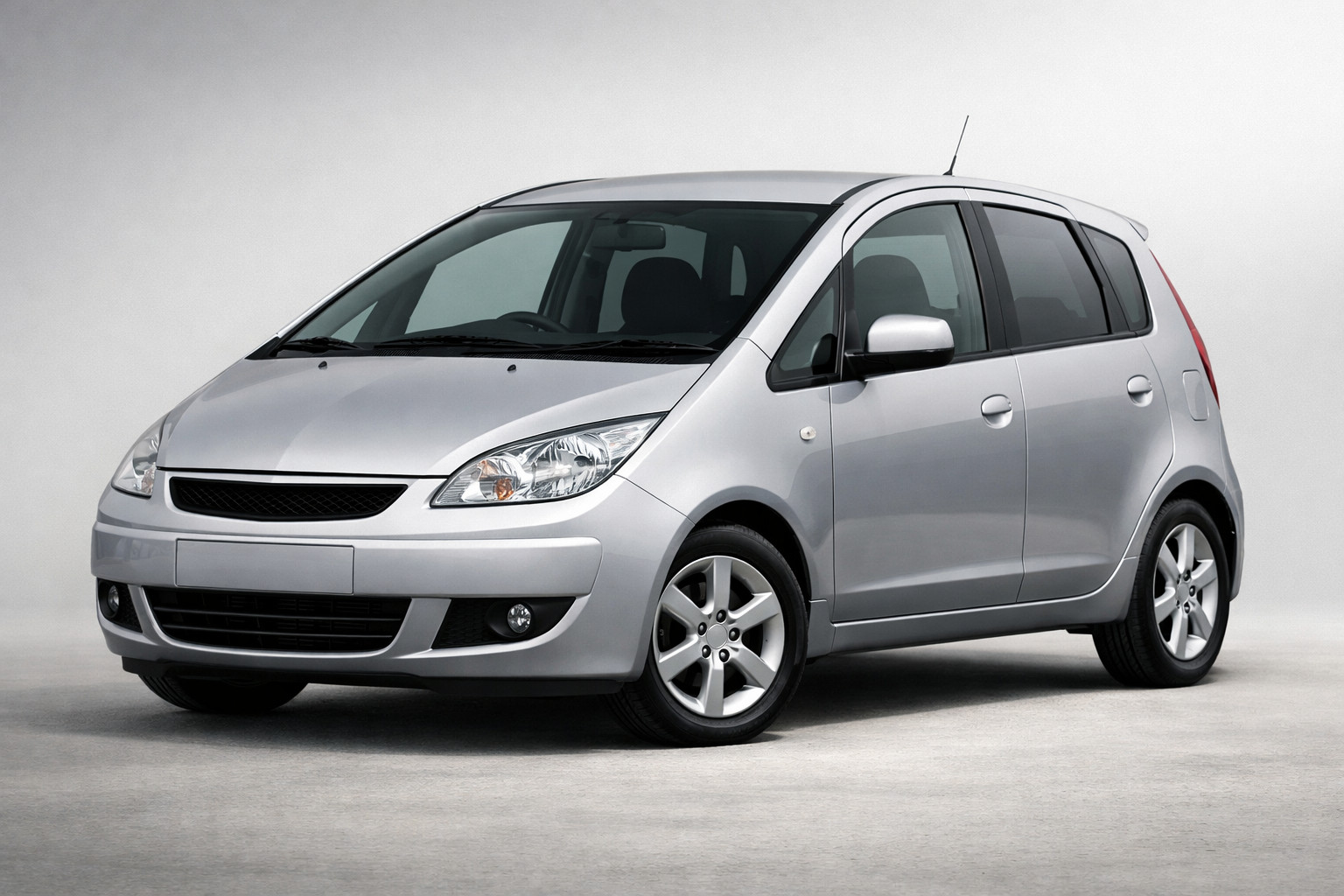
The Mitsubishi ASX in its 2010-2022/2023 European form is an old-school compact crossover: simple engineering, a high seating position, 190 mm ground clearance, a 406 L trunk, and a very long life cycle without any radical change to the basic design. People didn’t buy it for thrills, but for straightforward ownership, decent geometry for rough roads, and the feel of a tough workhorse.
The key is not to confuse this ASX with the European ASX from 2023: the name stayed, but the car became a different one. If you’re looking at 2010-2022 cars or choosing accessories specifically for them, this review is about the long-running first generation, which went through several updates and remained more practical than modern right up to the end of its career.
The ASX sat right in the middle of the compact crossover segment: smaller and simpler than large family models, yet more convenient than a regular hatchback thanks to the higher seating position and better geometry. By 2019, global sales totaled around 1.32 million vehicles across roughly 90 countries, making it one of Mitsubishi’s key mass-market cars.
In the market, the ASX was valued for being easy to live with—no adaptation required. It’s a car for the city, family use, the country house, weekend trips, and winter roads, not for those chasing a hushed cabin, the latest electronics, or sharp handling. In its mature years it already lagged behind many rivals in terms of “newness,” but it kept its strong point: simple everyday usability.
In Europe, the classic ASX was sold from 2010 and effectively lasted through 2022/2023, going through several exterior and equipment updates but without a full generational change in the traditional sense. That’s why when choosing a used car or accessories, you need to look not only at the model name, but also at the model year and the specific market.
| Period | What matters |
|---|---|
| 2010 | Start of European sales of the first ASX as the brand’s compact crossover. |
| 2010-2022/2023 | One long generation with several updates; engines, gearboxes, and drivetrains differed by year and country. |
| From 2023 in Europe | The ASX name was moved to a different car on the CMF-B platform, so you can’t mix the old and new ASX mechanically. |
For the buyer, it means one simple thing: the 2010-2022 ASX is a long-lifer with a proven design, while the 2023 ASX is already a different vehicle with a different logic of choice.
The ASX engine lineup depended heavily on market and year. At launch in Europe, there was a 1.6-liter gasoline engine with 115 hp and a 1.8-liter diesel with 150 hp; later, a 2.2-liter diesel with 150 hp and an automatic transmission was added. In later European gasoline versions, they used a 2.0-liter engine with 150 hp and 195 N·m.
| Engine | Power | Transmission | Practical takeaway |
|---|---|---|---|
| 1.6 gasoline | 115 hp | Manual | Fine for the city, but not much pulling reserve on the highway. |
| 1.8 diesel | 150 hp | Depending on version | Better for mileage and highway driving, but doesn’t like purely short trips. |
| 2.2 diesel | 150 hp | Automatic | A rarer version for those who want torque and an automatic. |
| 2.0 gasoline 4J11 | 150 hp, 195 N·m | 5-speed manual or CVT | The most straightforward choice in later European cars, especially for regular family use. |
If the car is needed mainly for city driving, gasoline versions make more sense. Diesel is best where you have regular highway use, loads, and longer trips; otherwise, the risk of DPF-related hassle is higher.
The ASX is convenient because it doesn’t look big, yet in real life it isn’t cramped. A length of 4365 mm and a wheelbase of 2670 mm make it manageable in the city, while 190 mm ground clearance gives margin for curbs, gravel roads, and winter ruts. The suspension is tuned more for comfort and calm stability than for sharp responses.
| Parameter | Value |
|---|---|
| Dimensions | 4365 × 1810 × 1640 mm |
| Wheelbase | 2670 mm |
| Ground clearance | 190 mm |
| Fording depth | 400 mm |
| Approach/departure/breakover angles | 20.1° approach, 31.4° departure, 19° breakover |
| Trunk | 406 L, including a 13 L underfloor compartment |
| Cargo length with rear seats folded | up to 1510 mm |
| Maximum cargo width | 1350 mm |
| Curb weight | 1375 kg in 2WD, 1470 kg in 4WD |
| Towing capacity (braked) | 1300 kg |
| Turning circle | 10.6 m |
| Late-version tires | 225/55 R18 |
In practice, it means a simple thing: the ASX works well as an urban crossover but isn’t afraid of everyday loads. The trunk isn’t record-breaking, but it’s well-shaped, and the body isn’t too bulky for daily parking.
The ASX cabin is functional, but without much flair. Seating is high, visibility is good, the second row folds 60:40, the car seats five, and it works well as family transport. The weak spot is its age: materials are simple, and sound insulation is average compared with stronger rivals.
Safety is better than the model’s age might suggest: the early European version earned 5 stars in Euro NCAP. But it’s important to remember that equipment depended on year and trim, so a late or early ASX should be judged not by the name, but by the specific car.
In daily life, the ASX is strongest where predictability matters. The late 2.0-liter gasoline version in Europe had an official consumption of 7.5 L/100 km in 2WD and 8.2 L/100 km in 4WD, and in real mixed driving owners often see about 7.9-8.5 L/100 km. The fuel tank is 63 L in the front-wheel-drive version and 60 L in the all-wheel-drive one.
The service interval for late European cars is roughly every 20,000 km or once a year. For city use and short routes, gasoline is the safer scenario. If you need torque, grip on slippery surfaces, and regular trips out of town, then AWD and diesel versions make more sense, but they require disciplined maintenance.
| Pros | Cons |
|---|---|
| High seating position, 190 mm ground clearance, and city-friendly ease | The cabin and sound insulation are noticeably simpler than in some rivals |
| Practical body, 406 L trunk, and decent second-row flexibility | The early 1.6 gasoline isn’t very convincing for quick overtakes |
| AWD versions are available for slippery surfaces and gravel roads | Diesels don’t like short urban trips |
| Simple, clear ownership logic and a good reputation with proper servicing | Because of its long life cycle, by the end of its career the model looked older than the market |
Who the ASX suits: those who want a compact family crossover without complicated technical exotica, with decent geometry and calm everyday behavior. Who it doesn’t: those expecting executive-class quietness, a lively character, or a truly modern interior.
For the ASX, tuning makes sense when it solves everyday tasks rather than pretending to be sporty. On the Mitsubishi ASX page, it’s logical to look first at things that genuinely work every day: floor mats protect the interior from dirt and moisture, and a roof rack for rails adds useful capacity for trips, skis, a bicycle, or a roof box.
Those are the accessories that best match the ASX’s character. Decorative trim pieces can refresh the look too, but their practical payoff is lower than proper interior protection, cargo-area protection, or solutions for carrying gear.
The first European-wave Mitsubishi ASX isn’t the most modern or the quietest crossover in its class, but it’s honest in everyday use. It has the essentials: decent ground clearance, a sufficient trunk, straightforward gasoline versions, city suitability, and a calm ownership logic without unnecessary complexity.
If you’re choosing an ASX today, it’s worth paying close attention to the year, market, engine, and drivetrain type so you don’t mix up the historic 2010-2022 ASX with the European model from 2023 onward. This piece is based on real selection experience, practice, and real-world usage scenarios, so the conclusion is simple: the ASX makes sense as a working compact crossover for those who value everyday convenience over flashy novelty.
| ✔ | The high seating position, 190 mm of ground clearance, and compact dimensions make the ASX convenient in the city, over curbs, and on bad roads. |
| ✔ | The 406 L trunk and a practical second-row fold-down give it family-friendly usability for trips to the countryside and everyday hauling. |
| ✔ | There are straightforward gasoline versions for city driving and all-wheel-drive options for slippery surfaces and gravel roads, so you can choose a configuration to suit your needs. |
| ✔ | The design is simple and stayed in production for a long time without radical changes, so the car doesn’t require much getting used to and, with proper maintenance, has a reputation for predictable ownership. |
| ✔ | The early European version received 5 Euro NCAP stars, meaning the model doesn’t look weak in terms of safety for its age. |
| ✘ | The interior is simple, and sound insulation is average, so compared with rivals the ASX feels older and less comfortable. |
| ✘ | The 1.6-liter gasoline engine is rather weak on the highway and during overtaking, so it’s not the best fit for fast driving. |
| ✘ | Diesel versions do not like short city trips, because under that kind of use the risk of problems with the particulate filter increases. |
| ✘ | Because of its very long lifecycle, by the end of its career the model was already noticeably lagging behind the market in terms of modernity and freshness. |
Shipping to EU
Wholesale and retail
Own warehouse
Опис продукту
Подарунки не надаються при оформленні покупки у кредит під 0,01% або при покупці частинами.