08.04.2026
221
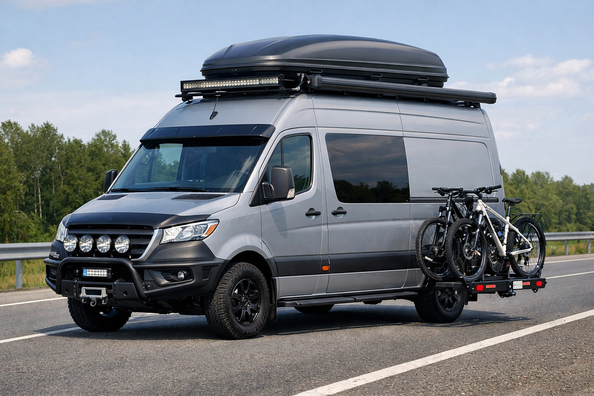
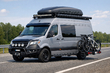
This upgrade plan is for a Mercedes Sprinter W907/W910 owner who drives mainly on the highway and is tired of constant steering corrections in crosswinds, body roll during lane changes, and a loaded body that keeps rocking. If what you want is a calmer, more predictable van on the motorway—not an “off-road look”—the order of work matters more here than the number of parts.
For the Sprinter, the main mistake is simple: people start with what’s visible on the outside, not with what actually keeps the vehicle stable at speed. On the W907/W910, the difference is made not by decorative pieces, but by correct tire pressure for the real weight, proper commercial road tires, then a stabilizer bar and shock absorbers chosen for the specific symptom. This is especially noticeable on a long wheelbase, high roof, a camper, or a vehicle that runs with cargo all the time.
For highway use, the upgrade must solve three things: reduce sensitivity to crosswinds, remove excessive body roll, and make the vehicle’s reactions more composed after waves, expansion joints, and long sweepers. In other words, the driver should have to “catch” the van less with the steering wheel, and the rear shouldn’t keep “living its own life” after a maneuver.
It’s important to understand the limits of this scenario. This is not about a soft ride on broken dirt roads, and not about fighting every small vibration. If the Sprinter is empty, short, and without a high roof, some solutions may be unnecessary; if it’s a camper or a permanently loaded van, priorities shift toward controlling mass and rear-axle stability.
Step one — don’t buy anything until you understand the real axle loads and set cold tire pressure according to the sticker on the B-pillar. For the factory 225/65R16C, the difference between empty and loaded is big: up front it can be around 3.3 bar empty and 3.6–3.9 bar under load; at the rear around 3.0–3.1 bar empty and 4.6–4.9 bar loaded. That’s why the habit of “inflating to the max” or, наоборот, keeping it soft for comfort often creates instability by itself.
Step two — proper commercial road tires, if you currently have a worn set, aggressive A/T, or an unfortunate replacement with a heavy tread. For pure highway driving, a road-pattern tire is almost always the more logical choice: less noise, fewer unnecessary reactions, and more predictable high-speed behavior.
Step three — a rear anti-roll bar, if the main complaint is body roll and crosswind sensitivity. On the Sprinter, this often gives a more noticeable effect than trying to “prop up” the vehicle right away with helper springs. If the vehicle doesn’t roll much but keeps rocking for a long time after a wave, then you need to look toward shock absorbers instead.
| Upgrade | Why it’s needed | Who truly benefits |
|---|---|---|
| Weighing by axle and correcting tire pressure | Restores a proper contact patch, predictable braking, and steering response | Absolutely all W907/W910, especially those that run empty sometimes and loaded other times |
| Commercial road tires | Reduce noise, “floating,” and unnecessary reactions on the highway | Those running A/T tires, heavy tires, or a tired/worn set |
| Rear anti-roll bar | Reduces body roll and weight transfer in corners and in crosswinds | Long wheelbase, high roof, campers, shuttle and cargo Sprinters |
| Quality shock absorbers | Damp rocking after waves, expansion joints, and repeated bumps | Those whose body keeps “working” after a maneuver, or whose suspension is already tired |
| Helper springs or air assist | Support ride height and control under constant load | Only vehicles with real, regular cargo—not an empty van “just in case” |
DD Tuning expert comment: most often, for highway driving people try to treat a symptom rather than the cause—install stiff supports on an empty vehicle or buy larger tires, when the issue was tire pressure and worn shocks. The second typical mistake is judging a Sprinter after one short loop around town. To draw a proper conclusion, you need to drive the vehicle in its real highway configuration—at the load and speed at which it actually works.
After the basics, it makes sense to move on to shock absorbers. If the Sprinter isn’t so much leaning as it is rocking for a long time, sagging over waves, or reacting nervously to a series of joints, quality shocks will do more than an even stiffer stabilizer bar. Here, body style, drivetrain, gross weight, and the specific suspension setup matter, so selection should be done by VIN and chassis configuration.
As a second stage for a permanently loaded vehicle, you can consider helper springs or air assist. But only if there is a real task: the van regularly carries heavy tools, equipment, or has been converted into a camper and squats at the rear. On a light or empty van, this upgrade often makes the rear more nervous rather than better. If front struts or ride height geometry are changed, it’s also worth planning for a proper alignment after installation.
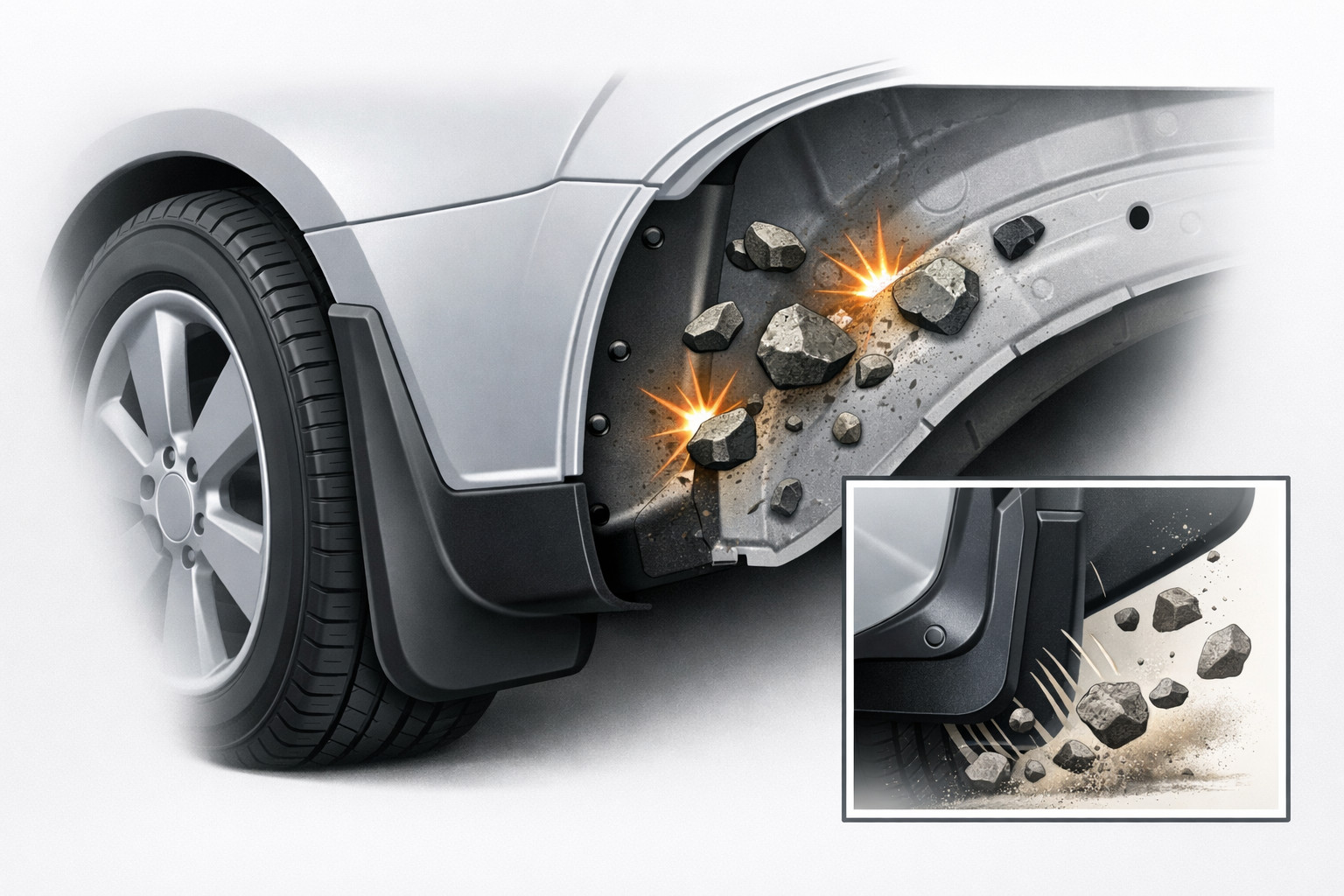
Everything that improves day-to-day living on the road but barely changes high-speed behavior belongs here. That includes window deflectors, mats, seat covers, side steps, and some exterior plastics. They can be useful for daily use, getting in and out, or keeping the cabin clean, but they don’t replace any of the key chassis steps.
On a highway-focused Sprinter, these items make sense only after the vehicle stops tiring the driver with its handling. Otherwise you get the typical story: the van looks “upgraded” on the outside, but at speed it still needs constant small steering corrections.
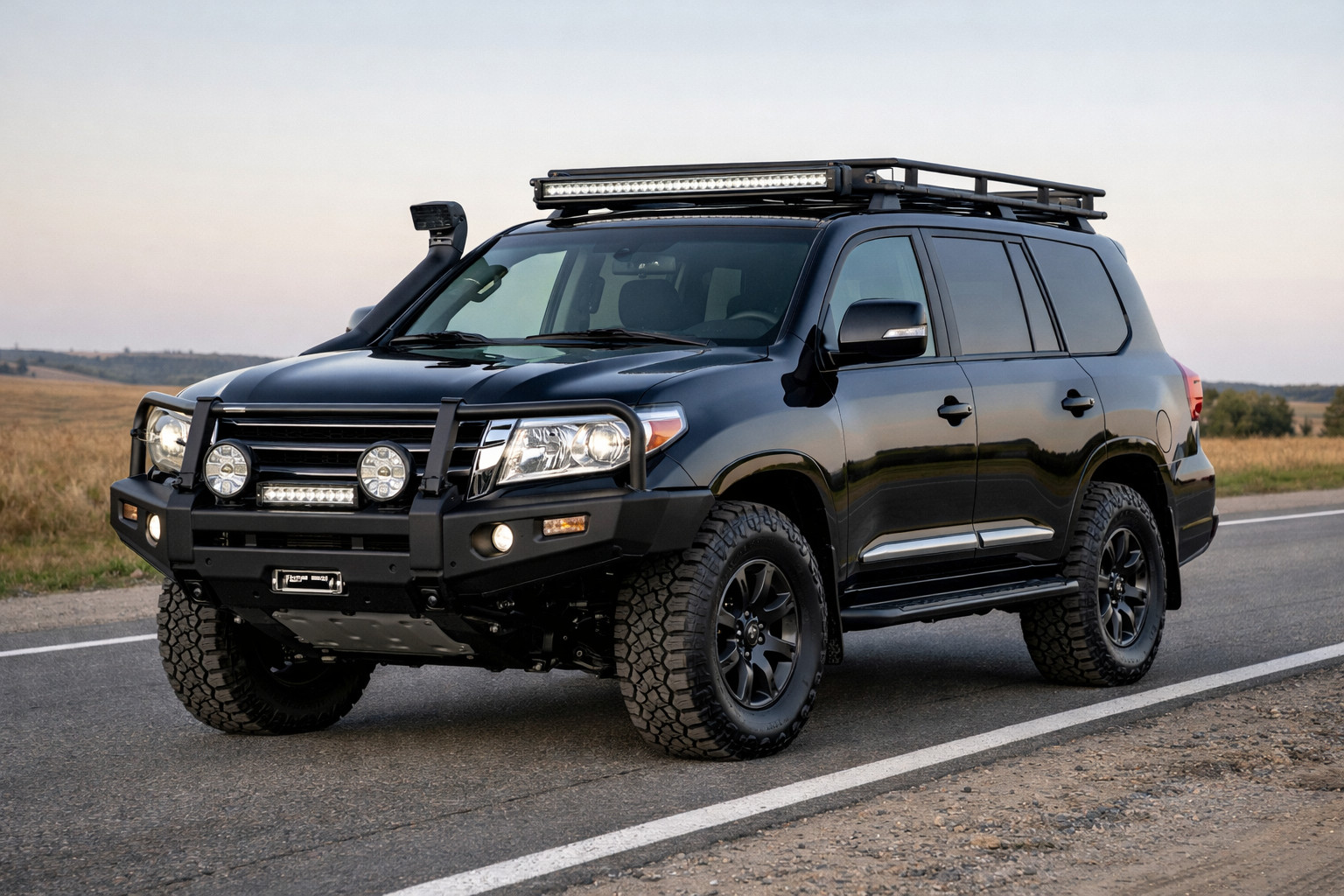
First—aggressive A/T tires for a vehicle that spends 90% of its time on asphalt. They add noise, often worsen rolling ease, and are not a starting solution for highway driving. Second—a lift and larger wheels for looks: for the motorway this is usually a step in the wrong direction, because the center of mass and body reactions become less favorable.
Third—a steering stabilizer as a magic wand. If the cause is tire pressure, tires, body roll, or worn shocks, it won’t solve the root problem. Fourth—helper springs “for the future” for an empty van. Fifth—expensive exterior decor when the budget is limited and the vehicle still lacks basic motorway stability.
| Scenario | What to install first | What can be postponed | What is not required |
|---|---|---|---|
| Empty or lightly loaded van | Pressure set to real weight, road tires, diagnosis of stock shock absorbers | Rear anti-roll bar, if there is real body roll at speed | Helper springs, lift, big A/T tires |
| Permanently loaded van or camper | Pressure, tires, rear anti-roll bar, then shock absorbers | Air assist or helper springs after testing under real weight | Decorative body kits as a substitute for chassis upgrades |
| Routes with strong crosswinds | Pressure, tires, rear anti-roll bar | Premium shock absorbers if rocking remains | Any solutions that add height and mass up top without a need |
| If an uprated factory chassis is already installed | Check whether the issue is tires, pressure, or worn components | Targeted upgrades after a test drive | Buying the whole kit at once without diagnostics |
More expensive solutions are justified where the Sprinter truly earns its keep on the highway: big daily mileage, high roof, long wheelbase, consistent cargo, or a heavy camper build. In that scenario, it makes sense not just to “prop up” the body, but to dial the vehicle in more precisely: premium shock absorbers, careful selection by axle load, and a review of the stock suspension components. If the basics aren’t done, expensive parts often deliver less effect than the owner expects.
If after the chassis work you’re already choosing items for highway operation, start with the catalog for Sprinter W907/W910. For everyday on-the-road needs, window deflectors can be appropriate, while roof racks should be bought only when top load is truly needed, because any mass up high doesn’t help the vehicle in crosswinds.
From a customer’s experience: the owner of a high-roof Sprinter for intercity trips initially wanted helper springs and larger tires because the van felt “pulled around” on the highway. After weighing, correcting pressure, and switching to a proper road tire set, it became clear that the main remaining issue was only body roll during lane changes—and a rear anti-roll bar solved it. In the end, the budget was smaller than planned, and high-speed driving became calmer without unnecessary harshness.
For a Mercedes Sprinter W907/W910 set up for the highway, the smartest order is: first weight and pressure, then the right tires, then a stabilizer bar for roll and crosswinds, and only after that shock absorbers and load support matched to real load. This is the simplest way to cut through marketing clutter and not overpay for upgrades that don’t solve your task.
This material is based on real selection experience, hands-on practice, and real-use scenarios—not the idea of “install everything at once.” If you treat the Sprinter as a working tool for motorway driving, the best upgrade is not the loudest, but the one that delivers a calmer vehicle at your exact load and on your route.
| ✔ | First, it is suggested to check the actual axle weights and set the tire pressure according to the real load. This is a practical step that directly affects the contact patch, braking, and stability on the highway. |
| ✔ | For highway use, it is recommended to fit road commercial tires instead of A/T or a worn set. This choice reduces noise, the tuned-in “floating” feel, and unnecessary steering responses at speed. |
| ✔ | The rear stabilizer is described as one of the most effective ways to reduce body roll and reaction to crosswind. For a long wheelbase, high roof, camper, or cargo Sprinter, this is especially appropriate. |
| ✔ | Good-quality shock absorbers are brought up as a separate stage when the problem is not body roll, but bouncing after waves and joints. This makes it possible to address the symptom of the body’s “second oscillation” itself, rather than overloading the suspension with stiffer supports. |
| ✔ | An approach with step-by-step diagnostics and a test drive after each step helps avoid changing everything at once. In the article, this is presented as a way to avoid unnecessary expenses and understand which modification actually made a difference. |
| ✘ | Some solutions make sense only for vehicles carrying a permanent or significant load. For an empty or lightly loaded van, helper springs, air assistance, or rigid supports may be unnecessary or may even worsen the rear-end behavior. |
| ✘ | More expensive modifications will not deliver the expected result if the basics are not addressed — pressure, tire condition, and worn shock absorbers. In other words, without diagnostics there is a risk of spending money on parts that do not eliminate the root cause of the problem. |
| ✘ | Aggressive A/T tires, a lift, and large wheels for highway use are explicitly called bad purchases. They add noise, worsen rolling, and make body responses less favorable at speed. |
| ✘ | The steering stabilizer is not considered a standalone solution. If the cause lies in roll, pressure, or tired shock absorbers, this component will not address the main flaw in the vehicle’s behavior. |
Shipping to EU
Wholesale and retail
Own warehouse
Опис продукту
Подарунки не надаються при оформленні покупки у кредит під 0,01% або при покупці частинами.