
21.03.2026
773
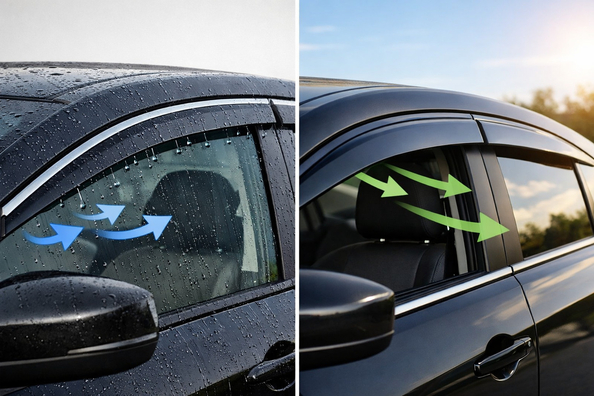
If you need better protection from rain, wet snow, and the habit of driving with the window slightly open, it’s more practical to look at wide 9–10 cm wind deflectors. If your priority is less noise at speed, a cleaner look, and minimal protrusion from the body, slim or low-profile 3–4 cm options usually win.
The key is not to reduce the choice to width alone. The real-world result is influenced much more by how accurately the shape matches your specific model, the mounting type, the condition of the door seals, and the installation itself: in the cold, on a dirty surface, or without allowing time after installation, even a good set can perform worse than a simpler one that’s correctly selected.
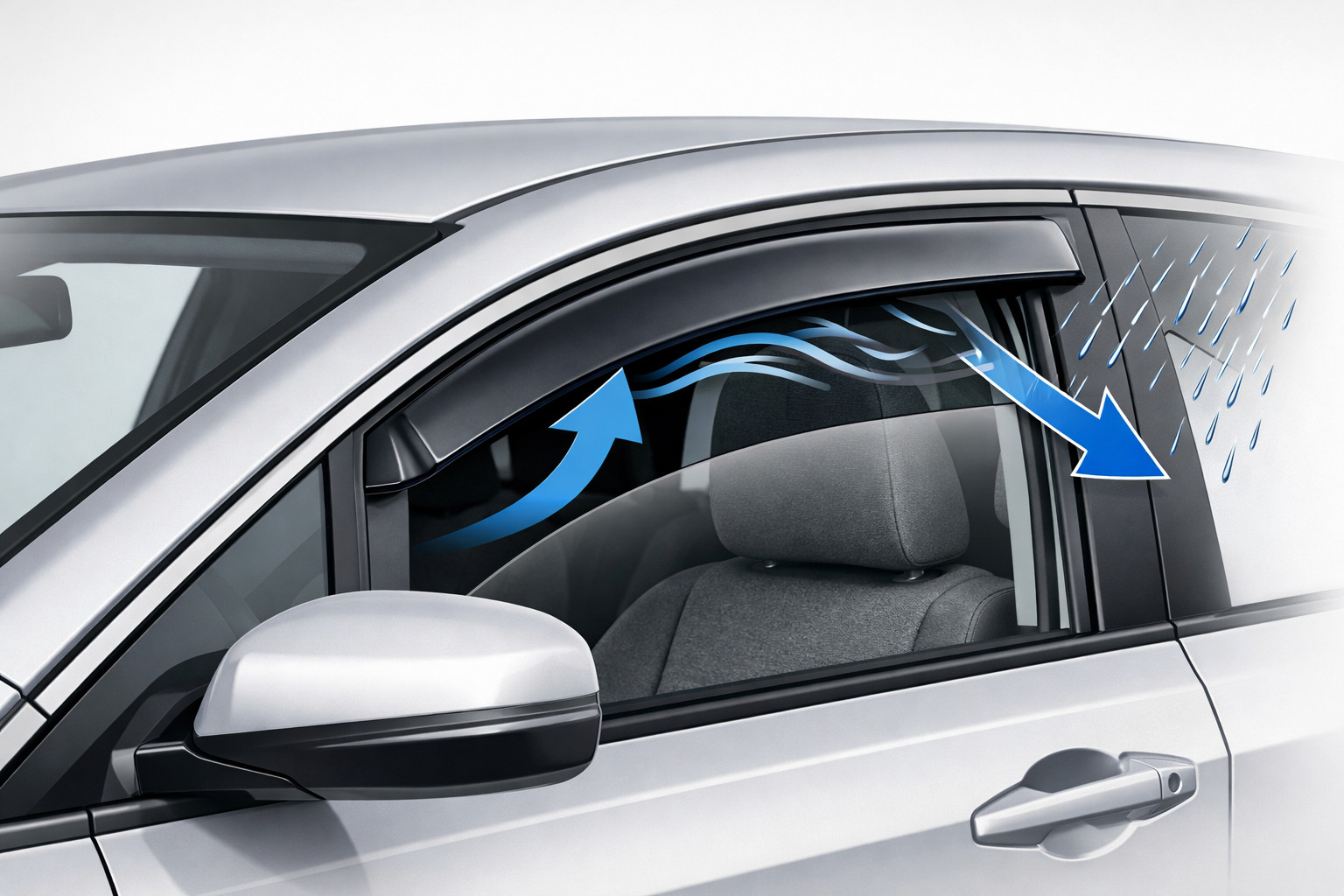
A wide deflector physically covers the upper area near the window better, so it diverts droplets and snow more effectively when the glass is opened a few centimeters. A slim deflector changes the door’s aerodynamics less, so it more often behaves calmer on the highway and is less visually noticeable.
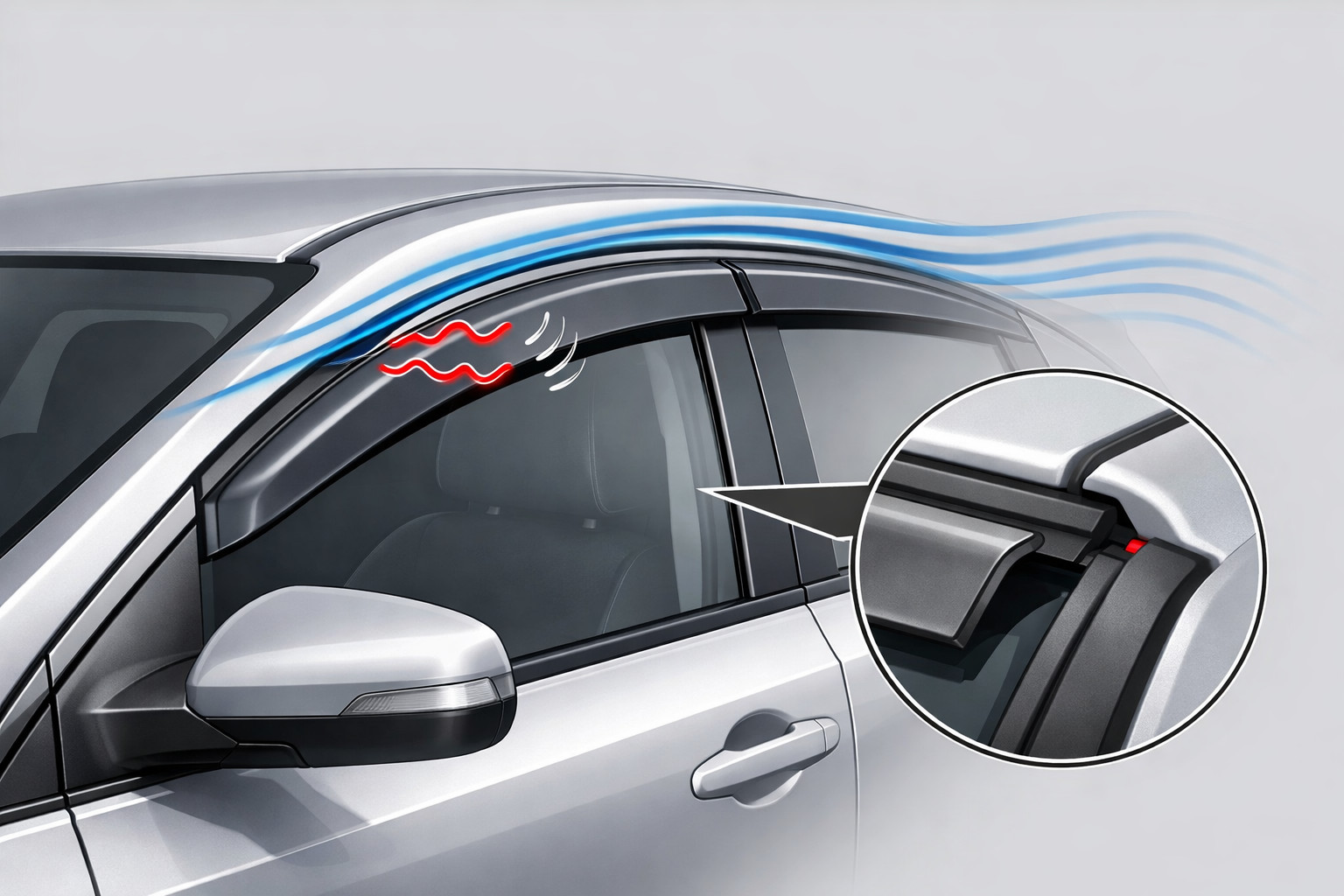
So the answer is simple: for rain, wide is more often better; for reducing extra wind effect, slim is more often better. But no type can completely eliminate wind noise, especially if the issue is with the door seals or the shape of the window frame itself.
| Option | Strengths | Weaknesses | Who it’s for |
|---|---|---|---|
| Slim 3–4 cm | Less protrusion, cleaner look, usually less aerodynamic noise | Cover the area near the window less; in heavy rain, protection is more modest | Those who drive a lot on highways and want a minimally noticeable accessory |
| Wide 9–10 cm | Divert rain and snow better; more convenient for frequent ventilation in bad weather | More noticeable externally; at speed they can be louder | City driving, daily short trips, smokers, drivers who frequently ventilate the cabin |
DD Tuning expert comment: most often, the people who make mistakes are those who buy the widest set hoping for less noise on the highway. On some cars, the opposite happens: extra protrusion creates more turbulence. The second common mistake is installing in-channel deflectors without checking compatibility with automatic window closing and without allowing 48 hours after installation.
Slim models make sense where higher-speed driving, appearance, and minimal interference with the door line matter. They stick out less, so they more often behave calmer at 90–130 km/h, especially when the window is only opened a little. That’s why they’re often chosen for daily highway commutes and long trips.
The downside is straightforward: less physical coverage. In drizzle they work fine, but in heavy rain or wet snow with the glass slightly open, the wide version is usually more helpful. If you want the “open a crack and avoid spray” effect, a slim set doesn’t always give the same freedom.
Wide models create a larger visor over the window. This is especially noticeable in the city: you can open the glass more often for ventilation, and less water, snow, and road grime gets in. For cars where the cabin is regularly ventilated in the rain, this is a practical benefit, not just cosmetics.
The trade-off is that a larger protrusion is more noticeable and can affect airflow more. On one model it may produce only light background noise; on another, a whistle at a certain speed. So wide deflectors should be seen not as “better overall,” but as “better for wet weather and city use.”
Material and installation often matter more than the difference between 4 and 10 cm. Quality acrylic or impact-resistant polymer sets handle UV, washing, and fine abrasion better. For gravel roads, this is especially useful.
It’s best to install deflectors in a warm area, on a clean and dry surface or a clean window channel, and keep the windows closed for 48 hours after installation. If installed in the cold, the part takes longer to settle, and the risk of detachment or misalignment increases. For in-channel sets, it’s critical that the glass closes freely without conflicting with the seal.
For city driving, the choice is usually in favor of wide models, because the ability to quickly ventilate the cabin in any weather is valued. For the highway, slim models more often win: they don’t work miracles, but they’re less likely to provoke extra noise and look more understated.
If the car is used in mixed conditions, focus on the dominant scenario. When 70% of trips are city driving, rain, and short stops, a wide deflector is justified. When it’s long intercity routes at higher speed, the slim option is usually the smarter choice.
| Scenario | What to choose | Why |
|---|---|---|
| You often open the window in rain or snow | Wide 9–10 cm | Provides more coverage and keeps a drier zone near the top edge of the glass |
| Lots of highway driving and speed matters more than maximum protection | Slim 3–4 cm | Less protrusion usually means calmer aerodynamics and a cleaner look |
| City car for daily cabin ventilation | Wide 9–10 cm | More convenient to crack the window at a light, in a parking lot, or in traffic—even in wet weather |
| You want the most discreet accessory possible | Slim 3–4 cm | They’re closer to the factory door line and change the car’s appearance less |
| A car with sensitive automatic window closing | Don’t chase width—choose a precise model-specific set | Here, mounting and geometry compatibility matter, not visor size |
Paying extra is justified when you need not just a visor over the window, but stable results for years: precise model geometry, better material, a cleaner edge, UV resistance, and a lower chance of issues after washing. This is especially relevant for cars that often drive on highways, sit in the sun, or are used daily with no room for minor drawbacks.
Before buying, it’s worth checking the current window deflectors, separately reviewing the key differences in materials and shapes in how to choose deflectors, and confirming installation nuances in how deflectors are installed. In higher-end sets, what you feel more often isn’t “width,” but better precision and fewer compromises in everyday use.
From a customer’s experience: the owner of a city wagon was looking for an option to keep the window slightly open in the rain without catching spray in the cabin. At first, he considered slim deflectors for their more restrained look, but after discussing the scenario he chose a wide, model-specific set. In the end, he was satisfied specifically with the practicality: the cabin ventilates more easily, and noise at his usual city speeds didn’t become an issue.
If you need a one-sentence answer: wide deflectors work better against rain, while slim ones are more often better at reducing extra wind effect. But you should buy not “width in general,” but a model-specific set for your conditions: city or highway, frequent ventilation or calmer behavior at speed, adhesive mounting or in-channel. This material is based on real selection experience, practice, and real usage scenarios—so the best choice here isn’t universal, but scenario-based.
| ✔ | Wide 9–10 cm deflectors cover the upper area near the window better, so they are more practical in rain, wet snow, and when the window is opened a few centimeters. |
| ✔ | Thin 3–4 cm models protrude less from the body, so they usually offer quieter behavior at speed and look neater on the car. |
| ✔ | For city driving, wider models are more convenient for everyday cabin ventilation: you can open the window in traffic, in a parking lot, or at a traffic light even in bad weather. |
| ✔ | The real result depends heavily on the accuracy of the vehicle-specific kit, the mounting type, and installation quality, not just on the deflector width. |
| ✔ | Quality materials and proper installation can provide better durability and fewer issues after washing or in the sun than simply choosing a larger size. |
| ✘ | Wide deflectors are more noticeable from the outside and on some cars can affect airflow more strongly, even causing extra noise or whistling at certain speeds. |
| ✘ | Thin models cover the area near the window less effectively, so in heavy rain or wet snow the protection from splashes and precipitation is not as convincing. |
| ✘ | Insert deflectors are not compatible with automatic window closing on all cars and in some cases may interfere with its proper operation. |
| ✘ | Installation in cold conditions, on a dirty or wet surface, or without allowing time after installation increases the risk of detachment, misalignment, or whistling. |
Shipping to EU
Wholesale and retail
Own warehouse
Опис продукту
Подарунки не надаються при оформленні покупки у кредит під 0,01% або при покупці частинами.