16.05.2026
361
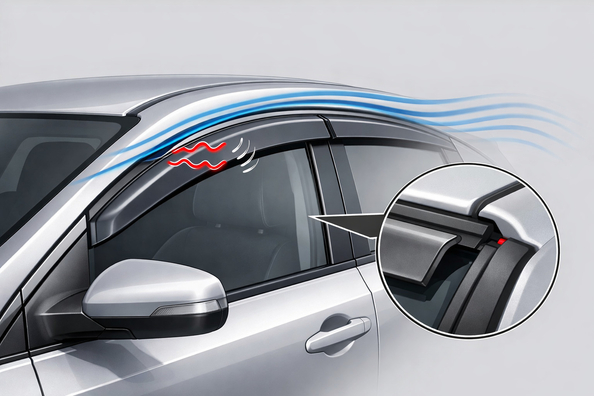
Whistling from window deflectors at speed almost always means not a “bad accessory,” but a broken airtight seal along the upper part of the door. Air finds a micro-gap between the deflector, the weatherstrip, the glass, or the door frame—and at speeds from about 50 km/h it becomes audible as a sharp, high-pitched noise.
The mistake most owners make is simple: they immediately order another set. In reality, you first need to understand exactly where the airflow is breaking away—inside the deflector channel, along the upper seal, around the mirror area, or due to the door’s fitment. Only after that does it make sense to change anything.
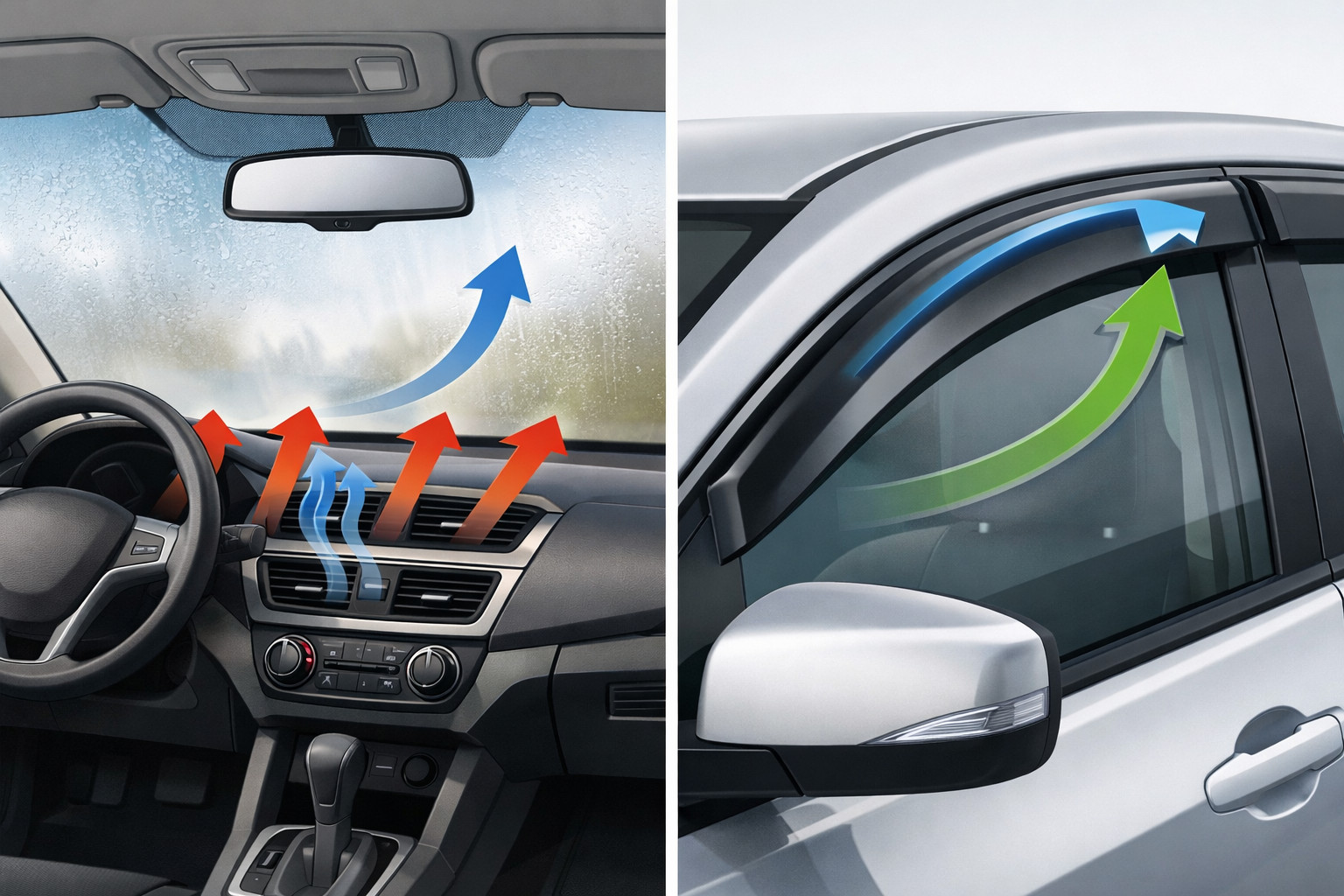
A deflector changes the airflow shape near the window frame. If it sits straight and the glass presses the seal tightly, there may be no noise at all. But just a few millimeters of misalignment, a bent edge of rubber, or a piece not fully seated is enough to create a whistle.
Most often the issue shows up on the highway, and it becomes stronger in a crosswind. This is an important point: sometimes it seems like the deflector is whistling, while in fact the source is near the mirror, the A-pillar, or the upper corner of the door—where the airflow simply became more noticeable after installing the accessory.
After installing new deflectors, it’s also important to let them settle into the channel. If you actively open the window right away—especially in cold weather—the risk of misalignment and whistling is much higher.
DD Tuning expert comment: The most common mistake is blaming the deflector right away and looking for another set. In selection we regularly see a different picture: the upper seal is folded, the glass bounces back due to protection, or the deflector is inserted into the channel not along the full length. If you first localize the noise with tape and check the window pressure, you can usually avoid unnecessary expenses.
| Symptom | Likely cause | What to do |
|---|---|---|
| Whistling appeared immediately after installation | The deflector isn’t seated in the channel or it folded the seal | Remove it, clean the channel, reinstall, straighten the rubber, don’t lower the window for a few days |
| The glass goes up and then pulls back slightly | Anti-pinch protection is triggering or the profile is too thick | Check window travel, reset adaptation if needed, assess deflector compatibility |
| Noise is stronger in a crosswind | Mirror, A-pillar, or upper door corner | Do a zone-by-zone tape test; don’t replace the deflector at random |
| Whistling changes if you lower the window slightly | Problem with glass pressure or the upper seal | Inspect the seal, check seating alignment, replace the rubber if needed |
| The sound comes only from one side | Local misalignment of the door or the deflector | Compare both sides, check gaps and door position |
| After applying tape, the noise disappears | There’s an air leak in the taped zone | Look for a permanent fix right there: installation, seal, door fitment |
A new accessory makes sense only when it’s confirmed that the old deflector is poorly fitted, interferes with the glass, or has an unsuccessful profile. In that case, it’s logical to look at vehicle-specific window deflectors rather than buying yet another universal set.
If the problem appeared after a rushed installation, it’s worth going through the basic installation rules first. For this, a separate guide on installing window deflectors is useful—often that alone is enough to eliminate noise without replacing any parts.
If the whistle is related to old rubber, you should invest not in new wind deflectors but in the door seals. A good reference is the article on when to replace door seals. And if the tape test points to the mirror or pillar area, it’s better not to spend money on window accessories at all.
| Solution | When it works | When it’s not worth spending money |
|---|---|---|
| Reinstall the existing deflector | The noise appeared right after installation; misalignment or a folded seal is visible | When the source is confirmed near the mirror or along the door frame |
| Reset window adaptation and check pressure | The glass doesn’t reach the top or bounces back | If the glass closes evenly and the noise doesn’t change |
| Replace the deflector with a vehicle-specific one | The current set is universal, thick, or prevents the glass from seating properly | When the old deflector sits straight and the leak is in another zone |
| Replace the upper door seal | The rubber is flattened, torn, wavy, or doesn’t hold its shape | If the seal is intact and the issue is in accessory installation |
| Adjust door fitment | There’s a difference in gaps, misalignment is visible at the top, noise only on one side | When the door sits straight and the whistling depends on window position |
| Locally seal the found gap | The source is clearly confirmed by the test at a specific point | When the area hasn’t been found and the repair is done at random |
From a customer’s experience: a driver complained about whistling after installing new deflectors at around 90 km/h and was already about to order another set. A tape check showed the noise wasn’t from the front edge but from the upper corner of the door, where the seal had folded after installation. After reinstalling the deflector, straightening the rubber, and keeping the windows closed for two days, the whistle disappeared without unnecessary purchases.
If deflectors whistle, the problem is usually not the accessory itself but an air gap: incorrect installation, a folded seal, incomplete window closure, door misalignment, or noise from an adjacent area. The smartest approach is: localize the whistle, distinguish whether it’s the deflector, the seal, or the mirror—and only then decide what to repair or replace.
That’s how you avoid wasting money blindly. This material is based on real selection experience, hands-on practice, and real-world use cases—where it’s not accessory marketing that matters, but accurate diagnosis of the cause.
Shipping to EU
Wholesale and retail
Own warehouse
Опис продукту
Подарунки не надаються при оформленні покупки у кредит під 0,01% або при покупці частинами.