21.04.2026
477
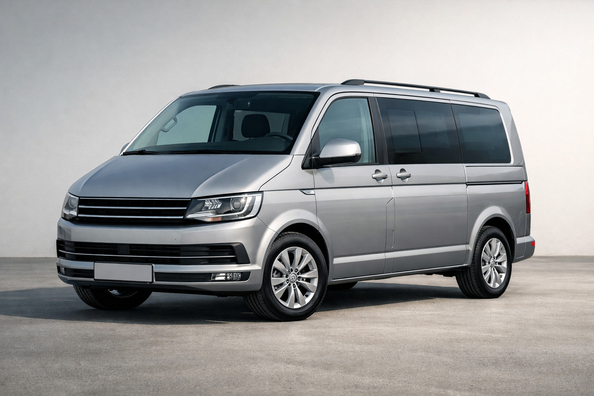
Volkswagen T6 (model years 2015–2024) is one of the most practical Transporters in the whole lineup: on the same base it can be a work van, a family Kombi, a shuttle, or a starting point for a camper build. Its strengths are obvious right away: lots of body variants, strong resale value, and huge potential for upgrades. The weaknesses are also well known: cabin noise, a very large spread between configurations, and the need to carefully choose the diesel and gearbox on the used market.
Under the name T6, people often mean both the T6 itself and the later T6.1. For a buyer this matters: the core idea of the vehicle stayed the same, but after the 2019 update the electronics, multimedia, driver-assistance systems, and the overall day-to-day user experience changed noticeably.
The T6 sits between purely utilitarian vans and more expensive passenger minivans. It’s not the sharpest to drive and not the quietest in the class, but it’s extremely versatile. That’s exactly why the model holds its price well and remains consistently attractive to both businesses and private owners.
The T6 fits best for those who need one vehicle for several roles: work on weekdays, family trips on weekends, hauling gear, or a base for conversion. It makes less sense for those who want passenger-car quietness, easy city parking, or the most straightforward choice with no nuances across bodies, wheelbases, and equipment.
The T6 launched in 2015, and the T6.1 arrived in 2019 and officially closes out the period through 2024. Formally it’s one family, but for a real user the difference is noticeable: the T6.1 got a different front end, a more modern dashboard, new steering, updated diesels, and a better set of driver-assistance systems.
Because of this, the early T6 is more often viewed as a more affordable base, while the T6.1 is seen as the more mature everyday option. On the used market it’s important not to lump everything into one “Transporter” category: a 2016 vehicle and a 2021 vehicle can look very similar on the outside, yet differ noticeably in equipment and daily behavior.
The most complete precise official figures are available for the T6.1. The backbone of the range is 2.0-liter TDI diesels: 90, 110, 150, and 199 hp. For some versions, the top variant of the same power unit is listed as 204 hp, so when buying it’s better to verify the exact market version rather than relying only on the name. Gearboxes include a 5-speed or 6-speed manual, as well as a 7-speed DSG; 4MOTION all-wheel drive is available for certain modifications.
| Engine | Power | Transmission and drive | Practical use |
|---|---|---|---|
| 2.0 TDI | 90 hp | Manual | Base option for calm city work without heavy loads |
| 2.0 TDI | 110 hp | Manual | A sensible minimum if the vehicle often runs empty or lightly loaded |
| 2.0 TDI | 150 hp | Manual or DSG, 4MOTION on some versions | The most balanced choice for highway driving, towing, and mixed use |
| 2.0 TDI | 199 hp or 204 hp depending on version | Mainly DSG, 4MOTION possible | For heavier tasks, faster highway use, and those who value pulling power |
| ABT e-Transporter 6.1 | 83 kW, 200 N·m | Electric drive | A niche solution if you need an electric van without losing cargo space |
In real-life selection, the mid-output versions usually raise the fewest questions, while the most powerful diesels and DSG require a more careful check of service history. For early T6 models there are fewer exact official tables than for the T6.1, so most of the specific figures here refer to the later period.
The main strength of the T6 is not one specific modification, but the range of body types. In the Kombi, you’ll officially find lengths of 5 006 or 5 406 mm, cargo area of 4.3 or 5.0 m², and volume of 5.8, 6.7, or 9.3 m³ depending on wheelbase and roof. For the panel van, 5.8–6.7 m³ is quoted, up to three Euro pallets, and payload of 460–992 kg. With the T6 it’s more accurate to talk not about a classic trunk in liters, but about the cargo compartment.
| Parameter | What matters |
|---|---|
| Generation and years | T6: 2015–2019; T6.1: 2019–2024 |
| Kombi length | 5 006 or 5 406 mm |
| Cargo compartment volume | 5.8 / 6.7 / 9.3 m³ depending on wheelbase and roof; for the panel van 5.8–6.7 m³ |
| Turning circle | 11.9 or 13.2 m |
| Towing | Up to 2 200–2 800 kg braked trailer depending on version |
| Roof load | 100 kg with two crossbars or 150 kg with three |
| Compartment access | Wide sliding doors, low loading sill, convenient rear doors |
| Ground clearance | No exact official figure is provided in the available tables; for all-wheel-drive versions a wading depth of 300 mm is stated |
The suspension here is tuned not for excitement, but for durability and everyday work. On broken roads, the T6 often turns out to be more comfortable than you’d expect from a commercial platform, but in handling it doesn’t pretend to be a passenger car.
The T6.1 is noticeably better inside than the early T6. The dashboard is more modern, the multimedia system has DAB+, USB, and Bluetooth, and higher-end systems add a larger screen and navigation. On safety, key features include Front Assist with City Emergency Braking, a post-collision braking system, and on some versions adaptive cruise control.
Comfort here is practical, not laid-back. Seating is high, visibility is good, the cabin adapts easily to work or travel, but sound insulation isn’t a strong point: at speed you can clearly hear the engine, the road, and the wind.
In daily work the T6 is strong in the details: a wide side opening, a low loading edge, different wheelbases, roofs, and seating layouts. A Kombi can carry people, and after removing the seats it turns into a very spacious hauler. Because of this, the model is equally interesting for courier services, service teams, active families, and those building a camper.
But this is also the main pitfall: fuel consumption, payload, and towing figures vary greatly depending on body type, wheelbase, roof, drivetrain, and equipment. The T6 should be compared not “on average for the model,” but by the exact configuration of the specific vehicle.
| Strengths | Weaknesses |
|---|---|
| Very flexible platform: van, Kombi, shuttle, camper base | Average sound insulation, especially on the highway |
| Good liquidity and strong residual values | You need to understand specific versions carefully, because the numbers vary a lot |
| Comfortable-for-class suspension on bad roads | Not the sharpest handling among competitors |
| 4MOTION available, a large accessory ecosystem, and strong upgrade potential | Some higher-output diesels and gearboxes have a reputation that calls for thorough inspection |
From an owner’s perspective, the main plus is versatility without losing market value. The main minus is that you can’t buy a T6 simply “by the name”: here the configuration matters more than the badge on the grille.
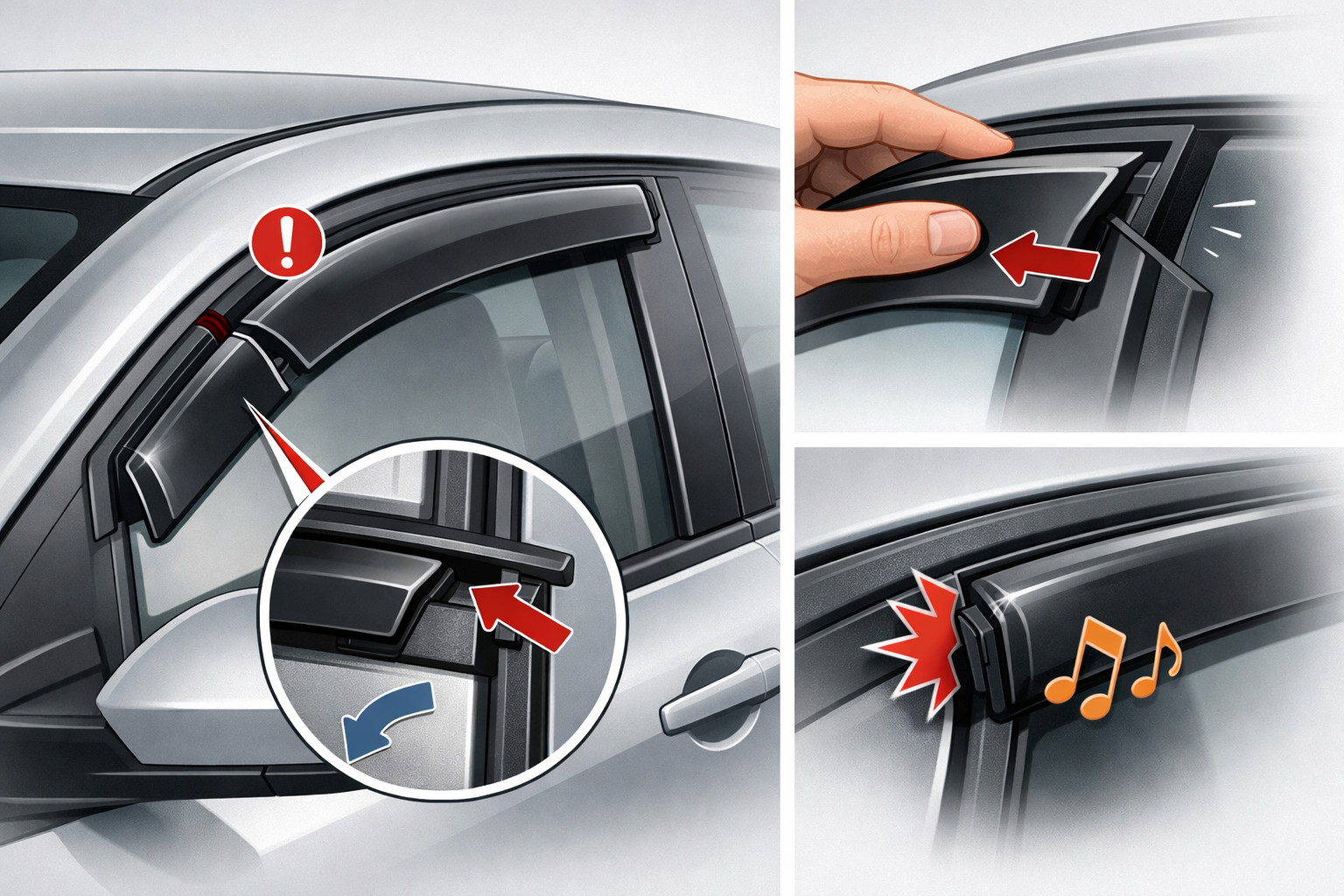
For the T6, tuning makes sense when it strengthens your usage scenario rather than masking wear. It’s convenient to start with the general selection of accessories for Volkswagen T6, and among the items you really feel every day, the most common need is window deflectors: they make it easier to ventilate the cabin in the rain and while parked.
After that, everything depends on the vehicle’s role. A work van needs protection, a clean interior, and easier loading; a Kombi and a camper base need solutions for passengers, luggage, and the roof. Decorative elements for the T6 only make sense after the basic practical tasks are covered.
Volkswagen T6 and T6.1 are strong where modularity, resale value, and multiple body scenarios are needed. For most people, the smartest choice is a well-checked 2.0 TDI with mid-level output in a body style that matches the task; if you need quietness, passenger-car manners, and minimal buying nuances, it’s worth looking at other formats too.
This material is based on real selection experience, hands-on work with accessories, and real-world use cases for the T6/T6.1 — from a commercial van to a family Kombi and a travel build base.
| ✔ | The model is very versatile: on the same platform, a van, Kombi, shuttle, and camper version are available, so it can be adapted for work, family, or travel. This is convenient if you need one vehicle for several tasks. |
| ✔ | There is a wide choice of body styles, wheelbases, roofs, and cargo area configurations. This makes it easier to choose a vehicle for a specific load rather than settle for a generic option. |
| ✔ | The suspension is tuned to work properly on bad roads and not overload the driver in everyday use. For a commercial base, that is a practical advantage. |
| ✔ | The model holds its value well on the used market and has strong liquidity. For the owner, this means lower losses when reselling. |
| ✔ | The T6.1 received more modern electronics, multimedia, and driver assistance systems. This makes daily use more convenient than in earlier cars. |
| ✘ | The sound insulation is average: at speed, the engine, road, and wind are clearly audible. If you want near-passenger-car quietness, the T6 may disappoint. |
| ✘ | When choosing, you need to understand the specific version, because body styles, wheelbases, engines, gearboxes, and equipment differ. Buying it “by name” alone can easily lead to a mistake. |
| ✘ | The strongest diesels and DSG require a careful check of the service history. On the used market, this increases the risk of buying a more complex and expensive-to-maintain example. |
| ✘ | The model is not the sharpest to drive among its rivals and does not pretend to be a passenger car. In the city and on winding roads, this feels like a compromise in favor of practicality. |
Shipping to EU
Wholesale and retail
Own warehouse
Опис продукту
Подарунки не надаються при оформленні покупки у кредит під 0,01% або при покупці частинами.