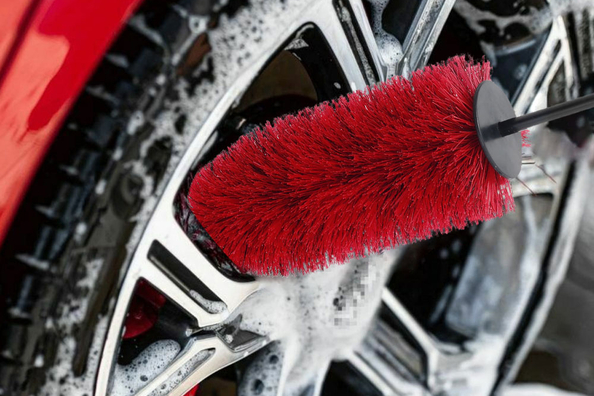
Forged wheels — are not just a tuning element, but a real investment in your car. They’re lighter, stronger, and more eye-catching than cast or stamped wheels, but they require careful handling. Brake dust, salt, dirt, and UV rays quickly damage the finish, causing dullness, corrosion, or scratches. Proper care extends wheel life for years and keeps that premium look.
Why forged wheels need special care
- They often feature polished aluminum or a thin protective layer (clear coat, ceramic).
- Brake dust (metal particles) embeds deeply and causes spot corrosion.
- The wrong chemicals (acids, alkalis, solvents) can ruin the surface in 1–2 washes.
Step-by-step daily/weekly cleaning
- Let the wheels cool — never wash them hot right after driving (it can damage the clear coat or protective layer).
- Rinse off heavy dirt — with a strong water jet or a pressure washer (moderate pressure).
- Apply a dedicated wheel cleaner — pH-neutral or reactive (changes color on contact with iron, e.g., Iron X, Reactive Wheel Cleaner).
- Wait 3–5 minutes — let the product break down the brake dust.
- Agitate with a soft brush — use a wheel brush or a microfiber sponge (not metal!).
- Rinse thoroughly — with clean water, leaving no chemical residue.
- Dry — with a microfiber towel to avoid water spots.
Protection and prevention
- Apply a ceramic coating or wheel wax every 3–6 months — it repels dirt and makes cleaning easier.
- Avoid: acidic products, hot water, abrasive sponges, steam cleaners without temperature control.
- Park carefully — minimize contact with curbs.
- Wash more often in winter — salt accelerates corrosion by 3–5 times.
Regular care (every 1–2 weeks) — isn’t a whim, it’s a must for forged car wheels. Preserve the shine and metal texture — and your wheels will always look like new.