18.04.2026
397
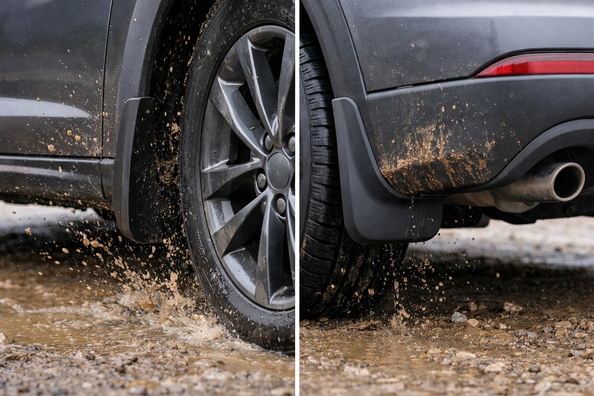
For a typical passenger car, front mud flaps are usually installed first. They most often intercept dirt, road salt, and small stones that would otherwise hit the sills, the lower part of the doors, and the edge of the front wheel arch. Rear ones more often make sense as a second step, or as a priority for commercial vehicles, a trailer setup, or constant driving on wet highways.
So you don’t buy a set “just in case,” compare more than price. The real difference comes from installation, the risk of noise and scraping, material longevity, the practical effect on your specific body shape, and whether you mainly need to protect your own sills—or also reduce spray behind the car.
It’s simple: front mud flaps work more to protect the car’s body itself, while rear ones more often reduce the stream of water and dirt behind the vehicle. So for a city sedan, hatchback, or crossover, the question usually is: what will deliver a noticeable effect after the first trips? In most cases, that’s the front set.
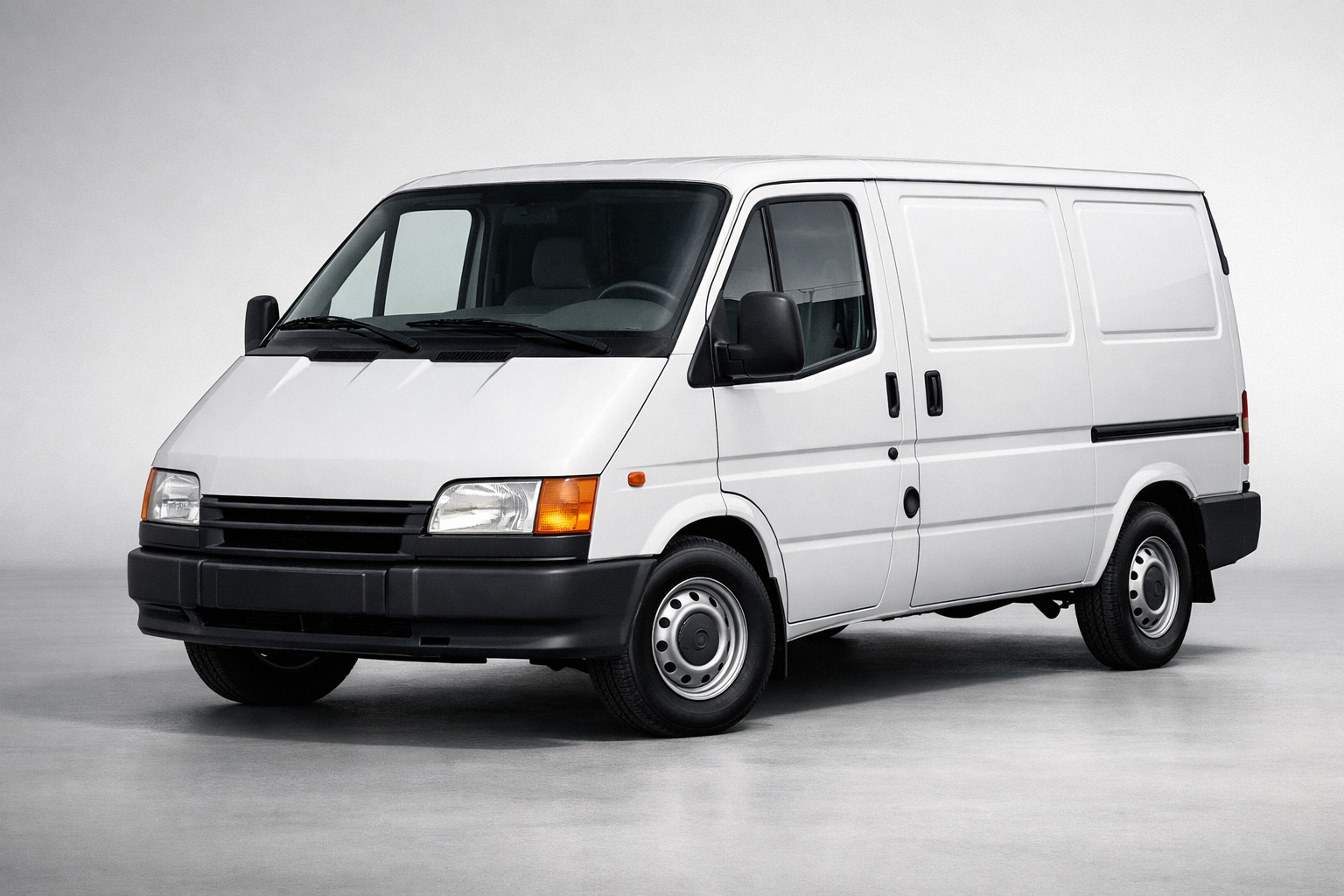
Rear mud flaps aren’t useless, but on passenger models their effect is often weaker specifically for keeping sills and doors clean. On the other hand, on vans, pickups, trailer-towing cars, and commercial transport, they matter more because controlling spray from the rear wheels is more important there.
| Option | Strengths | Weaknesses | Who it suits |
|---|---|---|---|
| Front mud flaps | Better protect the sills, doors, and the front section of the side bodywork; often easier to install; deliver a noticeable effect faster | On low cars they may catch snow, ice, and uneven surfaces; if the material is stiff, scraping is possible | Most passenger cars, city crossovers, vehicles with active winter use |
| Rear mud flaps | Better hold back the stream of water and dirt behind the car; useful for vehicles with a trailer or commercial equipment | On many passenger models they have less impact on body cleanliness; installation is often more complicated | Vans, pickups, commercial transport, vehicles with frequent highway trips |
| Front + rear set | The most complete protection; less dirt both on the body and in the spray stream behind; a logical option for harsh conditions | The most expensive option; more chances to get the fit wrong or end up with extra noise if the set is poorly chosen | Those who drive a lot, are often on the highway, in slush, on gravel roads, or want to solve it in one go |
DD Tuning expert comment: The most common mistake is installing rear mud flaps hoping the sills and the lower edge of the doors will stay clean. On most passenger cars, the main dirt stream comes from the front wheel. Another typical story is a stiff universal set on a low car: at first it seems durable, and then rubbing starts, ice builds up between the flap and the arch, and the mounting points get pulled out of alignment.
This is the most rational first step for most passenger cars. The front wheel throws the most dirt into the sill area, the door seam, and the lower part of the body, so the difference is visible sooner here. Another plus is that installation is often simpler, which means not only a lower part price but also a lower installation cost.
The downside is that the front pieces suffer more from contact with snow, ice, curbs, and sharp changes in road surface. If the car is low and the mud flap is long or too stiff, you may get scraping and the edge can get torn back.
On passenger models, they less often deliver the same “wow effect” in terms of body cleanliness. Their benefit more often shows up as less water mist and fewer stones behind the car, plus the rear arch lives a bit more calmly. For a van, pickup, or a trailer-towing vehicle, this is more noticeable.
The weak point is installation. There’s often less free space at the rear, so the job takes longer. If you install only rear flaps on a regular passenger car hoping to solve dirty sills, the result is often modest.
A full set makes sense when the car regularly drives in tough conditions: wet highways, winter with de-icing chemicals, dirt roads, construction sites. Here, it’s not only about the look of the body, but also about having less abrasive debris in the arches and on the lower edges.
But a full set isn’t always justified. If the budget is limited, it’s better to start with what actually delivers a noticeable result, rather than spreading money across four pieces without a clear priority.
For a city passenger car that drives on asphalt and only occasionally goes out of town, the logic is simple: start with the front. They better protect the sills from sandblasting and salt deposits—exactly what the owner sees and washes most often.
If the car is constantly on the highway in the rain, tows a trailer, or it’s a loaded van, rear ones become important too. In that scenario, it’s no longer only about body cleanliness, but also about controlling the water plume and dirt behind the car. For a harsh winter or regular driving on bad roads, a full set is often the best choice.
| Scenario | Best choice | Why |
|---|---|---|
| City sedan or hatchback | Front | They reduce dirt on the sills and lower part of the doors the most with the smallest budget |
| Crossover for city and highway | Front, with rear as the second step | The first noticeable effect comes from the front pair, and the rear complements protection on wet highways |
| Frequent winter driving in slush and chemicals | Front + rear set | Better contains dirt all around and reduces the load on arches and lower body edges |
| Van, pickup, trailer-towing vehicle | Rear or full set | The rear wheels have a stronger impact on spray behind, so their role is higher |
| Low car with small ground clearance | Short, model-specific front ones, or avoiding overly long universal kits | The key isn’t just installing a mud flap, but not ending up with constant scraping and tear-offs on driveways |
A more expensive kit makes sense not by itself, but when it solves a specific problem: it fits the arch more precisely, doesn’t require unnecessary drilling, is less likely to rub the tire or the liner, and holds its shape longer. If you just need to cover the basic task, it’s worth starting with the mud flaps category and looking at the fit for your body geometry.
When the most OEM-like installation matters and there’s less chance of misalignment or scraping, it makes sense to look at original mud flaps. They’re usually more expensive, but that extra cost is justified when a cheap universal option has already shown poor fitment or quickly worn out the mounting points.
If the car constantly drives on wet roads, mud, and winter salt, mud flaps alone may not be enough. In that scenario, it’s more expensive but more practical to combine them with wheel arch liners so less abrasive debris and moisture stays inside the arch.
From a customer’s experience: An owner of a city crossover initially wanted to install only rear mud flaps, because they were thinking more about the dirt stream behind the car. After selection, they chose the front set as the first step, and it immediately reduced deposits on the sills and the lower edge of the doors. The rear ones were added later, when the car started regularly driving on the highway in winter, and that’s when the full set truly delivered.
In short, for most passenger cars, front mud flaps are the priority. Rear ones are worth adding as a second step, or prioritizing right away for commercial vehicles, trailer-towing cars, and scenarios where reducing spray behind the vehicle is critical. This material is based on real fitment experience, practice, and real-world use cases—not an abstract list of benefits.
| ✔ | Front mud flaps best catch dirt, salt, and small stones before they hit the sills, doors, and front side panels. For most passenger cars, this gives a noticeable effect after the first few trips. |
| ✔ | Front mud flaps are usually easier to install: often it is enough to turn the wheel and use the factory clips. This reduces not only installation time, but also installation costs. |
| ✔ | On a regular city car, the front set is the most rational starting point if the budget is limited. It delivers the most noticeable result without overpaying for a full set. |
| ✔ | Rear mud flaps are useful where it is important to hold back water and dirt behind the vehicle. This is especially relevant for vans, pickups, cars with trailers, and commercial vehicles. |
| ✔ | A full front + rear set makes sense in heavy operating conditions: winter slush, road salt, gravel roads, frequent highway driving. In this mode, it better protects the body, wheel arches, and lower edges. |
| ✘ | If you install only rear mud flaps on a regular passenger car, they often have little effect on keeping the sills and doors clean. In this scenario, the effect may be less than expected. |
| ✘ | Front mud flaps are more exposed to impacts from snow, ice, curbs, and road unevenness. On a low car or with a stiff universal set, this can cause scraping and rubbing. |
| ✘ | Rear mud flaps are often more difficult to install because there is less free space at the back, and sometimes the wheel even has to be removed. This makes installation more complicated than with the front ones. |
| ✘ | A full set costs more, and there is also a higher chance of getting the fit wrong and extra noise if the product is chosen poorly. For some cars, this may be an excessive solution without noticeable additional benefit. |
Shipping to EU
Wholesale and retail
Own warehouse
Опис продукту
Подарунки не надаються при оформленні покупки у кредит під 0,01% або при покупці частинами.