03.04.2026
611
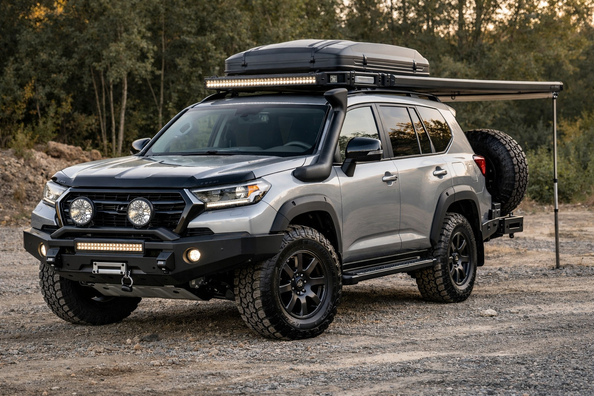
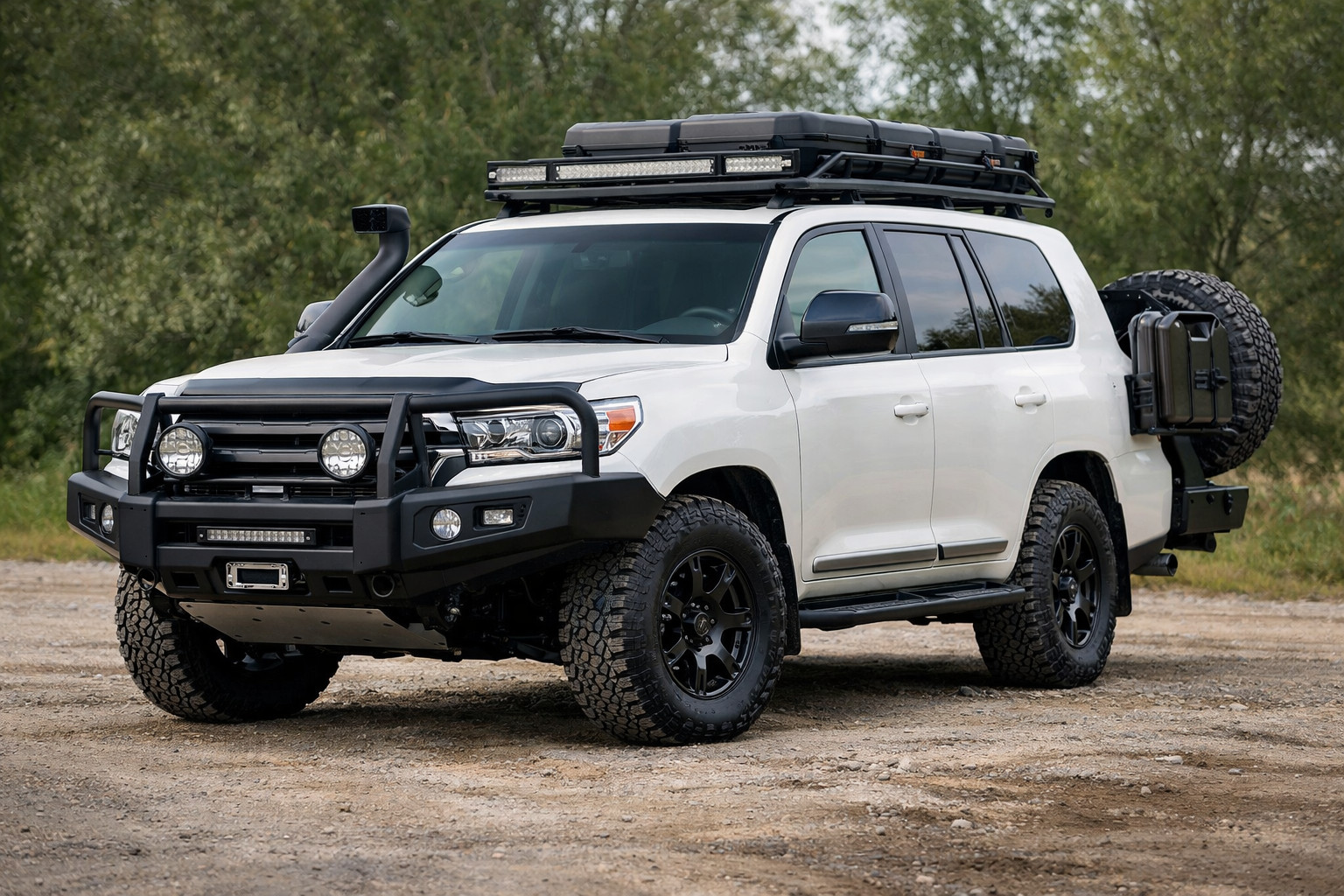
This upgrade plan is for a Toyota Land Cruiser Prado 250 owner who, after purchase, doesn’t want to bolt on everything at once, but to build a practical setup for a realistic use case: city, highway, trips, dirt roads, and occasionally a trailer or a boat. The idea is simple: first give the Prado 250 more grip, protect the underbody, and cover recovery basics—then think about heavy and expensive upgrades.
From the factory, the Prado 250 already has a body-on-frame chassis, full-time 4WD, low range, and solid baseline capability. That’s why the most common mistake after buying one is spending the budget on a lift, big tires, or decorative side steps before tires, underbody protection, and useful gear. It’s also important that compatibility depends on trim level, market, wheel size, wheel offset, and the presence of adaptive suspension on some versions.
A proper upgrade for the Prado 250 should solve three tasks: improve contact with the surface, reduce the risk of damaging the underside on ruts or rocks, and make getting out predictable if you get stuck. For most owners, that’s already enough to make the vehicle noticeably more capable without losing daily comfort.
If your use is almost entirely on asphalt, the list can be significantly shortened. But if you’re planning trips into the woods, on loose ground, to the water, or towing a heavy trailer, priorities shift: protection, recovery gear, and a towing setup matter more than appearance. Roof and suspension choices also depend on the scenario, because any bolt-on equipment eats into payload.
If you plan to tow from the first months, move this item higher: look right away at a towing kit, wiring, and trailer brake control—not only the off-road side.
| Upgrade | Why you need it | Who really benefits |
|---|---|---|
| Tires with better grip | Improve traction on dirt, gravel, wet grass; reduce how helpless a heavy vehicle feels on slippery surfaces | Almost everyone who leaves pavement or drives year-round in changing conditions |
| Underbody protection | Takes hits from rocks, ruts, and uneven ground; lowers the risk of expensive repairs | Those who drive in forests, fields, mountain roads, to fishing or hunting spots |
| Frame-mounted rock sliders | Protect the sides and sills where factory steps can’t | Those who drive on rocks, in deep ruts, or often catch berms and embankments |
| Recovery gear | Gives you a chance to get out on your own or accept help safely | Those who don’t drive only on dry dirt roads and don’t want to wait for a tractor |
| Cabin and cargo organization | Protects the interior from dirt, secures cargo, simplifies family and travel trips | Families, travelers, and anyone who often carries gear |
| Towing setup | Covers the trailer/camper/boat/platform use case | Those who actually tow, not “might need it someday” |
| Suspension lift | Adds margin under load and in more demanding off-road conditions | Only those who have already hit the limits of the stock suspension or constantly carry heavy equipment |
After tires, protection, and basic recovery, it makes sense to move to upgrades for your specific use. For family trips: floor mats, a cargo liner, an organizer, a cargo barrier. For camping: a roof rack or cargo system—but only if you actually carry light, bulky gear and stay within the allowed roof load.
A separate second stage is towing. The Prado 250 can tow a lot, but for a heavy trailer you need the right setup, not emotions: hitch, wiring, sometimes a weight distribution system and trailer brake controller. A snorkel isn’t universal either: it’s justified where there’s lots of dust, sand, or regular water crossings—not for a daily city commute.
Useful comfort, in my view, is only what truly makes daily life easier: all-weather mats, cargo-area protection, and cargo organization. These are inexpensive items, but they pay off quickly with a cleaner interior and less mess on the road.
Everything else often borders on visual tuning. Big wheels, overly aggressive tires, decorative steps, and body kits can look impressive, but on a heavy Prado 250 they often mean a harsher ride, more noise, higher fuel consumption, and little benefit beyond photos.
There’s one main mistake: buying for the picture instead of the use case. With the Prado 250, it’s especially obvious because the factory base is already strong, and mindless add-ons easily eat the budget and payload.
| Scenario | What to install first | What can be postponed | What isn’t required |
|---|---|---|---|
| City + highway + travel | Tires, mats, cargo protection | Underbody protection, organizer | Lift, rock sliders, roof platform |
| Regular dirt-road use | Tires, underbody protection, basic recovery | Cargo organization, roof | Big wheels, decorative body kit |
| Rocks, ruts, demanding routes | Underbody protection, frame-mounted rock sliders, recovery gear | Suspension, if the stock setup is no longer enough | Decorative side steps |
| Trailer or caravan | Towing setup, wiring, trailer brake control | Snorkel, roof system | Lift, if you don’t drive serious off-road |
| Family travel scenario | Mats, cargo liner, cargo organization, tires | Cargo barrier, roof for specific gear | Heavy-duty tuning without real trips off-road |
More expensive kits are justified when the Prado 250 runs under load, regularly drives demanding routes, or often tows. What matters here is not only the part itself, but also correct installation and compatibility: bumper type, presence of cameras, wiring, the suspension on the specific version. If you want to narrow down options first, check the Prado 250 tuning section.
Paying more makes sense where a mistake is costly: strong underbody protection for rocks, frame-mounted rock sliders, a complete towing kit for a heavy trailer, suspension tuned for constant extra load. If the vehicle spends most of its time on asphalt, the most expensive solutions often don’t pay back and only make the car heavier and harsher.
For the Toyota Land Cruiser Prado 250, the logic is straightforward: tires first, then underbody protection, then rock sliders and recovery basics, and only after that—cargo, towing, comfort, and suspension last. This order delivers the most benefit per dollar and doesn’t ruin the strong factory foundation.
In short: don’t buy for the picture. Buy for the route, the weight, the trailer, and real trips off-road. With the Prado 250, that’s exactly what separates a useful upgrade from expensive clutter.
| ✔ | Tires are given top priority: they deliver the biggest improvement in traction on dirt, gravel, wet grass, and mixed conditions. It’s a practical upgrade that is noticeable in the city, on the highway, and off-road. |
| ✔ | Underbody protection and frame-mounted rock sliders cover real risks for the Prado 250 on rocks, in ruts, and on rough roads. They reduce the chance of damaging important components and the body sides where factory parts do not help. |
| ✔ | The author clearly sets priorities: first basic capability and recovery, then a lift, roof systems, or other heavy tuning. This helps avoid spending the budget on secondary things before truly useful ones. |
| ✔ | There are separate recommendations for different scenarios — city driving, travel, rocks, a trailer, or family touring. This approach makes choosing easier and helps avoid installing unnecessary parts if the vehicle spends most of its time on pavement. |
| ✔ | The article emphasizes checking compatibility with the trim, wheel size, offset, and even the spare tire. This is useful because for the Prado 250, some solutions really depend on the specific version. |
| ✘ | Many useful upgrades only make sense after a clear understanding of the intended use case. If this is not done, it is easy to buy a lift, big wheels, or a roof system without a real need. |
| ✘ | Some upgrades require additional compatibility checks or related components: for example, front recovery points may require a силовий бампер, and some solutions may need specific wiring or a camera relocation. |
| ✘ | Some popular solutions can worsen everyday comfort: large wheels, aggressive tires, a roof platform, or an unnecessary lift can add noise, harshness, and weight. |
| ✘ | A suspension lift is not presented as a universal necessity, and without real payload or serious off-roading it often brings more compromises than benefits. For most owners, it makes sense to leave it until the end. |
Shipping to EU
Wholesale and retail
Own warehouse
Опис продукту
Подарунки не надаються при оформленні покупки у кредит під 0,01% або при покупці частинами.