05.04.2026
180
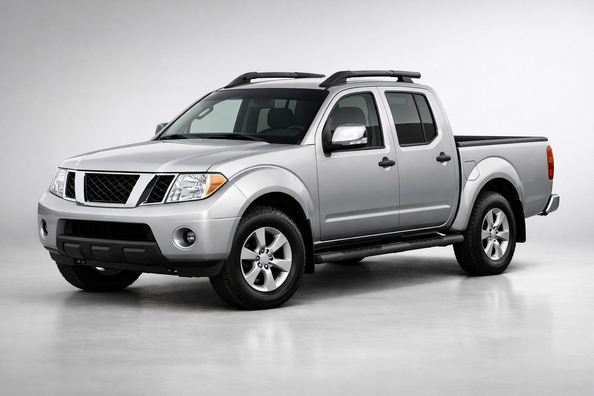
The Nissan Navara D40 in the years most often searched on the used market—typically 2006-2015—is a body-on-frame pickup for those who need traction, payload, towing, and real day-to-day usability, not just looks. In good condition, it combines a workhorse character with a fairly usable second row and doesn’t come across as purely utilitarian.
The key is not to romanticize the format. The Navara suits people who actually use the bed and four-wheel drive, but early vehicles require a very careful check of the frame, the diesel’s condition, and whether factory updates were carried out. For city use, short trips, and minimal running costs, it’s not the easiest option.
The Navara D40 sat between strictly work-focused pickups and more civil, private-owner-oriented versions. People bought it not only for construction, farms, or towing, but also as a one-car solution: weekdays—work; weekends—cottage, boat, or dirt roads.
The model’s strong point is balance. It pulls better than most crossovers, has a frame and a low-range transfer case, yet in double-cab versions it offers more everyday practicality than many older pickups. If you need a quiet, compact, and cheap-to-run vehicle, the Navara will almost certainly be too much.
This review covers the D40 generation produced in 2005-2015. In our market, vehicles from 2006-2015 are more commonly seen, so that’s usually the range buyers mean.
Over the production run, the model changed in engines, equipment, and safety, and specifications could vary by market, cab type, and drivetrain. Practically, this means one simple thing: an early Navara and a later Navara are not the same vehicle in terms of risk. The most questions come up around early cars—especially 2005-2008—due to the well-known risk of frame corrosion and weaker initial safety tuning.
So the general advice is simple: if your budget allows, look for well-kept later examples with a transparent history. If you’re considering an early vehicle, frame inspection and verification of service campaigns are mandatory, not a formality.
The main engine for the D40 is a 2.5-liter turbodiesel. Depending on year and version, it makes 171-190 hp and 403-450 N·m. For more demanding trims, there’s also a 3.0-liter V6 turbodiesel with 231 hp and 550 N·m. Gearboxes are a 6-speed manual or 5-speed automatic; the primary scenario for this model is 4x4 with low range, although some markets also had 4x2 versions.
| Parameter | What the Navara D40 has | What it means in practice |
|---|---|---|
| Generation | D40, 2005-2015 | One body cycle, but noticeable differences between early and later vehicles |
| Engines | 2.5 turbodiesel 171-190 hp; 3.0 V6 turbodiesel 231 hp | 2.5 is the main work option; 3.0 is for those who want a torque reserve and easier towing performance |
| Torque | 403-450 N·m for the 2.5; 550 N·m for the 3.0 | This is where the Navara makes sense: towing a trailer, hauling loads, and not running out of breath on climbs |
| Transmissions | 6-speed manual, 5-speed automatic | The manual feels simpler; the automatic is more convenient in the city and for towing-heavy use |
| Drivetrain | 4x4 with low range; some versions 4x2 | For work and going off asphalt, it makes the most sense to look at 4x4 |
| Fuel tank | 80 L | Range is decent, but real-world consumption is far from passenger-car levels |
| Real consumption | Often around 10-11 L/100 km; the V6 is usually higher | Buying a Navara as an “economical diesel” is not a good idea |
When buying a 2.5 dCi, the key is not the numbers in the ad, but condition. Typical weak points for this engine are well known: the timing chain, turbo control components, and fuel system elements. If you need a vehicle for work, service history matters more than shiny paint.
The Navara is large even by the standards of pickups of its time. For the double-cab version, a length of 5133 mm is often cited, while across the range it’s roughly 5220-5296 mm depending on configuration. Width is about 1848-1850 mm, height 1762-1906 mm, and wheelbase 3200 mm. That’s good for stability and cabin space, but not very convenient in a tight city.
The model’s hauling logic is straightforward: curb weight depending on version falls in the 1825-2185 kg range, and payload is about 780-1250 kg. Towing should also be verified for the specific vehicle: some versions are quoted at 2600 kg, while other market specs go up to 3500 kg.
| Indicator | Value | Practical takeaway |
|---|---|---|
| Length | 5133-5296 mm depending on body | Relaxed on the highway; in yards and parking lots you’ll need to get used to it |
| Width | 1848-1850 mm | Enough cabin space, but you always feel the size |
| Height | 1762-1906 mm | High seating position, but it’s worth checking access to low parking garages in advance |
| Wheelbase | 3200 mm | Adds stability, but reduces agility on broken terrain |
| Ground clearance | The exact figure depends on version, tires, and suspension condition | Don’t rely on a single catalog number—check the specific vehicle |
| Payload | 780-1250 kg | A good reserve for work, but overloading quickly hits durability |
| Trunk | No classic trunk with a fixed volume | On a pickup, the bed is what matters; with a canopy, usable volume depends on the add-on |
Because of the body format, the Navara is a great fit for those who actually carry tools, a generator, an ATV, or building materials. If you simply need a big enclosed luggage area for suitcases and a stroller, a wagon or a large crossover makes more sense.
For its class, the Navara is appealing because in the double cab the second row doesn’t feel like a penalty box. That’s why it was often considered a more family-friendly alternative to purely work-focused pickups. In terms of rear space, it looks better than some competitors of that era.
The weak spot is age. The interior of older D40s is already basic, and the multimedia is no longer a reason to buy. But if your priorities are seating position, visibility, and simple functionality rather than screens and styling, the cabin does its job.
There’s an important safety nuance: after the 2008 updates the situation improved, while early vehicles were rated more critically. So when buying, don’t project the reputation of later versions onto the very first years. Verifying completed campaigns and the condition of safety systems really matters here.
In daily life, the Navara demands an honest approach. An average real-world consumption around 10.2 L/100 km for the range is normal for this format, and the 3.0 V6 often ends up even thirstier. On the plus side, the 80-liter tank provides a solid range, especially if the vehicle isn’t used only in the city.
The daily downside is obvious: length over five meters. Parking, U-turns, and narrow yards are not its element. Another point is the open bed. Without a cover or canopy, small items either get dirty or require separate organization.
From an owner’s perspective, the Navara shines best where it regularly does work: towing, hauling, driving on bad roads, while still not being reduced to a purely commercial tool. If your main mode is traffic jams, short trips, and shopping malls, there’s not much benefit to this format.
| Area | Pros | Cons |
|---|---|---|
| Torque and work | Strong diesel character, decent payload, good towing potential | Towing and load figures must be checked for the specific version, not taken from an averaged number |
| Comfort | For a pickup it drives fairly civil; the second row in the double cab is useful in daily life | It’s still a large body-on-frame pickup, not a city crossover |
| Reliability | With a healthy frame and proper service it can be a tough work vehicle | Early vehicles have a risk of frame corrosion, and the 2.5 dCi doesn’t tolerate neglect |
| Costs | Diesel torque pays off under load | Real consumption is often 10-11+ L/100 km, and maintenance isn’t cheap |
| Everyday practicality | The bed lets you carry things that won’t fit in a regular passenger car | No classic enclosed trunk without additional accessories |
In short, the Navara at its best is a vehicle for someone who understands why they need a pickup. The Navara at its weakest is an impulse buy “because I like the high seating position” without readiness to live with the size, the diesel, and body-on-frame specifics.
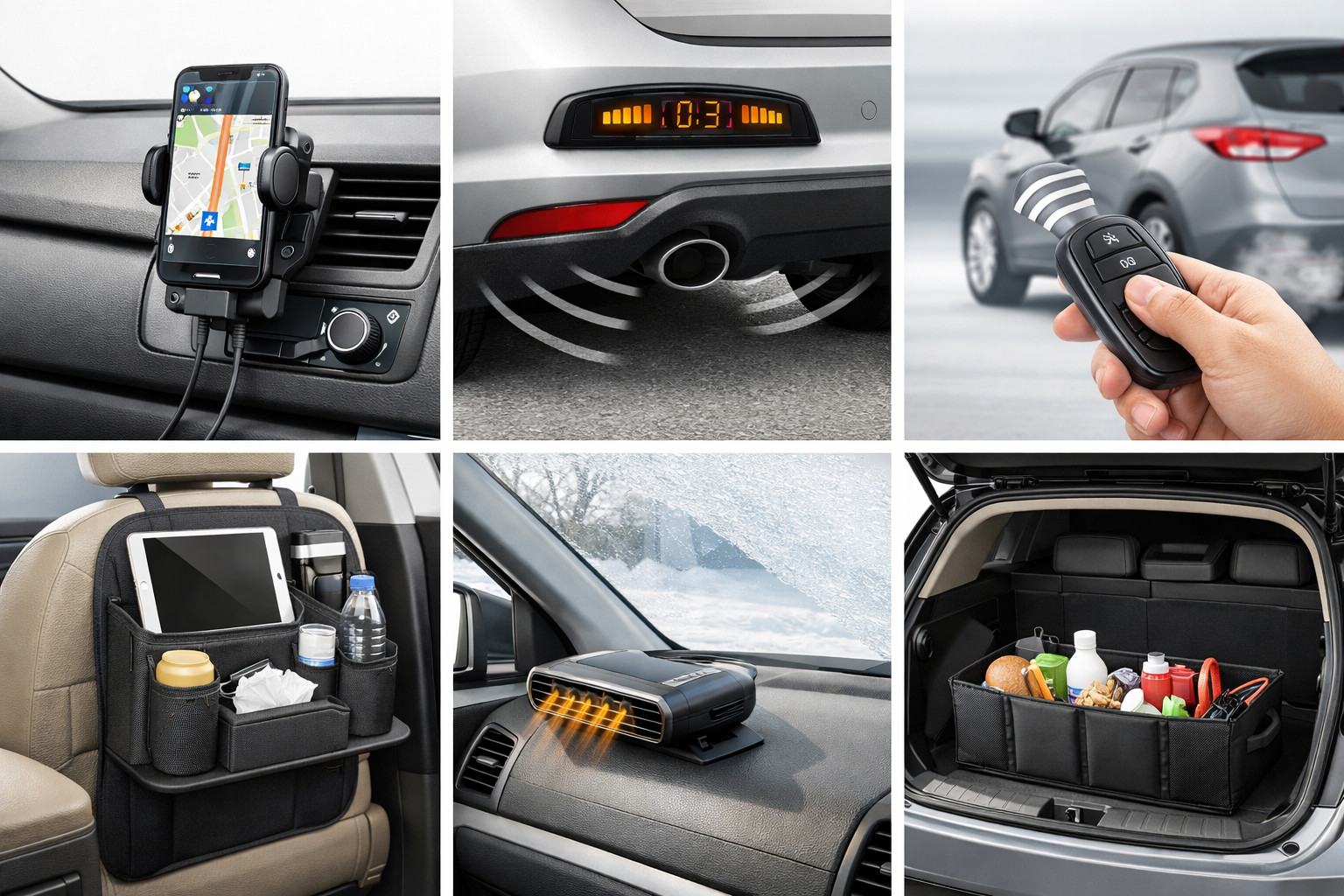
With the Navara, tuning makes sense not as decoration, but as tailoring the vehicle to a specific use case. If the pickup works every day, the right accessories quickly deliver more value than flashy exterior details.
If you don’t want to overload the look, this set is often enough for the Navara to look put-together and become more convenient in everyday life. After that, it makes sense to think about wind deflectors, mats, skid plates, or other items for your specific usage.
The Nissan Navara D40 is a solid pickup for those who genuinely need a frame, torque, a bed, and the ability to live beyond asphalt. It works best as a work-and-life tool with a reasonable comfort reserve, not as a replacement for a typical city car. Before buying, the three key points are: frame condition, diesel health, and the exact specification of the specific vehicle.
Viewed realistically, a late, well-maintained example makes more sense than an early cheap Navara with pretty photos. This conclusion is based on real selection experience, practice, and real-world use cases—not catalog promises.
| ✔ | The ladder-frame construction, low-range gearbox, and all-wheel drive make the Navara suitable for work, towing, and driving on poor roads. It’s not just a tall body, but a vehicle with real pulling power under load. |
| ✔ | The double cab provides a fairly useful second row, so the pickup can be used as more than just utility transport. For family or mixed-use tasks, it’s more practical than many older pickups. |
| ✔ | The payload capacity of around 780-1250 kg makes it possible to carry truly work-related loads, not just small luggage. For tools, materials, or equipment, the cargo bed makes perfect sense. |
| ✔ | The range is decent thanks to the 80-liter tank, which is convenient for trips outside the city and working without frequent refueling. This is especially noticeable if the vehicle regularly covers more than just short city routes. |
| ✔ | In good condition, the Navara looks and drives more civilised than many pickups of its time. In other words, it’s a compromise between a work tool and a daily car, rather than purely a commercial vehicle. |
| ✘ | Early examples carry a risk of frame corrosion, so buying one without a thorough inspection can quickly backfire. This is one of the model’s main practical risks. |
| ✘ | The 2.5-liter diesel does not forgive poor maintenance: the article mentions weak points such as the timing chain, turbo control, and fuel system. In other words, you won’t just be able to buy it and drive it as-is with a neglected engine. |
| ✘ | The Navara is large in size, which is good on the highway, but inconvenient in the city, tight yards, and when parking. For everyday urban use, it feels noticeably bulky. |
| ✘ | Real fuel consumption often stays around 10-11 l/100 km and can be higher with the V6, so it can’t be called an economical diesel. In addition, maintenance is not cheap either. |
| ✘ | The pickup does not have a classic enclosed trunk, so small items need extra protection unless you have a canopy or cover. For everyday use, it is less convenient than a crossover or estate. |
Shipping to EU
Wholesale and retail
Own warehouse
Опис продукту
Подарунки не надаються при оформленні покупки у кредит під 0,01% або при покупці частинами.