25.03.2026
291
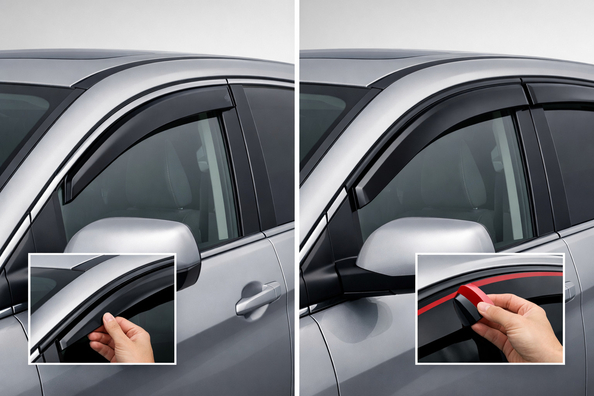
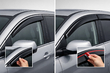
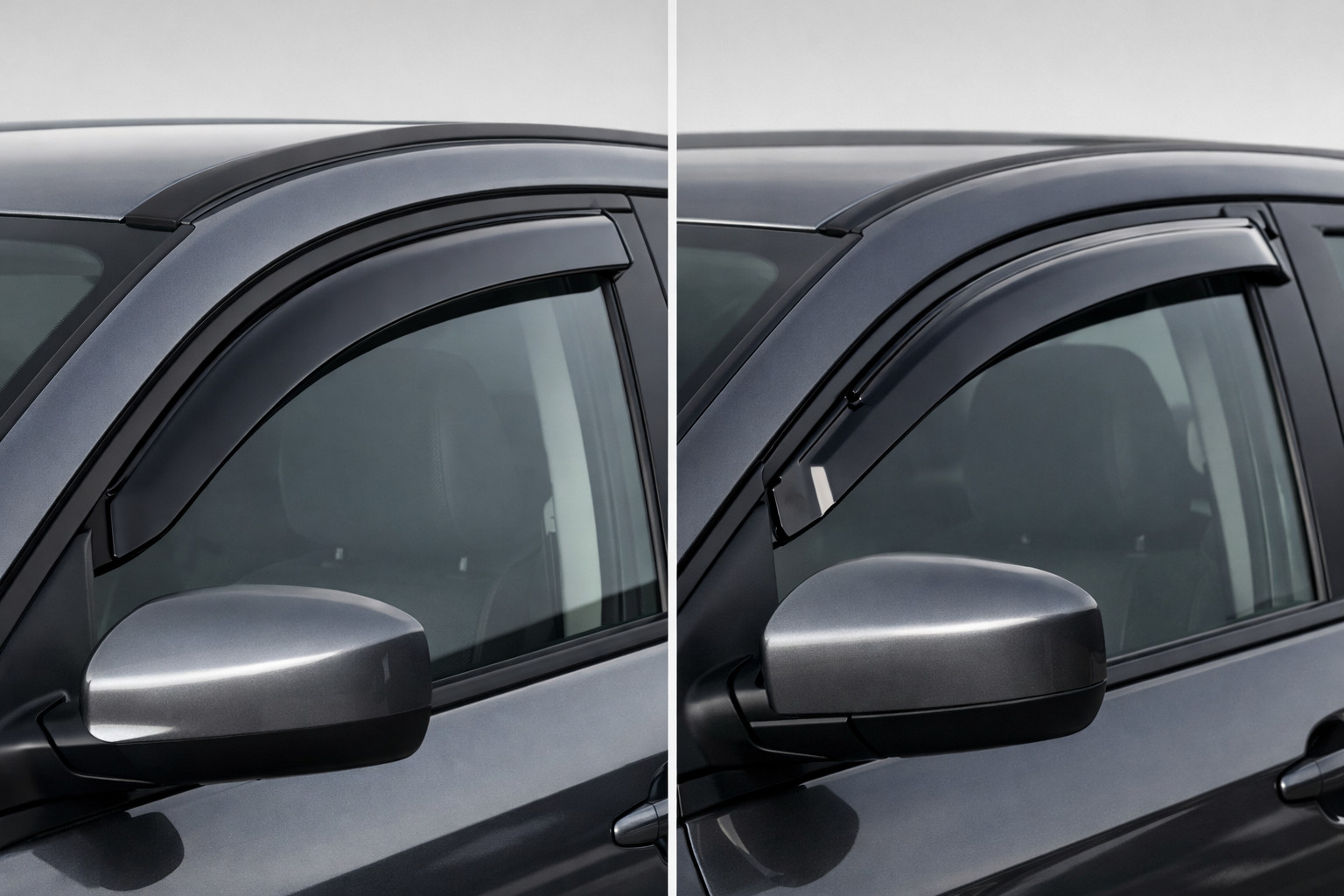
If you want the lowest risk for the glass, the seal, and the window regulator, it’s often better to choose stick-on wind deflectors. If, however, a more hidden look without an external tape line on the frame matters more to you, and there’s a kit for your model that fits into the window channel without conflicts, then you can consider in-channel (insert) ones.
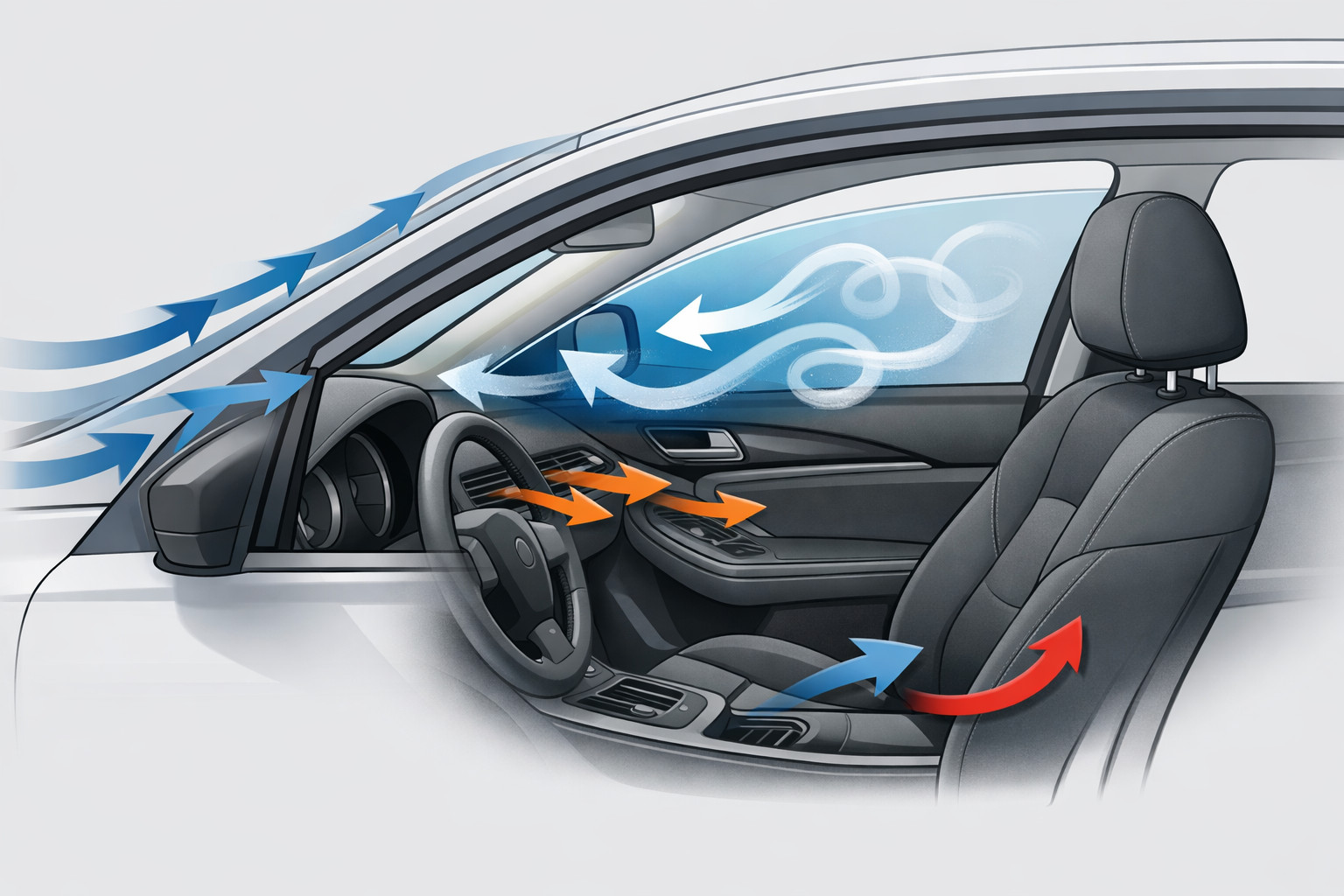
Both types let you crack the window slightly in rain or snow, ventilate the cabin better, and partially reduce turbulence. But the installation method is what makes the difference: one option sits outside the glass channel, the other sits directly in it. This is exactly where the differences in noise, service life, convenience, and installation requirements come from.
The key question here isn’t which type is “better in general,” but which one will bring fewer compromises on your specific vehicle. An in-channel deflector looks cleaner because it sits in the channel, but for that reason it can affect window operation—especially if you have auto close or pinch protection. A stick-on deflector doesn’t take up space in the channel and is simpler in everyday use, but its reliability depends more heavily on tape quality and surface prep.
So the choice comes down to priorities: easier installation and a lower chance of conflict with the window, or a more hidden look—provided there’s exact compatibility with the door frame.
| Option | Strengths | Weaknesses | Who it’s for |
|---|---|---|---|
| In-channel | More hidden look, no external tape on the frame, looks cleaner from the side | May interfere with window closing, trigger pinch protection, sometimes noisy or may need a few days to settle | Those who want a more OEM-like look and have a proven kit for a specific model |
| Stick-on | Easier installation, lower chance of conflict with the window regulator, don’t take up the glass channel, easier to replace | Depend on tape quality and surface prep; removal may leave adhesive residue | Those who value predictable installation, day-to-day practicality, and lower risk for the glass |
DD Tuning expert comment: the most common mistake is choosing in-channel deflectors based on photos only, without considering how sensitive the power window auto function is. On some cars, the issue doesn’t show up right away, but after a few days—when the window starts bouncing back or closes misaligned. If the owner isn’t ready to strictly follow installation pauses and wait for settling, it’s safer to look at the stick-on option.
These deflectors install into the window channel or the seal channel. Their advantage is a more understated exterior look, but this installation method makes them sensitive to door geometry. If the kit presses even slightly on the glass, you may get binding, extra noise, or pinch protection activation.
After installation, in-channel sets often need time to seat properly: the window is cycled up and down several times, and the windows are kept closed for a while. That isn’t a problem by itself, but it means the result isn’t always clear in the first 10 minutes after installation. For everyday use, it’s a good option only when the shape is an exact match.
Stick-on deflectors mount to the outer frame using adhesive tape. They don’t go into the channel, so they affect window travel less. In practice, that’s the main reason they’re chosen more often for vehicles with sensitive power windows.
The weak point here is different: if you install them in the cold, on a dirty surface, or without proper degreasing, the tape will hold worse. That’s why installation temperature and the curing pause matter. If everything is done correctly, this option is convenient for daily use; if not, delamination or marks after removal can appear over time.
For price, don’t focus on type alone. Brand, molding accuracy, material, and whether it’s a 2-door or 4-door kit matter more.
For most daily-driven cars—where the owner wants to install once and not revisit the topic—stick-on deflectors are more practical. They’re better for those who often use automatic window closing, don’t want to wait for in-channel settling, and want to minimize the risk of re-installation.
In-channel deflectors make sense when you consciously put appearance first and know for sure that this type works correctly on your model. This isn’t a “guess and hope” solution: it’s not just the deflector brand that matters, but the exact shape for your door frame.
| Scenario | What to choose | Why |
|---|---|---|
| Vehicle with auto window close or sensitive pinch protection | Stick-on | Lower chance the deflector will affect window closing |
| Need a more hidden look without external tape | In-channel | They sit in the channel and look more understated—if the kit is a precise match |
| Need easy installation without a long settling period | Stick-on | No work inside the channel; easier to verify the result immediately |
| Car is washed often, daily use, no desire to tweak anything | Stick-on | Usually fewer questions about interaction with the glass, if the tape is applied correctly |
| Willing to spend a bit more time after installation for the sake of looks | In-channel | May require window cycles and time for the fit to form |
Paying extra makes sense not for the brand name, but for more accurate geometry, more stable material, and fewer surprises during installation. This is especially important for cars with frameless doors, sensitive automatic window operation, or for anyone who wants to install a set once and not come back to it after the first highway run or car wash.
Before buying, it’s worth checking the available window deflectors, separately reviewing the material and differences between products in the article about choosing deflector material, and also skimming the practical nuances in how to choose deflectors for your car. In the higher-price segment, you’re essentially paying for fit accuracy, predictable installation, and a lower risk of rework.
From a customer’s experience: the owner of a family wagon was looking for wind deflectors so he could leave the window slightly open in the rain without dealing with fogging. At first he considered in-channel ones because they look cleaner, but because of the auto window close he chose stick-on and installed them on a warm day with proper curing time. In the end, he got what he wanted: ventilation without conflicts with the glass and without needing to fix anything a week later.
If you want a simple, practical answer, the safer choice for most owners is stick-on wind deflectors. In-channel ones are worth buying when you consciously put the hidden look first and you’re confident about compatibility with your specific car. This material is based on real selection experience, installation practice, and real-world use scenarios, so the main advice is simple: don’t judge wind deflectors by appearance alone—judge them by how they’ll behave with your window every day.
| ✔ | Adhesive wind deflectors are usually easier to install: there’s no need to fit them into the window channel, and the result is easier to check right after installation. |
| ✔ | For cars with auto-close or sensitive anti-pinch systems, adhesive ones give less chance of conflict with the glass, since they hardly affect the window movement. |
| ✔ | They are practical in everyday use: easier to replace and interfere less with the window regulator. |
| ✔ | Insert wind deflectors look neater and more discreet, as they sit in the channel without an external strip on the frame. |
| ✔ | Both types let you crack the window slightly in rain or snow and ventilate the cabin better without strong drafts. |
| ✘ | With insert types, there is a risk they may interfere with closing the glass or trigger the anti-pinch system if the kit is not matched precisely. |
| ✘ | Insert types often need some settling time after installation: the glass is run up and down several times, and it is not always immediately clear whether everything works properly. |
| ✘ | Adhesive ones depend more on the quality of the tape and surface preparation, so installation in cold weather or on a dirty frame may result in weaker hold. |
| ✘ | After removal, adhesive ones may leave glue marks on the frame. |
Shipping to EU
Wholesale and retail
Own warehouse
Опис продукту
Подарунки не надаються при оформленні покупки у кредит під 0,01% або при покупці частинами.