11.07.2026
182
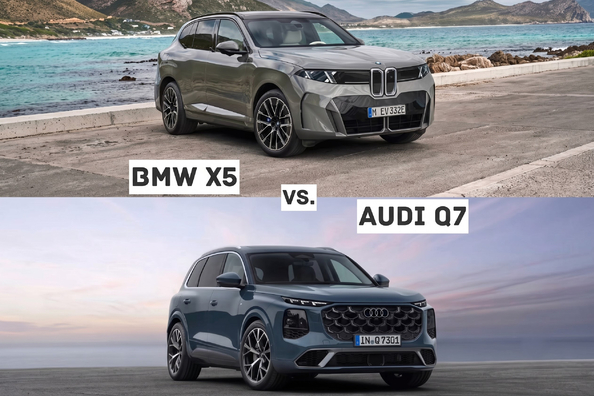
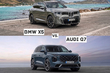
BMW X5 2027 and Audi Q7 2027 are two large premium SUVs aimed at different types of buyers. The BMW X5 focuses on a new generation, electrification, dynamics, and technology. The Audi Q7 is more focused on space, comfort, 6 or 7 seats, and classic SUV practicality.
In short: BMW X5 2027 looks stronger in terms of technology and powertrain choice, while Audi Q7 2027 wins on capacity, family practicality, and passenger comfort.
| Criteria | BMW X5 2027 | Audi Q7 2027 |
|---|---|---|
| Vehicle class | Premium midsize SUV | Large premium SUV |
| Main focus | Technology, dynamics, electrification | Space, comfort, family practicality |
| Number of seats | Mostly 5 seats | 5, 6, or 7 seats depending on market and trim |
| Powertrain types | Gasoline, mild-hybrid, plug-in hybrid, all-electric iX5 version | Gasoline, diesel, mild-hybrid, performance SQ7 version |
| Strongest advantage | Wider choice of drivetrains and modern technology | Spacious cabin and family-friendly convenience |
| Who it suits best | Those who want a modern, tech-focused SUV | Those who need a large, comfortable 6–7-seat SUV |
BMW X5 2027 is a new generation of the popular premium SUV. The vehicle gets a more modern design, an updated digital interior, a new electronic architecture, and a broader selection of powertrains.
The key feature of BMW X5 2027 is the arrival not only of gasoline and hybrid versions, but also the fully electric BMW iX5. This makes the X5 lineup far more flexible for different buyer types: from those who want a classic gasoline SUV to those already ready to switch to an EV.
| Version | Powertrain type | Key feature |
|---|---|---|
| BMW X5 40 | Gasoline engine | Base version for selected markets |
| BMW X5 40 xDrive | Gasoline mild-hybrid | All-wheel drive and a strong balance of performance and fuel economy |
| BMW X5 50e xDrive | Plug-in hybrid | Ability to drive on electric power in the city and use the gasoline engine on the highway |
| BMW iX5 60 xDrive | Fully electric version | The most tech-forward option in the lineup |
| BMW X5 M Performance | Gasoline V8 | Performance version for buyers who want maximum dynamics |
For the buyer, it means one thing: BMW X5 2027 can be tailored to different usage styles. For the city, the plug-in hybrid or the all-electric iX5 works well. For long trips, the gasoline X5 40 xDrive is a solid choice. For maximum excitement, the upcoming M Performance versions.
Audi Q7 2027 remains a large premium SUV whose main advantage is space, comfort, and practicality. It’s a vehicle for those who need more than just a crossover—a big family SUV capable of carrying 6 or 7 passengers.
Unlike the BMW X5, the Audi Q7 puts less emphasis on full electrification. Its strengths are classic gasoline and diesel engines, quattro all-wheel drive, a roomy cabin, and a high level of comfort.
| Version | Powertrain type | Key feature |
|---|---|---|
| Audi Q7 3.0 TDI | Diesel V6 mild-hybrid | Economical option for high-mileage driving |
| Audi Q7 TFSI V6 | Turbocharged gasoline V6 | Powerful gasoline version for selected markets |
| Audi SQ7 | Gasoline V8 twin-turbo | Performance version with maximum dynamics |
Audi Q7 2027 is better suited to those looking for a spacious, comfortable, and versatile premium SUV. This is especially relevant for families, drivers with long daily mileages, or those who often travel long distances.
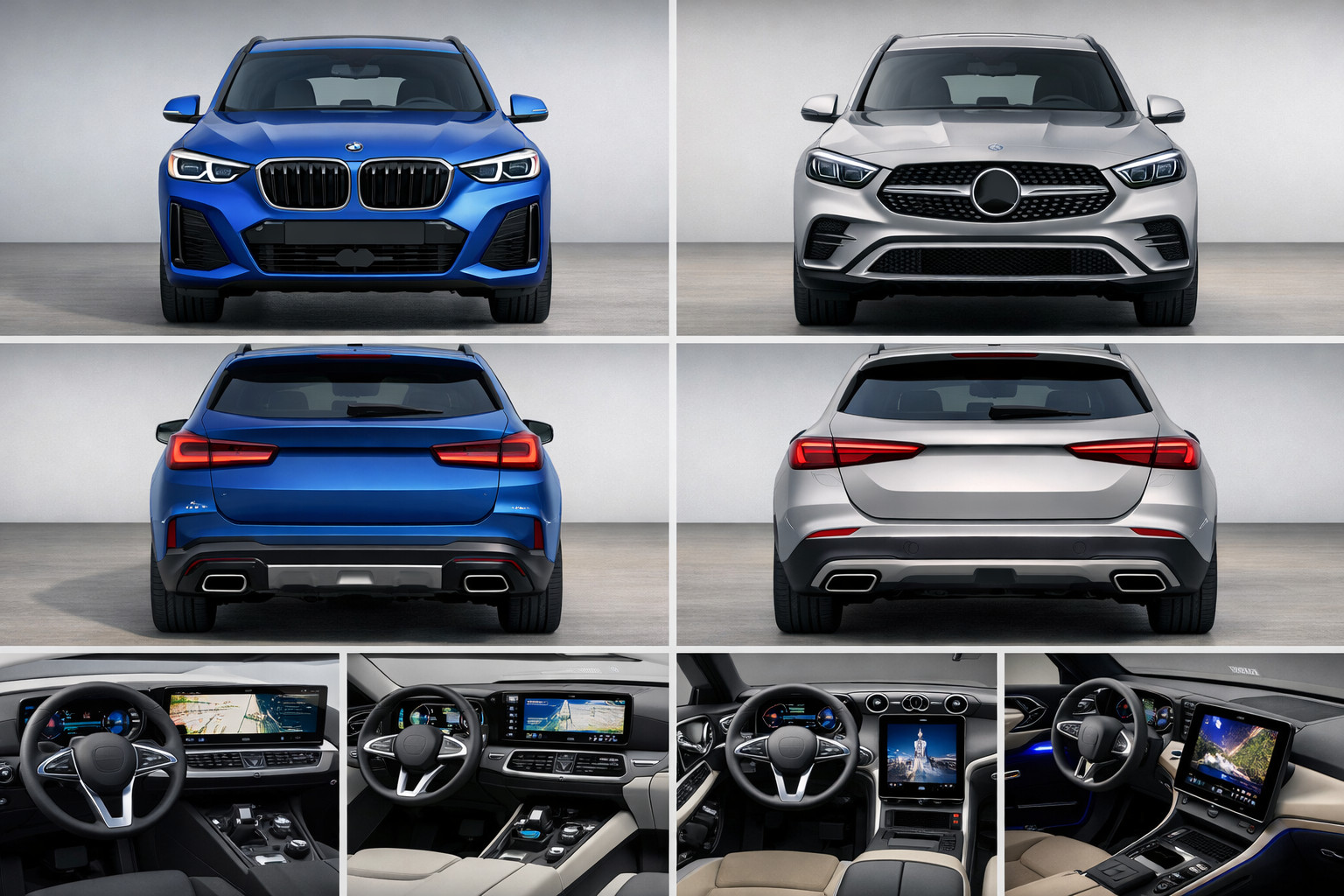
BMW X5 2027 gets a bolder, more modern design. The front end is more expressive, with new lighting graphics, a large kidney grille, and a more high-tech look. The all-electric iX5 stands out especially, with its own design elements.
Audi Q7 2027 looks more restrained but solid. Its design retains the classic image of a large premium SUV: a massive Singleframe grille, a wide front end, clean body lines, large wheels, and modern lighting.
If the buyer wants a more dynamic and high-tech image, the advantage goes to the BMW X5. If status, restraint, and a classic premium style matter more, the Audi Q7 looks stronger.
Inside the BMW X5 2027, the main emphasis is on digital technology. The vehicle gets a modern infotainment system, a digital instrument cluster, a new control logic, and premium trim materials. The driving position is more focused on active driving.
Audi Q7 2027 takes a different approach. Its interior is more oriented toward passengers, comfort, and practicality. The main advantage is the ability to have 6 or 7 seats, a large trunk, and convenient access for the whole family.
| Parameter | BMW X5 2027 | Audi Q7 2027 |
|---|---|---|
| Cabin orientation | Driver-focused | Passenger- and family-use focused |
| Practicality | High, but mostly in a 5-seat format | Very high thanks to the 6/7-seat configuration |
| Digital technology | A BMW strong point | An Audi strong point, but with more emphasis on comfort |
| Second-row comfort | High | Very high |
| Third row of seats | Not the model’s main advantage | One of the Q7’s key advantages |
BMW X5 2027 offers a wider choice of powertrains. The lineup includes gasoline versions, a plug-in hybrid, and the fully electric iX5. This is an important advantage for buyers who want a vehicle that accounts for future environmental regulations, urban restrictions, and fuel costs.
Audi Q7 2027 remains a more traditional option. Its engines are better suited to those who don’t want to depend on charging infrastructure, who often drive on highways, or who plan to use the vehicle as a large family SUV for long trips.
In terms of driving feel, the BMW X5 will be more driver-focused. The Audi Q7 is calmer, more comfortable, and more stable on long routes.
One of the biggest differences between BMW X5 2027 and Audi Q7 2027 is the level of electrification. BMW offers a plug-in hybrid and the fully electric iX5. This makes the X5 more versatile for today’s market.
The plug-in hybrid BMW X5 50e xDrive suits those who want to commute daily around the city on electric power, but not give up a gasoline engine for long trips. The fully electric BMW iX5 is aimed at buyers who are already ready to switch to an EV in the premium SUV segment.
Audi Q7 2027, for now, is more oriented toward traditional powertrains. That’s not a drawback for all buyers. For many, a diesel or gasoline Q7 will be more practical, especially if there’s no home charging or regular access to fast-charging stations.
For the city, BMW X5 2027 looks more convenient, especially in plug-in hybrid or all-electric form. It feels more compact, more dynamic, and more high-tech. If you can charge the car at home or at work, the X5 can be more cost-effective in daily use.
Audi Q7 2027 is better suited for a family. If you often need to carry kids, passengers, luggage, or use the third row, the Q7 has a clear advantage. It’s a vehicle that works better as a large family transporter.
| Use scenario | Best choice | Why |
|---|---|---|
| City and daily short trips | BMW X5 50e or BMW iX5 | Ability to drive on electric power |
| Large family | Audi Q7 | 6 or 7 seats and a bigger cabin |
| Long-distance trips | Audi Q7 or BMW X5 40 xDrive | Comfort, range, highway stability |
| Maximum technology | BMW X5 | All-electric iX5 version and new digital architecture |
| Sporty character | BMW X5 M Performance or Audi SQ7 | Powerful engines and sport tuning |
BMW X5 2027 is worth choosing if the buyer wants a modern premium SUV with a technology buffer for the next several years. It’s a good option for those who want dynamics, a new design, electrification, and more powertrain choices.
Audi Q7 2027 is better suited to buyers who need a large, comfortable, and practical SUV. It’s a strong choice for families, long trips, and those who want a classic premium vehicle without mandatory dependence on charging.
There’s no clear winner here, because these models solve different tasks. BMW X5 2027 is better suited to those who want a tech-focused SUV with an emphasis on the driver, dynamics, and electrification. Audi Q7 2027 is better suited to those who need a spacious family premium SUV with a large cabin and the option of 6 or 7 seats.
If your main criteria are new technology, an all-electric version, a plug-in hybrid, and a sporty drive, it’s worth looking at the BMW X5. If practicality, space, passenger comfort, and family versatility matter most, the Audi Q7 is the more logical choice.
BMW X5 2027 is the more modern and tech-forward choice. It offers a broader lineup, including a plug-in hybrid and the fully electric iX5. This is an SUV for those who want a next-generation vehicle with an emphasis on dynamics, digital technology, and future-ready ownership.
Audi Q7 2027 is the more practical, family-oriented choice. Its key advantages are a large cabin, 6 or 7 seats, comfort, quattro all-wheel drive, and a classic premium character.
In short: BMW X5 2027 wins on technology and powertrain choice, while Audi Q7 2027 wins on space, comfort, and family practicality.
| ✔ | The 2026 BMW X5 is a better fit for those who drive a lot on their own: it is quieter on the highway, more dynamic, and overall feels more composed. |
| ✔ | The X5 xDrive40i has enough power for daily driving and highway use, while avoiding the feeling that you are overpaying for more complex technology without any noticeable practical benefit. |
| ✔ | The Audi Q7 wins where real family or work practicality is needed: 7 seats, a longer body, and standard all-wheel drive make it more convenient for carrying people and luggage. |
| ✔ | The Q7 55 TFSI looks more sensible than the base version because it is better suited for highway driving, load carrying, and towing than the weaker 45 TFSI. |
| ✔ | If you have home or office charging, the BMW X5 xDrive50e can be very convenient for short daily routes thanks to its quiet electric mode. |
| ✘ | The BMW X5 is limited to five seats only, so it is less versatile for a large family or for trips where a third row is sometimes needed. |
| ✘ | The X5 is more expensive to own, and the plug-in hybrid xDrive50e loses its point without charging and becomes simply more complex and more expensive technology. |
| ✘ | The Audi Q7 in the base 45 TFSI version feels a bit weak for this class, especially when compared with the X5 xDrive40i. |
| ✘ | The third row in the Q7 is there, but it is cramped and does not replace a full family car for six to seven adults on a regular basis. |
Shipping to EU
Wholesale and retail
Own warehouse
Опис продукту
Подарунки не надаються при оформленні покупки у кредит під 0,01% або при покупці частинами.