18.07.2026
243
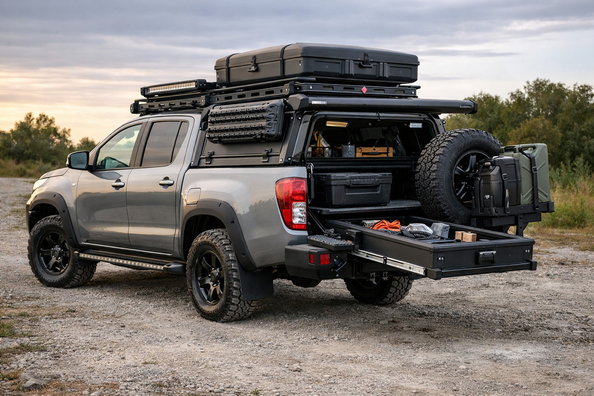
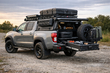
This upgrade package is for a pickup owner who uses the same vehicle to haul tools, shopping, household items, and occasionally family luggage. The goal isn’t to hang accessories all over the bed, but to make it withstand work, keep the cab from getting trashed with dirt, and avoid turning everyday trips into constant rearranging.
The logic is simple: first protect the bed and interior, then secure cargo safely, then add covered storage, and only after that focus on access convenience and comfort items. If the pickup has a short bed or you often carry tall loads, any heavy and tall solution needs extra scrutiny because it quickly eats into usable volume.
For a “work plus everyday” scenario, a pickup has to solve four tasks at once: prevent the bed from getting worn down by cargo, keep items from sliding around the platform, store part of the gear in a dry and enclosed place, and allow quick access to what you need without fully unloading.
The key is not to lose versatility. If the truck carries tools once a week, and on weekends large boxes, building materials, or a stroller, an overly tall box, a bulky drawer system, or the wrong cover can make the pickup less useful than it was from the factory.
Top priority is bed protection. If loads are frequent and harsh, it’s more practical to look at a spray-in liner or a well-fitted sectional bed protector. A drop-in plastic liner is cheaper, but it more often creates extra noise, traps water, and when poorly made works against the paint rather than for it.
Second step is proper tie-down points and straps. For a work pickup this isn’t a small thing: a few cases, a jerry can, or tools without securing quickly start hitting the bed and each other. If you carry small cargo every day, a tie-down system is more useful than an expensive cover installed earlier just for “order in the bed.”
A third early upgrade is often interior protection: rubber floor mats with high sides and seat covers. For those who get into the vehicle straight from a job site, this isn’t cosmetic—it’s how you avoid turning daily use into constant detailing.
| Upgrade | Why it’s needed | Who it really helps |
|---|---|---|
| Bed liner | Protects the floor and sides from abrasion, impacts, and moisture | Anyone who regularly hauls tools, boxes, bags, building materials |
| Rails, tie-down points, straps | Secures cargo and prevents it from sliding around the bed | Anyone hauling several small or medium items rather than one large load |
| Tonneau cover or bed lid | Protects items from rain, dust, and prying eyes | Those who leave gear in the bed between trips or often drive on the highway |
| Small tool box | Separates a constant work kit from the rest of the cargo | Tradespeople, service techs, anyone who carries the same items every day |
| Rubber mats and seat covers | Makes cleaning easier and reduces interior wear | Those who often get in wearing work clothes or mix work and family trips |
| Tailgate step or tailgate damper | Makes bed access easier and reduces impacts when opening | Those who climb into the bed many times a day |
DD Tuning expert comment: the most common mistake is buying a hard cover first, then realizing it doesn’t work well with tie-down rails or a tool box. The second typical miss is installing a large drawer system when in reality tall boxes or sheet material get hauled weekly. Before choosing, measure not the “rare maximum” load, but what you carry all the time.
Once the base is done, it makes sense to choose covered storage. If you often need full bed access and you don’t leave expensive tools overnight, a soft roll-up tonneau usually imposes the fewest limitations. If the truck sits outside, works in winter, and valuable gear is carried in the bed, it’s more logical to look at a hard roll-up option or another hard solution.
But any cover is a compromise. Hard tri-fold and retractable systems take away some bed length or height, and on a short bed that’s felt more strongly. For a work scenario, a small cross-bed box near the cab or using the side space is often better than a full drawer system that raises the floor and immediately cuts your ability to haul tall items.
Useful comfort items here include mats, seat covers, a tailgate damper and, if needed, a step for bed access. These are smaller expenses, but they genuinely make life easier when the truck works every day.
Appearance upgrades with partial utility include side steps, decorative bars, trim covers. Steps make sense if entry is truly high or kids or older people often ride along. But if ground clearance matters and you sometimes drive off pavement, steps can annoy more than they help.
Most often, money is wasted on things that look “serious” but don’t fit the scenario: an overly tall storage system, a heavy cover for rare overnight tool storage, decorative bars with no real purpose. In the end, the bed becomes less spacious, and the benefit added is minimal.
Another common overpayment is buying a cover hoping for noticeable fuel savings. For a work pickup, that’s a very questionable argument. It’s better to judge not the promises, but whether you need weather protection, basic security for your items, and compatibility with your cargo, rails, and box.
| Install first | Can be postponed | Not mandatory | Selection logic |
|---|---|---|---|
| Bed liner | Hard bed cover | Decorative bars | First you need to preserve the bed, not add weight and restrictions |
| Tie-down points and straps | Large box or drawer system | One-piece hinged cover for those who often haul oversized loads | Cargo safety matters more than complex organization |
| Rubber mats and covers if the interior is a work space | Tailgate step | Side steps if ground clearance matters | Daily dirt and interior wear accumulate faster than the inconvenience of lacking access accessories |
| A tonneau matched to your type of cargo | Expensive hard solutions | A tall drawer system for occasional tools | A cover only makes sense after confirming it doesn’t interfere with your real-world loads |
More expensive solutions are justified when the pickup truly earns money every day, stays outside overnight, or constantly carries tools that must be kept dry and organized. In that scenario, it makes sense to look not only at basic protection, but also at expedition boxes for separate gear, hard bed roller shutters as an example of a covered solution for a specific model, or canopies if you need essentially additional enclosed volume.
It’s important not to confuse “more expensive” with “better.” If you often haul tall boxes, sheet material, or irregular cargo, a heavy rigid solution can turn out worse than a simpler tonneau and a compact box. Compatibility between the cover, mounting points, and storage system should always be checked for the specific bed and model year.
From a customer’s experience: for service work, they needed a way to keep tools dry without losing the bed for large boxes. At first they wanted a tall drawer system and a hard cover, but after measuring they settled on bed protection, tie-downs, a small box, and a simpler cover. As a result, small tools stopped rolling around the bed, and space for bulky cargo remained.
For a pickup used for work and everyday tasks, what works best isn’t the most expensive kit, but the right order of upgrades: protect the bed and cab, secure the load, then add covered storage, and only after that add access accessories and exterior add-ons. That’s how you avoid overpaying for looks and don’t ruin the pickup’s main advantage—versatility.
This material is based on real selection experience, hands-on practice, and real usage scenarios: what people install first, what delivers tangible daily benefits, and what often turns out to be unnecessary. If you stick to this logic, the upgrade will be functional, not decorative.
| ✔ | First, it covers the basic issues: bed protection, load securing, and keeping the cabin clean. This is practical for a pickup that carries both work gear and everyday shopping every day. |
| ✔ | The approach with a focus on simple things helps preserve the bed’s versatility. For tall boxes, building materials, or oversized cargo, this matters because complex systems can take away useful space. |
| ✔ | There is a clear logic of step-by-step upgrades: first the liner and tie-downs, then a tonneau cover or hard cover, and only after that small convenience items. This makes it easier not to overpay for a solution that gets in the way of the real use case. |
| ✔ | The package takes into account everyday use after dirty work: rubber floor mats, seat covers, and a tailgate assist. This reduces the time and cost of cleaning and minor cabin wear. |
| ✔ | The material clearly explains when more expensive solutions are needed and when they will be unnecessary. This helps choose not the most solid-looking option, but the one that is compatible with the cargo and work mode. |
| ✘ | Rigid covers, large drawers, and tall storage systems can quickly eat into bed volume. For a short-bed pickup or frequent tall loads, this is a real limitation. |
| ✘ | The package does not offer one universal solution for everyone, because it depends heavily on what is hauled each week. Height, length, and free space have to be measured separately, otherwise it is easy to make the wrong purchase. |
| ✘ | Some useful items in this set do not solve the problem completely, but only make everyday life easier. For example, mats, covers, or a side step do not replace proper bed protection and cargo organization. |
| ✘ | There is a risk of buying accessories for their looks rather than for the task, and then they will only make working with the bed more complicated. This especially applies to decorative bars, side steps, and heavy covers without a real need. |
Shipping to EU
Wholesale and retail
Own warehouse
Опис продукту
Подарунки не надаються при оформленні покупки у кредит під 0,01% або при покупці частинами.