12.06.2026
204
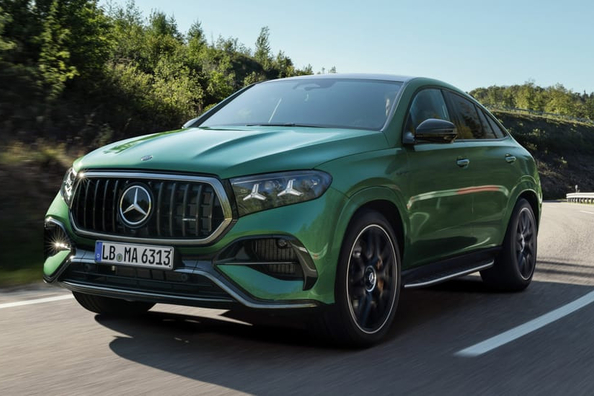

The updated Mercedes-AMG GLE 63 S and GLS 63 are not just big, fast crossovers, but two different answers to the same question: how much practicality you can combine with a V8. The GLE is closer to the role of a daily family vehicle with very serious performance, while the GLS is already a full-size flagship for long trips, a third row, and regular hauling of heavy loads.
After the update, both models retained the 4.0-liter twin-turbo V8, the 9-speed AMG SPEEDSHIFT TCT 9G automatic transmission, and AMG Performance 4MATIC+ all-wheel drive. In the global specification this means 612 hp and 850 N·m, but in some markets you may see 603 hp; it’s best viewed as a market-spec or measurement-method difference rather than a different engine.
The GLE 63 S and GLS 63 sit above the regular GLE and GLS not only in power, but also in chassis tuning, brakes, and overall character. In format, the GLE is closer to fast premium crossovers like the BMW X5 M: it’s large, but still not excessive in the city. The GLS 63 is a heavy full-size vehicle that plays in the same field as the BMW Alpina XB7 and Cadillac Escalade-V.
Who the GLE suits: a driver who needs one car for every day, but won’t give up a V8, a big trunk, and a very quick launch. Who the GLS suits: a family that genuinely uses the third row, travels far, and can take advantage of towing up to 3493 kg. Who neither model suits: anyone looking for efficiency, compact size, or low running costs.
The focus of this news is not new generations, but updated current AMG versions. For the GLE this is the W167 body, present in the lineup since 2018; for the GLS it’s the X167, current since 2019. So we’re talking about heavily revised existing models, not a full platform change.
Historically, the GLE continues the line of large Mercedes-Benz crossovers previously known as the M-Class, while the GLS is the successor to the large three-row GL and early GLS models. So choosing between them is not about how new they are, but about format: a big fast five-seater or a full-size seven-seat flagship.
In both cases, the hardware is built around the same power package: a 4.0-liter twin-turbo V8, electrified assistance, a 9-speed automatic, and AMG Performance 4MATIC+ all-wheel drive. In the global AMG spec, output is 450 kW, i.e. 612 hp, and 850 N·m. On US pages you can see 603 hp with the same 850 N·m, so keep that in mind when comparing catalogs.
The difference between the models is felt not in the engine itself, but in weight and purpose. The GLE 63 S accelerates to 100 km/h in 3.9 s and feels sharper. The GLS 63 does the same in 4.2 s, but carries a much larger body, a third row, and more usable space.
| Parameter | Mercedes-AMG GLE 63 S | Mercedes-AMG GLS 63 |
|---|---|---|
| Engine | 4.0 l twin-turbo V8 | 4.0 l twin-turbo V8 |
| Power | 612 hp globally, 603 hp in some markets | 612 hp globally, 603 hp in some markets |
| Torque | 850 N·m | 850 N·m |
| Transmission | 9-speed automatic | 9-speed automatic |
| Drive | AMG Performance 4MATIC+ all-wheel drive | AMG Performance 4MATIC+ all-wheel drive |
| 0–100 km/h | 3.9 s | 4.2 s |
| Fuel consumption WLTP | 13.6–13.2 l/100 km | 13.7–13.4 l/100 km |
The GLE is noticeably shorter and lighter: 4953 mm long, 2995 mm wheelbase, curb weight 2525 kg. The GLS is already 5243 mm long, 3134 mm wheelbase, and curb weight 2775 kg. On paper the difference looks like just numbers, but in the city and in parking garages you feel it immediately.
Both models are seriously prepared in terms of suspension. The GLE uses AMG ACTIVE RIDE CONTROL with active roll stabilization and adaptive damping. The GLS features AMG RIDE CONTROL+ air suspension together with ACTIVE RIDE CONTROL; for rough roads the body can be raised by another 20 mm. This isn’t hardcore off-road hardware, but the comfort and stability reserves are very high.
| Specification | GLE 63 S | GLS 63 |
|---|---|---|
| Length | 4953 mm | 5243 mm |
| Wheelbase | 2995 mm | 3134 mm |
| Width without mirrors | 2017 mm | 2030 mm |
| Height | 1783 mm | 1783 mm |
| Ground clearance | 191 mm | about 201 mm for the GLS family, plus a 20 mm body lift |
| Trunk | 943–2121 l | 493–2398 l |
| Number of seats | 5 | 7, optionally 6 |
| Towing | up to 3493 kg | up to 3493 kg |
| Fuel tank | 85 l | 90 l |
The strong point of both AMGs is not only acceleration, but also the fact that they don’t wear you out on a long trip. The GLE offers a quiet cabin, rich equipment, and enough space for a family without the feeling that you’re driving an overly large vehicle. The GLS is more logical where the second and third rows are needed regularly, not occasionally.
Practical nuances are worth knowing in advance, too. For the GLE, owners note not the most user-friendly steering-wheel buttons and a tight third row, if you need it at all. For both models, it’s important to check the status of any recall campaigns related to passive safety components if you’re looking at a specific vehicle on the market.
In daily driving, the main difference between the GLE and GLS isn’t the acceleration numbers, but how often you enter underground parking, whether you carry family on the third row, and whether you need extra interior space. The GLE is easier to live with in the city: it’s shorter, more maneuverable, and already has a very large trunk in five-seat configuration. The GLS is more comfortable on the highway and roomier for passengers, but demands more space everywhere.
Fuel consumption here should be taken without self-deception. Even the official figures are high, and in real city driving the GLS can easily go well beyond 15 l/100 km. Add expensive large-diameter tires, big brakes, and costly options, and it becomes clear these vehicles are bought for their format and capabilities, not for savings.
| Strengths | Weaknesses | What it means for the owner |
|---|---|---|
| 4.0 V8 and 850 N·m | High fuel consumption | The vehicle accelerates easily and tows a trailer, but frequent refueling will be the norm |
| 4MATIC+ all-wheel drive and active chassis | Expensive tire and brake upkeep | High-speed stability comes with costly consumables |
| GLE is convenient as a daily car | The third row in the GLE isn’t for постоян use | If you need five seats and a big trunk, the GLE makes more sense; for a large family, the GLS is better |
| GLS is genuinely spacious and suitable for long trips | Large dimensions make parking and maneuvers harder | It’s very comfortable on the highway, but in the city you’ll have to get used to the size |
| Wide factory personalization options | The final price rises quickly due to options | You can build the car to your needs, but the budget can easily become very high |
If you simplify it to one takeaway, the GLE 63 S is a fast large crossover for those who want a balance between performance and everyday convenience, while the GLS 63 is for those who want the same V8 but with a full-size cabin and fewer capacity compromises.
Tuning for these models makes sense when it solves a specific task. For the GLE, that often means protecting the interior and trunk, because the car frequently serves as family transport with suitcases, kids’ items, or sports gear. For the GLS, it’s more important to make entry easier, protect the body from dirt, and add convenience on long trips.
It’s better to start not with decorative parts, but with items that actually work every day: floor mats, side steps, cargo solutions, mud flaps. Grilles, diffusers, or carbon trim make sense only after basic day-to-day needs are covered.
The updated Mercedes-AMG GLE 63 S and GLS 63 stick to the old logic: a big gasoline V8, a fast automatic transmission, all-wheel drive, and a very high torque reserve. The GLE looks like the smarter choice for those who drive daily and want one versatile vehicle, while the GLS opens up best where you need three rows, long routes, and maximum capacity.
The key is not to confuse the V8 emotion with ownership practicality: these are expensive, heavy, and thirsty vehicles, but that’s exactly the set of capabilities people choose them for. The material is based on real selection experience, practice, and real-world usage scenarios, so the main question here is simple: do you need a fast large crossover, or do you truly need a full-size AMG.
| ✔ | Both models retain the 4.0-liter twin-turbo V8, 9-speed automatic transmission and AMG Performance 4MATIC+ all-wheel drive, so they offer a very high reserve of power and confident acceleration. The GLE 63 S accelerates from 0 to 100 km/h in 3.9 s, while the GLS 63 does it in 4.2 s. |
| ✔ | The GLE 63 S feels more suitable as a daily car: it is shorter and lighter than the GLS, so it is easier to handle in the city and in parking lots. At the same time, it already has a large trunk in the five-seat configuration. |
| ✔ | The GLS 63 is better suited for a large family and long trips, as it offers 7 seats, 6 seats as an option, and more space in the cabin. It also has a higher towing capacity — up to 3493 kg. |
| ✔ | Both models have seriously upgraded suspension: active roll stabilization, adaptive damping, and the GLS also has air suspension with the ability to raise the body by 20 mm. This improves comfort and stability on the highway and rough roads. |
| ✔ | The interior and equipment are focused not only on dynamics, but also on long trips: the article mentions a quiet cabin, rich equipment, and no fatigue on the road. For such large fast crossovers, this is an important practical advantage. |
| ✘ | Fuel consumption is high even according to official figures, and in the city the GLS can easily exceed 15 l/100 km. This makes everyday use an expensive pleasure. |
| ✘ | The large dimensions, especially of the GLS, make parking and maneuvering more difficult, and the difference is immediately felt in underground parking lots. In the city, it is less convenient than the GLE. |
| ✘ | Maintaining both models is not cheap: expensive large-diameter tires, large brakes, and options quickly raise the total cost of ownership. These are not cars for those who count every expense. |
| ✘ | In the GLE, the third row, if needed, is not suitable for regular use, and some controls are described as not the most convenient. So for a large family, it already has compromises. |
Shipping to EU
Wholesale and retail
Own warehouse
Опис продукту
Подарунки не надаються при оформленні покупки у кредит під 0,01% або при покупці частинами.