06.08.2026
129
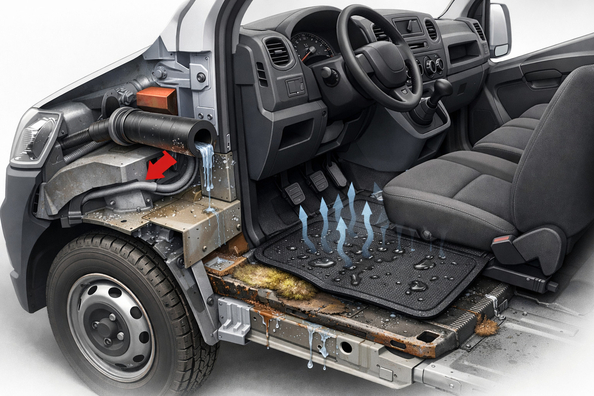
If the mats in a Renault Master are wet after almost every trip, the issue is usually not the mats themselves. More often, three things overlap: water gets into the cabin through a specific body area, the interior doesn’t release moisture well because of the ventilation mode, and the mat material or the underlay beneath it holds water for a long time.
That’s why the right order of actions is simple: first, separate a leak from accumulated condensation and tracked-in moisture, then dry not only the top of the mat but also what’s underneath it. And only after that does it make sense to decide whether you need to replace the mats or individual sealing elements.
The Master has a large cabin, frequent door openings, and a work pattern with short drives and stops. In winter or rain, water is constantly brought in on shoes, and if the vehicle is used with damp cargo, the overall humidity in the cabin is even higher. In these conditions, even normal mats don’t have time to release moisture between runs.
The second reason is that often it’s not only the mat that gets wet. If water gets under it, the underlay and the floor sound insulation become soaked, and they take much longer to dry. That’s why it feels like the mats “don’t dry at all,” even though the source of the problem may be below.
DD Tuning expert comment: the most common mistake is to wipe the top of the mat and assume the issue is solved. If moisture has already gone underneath, it will come back the next morning even without new rain. The second typical mistake is replacing mats before checking the drains and the sliding door area—although that’s where the root cause often is.
| Symptom | Likely cause | What to do |
|---|---|---|
| Wet near the sill or the lower sliding door rail after rain | Leak through the rail, fasteners, or seal | Check this area locally with water, inspect seals and mounting points, fix the leak |
| Damp under the mat after parking in the rain | Drains under the windshield aren’t draining water | Clean the drains, check water runoff, then fully dry the underlay |
| The top of the mat is wet after every workday, but there are no signs of leaks | Wet shoes, snow, dirt, frequent in-and-out | Remove water daily, take the mat out to dry, switch to a material that doesn’t absorb moisture |
| Windows constantly fog up, heavy humid air in the cabin | Recirculation, weak ventilation, A/C is hardly used | Switch to outside air, increase fan speed, turn on the A/C periodically |
| The problem gets much worse in winter or when transporting damp cargo | Seasonal moisture overload in the cabin | Increase ventilation, don’t leave damp cargo for long, dry the floor deeper—not just the surface |
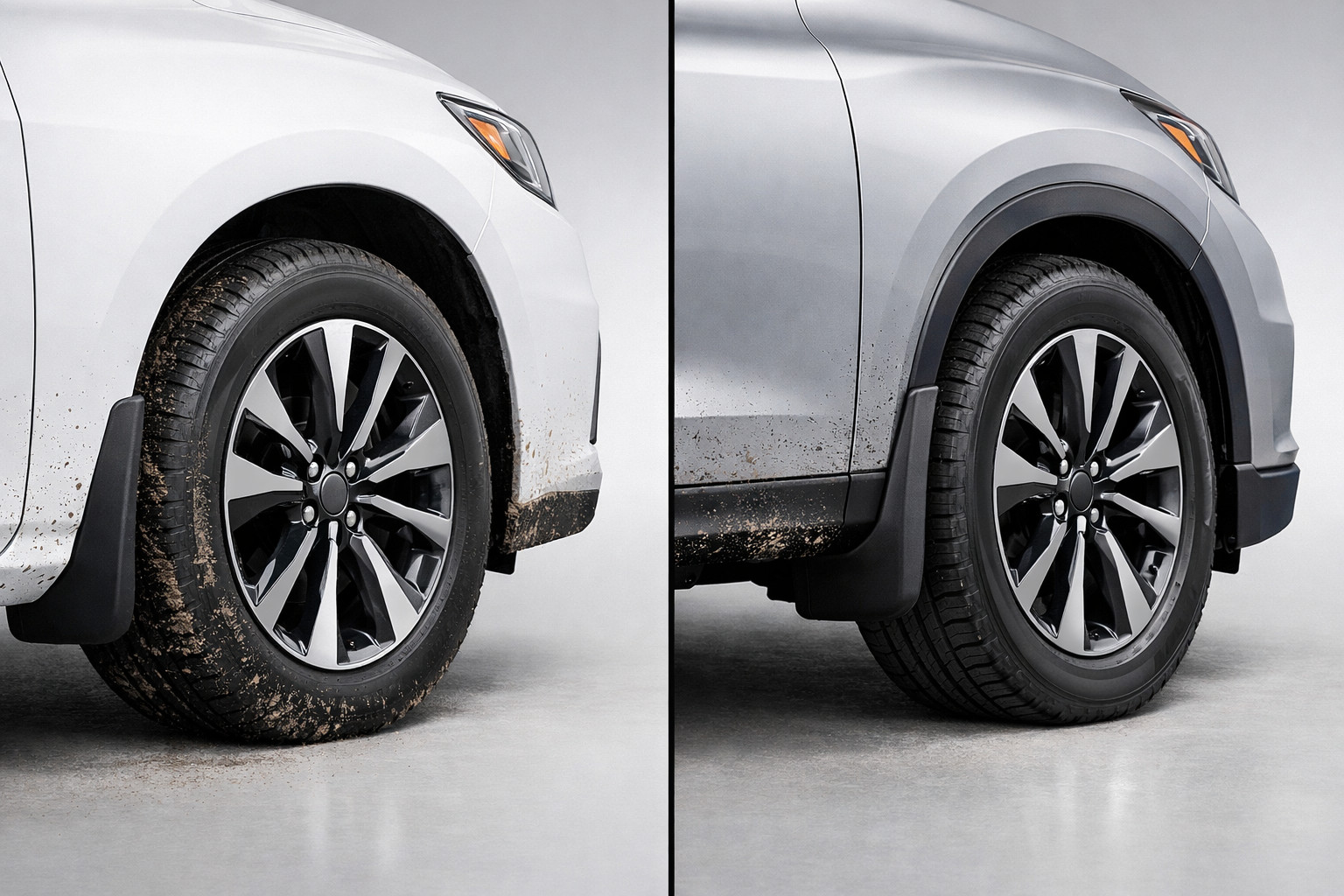
Accessories make sense when the water source has already been found, or when you clearly understand that the main load comes from wet shoes and the work pattern. For daily use with frequent dirt and snow, EVA mats or rubber mats are more practical: they’re easier to shake out, rinse, and put back into service faster.
If the vehicle is generally dry and moisture appears only occasionally, you can stick with textile mats, but in the wet season they lose in drying speed. And when localization points to a leak near the doors or the area under the windshield, it’s more logical to spend money not on a new set of mats but on drains, seals, or repairing the problem area.
| Solution | When it works | When it’s not worth spending money |
|---|---|---|
| Cleaning the drains under the windshield | When water appears after rain or a car wash, especially after parking | When moisture appears only from snow on shoes with no signs of leakage |
| Checking and repairing the sliding door area | When it’s wet near the sill, rail, or door opening | When dampness is uniform throughout the cabin and looks more like condensation |
| Fully drying the underlay under the mat | When the floor is already soaked and a damp smell lasts for several days | When only the top is wet and you fixed the issue immediately, not letting water go down |
| Switching to outside air and using the A/C regularly | When the windows constantly fog up and the cabin dries slowly | When there’s an active body leak—ventilation won’t stop a constant inflow of water |
| Replacing textile mats with EVA or rubber ones | When the main problem is daily water and dirt, not a leak | When water is coming from under the doors or through the drains |
| Moisture absorbers | As temporary help in the shoulder season after the cause is fixed | As the main solution for a real leak or a wet underlay |
From a customer’s experience: a Master owner complained that new mats “don’t dry” already on the second day after a run. During inspection it turned out there wasn’t much water on top, but moisture stayed under the mat after rain. After cleaning the drains, drying the floor, and switching to a non-pile option, daily cleaning became faster and dampness stopped building up.
In a Renault Master, mats most often don’t have time to dry not because of “bad material,” but because of a combination of leaks, weak cabin dehumidification, and constantly tracked-in moisture. First you need to understand where the water is coming from, then dry everything under the mat, and only after that choose a different type of covering or replace seals.
In short: if there’s a leak, repair the problem area; if it’s condensation, ventilation and the A/C help; if it’s daily dirt, a more practical mat type helps. This material is based on real selection experience, hands-on practice, and real usage scenarios—not the theory of “swap the mat and it will go away.”
Shipping to EU
Wholesale and retail
Own warehouse
Опис продукту
Подарунки не надаються при оформленні покупки у кредит під 0,01% або при покупці частинами.