24.08.2026
104
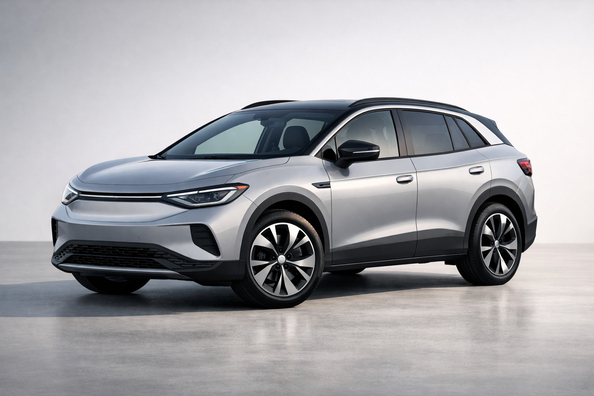
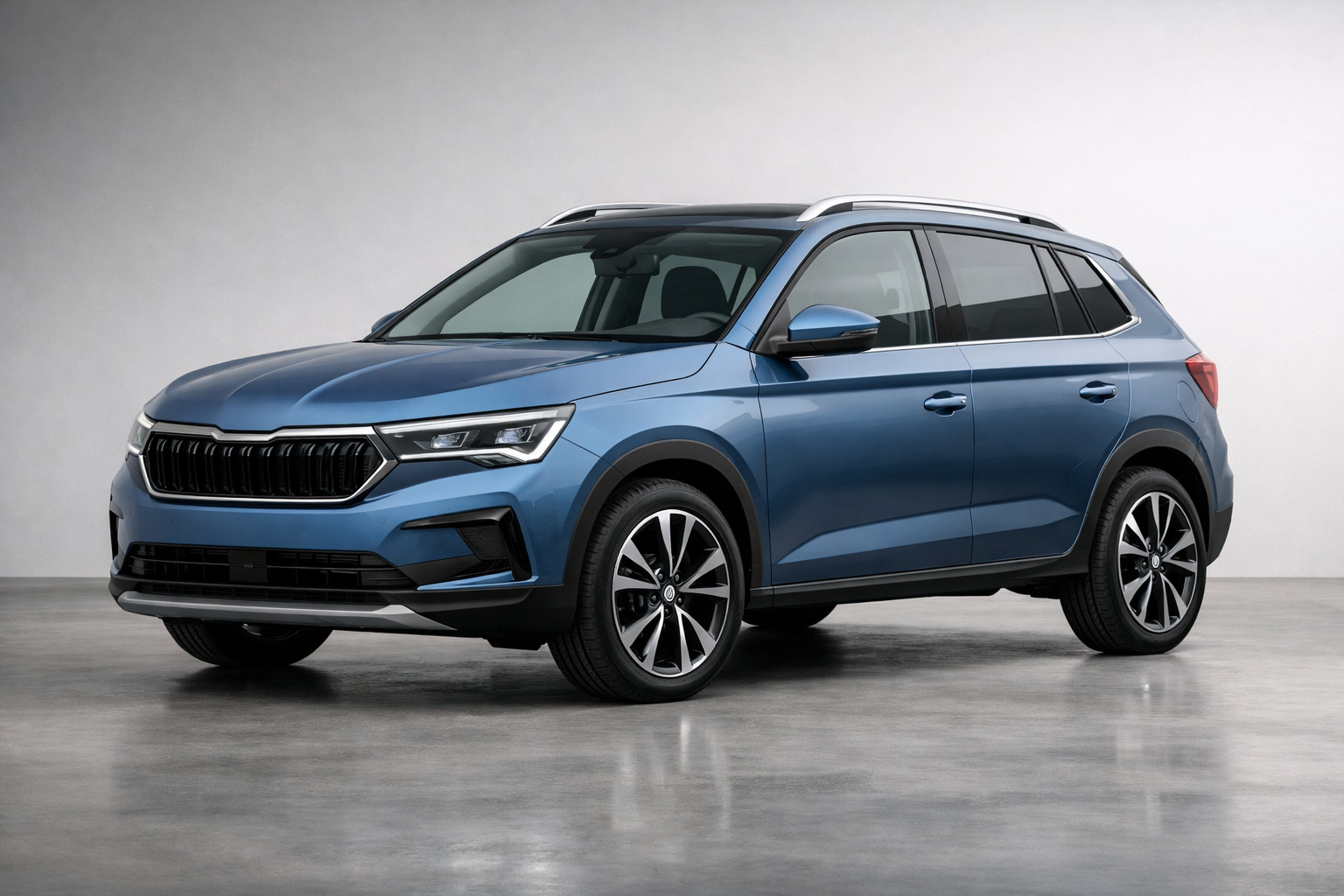
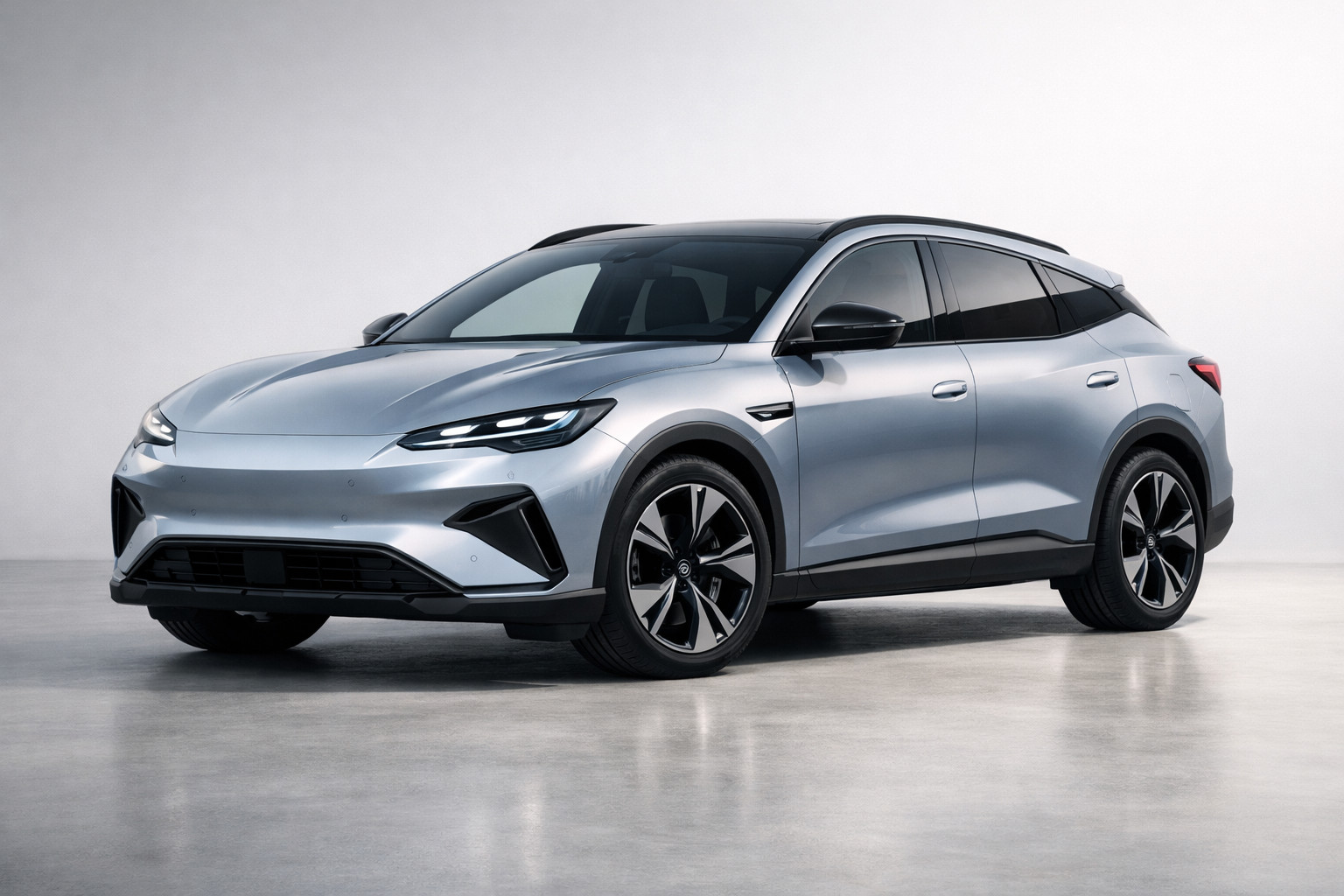
Volkswagen ID. Cross is a new compact electric crossover built on the MEB+ platform, entering the mass market with a very aggressive starting price from €27 995. Essentially, it’s an electric alternative to the T-Cross format: front-wheel drive, a single front e-motor, 37 or 52 kWh batteries, and a claimed range of up to 427 km WLTP.
For city use and a family daily routine, the concept looks strong: a proper trunk, fast charging, easy-to-manage dimensions, and the return of physical buttons. But it’s worth honestly factoring in the model’s limits as well: there’s no all-wheel drive, ground clearance is moderate, and long-term reliability stats and real owner feedback have not yet been formed.
ID. Cross sits in a very important niche for Volkswagen: it’s not an expensive showcase EV, but a compact SUV for a wide range of buyers. Its main rivals are other urban electric crossovers such as Renault 4 E-Tech, Jeep Avenger, Mini Aceman, Ford Puma Gen-E, and Škoda Epiq. The focus here isn’t on records, but on the balance of price, equipment, space, and energy consumption.
In terms of positioning, the model suits those who want to switch from a gasoline compact crossover to electric power without moving into a more expensive class. It won’t suit those for whom all-wheel drive, higher ground clearance, or a time-proven ownership record is critical.
At the start of sales, ID. Cross effectively has just one, first generation. The pre-production concept was shown in 2025, and the world premiere of the production version took place on July 15, 2026. Pre-orders in Germany opened the same day, with a full European market launch planned for autumn 2026.
That means this is a completely fresh model with no facelifts, no used-market history, and no accumulated database of typical failures. Some official figures may still be уточнюватися depending on the final market specification, so at launch it’s worth checking the exact spec sheet of the specific version.
In the case of ID. Cross, talking about engine displacement is incorrect: it’s an EV, so there’s no classic gasoline or diesel engine here. The lineup lists the front APP290 e-motor with a maximum torque of 290 N·m, front-wheel drive, and a single-speed transmission. Three power levels are stated: 85 kW, 99 kW, and 155 kW.
There are two battery options: 37 kWh with LFP chemistry and 52 kWh with NMC chemistry. An important nuance: official materials list the set of motors and batteries across the model range, but the specific motor-to-battery pairings may depend on the market and trim level.
| Parameter | What’s stated |
|---|---|
| Drive type | Front |
| Electric motor | APP290, 290 N·m |
| Power | 85, 99, or 155 kW |
| Transmission | Single-speed |
| Battery | 37 kWh or 52 kWh |
| WLTP range | Up to 316 km or up to 427 km depending on the battery |
| AC charging | Up to 11 kW |
| DC charging | Up to 90 kW or up to 105 kW |
| Fast charging 10–80% | About 23–24 minutes |
In terms of size, ID. Cross is closer to a convenient urban crossover than a large family SUV. A length of 4 153 mm and a 2 601 mm wheelbase promise city maneuverability, and the 475 l trunk looks like a genuinely strong argument for the class. There’s also a 25 l front compartment, and with the second row folded the volume grows to 1 340 l.
The chassis is classic for the segment: MacPherson up front and a torsion beam at the rear. A 140 mm ground clearance means it’s a car for asphalt, yards, curbs, and light dirt-road outings, but not for rough ruts. Towing is stated at up to 1 200 kg on an 8% grade, and the roof load is up to 75 kg. For curb weight there are discrepancies between different official briefs, so it’s best to verify the final figure for the specific trim.
| Specification | Value |
|---|---|
| Length | 4 153 mm |
| Width | 1 794 mm |
| Height | 1 581 mm |
| Wheelbase | 2 601 mm |
| Ground clearance | 140 mm |
| Trunk | 475 l |
| Maximum trunk volume | 1 340 l |
| Front compartment | 25 l |
| Roof load | 75 kg |
| Towing | Up to 1 200 kg |
Inside, Volkswagen clearly tried to fix what some early ID. models were criticized for. There’s a 10.25-inch digital cluster, a 12.9-inch central screen, physical buttons, and separate climate controls. That’s good news for anyone who doesn’t want to dig through menus for basic functions every time.
Equipment looks strong too: dual-zone climate control, keyless entry, front massage seats, optional Harman Kardon audio. The trim logic is straightforward: Trend already includes DC fast charging, Life adds adaptive cruise control and a rear-view camera, and Style brings matrix headlights and richer lighting equipment. Nuances: early tests noted noticeable wind noise at speed, and for taller passengers the second row may be less than ideal due to the high floor.
In daily life, ID. Cross looks most convincing in two scenarios. The first is city/suburb use with regular home or office charging—here even the smaller battery makes sense. The second is a mixed family routine with occasional highway trips, where it’s better to look straight at the 52 kWh. Fast charging from 10–80% in roughly 23–24 minutes seems sufficient for normal travel without long stops.
A separate plus is practical details for active use: a power supply function for external devices up to 3.6 kW, a proper trunk, the ability to carry items on the roof, and to tow a small trailer. But expectations should be realistic: winter range will be lower, front-wheel drive won’t replace all-wheel drive on slippery surfaces, and long-term reliability remains an open question for now.
| Strengths | Weaknesses |
|---|---|
| Strong starting price for the segment | No long-term reliability record yet |
| Practical 475 l trunk and good cargo space | Front-wheel drive only |
| Fast charging and a useful set for active use | 140 mm ground clearance limits off-asphalt capability |
| Return of physical buttons and clearer ergonomics | Notes about wind noise and second-row space |
From an owner’s perspective, the main advantage of ID. Cross is that it doesn’t demand a big compromise between everyday practicality and the electric format. The main downside is that the model still lacks a time-tested reputation, meaning early buyers will need to watch real winter range, build quality, and the behavior of the electronics in the details.
For ID. Cross, the smartest route is practical rather than decorative tuning. The car sits a bit low for a crossover, is aimed at daily city driving and family trips, so first and foremost floor mats, trunk protection, and mud flaps make sense. They genuinely reduce interior wear, make cleaning easier, and help reduce sandblasting on the sills and lower door sections.
Because the model is new, a dedicated ID. Cross catalog may still be expanding, so as a practical reference it’s worth looking at accessories for the similar-format Volkswagen T-Cross. This doesn’t mean automatic compatibility, but it gives a good idea of which categories will be most useful from day one.
There’s less benefit in heavy exterior decor here. Large trims, bulky body kits, or unnecessary aerodynamic parts on an electric crossover of this class more often hurt efficiency than deliver a tangible everyday advantage.
Volkswagen ID. Cross looks like a very well-aimed bet in the mass electric-crossover class: sensible dimensions, a good trunk, fast charging, solid ergonomics, and a price point many will genuinely start their comparisons from. If you need a city or family EV without off-road ambitions, the model is worth considering right at the start of sales.
But you should buy it without rose-tinted glasses: look at the exact trim, battery, real charging conditions, and your own route. This material is based on real selection experience, practice, and real-world scenarios with similar-format models, but for ID. Cross itself, final conclusions about reliability and small day-to-day нюанси will only appear after the first full seasons on the road.
| ✔ | A starting price of €27,995 makes the ID. Cross one of the more affordable entries in the compact electric crossover segment. This matters for those who want to switch to electric driving without paying extra for a larger class. |
| ✔ | A 475-l trunk and a 25-liter front compartment provide a good level of practicality for daily use and family trips. With the second row folded, capacity increases to 1,340 l. |
| ✔ | Fast charging at up to 90–105 kW and replenishing from 10–80% in about 23–24 minutes look convenient for trips without long stops. For city and mixed driving, this reduces dependence on lengthy recharging. |
| ✔ | The cabin brings back physical buttons and separate climate controls, making everyday use easier. This is more practical than fully touch-based controls, especially while driving. |
| ✔ | It offers useful everyday equipment: dual-zone climate control, keyless entry, massaging front seats, as well as the ability to power external devices up to 3.6 kW. This increases the car’s versatility without complex modifications. |
| ✘ | Only front-wheel drive limits capability on slippery surfaces and in more challenging road conditions. For those who need confidence in winter or on poor roads, this is a noticeable drawback. |
| ✘ | A ground clearance of 140 mm makes the model suitable mainly for asphalt, yards, and light dirt roads. For more serious bumps or rough tracks, there is already not much margin. |
| ✘ | The model is new, so there is still no long-term data on reliability, winter operation, or real owner feedback. Early buyers will have to rely almost entirely on official specifications and short tests. |
| ✘ | Early tests noted wind noise at speed, and the second row may not be ideal for taller passengers because of the high floor. This reduces comfort on long trips and for rear passengers. |
Shipping to EU
Wholesale and retail
Own warehouse
Опис продукту
Подарунки не надаються при оформленні покупки у кредит під 0,01% або при покупці частинами.