16.06.2026
230
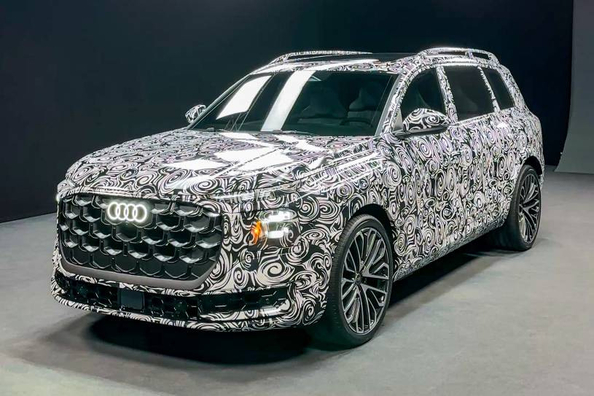
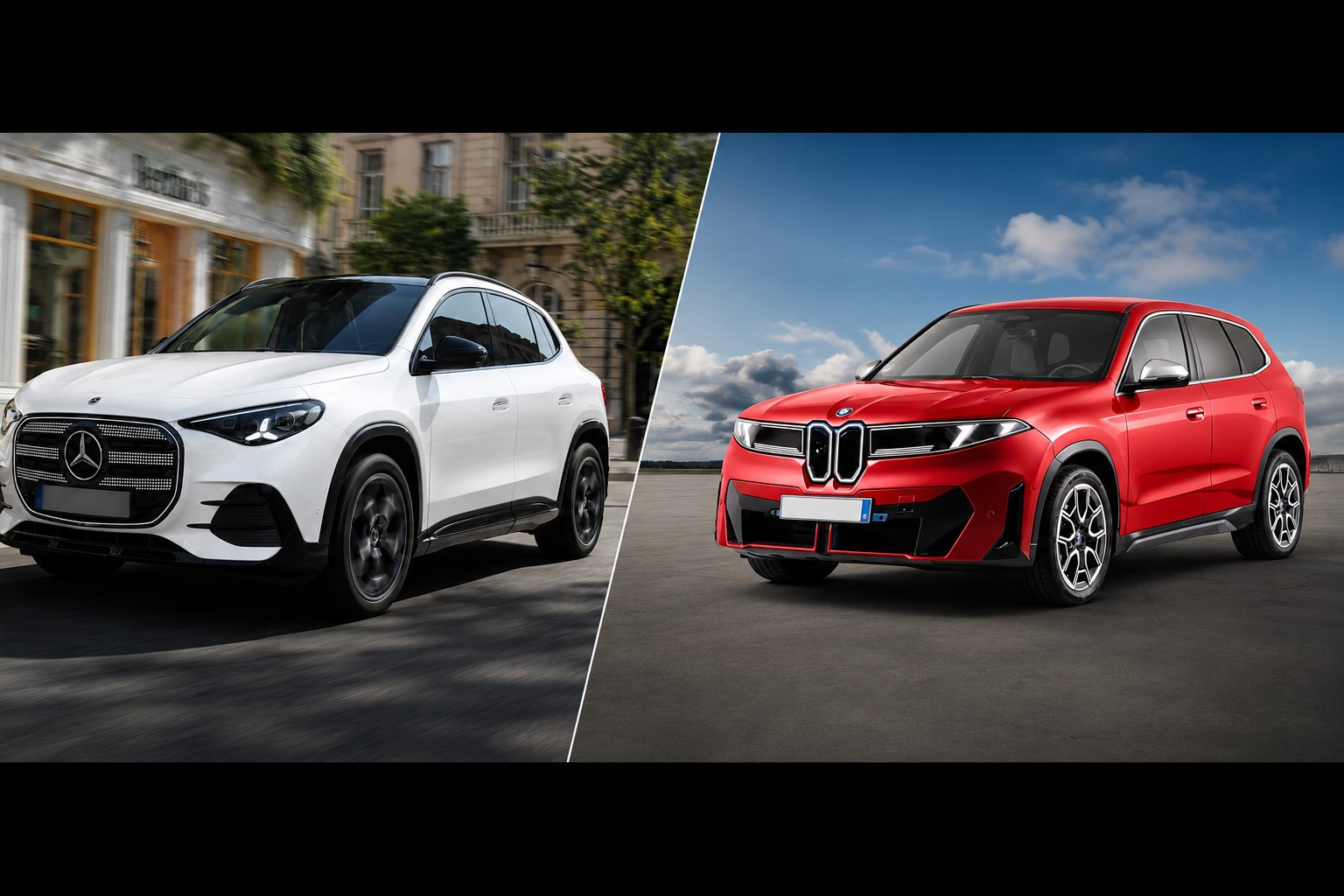
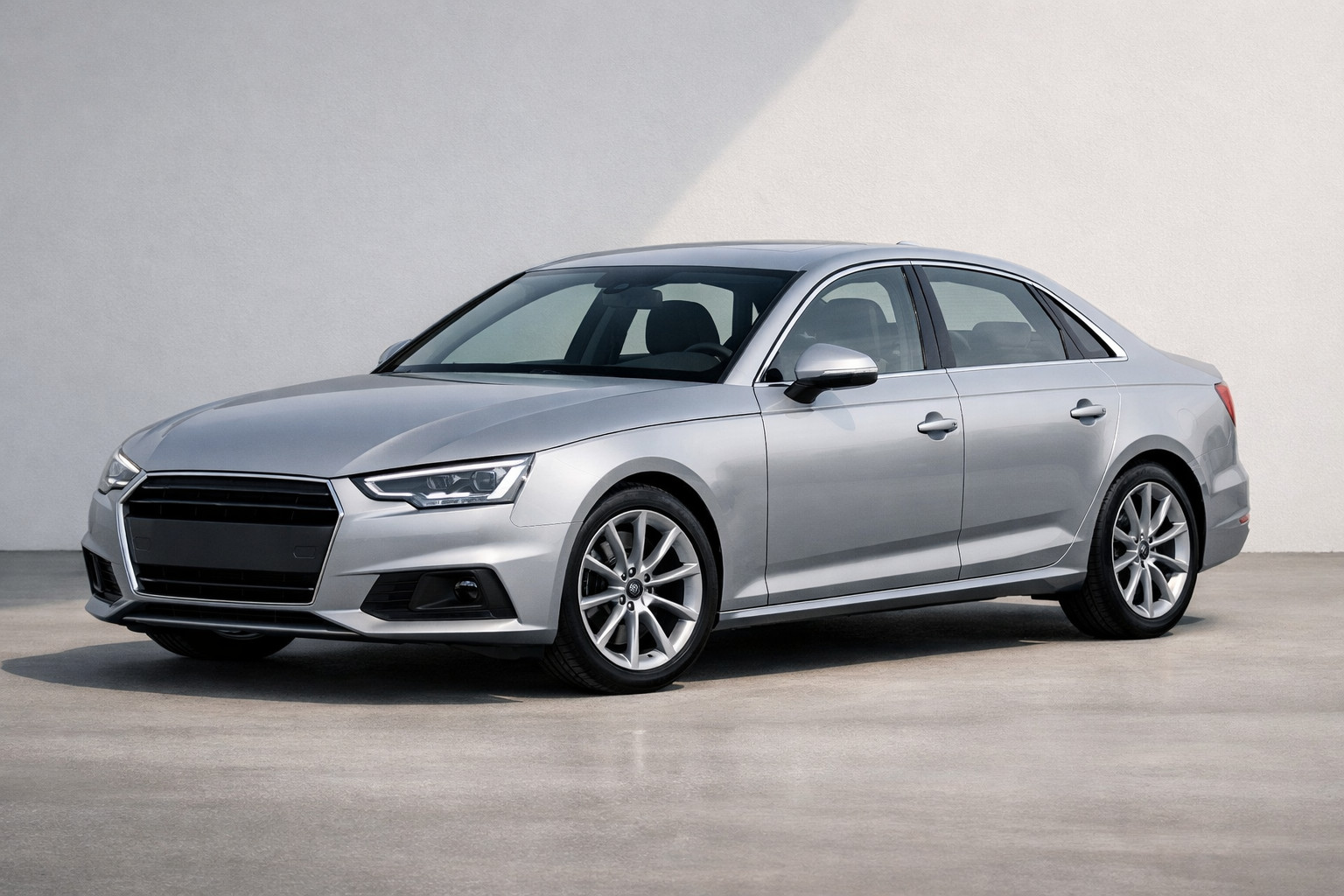
Audi is officially bringing the Q9 to its debut: on May 12, 2026 in Ingolstadt, the brand showed the first interior teaser and confirmed a global premiere in summer 2026. The newcomer is being prepared as a flagship full-size SUV with a focus on North America—i.e., the segment long dominated by the BMW X7 and Mercedes-Benz GLS.
For those who follow large premium crossovers, Audi Q9 matters not just as another model in the lineup. It’s Audi’s attempt to enter a class where buyers expect not merely an expensive cabin, but genuine second- and third-row space, high comfort on long trips, and uncompromising flagship status.
Audi hasn’t revealed everything yet, but the baseline picture is already there. The Q9 will become the new вершина of the brand’s SUV lineup, and the main emphasis in the first official presentation is not on power or platform, but on space, rear-passenger convenience, and premium cabin features.
| Parameter | What’s already confirmed | What hasn’t been revealed yet | Why it matters |
|---|---|---|---|
| Model status | Global premiere scheduled for summer 2026 | Exact debut date and sales launch by region | Gives a sense of timing, but doesn’t answer when the vehicle will actually appear in markets |
| Positioning | New flagship full-size Audi SUV with a focus on North America | Price positioning and full market strategy | This is where the Q9 must compete with the X7 and GLS, not with mid-size premium crossovers |
| Cabin and seating | Up to 7 seats, emphasis on second-row comfort | Actual third-row space, cargo volume, cabin reconfiguration | For families and long trips, these are key criteria—more important than the mere fact of having seven seats |
| Equipment | Power-operated doors, two Qi2.2 pads, USB-C up to 100 W, 4D audio system | What will be standard and what will be optional | In the premium segment, the gap between base and well-equipped trims is often decisive |
| Roof and cabin ambience | Large panoramic roof with variable transparency | Noise insulation level, heat comfort in hot weather, service complexity | A striking option only makes sense if it doesn’t create extra costs and discomfort |
| Technical side | There is still no official data on engines, platform, performance, or fuel consumption | The full powertrain lineup, drive types, acceleration and range figures | These figures will determine whether the Q9 can truly challenge today’s segment leaders |
Audi also mentions new interior materials, an aluminum rail system in the trunk, and a crossbar included with the standard roof rails. These are “small things” only on paper: for a large SUV, such details are often more important than decorative options, because they show whether the model is conceived as a genuinely family-and-touring flagship—not just a big status crossover.
For Audi, the Q9 fills a long-standing gap. The brand has had large and expensive SUVs, but not a dedicated model that directly enters the niche of full-size three-row flagships aimed primarily at the U.S. market. That’s why in March 2026 the brand’s leadership said plainly that the Q9 should strengthen Audi’s position in the U.S. and become the top of the portfolio.
For buyers, this also means a shift in roles within Audi’s own lineup. After the Q9 arrives, the Q7 will be seen even more clearly as a large family SUV rather than the main status-bearer in the segment. This fits well into the discussion about the future of the Audi Q7: with a new flagship, Audi gains more freedom to separate practicality, image, and price across different models.
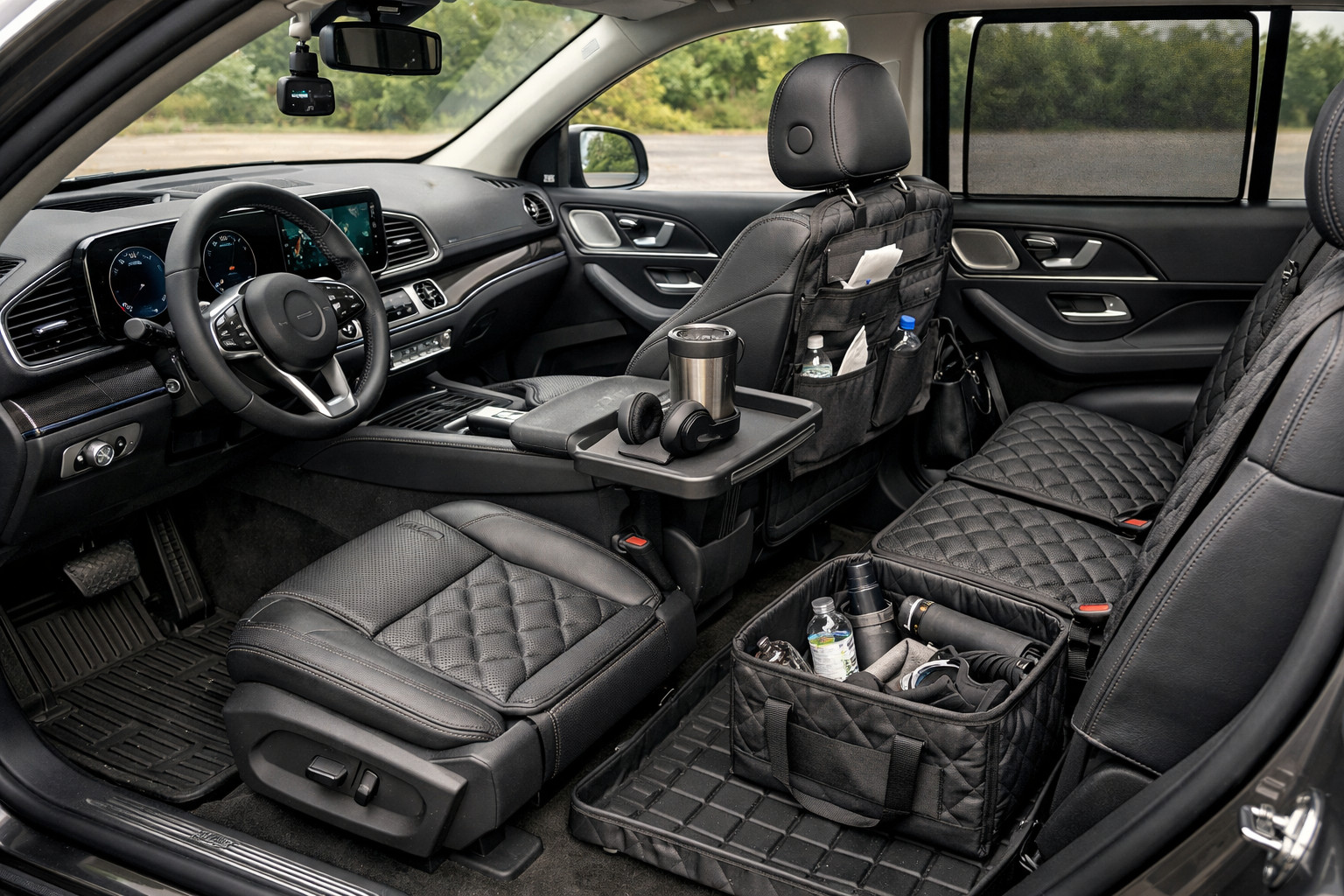
The product approach itself matters, too. The first interior teaser shows Audi is betting on rear-passenger comfort no less than on digital screens or a sporty image. This is no longer just a big vehicle for the driver, but a format for family use, business travel, and a market where the second row is often no less important than the front seats.
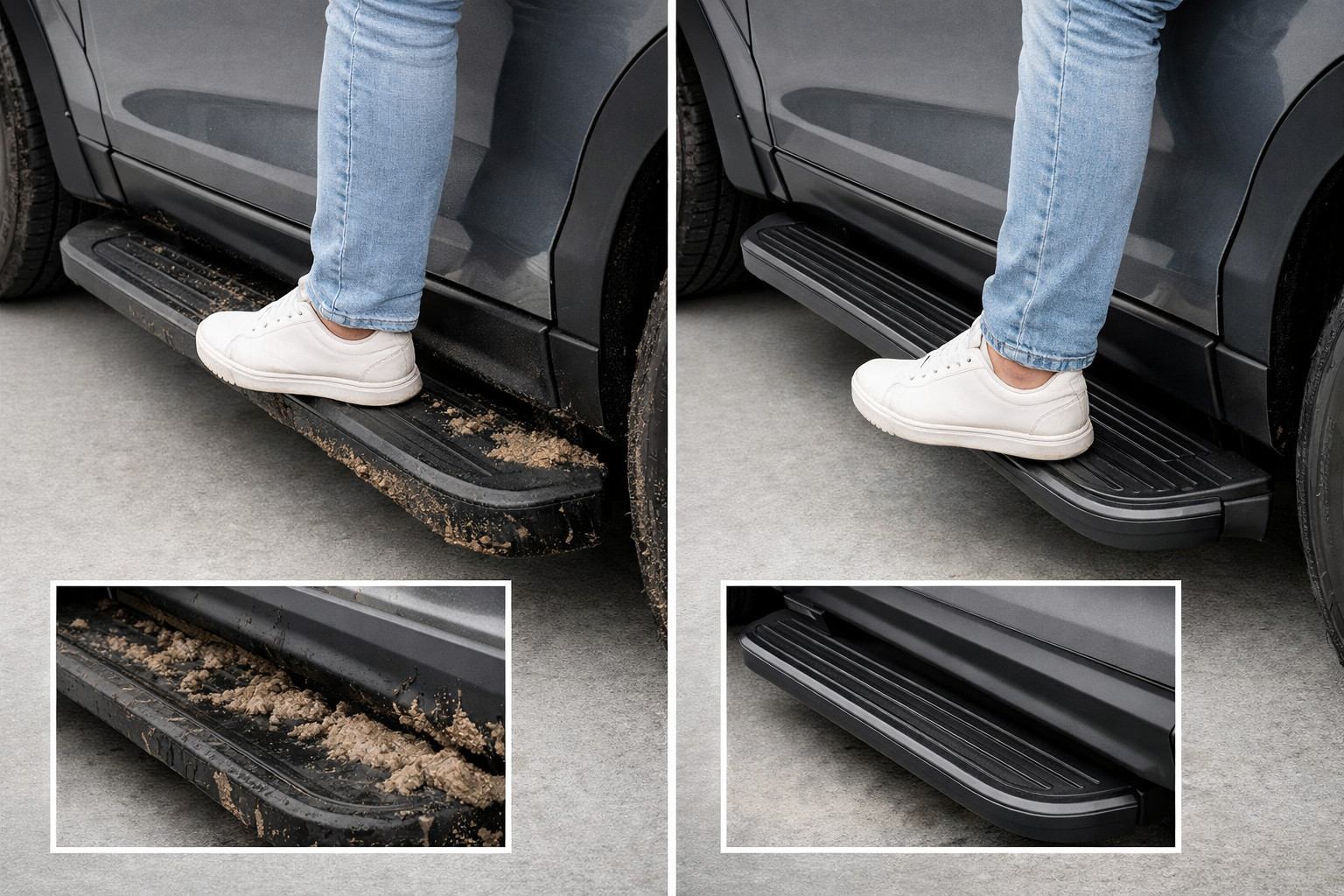
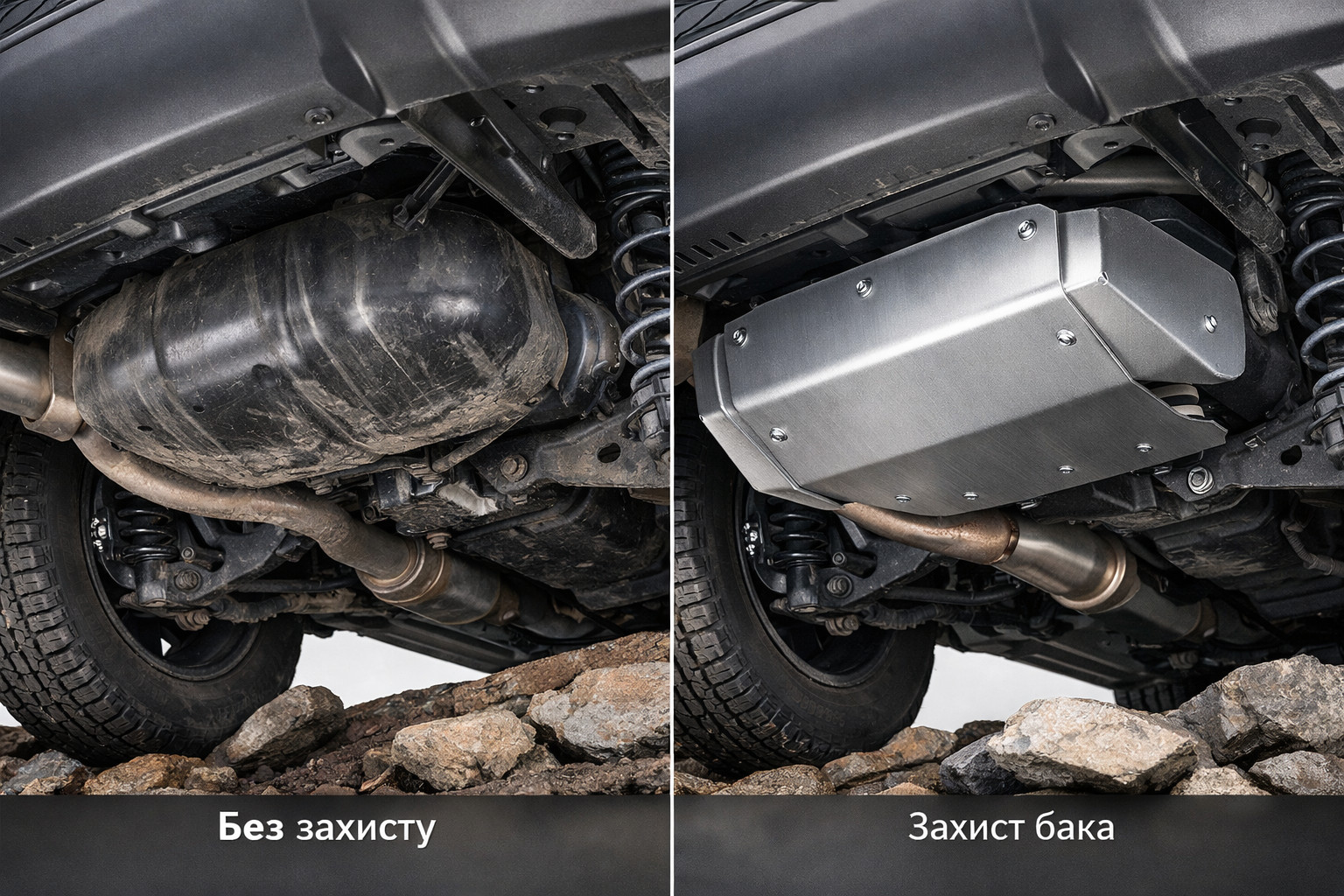
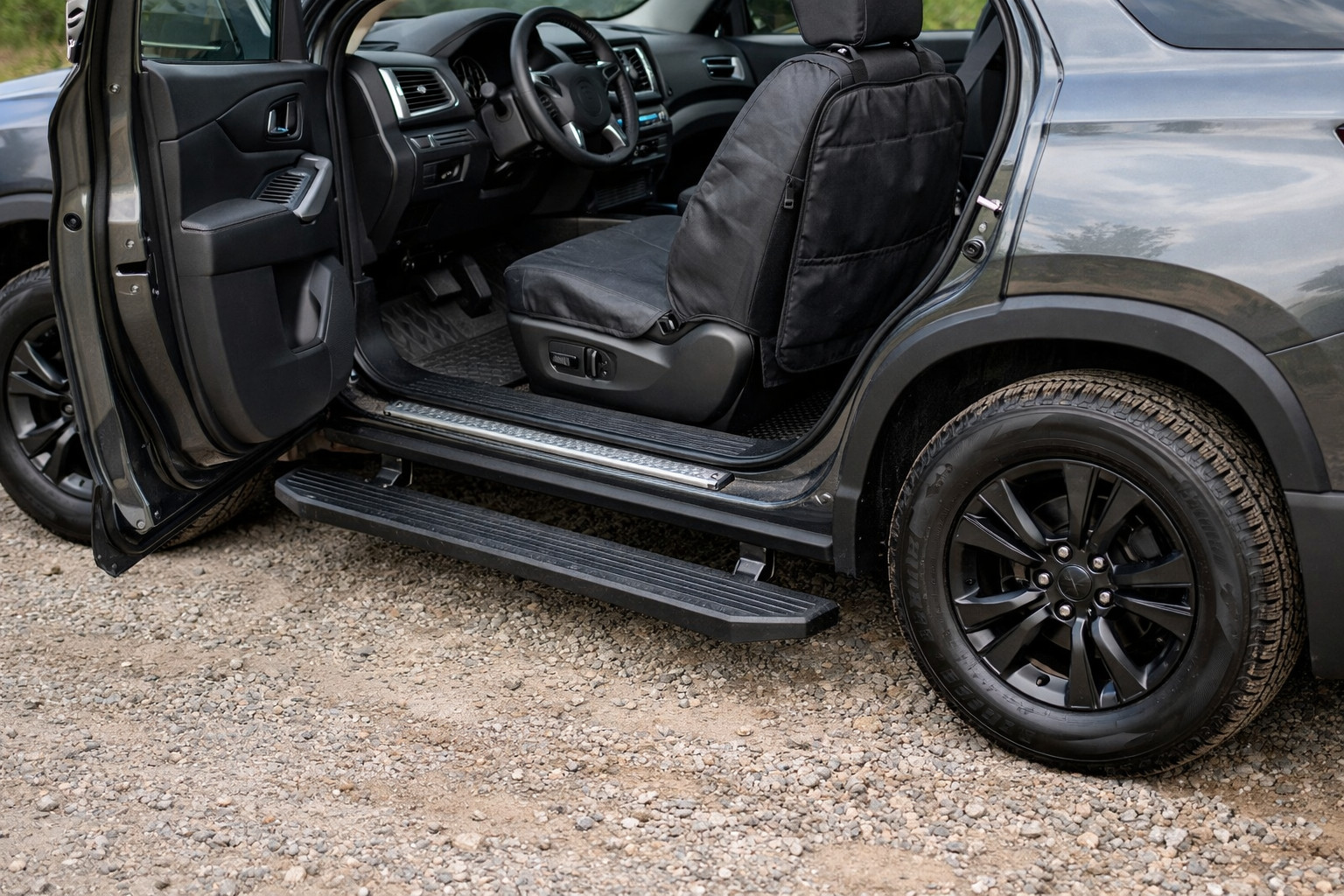
For the Ukrainian market, the news is interesting not only in theory. If the Q9 truly becomes a strong standalone player in the class, it will affect import structure and demand for accessories, wheels, protection, side steps, lighting, and other solutions for large SUVs—especially given the model’s stated market focus on North America.
| Parameter | Audi Q9 | BMW X7 | Mercedes-Benz GLS | What it means for the market |
|---|---|---|---|---|
| Lineup status | New flagship full-size SUV | Established flagship of BMW’s large SUVs | Established flagship of Mercedes-Benz large SUVs | Audi is entering not an empty niche, but an already formed class with strong standards |
| Length | Not disclosed | 5 171 mm | 5 207 mm | This size range is now considered the norm for a full-size premium SUV |
| Wheelbase | Not disclosed | 3 104 mm | 3 134 mm | These numbers are directly tied to real second- and third-row space |
| Passenger capacity | Up to 7 seats | 7 seats | 7 seats, 6 optional | Formally the Q9 already meets the class, but we need to see the real interior geometry |
| Power of reference versions | Not disclosed | 375 hp, 540 N·m | 375 hp, 500 N·m | The market will expect Audi to deliver not only comfort but also convincing base performance |
| 0–100 km/h | Not disclosed | 5.6 s | 5.8 s | In this class, it’s not sportiness per se, but torque reserve under load and at highway speeds that matters |
| Trunk | Not disclosed | Up to 2 560 l | 493–2 398 l | This is often where it’s decided whether the vehicle suits a big family, not just short city trips |
| Key comfort focus | Power doors, Qi2.2, USB-C up to 100 W, 4D audio, variable-transparency roof | Strong balance of space, power, and established reputation | Maximum status, comfort, and traditional luxury in the segment | Audi is betting on a flagship feel from the inside even before revealing the hardware |
For drivers, it means something simple: if the Q9 hits the mark, competitors won’t be able to ignore another strong product in the class. For the import market, this could potentially open up a new stream of U.S.-spec trims in the coming years, although Audi has not yet named the exact regions for the sales start. For service shops and tuning businesses focused on large SUVs, it’s also a signal: demand is shifting toward second-row comfort, more complex electronics, larger glass areas, and heavier wheel setups.
The biggest mistake right now is judging the Q9 only by its eye-catching interior. Until there is official data on the platform, engines, weight, real dimensions, third row, and trunk, it’s too early to conclude it has a clear advantage over the X7 or GLS. In this segment, a beautiful teaser doesn’t replace a spec sheet.
If Audi doesn’t reveal full technical specifications immediately after the debut, it won’t be a surprise. But it’s those specs—not the interior design—that will decide the Q9’s fate in the fight against two long-established rivals.
| Strength | Limitation | Possible risk for the buyer or market |
|---|---|---|
| Up to 7 seats and a clear emphasis on rear-passenger comfort | No official data on actual third-row space and trunk | In practice, the cabin may be less versatile than expected of a full-size SUV |
| Rich initial equipment: power doors, Qi2.2, USB-C up to 100 W, 4D audio | Unknown what will be standard in different countries and trims | The most interesting features may end up only in expensive versions |
| A clear entry into a new, higher segment of large SUVs for Audi | Price, powertrains, and hardware are still undisclosed | Without convincing mechanicals, even a strong cabin won’t outperform the X7 and GLS |
| Focus on North America, where the class of large three-row SUVs is consistently strong | Outside the U.S. and Canada, the launch strategy is still unclear | In other markets, the model may arrive later or in more limited form |
| Strong informational impact for the brand | There are already rumors about the platform, engines, and ultra-luxury versions, but without official confirmation | Part of market expectations may become inflated even before the production car is presented |
The key limitation is simple: right now the Q9 looks very convincing as a product concept, but not yet as a fully readable technical package. That’s why any talk about engines, a possible top version, or pricing should be separated from what Audi has officially confirmed.
The Audi Q9 already looks like one of Audi’s most important premieres in recent years: the brand is officially entering the class of large flagship SUVs, where the rules have long been set by the BMW X7 and Mercedes-Benz GLS. For now, the strongest signal is the interior, comfort, and passenger-oriented focus—not technical records.
Practically, three things are worth remembering: the premiere is set for summer 2026, the model is aimed primarily at North America, and the final assessment of the Q9 will depend on what Audi reveals about engines, dimensions, and real capacity. These details will determine whether the Q9 becomes a true new benchmark in the class—or just a beautiful and expensive announcement.
| ✔ | Audi has officially confirmed the debut of the Audi Q9 in 2026 and its entry into the full-size flagship SUV class, where the model will be clearly positioned against the BMW X7 and Mercedes-Benz GLS. This gives the newcomer a clear role in the lineup and on the market. |
| ✔ | The cabin is already said to offer up to 7 seats with an emphasis on second-row comfort. For family trips and long journeys, this is a more practical focus than just a large body size. |
| ✔ | The standard equipment looks genuinely useful in everyday use: power-operated doors, two Qi2.2 wireless chargers, USB-C up to 100 W, and a 4D audio system. These are not cosmetic options, but features that really make ownership easier. |
| ✔ | Audi separately highlights practical everyday details such as an aluminum rail system in the trunk and a crossbar. For a large SUV, this suggests a family-and-travel format rather than just a status image. |
| ✔ | The focus on North America seems logical, because that is where the large three-row SUV segment has long been established and demand for such models remains stable. This gives the Q9 a clear market target. |
| ✘ | So far, Audi has not disclosed the technical details: there is no data on engines, platform, performance, or fuel consumption. Without this, it is difficult to assess whether the Q9 will really be able to compete with the X7 and GLS. |
| ✘ | The actual dimensions, third-row space, and trunk volume are unknown. Formal 7-seat layout does not yet guarantee comfort for passengers and a large family in everyday use. |
| ✘ | It is unclear what exactly will be included in the standard equipment and what will remain in expensive trims or packages. In the premium segment, this can significantly change the final price and perception of the model. |
| ✘ | So far, the announced U.S. focus leaves open the question of when and in what form the Q9 will appear in other markets. For buyers outside the U.S., this means a possible delay or a limited choice of versions. |
Shipping to EU
Wholesale and retail
Own warehouse
Опис продукту
Подарунки не надаються при оформленні покупки у кредит під 0,01% або при покупці частинами.