28.07.2026
219
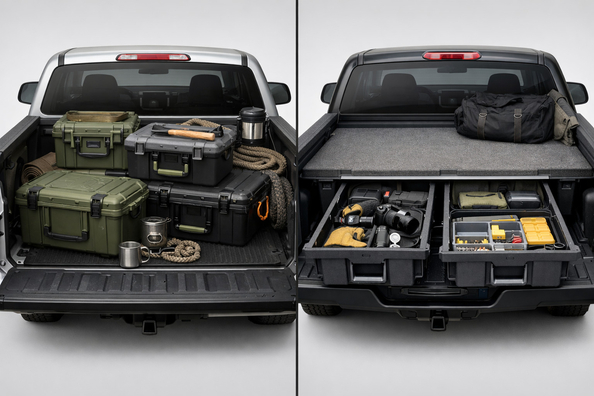
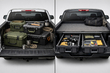
If it matters to you to quickly grab small tools and camping gear, and keep everything dry and sorted in its place, a drawer system usually wins. If the main thing is not to lose bed depth, spend less, and easily carry long or bulky items, it’s more practical to go with a box.
The confusion starts with the names: an “expedition box” may refer to a cross-bed box, a side box, a floor module, or even a full drawer platform. That’s why you shouldn’t look at the name, but at how you use the bed every day: what you haul, how often you open it, whether you have a canopy, tonneau cover, rails, and how critical noise, weight, and installation are.
Essentially, it’s a choice between organization and bed versatility. Drawers give quick rear access, good order for small items, and better control over your gear. But they take up the entire bed floor, raise it by about 31 cm, and are heavy on their own.
A box works differently: it’s simpler, lighter, and cheaper, and it doesn’t take away all the bed height and length. As a reference, a drawer system can weigh around 80–106 kg, while a low-profile aluminum cross-bed box is about 20 kg. That’s why for hauling long items, bags, a generator, or building materials, a box often makes more sense.
| Option | Strengths | Weaknesses | Best for |
|---|---|---|---|
| Drawer system | Fast access to small gear, tidy organization, drier storage, high load capacity of the top deck | High price, heavy weight, raises the bed floor, loss of depth, access only from the tailgate | Expeditions, camping, service call-outs, mobile workshop |
| Cross-bed box | Affordable, lighter, easier to install, doesn’t take up the entire bed floor | Worse access to small items, may interfere with rear visibility, compatibility limits with canopies and rails | Work, mixed trips, regular transport of bulky cargo |
| Side or floor box | Convenient side access, can be combined with other gear, partially preserves the bed’s working area | Harder to choose a layout, eats into interior space, not always convenient for long items | Those who need exterior access and a more flexible storage setup |
DD Tuning expert comment: most often people make two mistakes: they measure only bed length and forget about tonneau covers, rails, bed shape, and other add-ons; or they choose drawers just for the sake of order, even though they haul long and tall items every week. Before buying, it’s worth honestly writing down what’s in your bed every day and what’s there once a month. After that list, it usually becomes obvious whether you need permanent organization or a simpler box will be enough.
This is the most convenient format if you carry lots of small tools, straps, fasteners, a kitchen kit, first aid, electrical gear, a compressor, and other equipment you don’t want to reshuffle before every trip. Everything has its place, access is from the rear, and there’s still a platform on top for cargo.
The compromise is also harsh: the system is heavy, expensive, and takes away bed height. In addition, you need clearance behind the truck to open it, and with the tailgate closed, getting anything out is nearly impossible. If your bed often hauls sheet goods, a ladder, pipes, or tall cases, drawers can start to annoy you within a week.
This is the most practical option for those who use the vehicle for work but don’t want to turn the bed into a permanent organizer. A good box is lighter, cheaper, and doesn’t block the entire floor. Low-profile versions affect rear visibility less, and the bed remains suitable for normal cargo.
The downside is that small items have to be stacked in layers or split into separate bins inside. If you don’t plan internal organization, you won’t get quick access—you’ll end up digging through the contents by hand.
This is an in-between format for those who need exterior access or want to combine it with other equipment. These solutions give more freedom in layout, but they strongly depend on the specific bed, sides, canopy, and how exactly you load the truck. They should be seen not as a universal option, but as a targeted solution for your scenario.
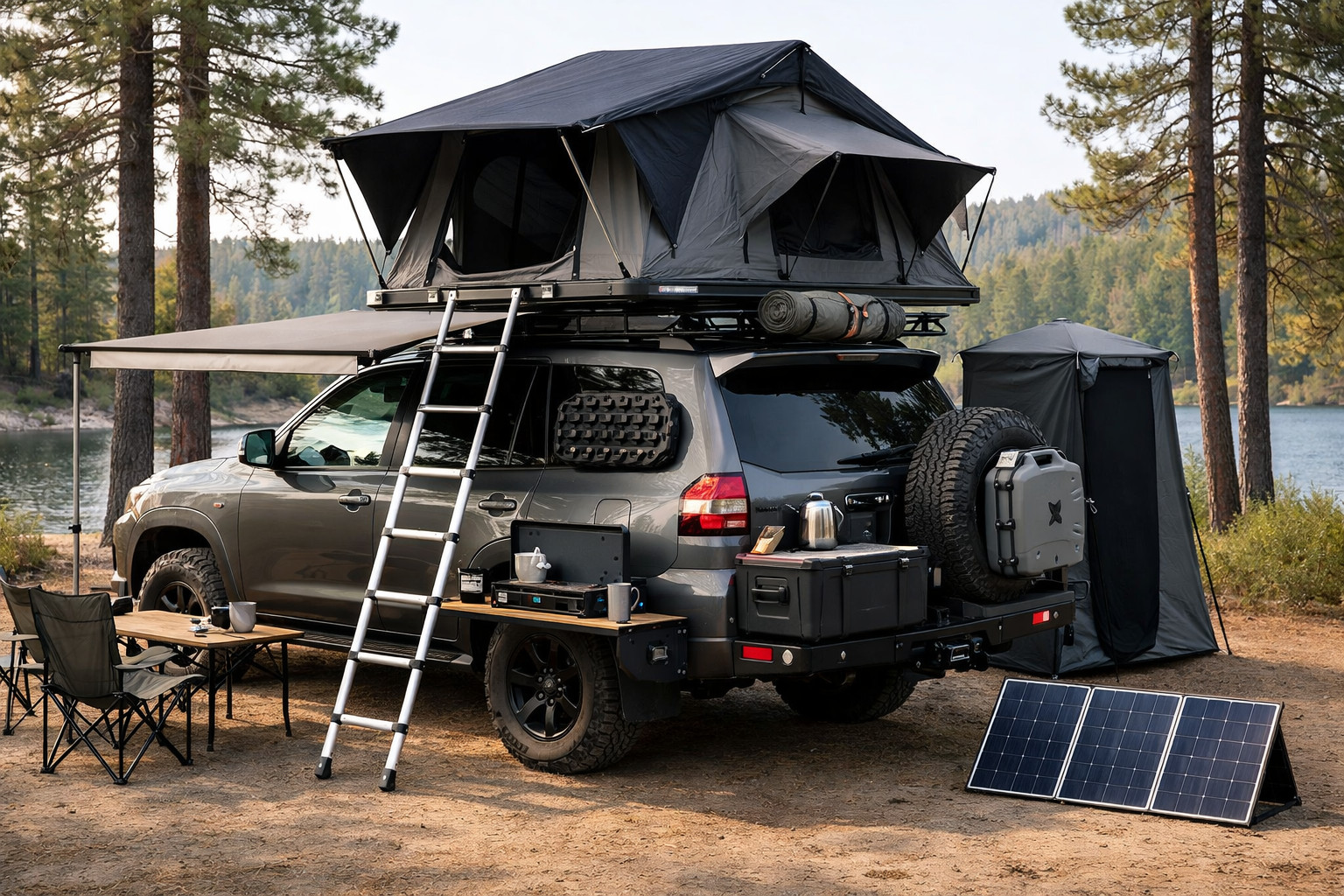
For trips, camping, and expeditions with lots of small items and a need for repeatable packing, drawers are usually stronger. You don’t waste time rearranging, and you don’t have to climb into the bed for every little thing.
For construction, installation work, and hauling tools together with long or bulky items, a box often looks more advantageous. It doesn’t force you to sacrifice bed depth for organization you may not need every day.
For mixed use—work during the week and fishing or camping on weekends—the winner is most often a low-profile box plus separate internal containers. It’s not as convenient as drawers, but it hurts less in terms of cost and overall versatility.
As for material for year-round use, it makes sense to look at aluminum or composite. If the priority is rigidity and vandal resistance, steel also makes sense—but only with proper coating and maintenance.
| Scenario | Best choice | Why |
|---|---|---|
| Camping, expeditions, fishing with lots of small gear | Drawer system | Provides order, fast access, and less time packing and searching for items |
| Daily work with long items, tools, and building materials | Cross-bed box | Preserves usable bed height and length, doesn’t completely block the working area |
| Mobile workshop with expensive small tools | Drawer system | The extra cost pays off with faster access, better organization, and better protection for the contents |
| Mixed use: workdays and weekend trips | Low-profile box | A compromise between storage and a free bed without a big loss of height |
| Need for exterior access and a non-standard layout | Side box | More convenient to grab items from the side and combine with other accessories |
A more expensive solution makes sense when the bed truly functions as an organized space, not just a place to haul. If you have lots of expensive small tools and you often need access in rain, darkness, or on call-outs, paying extra for drawers is justified. If you need a simpler, more flexible solution, it’s worth first looking at expedition boxes, thinking through how the bed will be covered, and separately evaluating a tonneau cover for a pickup bed.
In real-world selection, the most expensive mistake is buying an expensive system and then discovering it breaks your entire loading workflow. That’s why an expensive kit should be purchased only as part of a complete configuration—together with storage logic, bed coverage, and overall pickup tuning. That’s when the price difference works for you, instead of just looking nice in the catalog.
From a customer’s experience: most often the tough choice is for those who both work with the truck and travel for leisure. In one typical scenario, a person initially wanted drawers for the sake of order, but after listing daily cargo it became clear that long pipes and tall cases regularly ride in the bed. In the end they chose a low-profile box and separate containers in the bed: small items stopped getting lost, and the working volume didn’t disappear.
In short: for expeditions, camping, and on-the-road work with small gear, a drawer system is better; for daily work with bulky cargo, a lower budget, and greater bed versatility, a box is the better choice. In mixed use, the winner is most often not the “coolest” solution, but the one that doesn’t get in the way of the pickup’s primary job.
This conclusion is based not on pretty descriptions, but on real selection experience, installation practice, and real use cases: what people haul, how often they open the bed, what they pair the system with, and where they later regret making the wrong choice.
| ✔ | The drawer system provides quick access to small tools and gear from one place, without needing to shift things around every time before setting off. |
| ✔ | Drawers keep things organized better and are suitable for wet or loose contents, since items are divided into sections and stay dry more easily. |
| ✔ | A box is simpler, lighter, and cheaper to install, so it puts less load on the bed and does not take up all of its height and length. |
| ✔ | A crossover box leaves the bed more versatile for long items, construction materials, and bulky things that are not convenient to carry with drawers. |
| ✔ | A side or underfloor box offers a more flexible layout and can be convenient when outside access or combination with other equipment is needed. |
| ✘ | The drawer system is expensive, heavy, and raises the bed floor by about 31 cm, which reduces the usable volume for tall cargo. |
| ✘ | Access to the drawers requires space behind, and with the tailgate closed it is almost impossible to reach the items, so it is inconvenient in tight spots. |
| ✘ | A box is less suitable for small items: without internal organization you have to rummage through the contents, and items can sit in layers. |
| ✘ | In some configurations, the box may obstruct rear visibility and has compatibility limitations with covers and rails. |
Shipping to EU
Wholesale and retail
Own warehouse
Опис продукту
Подарунки не надаються при оформленні покупки у кредит під 0,01% або при покупці частинами.