26.09.2026
66
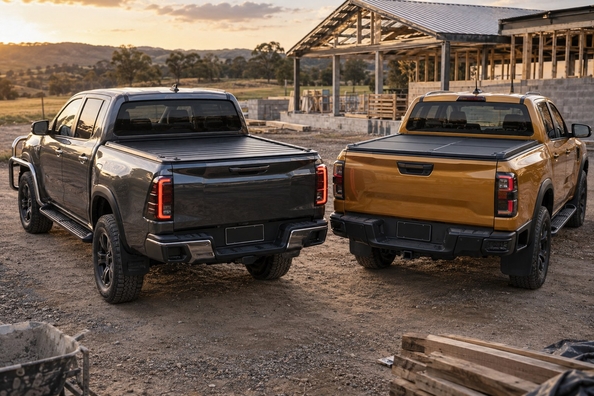
Toyota Hilux and Ford Ranger are the two most popular body-on-frame pickups in Ukraine and Europe, and in 2026 the choice between them has become even more interesting. Toyota has unveiled the ninth-generation Hilux with a diesel and a 48V hybrid system, while the current-generation Ranger is already in its fourth year on the market and has gained versions from the workhorse XL to the Wildtrak with a V6 and a plug-in hybrid. We compare both pickups using official Toyota and Ford data: dimensions, engines, drivetrains, body, off-road capability — and what of this you can actually buy in Ukraine.
Contents
For Hilux, the European Hybrid 48V version is shown (Toyota Europe); for Ranger, the data comes from Ford’s official importer in Ukraine for the double-cab model.
| Parameter | Toyota Hilux (9th generation) | Ford Ranger (since 2022) |
|---|---|---|
| Length / width / height | 5 320 / 1 855–1 885 / 1 865 mm | 5 370 / 1 918 / 1 884 mm |
| Wheelbase | 3 085 mm | 3 270 mm |
| Cab in Europe | double cab only (Double Cab), 5 seats | double cab; for XL also single cab and extended cab |
| Engines | 2.8 L diesel + 48V: 204 hp, 500 N·m | 2.0 L diesel: 170 hp / 405 N·m or 205 hp / 500 N·m; 3.0 L V6: 240 hp / 600 N·m |
| Transmission | 6-speed automatic (Japanese-spec data) | 6MT, 6AT, or 10AT |
| Four-wheel drive | part-time, H4 / L4 | 2H, 4H, 4L; in versions with 10AT also 4A (automatic AWD) |
| Rear differential lock | depending on trim | yes, in all trims listed in Ford Ukraine price lists |
| Approach / departure angles | 29° / 24° | 30° / 23° (with towbar), 25.6° (without it) |
| Wading depth | 700 mm | 800 mm |
| Payload | over 1,000 kg | up to 1,025 kg depending on version |
| Braked towing | 3,500 kg | 3,420–3,500 kg |
| WLTP consumption, combined | 9.7–10.0 L/100 km | 8.5–10.4 L/100 km |
Ground clearance is intentionally not included in the table: Toyota lists 309 mm for the Hilux Hybrid 48V, while Ford lists 235–237 mm for the Ranger, but manufacturers measure it using different methods, so these numbers are not directly comparable. For off-road use, it is more objective to look at angles and wading depth.
Both pickups are classic: a ladder frame, independent front suspension with double wishbones and coil springs, and a rear solid axle on leaf springs. The difference lies in the age of the design.
Hilux stayed on the predecessor’s frame, but Toyota refined it: in the Japanese version the side rails are thicker and 36 weld points were added in the body floor; the springs and dampers were retuned. For the first time on a European Hilux, there is electric power steering. We covered all changes in detail in the review of the ninth-generation Hilux.
Ranger appeared in its current form in November 2021 and received a new frame. At the premiere, Ford stated that the wheelbase and track grew by 50 mm, the front wheels were moved 50 mm forward, and the rear shock absorbers were moved outward from the frame rails to improve ride comfort. The steering also uses electric assist. As a result, the Ranger is noticeably larger: the wheelbase is longer by 185 mm, and the body is wider by 33–63 mm depending on the Hilux trim. The trade-off is slightly worse maneuverability in the city: the Ranger’s turning circle is 12.9 m.
Toyota is betting on a single diesel. For the Hilux in Europe, it is a 2.8 L with a 48-volt system: a motor-generator and a small lithium-ion battery under the rear seat. Output is 204 hp (150 kW), torque is 500 N·m in the 1,600–2,800 rpm range. The 48V system does not make the Hilux a full hybrid: it smooths the diesel’s operation, helps when pulling away, and slightly reduces consumption. In the Japanese version with this engine, there is a six-speed automatic. For some Eastern European markets, Toyota also keeps the regular 2.8 L diesel and a 2.7 L gasoline engine, and for city use it offers an electric Hilux with a WLTP range of up to 257 km.
The Ranger offers a wider selection. The base 2.0 L diesel makes 170 hp and 405 N·m (manual or six-speed automatic), while the bi-turbo version delivers 205 hp and 500 N·m with a 10-speed automatic. The most powerful diesel is the 3.0 L V6: 240 hp, 600 N·m, 0–100 km/h in 8.7 s. In Europe, Ford also sells the Ranger PHEV: a 2.3 L gasoline engine with an electric motor, 281 hp, 697 N·m, and up to 43 km on electricity alone — we have a separate review about it. For the UK, Ford announced that from the beginning of 2026 it will drop the 2.0 L diesel from the Ranger lineup, leaving the V6 and the hybrid.
The Hilux uses part-time four-wheel drive with low range: on asphalt it is rear-wheel drive, on slippery surfaces — H4, and in tough off-road conditions — L4. A rear differential lock is available, but depends on trim. The Multi-Terrain Select drive-mode system helps.
On the Ranger, the drivetrain depends on the version. Base vehicles have the classic part-time 2H / 4H / 4L setup. Versions with the 10-speed automatic get the 4WD Auto system with 4A mode: torque is distributed automatically between the axles, and you can keep four-wheel drive engaged on a wet highway or on a dirt road that alternates with asphalt. A rear differential lock and metal engine protection are listed in all the shown trims in Ford’s Ukrainian price lists.
In terms of geometry, the pickups are close: approach angles of 29° and 30°, departure angles of 24° for the Hilux and 23° for the Ranger with a towbar (without a towbar — 25.6°). The Ranger’s wading depth is greater — 800 mm versus 700 mm. The longer Ranger wheelbase slightly hurts on breakovers: its ramp-over angle is 21°. For those who want serious off-road capability in Ukraine, there is the Ranger Tremor: ground clearance is higher by 26 mm, the track is wider by 30 mm, Bilstein dampers, and the Trail Turn Assist function that reduces the turning radius on loose surfaces.
Both pickups tow up to 3.5 t with braked trailers and carry about a ton in the bed. For the Hilux, Toyota claims over 1,000 kg; for the Ranger, depending on engine and trim — from 685 to 1,025 kg. The Ranger bed has 1,224 mm between the wheel arches and a maximum length of 1,638 mm, steps in the rear bumper, rails with movable cargo tie-down points, and in the Wildtrak version — a 230 V 400 W outlet and bed lighting. The ninth-generation Hilux adds a new rear-bumper step and new taillights.
It is important to remember the gross combination weight rating: for the Ranger it is limited to 6,150–6,500 kg depending on version, so with a full bed and a maximum trailer you will have to remove some cargo — Ford shows this calculation directly in its price list.
On the Toyota Ukraine website as of the end of September 2026, the previous, eighth-generation Hilux is listed with 150 hp and 204 hp diesels; Toyota has not officially announced the start of ninth-generation sales in Ukraine. In Europe, the new Hilux Hybrid 48V has been on sale since July 2026.
In Ukraine, Ford offers the Ranger in XL, XLT, Limited, and Tremor trims with the 2.0 L diesel at 170 or 205 hp, and the XLT and Wildtrak with the 3.0 L V6 at 240 hp. The PHEV hybrid is not in the importer’s Ukrainian price list.
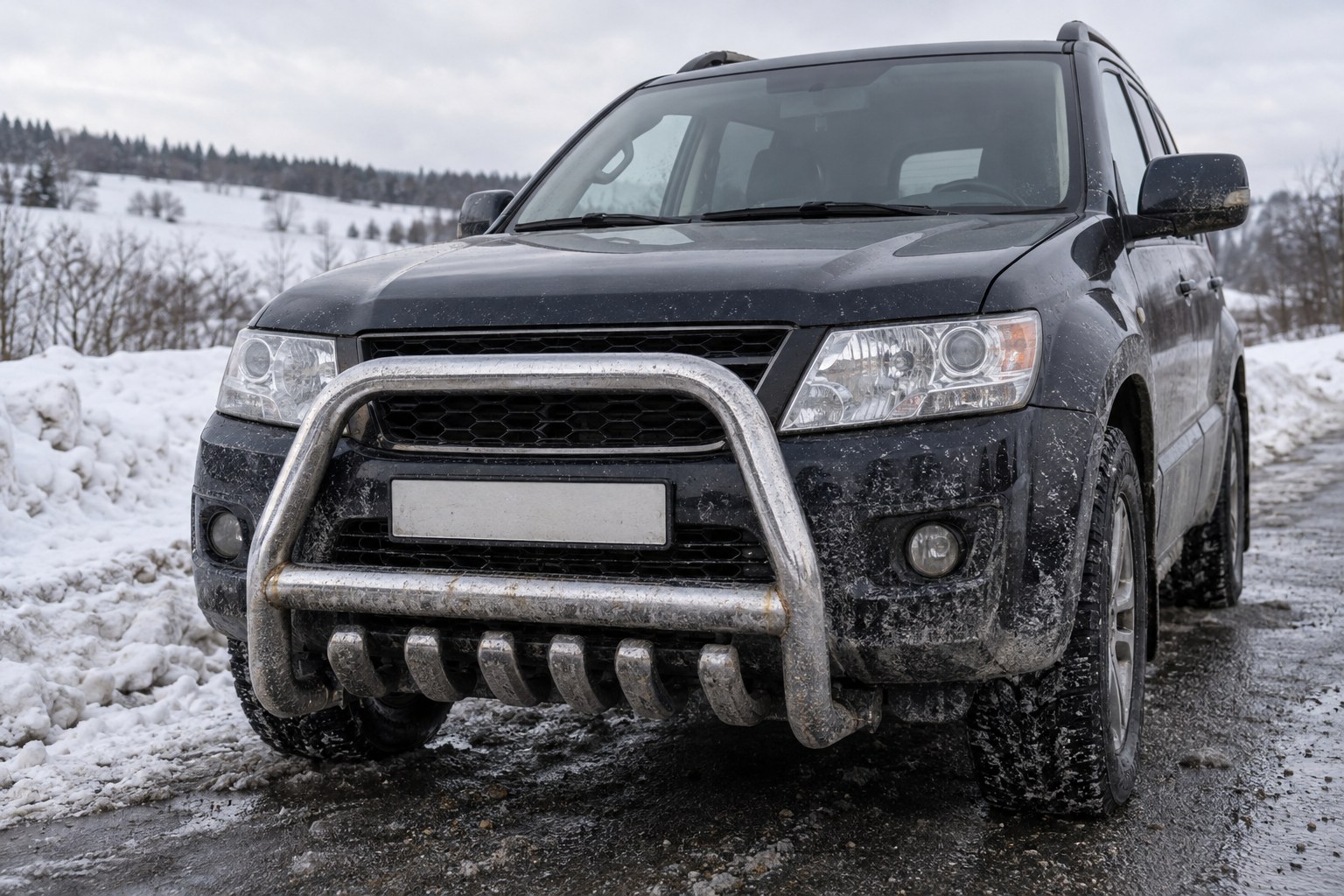
Both the new Hilux and the Ranger have a radar and cameras for safety systems at the front, so any front protection for them should be model-specific — designed so it does not block the sensors. For the Hilux 2025+ model years, there are not yet any model-specific bull bars or bed covers — among model-specific items, there is a hood deflector. The new vehicle has a different front end, and at the rear — new taillights, tailgate, and step, so parts from the eighth generation should not be carried over. The compatibility of each item is specified on the product page.
For the eighth-generation Hilux (2015–2025), the selection is wide: bull bars and front protection in stainless steel, chrome and black, as well as bed covers and canopies. Pay attention to the year: three-piece covers and roller shutters are made separately for vehicles from 2015–2020 and from 2020 onward, and for the Extra Cab there is its own roller shutter.
For the Ranger 2022+, the catalog includes three-piece bed covers and a canopy and a manual roller shutter with a handle and lock. The three-piece cover is available in two versions — standard and for the original roll bar: if there is already a bar installed in the bed, the cover is selected to match it. In the Wildtrak Pack Lifestyle package, an aluminum electric roller shutter is installed from the factory. There is not yet a model-specific front bull bar for the new-generation Ranger in the catalog.
We ship with Nova Poshta across Ukraine; orders from 15,000 ₴ — free delivery with our own transport.
| ✔ | Hilux: proven frame and 2.8 L diesel with 500 Nm |
| ✔ | Hilux: more compact — the shorter wheelbase and narrower body are more convenient in the city and over breakover points |
| ✔ | Hilux: departure angle of 24° versus 23° in the Ranger with a tow hitch |
| ✔ | Ranger: engine range up to a 3.0 L V6 with 240 hp and 600 Nm |
| ✔ | Ranger: 4A mode — 4WD does not need to be switched off on asphalt |
| ✔ | Ranger: 800 mm ford depth versus 700 mm and rear differential lock in all trims from the Ukrainian price lists |
| ✘ | Hilux: in Western Europe — one diesel and only a double cab |
| ✘ | Hilux: the ninth generation is still not officially sold in Ukraine |
| ✘ | Hilux: model-specific bull bars and bed covers for the new generation are not yet in the catalog |
| ✘ | Ranger: longer wheelbase and a ramp angle of 21° — worse on sharp breakover points |
| ✘ | Ranger: turning diameter of 12.9 m — less convenient in the city |
| ✘ | Ranger: model-specific front bull bar for the new generation is not yet in the catalog |
Shipping to EU
Wholesale and retail
Own warehouse
Опис продукту
Подарунки не надаються при оформленні покупки у кредит під 0,01% або при покупці частинами.