26.05.2026
315
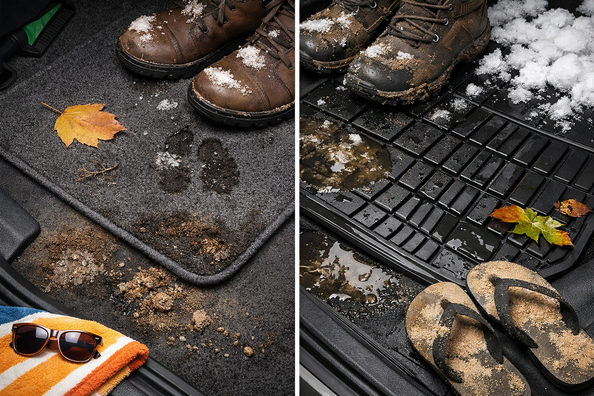

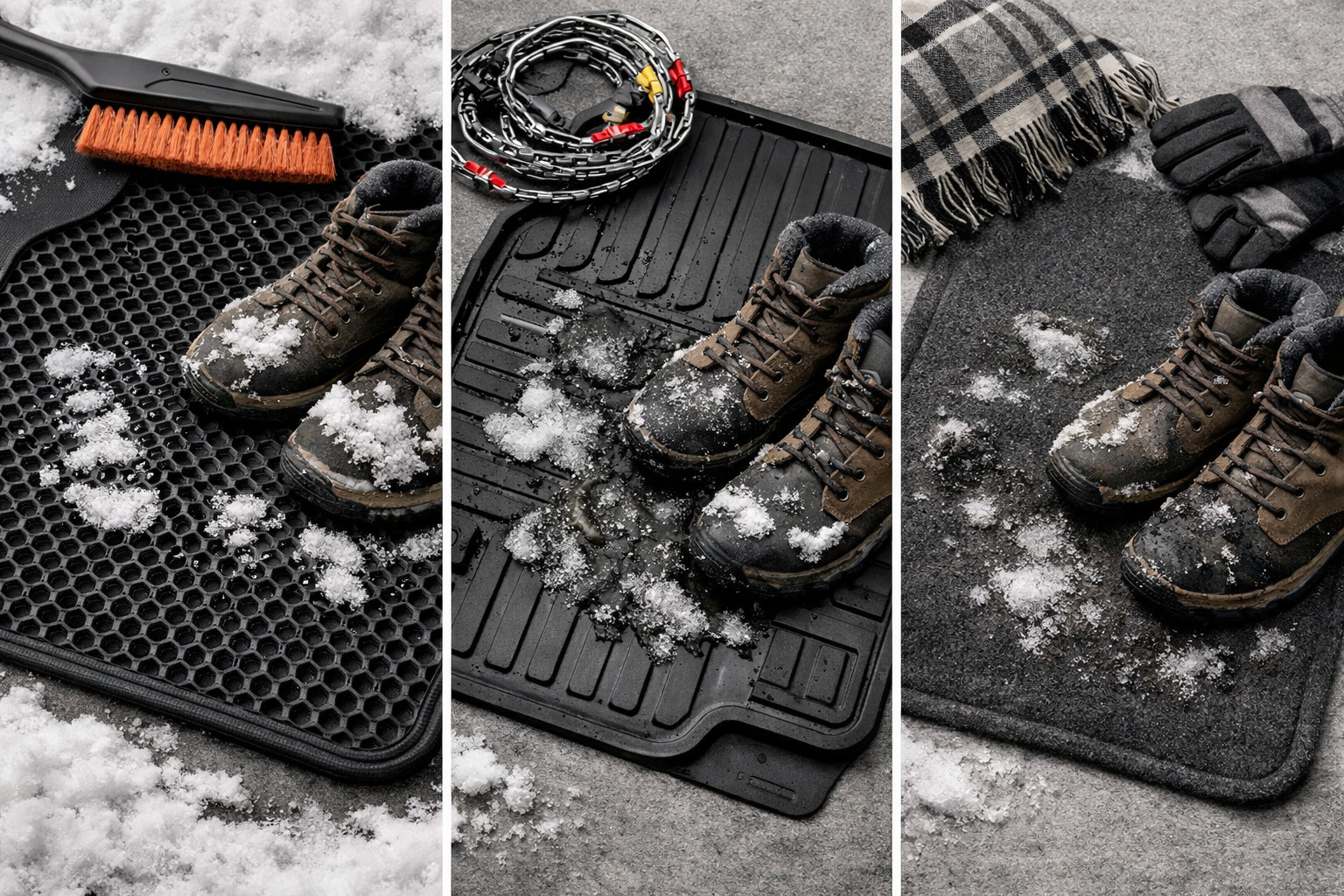
If your car spends most of its time in the city in dry weather, and you want the cabin to look neat and quieter, textile mats are usually the more convenient choice. But if you have winter, slush, snow, sand, frequent trips out of town, or kids constantly bringing dirt into the cabin, the more practical option is rubber or all-weather.
Most often people get it wrong not because of the material, but because of the selection logic: they look only at appearance or price and don’t check fit, mounting, sidewall height, and how easy daily cleaning is. If you need one set for the whole year, the fewest compromises usually come from custom-fit all-weather mats with fixation in the factory mounting points.
The difference between textile and rubber doesn’t come down to “which looks nicer.” Textile feels better in a dry cabin: it’s softer underfoot, visually closer to factory trim, and less annoying for those who dislike a utilitarian look. But you pay for that with more frequent upkeep, especially in fall and winter.
Rubber and all-weather mats shine where there’s water, salt, sand, and dirt. They don’t absorb it—they hold it on the surface or in channels—so the cabin is easier to keep dry. At the same time, cheap universal models often lose on fit, can leave parts of the floor exposed, and sometimes feel worse in the cabin due to their stiffness.
So the essence is this: for dry use—textile; for the dirty season—rubber; for one set for all seasons—a pricier all-weather option with an accurate pattern and proper mounting.
| Option | Strengths | Weaknesses | Who it’s for |
|---|---|---|---|
| Textile | Looks better in a dry cabin, nicer underfoot, wider choice of colors and textures | Absorbs moisture, harder to clean, loses neatness faster in winter | City driving, dry climate, summer set, drivers focused on cabin appearance |
| Rubber | Holds water, snow, salt, and sand well, washes quickly, practical in winter | Can be stiffer, sometimes has an odor, cheap universal versions often fit worse | Winter, shoulder seasons, country house, muddy trips, family car |
| Premium all-weather | Better floor coverage, higher sidewalls, more precise shape, proper fixation | More expensive, heavier, and not every textured surface washes back to like-new easily | For those who want one set year-round with minimal extra care |
Their main advantage is a cabin feel closer to factory equipment. They blend into the interior better, don’t look utilitarian, and are often more pleasant for everyday city use. If it’s dry outside and there’s no wet sand or salt on your shoes, textile is genuinely convenient.
The weak spot is moisture. In winter or during rainy seasons, such a mat quickly accumulates water and dirt in the pile. If you don’t dry and clean it regularly, the cabin looks less tidy, and the mat itself is harder to restore than a rubber one.
This is a practical tool for bad weather. Water, snow, de-icing chemicals, sand, and dirt stay on the surface instead of getting into the factory floor covering. For a daily winter routine, it’s the simplest way to avoid turning the cabin into a constantly wet zone.
The issue is that “rubber” often covers products with very different quality levels. A good mat holds its shape, doesn’t interfere with the pedals, and has sidewalls where they’re actually needed. A bad one slips, leaves gaps at the edges, or looks too rough for constant driving in a clean city.
DD Tuning expert comment: the most common mistake is buying a universal set just because it’s cheaper, then putting up with an exposed area near the left-foot rest or curling near the pedals. The second mistake is stacking one mat on top of another during seasonal rotation. If a mat isn’t fixed or even slightly interferes with pedal travel, it’s not a small thing—it’s a reason to change the set.
This isn’t just “another rubber mat,” but a separate product class. Here, not only the material matters but also the geometry: high sidewalls, larger coverage area, precise floor contouring, and proper mounting points. These are the solutions most often chosen by people who don’t want to swap sets by season.
This is the main year-round compromise. They’re more practical than textile in winter and neater than cheap rubber options. But the extra cost makes sense only if you truly need better fit, protection for the factory covering, and less hassle with cleaning.
For city driving, office routine, and the dry season, textile looks more logical: the cabin feels tidier, and there’s simply no need for deep sidewalls. For winter, private-sector roads, trips with wet shoes, kids’ items, or a dog, rubber and all-weather win without much debate.
If you have one car, little time for upkeep, and don’t want to change sets twice a year, it’s smarter to look at custom-fit all-weather models. If you truly notice the difference in cabin appearance and are ready for seasonal rotation, the combo “textile for the warm season plus rubber for the cold” is still a very practical scenario.
| Scenario | Best choice | Why |
|---|---|---|
| City car, mostly dry weather | Textile | Less reason to overpay for high sidewalls; cabin look and comfort matter more |
| Winter, slush, snow, de-icing chemicals | Rubber or all-weather | Better at containing water and dirt, easier to wash, lower risk to the factory flooring |
| One set for the whole year | Premium all-weather | Best balance of protection, fixation, and everyday practicality |
| Driver often carries kids, gear, and drives out of town | Rubber with good sidewalls | Dirt accumulates constantly, so quick washing matters more than decor |
| Owner cares about cabin appearance and is ready to change sets by season | Textile for the warm season, rubber for the cold | You get the strengths of both solutions without unnecessary compromises |
Paying extra is justified not when you want “something premium,” but when the car really lives in dirty conditions: winter, frequent getting in and out, out-of-town trips, kids, pets, active daily use. In such conditions, it’s not just the material that wins, but the precise shape, high sidewall, and correct fixation.
If you’re choosing a set primarily for the cold season, it’s worth looking at rubber mats. If you need a separate neat set for the warm season, it makes sense to compare textile mats. And if you want another compromise format between a dry cabin and easy daily cleaning, it’s worth evaluating EVA mats separately.
From a customer’s experience: a crossover driver wanted one set “so I don’t have to think about it every day” and initially planned to save money with universal rubber. After comparing fit and sidewall height, he chose a custom-fit all-weather option, because in winter he constantly carries a child and sports gear. In the end he was happy not because of looks, but because the factory cabin carpet stayed dry and cleaning was reduced to a quick rinse.
The choice is simple if you look not at the label, but at the scenario. Textile mats are better where cabin appearance, dry weather, and a nicer feel underfoot matter more. Rubber and all-weather are stronger in winter, slush, and any use where water, sand, and dirt regularly enter the cabin.
If you need one set for the whole year, the winner is most often the more expensive but more precisely fitted all-weather solution. If you’re ready to change sets by season, the combo “textile in the warm period, rubber in the cold” remains very workable. The material is based on real selection experience, practice, and real usage scenarios, so the main advice is one: don’t save on fit, fixation, and safety around the pedals.
| ✔ | Textile mats lose their neat appearance faster in wet weather. They absorb water and dirt into the pile, so they need more frequent drying and cleaning. |
| ✔ | Budget rubber or universal models often lose out in fit. They may leave exposed areas of the floor, slip, or fold up near the pedals. |
| ✔ | Cheap rubber mats can sometimes be stiff or have a noticeable smell. This makes them less comfortable for everyday driving in a clean city cabin. |
| ✔ | More expensive all-weather mats cost more, and not every textured surface can be easily cleaned to a perfect state. In other words, you pay extra for convenience and a precise fit. |
| ✘ | Textile mats are better suited to city driving and dry weather: they are softer underfoot and look more harmonious in the cabin. For those who want a neat look without the utilitarian feel, they are a practical choice. |
| ✘ | Rubber and all-weather mats handle water, snow, salt, and sand better. They do not absorb dirt but trap it on the surface, so it is easier to keep the cabin dry. |
| ✘ | Individually fitted all-weather models provide a better fit and proper fixing in the factory mounting points. This reduces the risk of the mat shifting and issues near the pedals. |
| ✘ | Textile in the warm season and rubber in the cold season give the most balanced result. This rotation lets you use the strengths of both materials separately without unnecessary compromises. |
| ✘ | For drivers who often carry children, cargo, or drive outside the city, rubber mats with good side walls are more practical. They are easier to shake out quickly or wash after dirty trips. |
Shipping to EU
Wholesale and retail
Own warehouse
Опис продукту
Подарунки не надаються при оформленні покупки у кредит під 0,01% або при покупці частинами.