09.05.2026
240
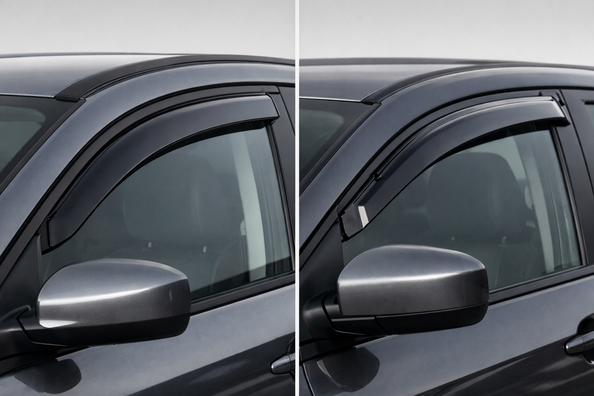
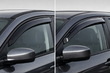
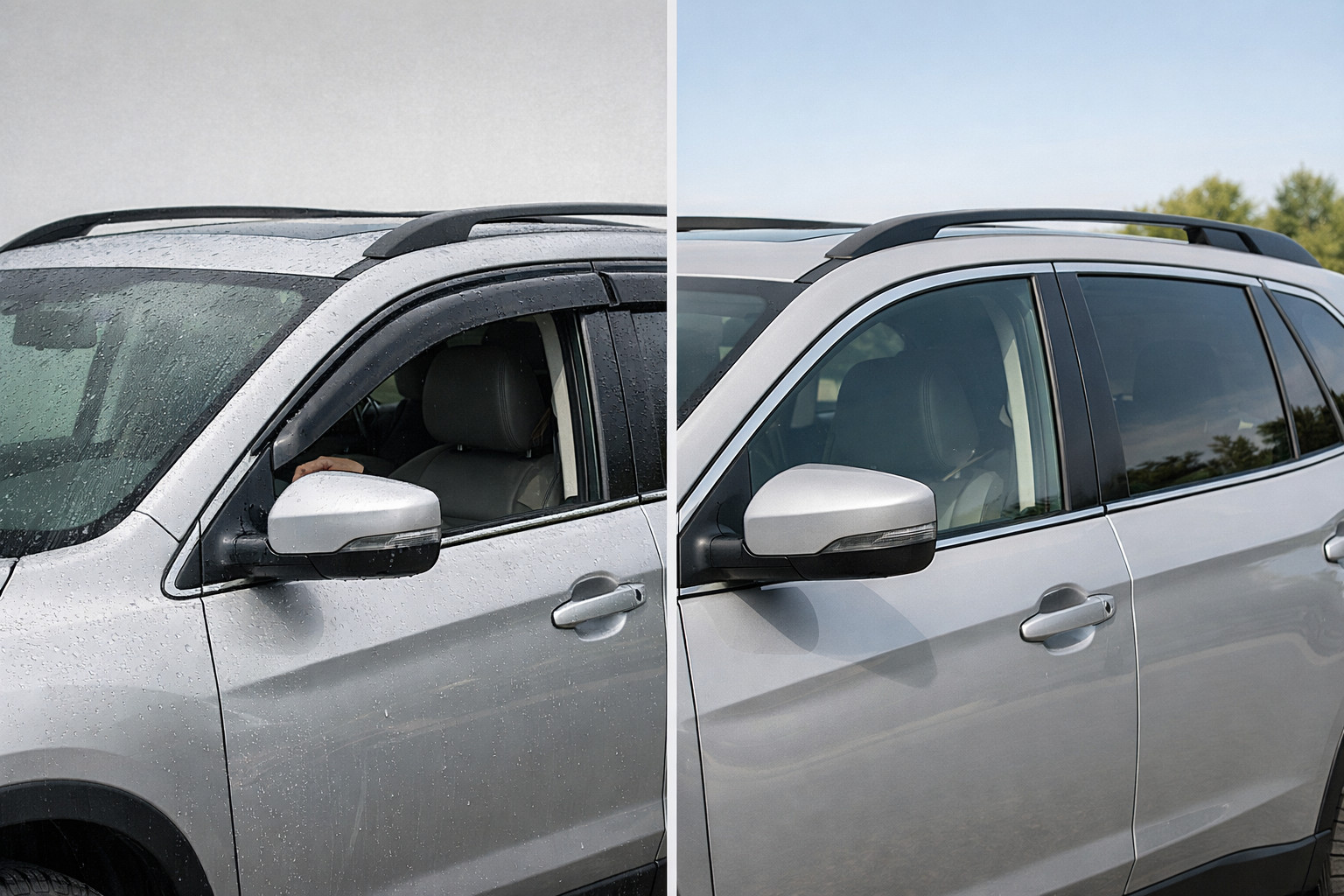
If you need wind deflectors that fit without trimming, whistle less on the highway, and don’t start annoying you after the first winter, it’s usually worth choosing vehicle-specific ones. Universal sets make sense when the priority is a lower price, quick availability, or a temporary solution for a car you don’t want to overinvest in.
The main mistake is looking only at the type name. The real result is determined by the geometry for a specific body, the mounting method, plastic stiffness, profile width, and how neatly they’re installed. A poorly matched vehicle-specific set can also put pressure on the glass, while a good universal one can work fine—but on average it comes with more compromises.
Vehicle-specific deflectors are made for a particular year, body, and door contour. That’s why they more often sit evenly along the frame, don’t look out of place, and are better suited for permanent use. This is especially noticeable on the highway, in cold weather, and on cars where correct window operation without binding matters.
Universal ones are chosen when you need a budget option, the car is old or rare, and it’s hard to find an exact vehicle-specific solution. They can handle the basic task—letting you crack the window slightly in rain, snow, or heat—but more often require test-fitting, trimming, and more careful installation.
| Option | Strengths | Weaknesses | Who it’s for |
|---|---|---|---|
| Vehicle-specific | More precise contour, cleaner look, lower risk of whistling, more stable on the highway, better for daily use | More expensive, tied to a specific body, if compatibility is wrong they can interfere with window travel | For those who drive daily, often travel on highways, don’t want trimming, and plan to use them long-term |
| Universal | Lower price, wider availability, you can find a solution for an old or not very popular car | More often require test-fitting or trimming, depend more on tape or clips, more often noisy at speed | For those who need a budget or temporary option and are ready for fit compromises |
DD Tuning expert comment: most often the mistake isn’t the brand, but compatibility. People order a set based only on the model year, don’t verify the body and door shape, and then blame the deflector type itself. The second typical mistake is installing everything in the cold and immediately using the window, which makes even a good set seat worse.
Their main advantage is geometry made for a specific vehicle. Because of this, a vehicle-specific deflector usually follows the door contour more tightly, sticks out less, develops play less often, and looks closer to an OE-style solution. If the car often runs on the highway, the difference in fit accuracy is felt more than in the city.
But vehicle-specific doesn’t automatically mean trouble-free. Some sets mount in the window channel, others mount externally with double-sided tape. In-channel versions are often quieter and neater, but with incorrect compatibility they can press on the glass. External vehicle-specific ones are easier to install, but they critically need a clean, dry surface, proper pressure, and a 24–48 hour pause without opening the windows. You can read more about the basic category in the article about window deflectors.
In terms of longevity, vehicle-specific sets usually win if the plastic is decent quality and installation wasn’t rushed. For long daily use, frequent washes, and cold weather, this is generally the calmer scenario—although external adhesive solutions are still sensitive to brush car washes.
Their advantage is simple: cheaper and easier to get. If you need basic protection from rain with a slightly open window, and perfect fit isn’t critical, a universal set can solve the task without major expense. This is especially relevant for older cars or vehicles where it’s hard to find a dedicated vehicle-specific solution.
The main downside is that they’re more often designed for adjustment rather than precise first-try installation. That increases the risk of whistling, uneven gaps, and lifting edges. The result is also strongly influenced by material and profile: a narrow deflector behaves more calmly, while a wide one blocks airflow more aggressively but can be more sensitive to fit errors. If you want to first understand the general installation logic, the article what deflectors are for and how they’re installed will help.
For a temporary or strictly budget solution, this is a workable option. But if the car drives fast every day, sits outside year-round, and you want to install once and forget it, universal sets are the ones that most often make you revisit the question. Before buying, it’s also useful to check installation nuances in the article about proper installation.
For daily driving, highway use, the cold season, and a car you want to keep looking tidy, vehicle-specific has the edge. They handle long-term use better simply because they depend less on on-the-spot adjustment.
Universal is more logical when the budget is strictly limited, the car is used occasionally, or it’s not a case where looks and quietness are a priority. Another scenario is a rare body style where there simply are no good vehicle-specific sets.
| Scenario | What’s better to choose | Why |
|---|---|---|
| Daily highway driving | Vehicle-specific | More accurate fit usually means less whistling and fewer chances the piece will start moving around at speed |
| City, short trips, occasional ventilation in rain | Vehicle-specific or quality universal | At lower speeds the noise difference is smaller, so a budget option may be enough |
| Older car with a tight budget | Universal | No point overpaying if you only need the basic function and the owner is ready to adjust |
| Winter, humidity, frequent fogging | Vehicle-specific | More stable geometry helps when windows are often cracked for ventilation and predictable window operation matters |
| Rare body style or hard to find a vehicle-specific set | Universal | When there’s no exact solution, a universal set may be the only realistic way to get the function you need |
Paying extra for a vehicle-specific set is justified when the car is used daily, often runs on the highway, sits outside in winter, or you simply don’t want to listen to whistling and redo the installation after a season. In these conditions, precise geometry, calmer aerodynamics, and a cleaner fit are truly more important than the initial price difference.
If you approach the choice practically, it’s worth first checking the window deflector category, separately refreshing the basics in the article what deflectors are for and how they’re installed, and before buying, verifying the details of proper installation. A more expensive solution makes sense only when you’re buying not just plastic, but a lower risk of noise, peeling, and having to reselect the set.
From a customer’s experience: a crossover owner was looking for an inexpensive set for daily highway driving and first chose a universal option because the price difference seemed significant. After fitting, a whistle appeared at speed, and one edge started lifting after a few washes. After switching to a vehicle-specific in-channel set, the noise issue decreased, and he didn’t come back to the deflectors again.
If you need an answer in one sentence: for long-term daily use it’s more often worth choosing vehicle-specific, for a budget or temporary scenario—universal. But what decides is not just the name, but the combination of three things: accurate compatibility, mounting type, and proper installation.
The material is based on real selection experience, hands-on practice, and real use scenarios. That’s why the takeaway is simple: when quietness, predictable window operation, service life, and a tidy look matter, a vehicle-specific set usually pays back the price difference. When the priority is saving money here and now, a universal set can also work—but with higher chances of compromises.
| ✔ | Model deflectors usually fit more precisely to a specific body and require less adjustment. This reduces the risk of wind noise at speed and makes them more convenient for everyday driving. |
| ✔ | For highway use and the cold season, model-specific options look more practical because they better follow the door contour and behave more consistently during long-term use. The article also notes that they interfere less with window operation. |
| ✔ | Universal deflectors are cheaper and more accessible, so they are suitable when the budget is limited or a quick solution is needed without a long search for a specific car model. |
| ✔ | For older or rare cars, a universal kit may be the only real option if a model-specific one is hard to find. It allows you to do the basic job — slightly open the window in rain or heat. |
| ✔ | With proper compatibility, clean installation, and quality plastic, model-specific deflectors can last longer. This is especially noticeable on a car that is washed often and used year-round. |
| ✘ | Universal deflectors more often require test fitting, trimming, or adjustment before installation. Because of this, installation takes more time and does not always give a perfect result on the first try. |
| ✘ | Poor fit of any kit, especially a universal one, can add whistling and turbulence at speed. The article explicitly states that this often becomes a source of discomfort. |
| ✘ | External versions on double-sided tape depend more heavily on surface preparation and installation conditions. If they are installed in the cold or on a dirty surface, the risk of the edges lifting increases. |
| ✘ | Universal solutions more often become a temporary compromise rather than a set-it-and-forget-it option. For daily highway driving and a car that sits outside in winter, they more often force you to return to replacement or rework. |
Shipping to EU
Wholesale and retail
Own warehouse
Опис продукту
Подарунки не надаються при оформленні покупки у кредит під 0,01% або при покупці частинами.