07.09.2026
50
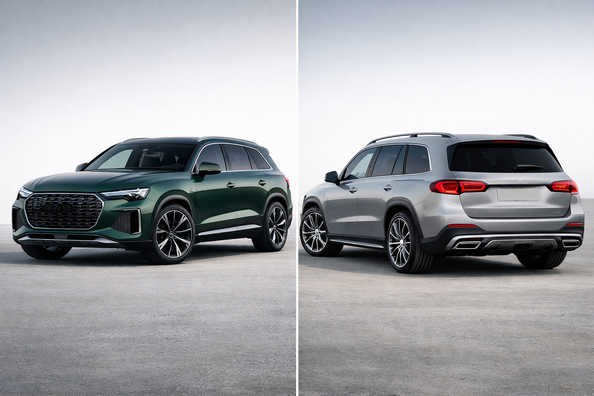
If you strip away the эмоції, the choice between the Audi Q9 2027 and the Mercedes-Benz GLS 2027 comes down to something simple: the Q9 gives you more tech and pulling power for less money, while the GLS offers a calmer, already proven formula of a large family SUV. One wins on equipment and новизною, the other—on quietness, maturity, and predictability in long-term ownership.
For a buyer, this isn’t a small thing. The Q9 looks stronger at launch, but the first model year always means less real-world data on durability, noise as mileage adds up, and residual value. The GLS is more expensive and weaker in base form, but it carries fewer risks.
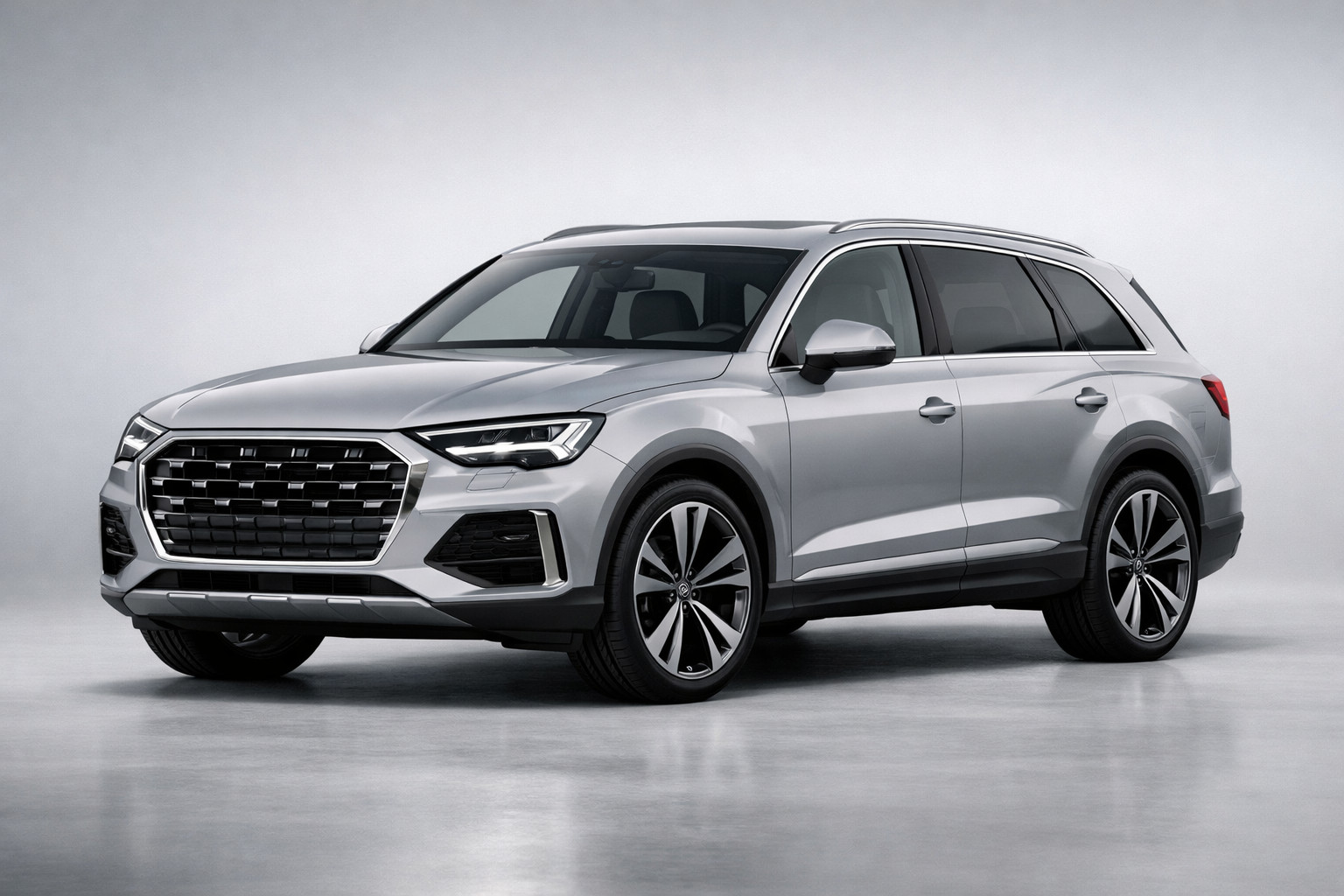
The Audi Q9 2027 has already been officially revealed and looks very convincing in base configuration: about $87.7–89.1k in the US, 429 hp, 599 N·m, standard adaptive air suspension, rear-axle steering, and a larger cargo area behind the third row. On paper, it’s one of the strongest offers in the class.
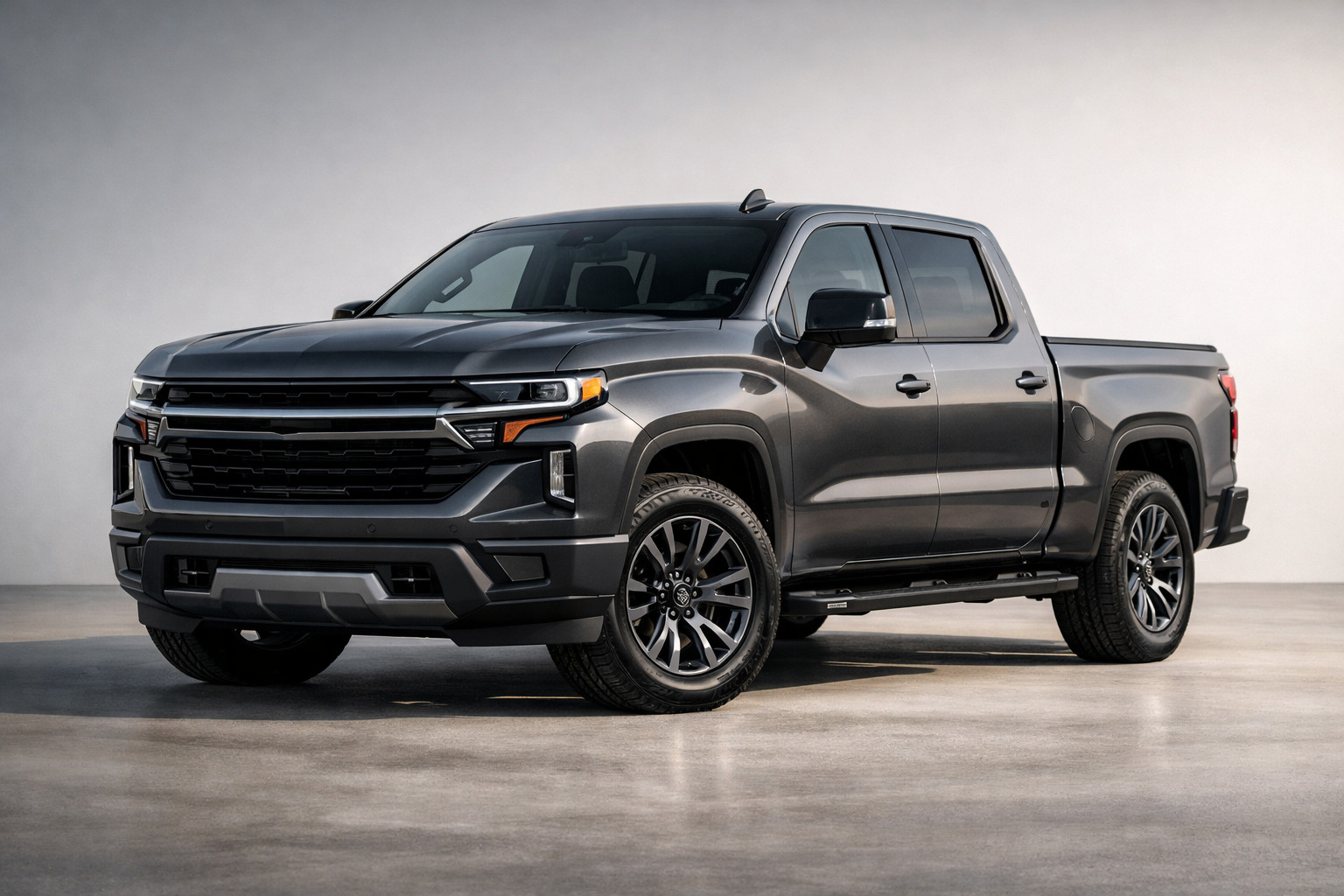
The Mercedes-Benz GLS 2027 has been announced officially without final pricing yet, but the market is ориентується on a start around $95k. In GLS 450 form it trails the Q9 in base output, but makes up for it by being not a brand-new model from scratch, but a deeply updated large SUV with well-understood highway manners, better proven evidence of cabin quietness, and more predictable long-term ownership.
In this class, the mistake is to look only at horsepower or the screen in the cabin. A practical choice is better made using five criteria.
| Option | Strengths | Weaknesses | Who it’s for |
|---|---|---|---|
| Audi Q9 2027 | Stronger base engine, rich standard equipment, larger cargo area behind the third row, standard air suspension and rear-axle steering | First model year, less data on durability and noise with mileage, very large dimensions, third row still doesn’t have a class-leading reputation | Those who want maximum tech and pulling power for their money and are willing to accept the risk of a new model |
| Mercedes-Benz GLS 2027 | Mature platform, quiet and relaxed highway behavior, strong reputation for long trips, broader availability of ready-made retrofits | Higher expected starting price, weaker base engine, expensive step up to V8 versions, large wheels can hurt winter comfort | Those who prioritize comfort, predictability, and prefer not to experiment in a model’s first year |
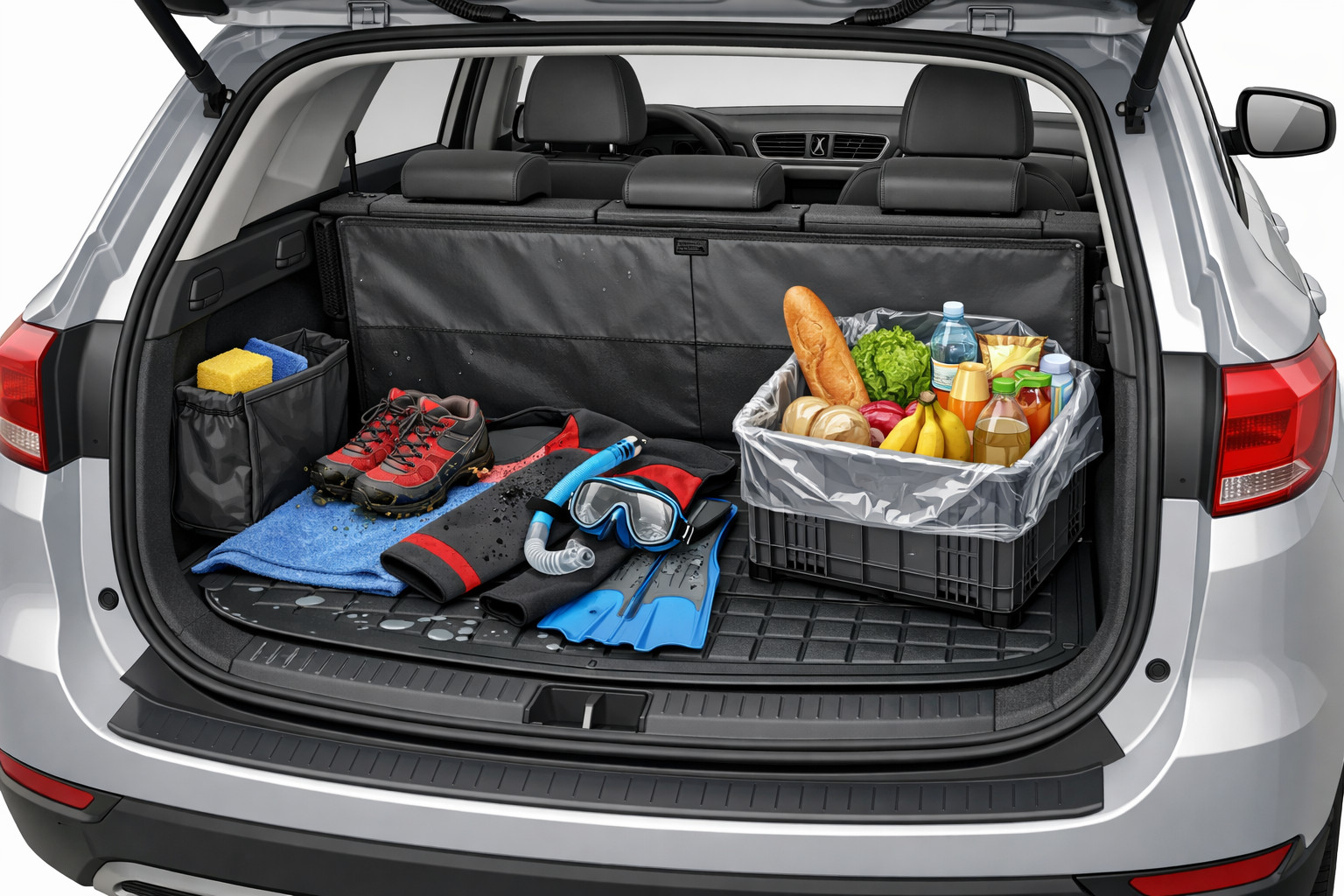
The Q9 enters the segment aggressively. The base 2.9-liter V6 biturbo with 429 hp and 599 N·m delivers what expensive large SUVs in entry versions often lack: a reserve of torque without having to jump straight to a V8. Add roughly 4.9 s 0–100 km/h, standard air suspension, rear-axle steering, and 547 L of cargo space behind the third row—and it becomes clear why the Q9 looks выгодно as a true “out of the box” purchase.
Practically, the Q9 is strong too: a long wheelbase, 6- or 7-seat configuration, generous cargo capacity, towing up to 3500 kg. But there’s a nuance: this is Audi’s first large flagship SUV of this format. So questions about real-world durability, cabin noise after a few years, small early teething issues, and residual value are still open. If what matters to you isn’t the presentation but a five-year ownership horizon, you need to factor this in honestly.
Another point is retrofitting. With a new model, it always takes some time for the market to catch up with mats, cargo solutions, side steps, body kits, and exterior tuning. That’s not a drawback of the vehicle itself, but it’s a real criterion if you’re used to tailoring a car to your needs right away.
The GLS 2027 takes a different approach. In base GLS 450 form it’s a 3.0-liter inline-six with mild hybrid assist, 375 hp and 560 N·m. On paper it’s less than the Q9, but it’s sufficient for the class, and the model has long been known as one of the calmest in the segment on the highway. For those who do a lot of long-distance driving, this difference in character matters more than a catalog number.
The GLS’s strong side is maturity. The platform is known, the suspension logic is well understood, the interior and sound insulation have a good reputation, and for those who want more тяги, there’s the GLS 580 with a V8 rated at 530 hp. Yes, the Q9 has a better starting value in price-to-equipment, but the GLS is better suited to people who don’t want to be early testers of a new model.
The weak points are obvious too. The starting price for the 2027 model year hasn’t been confirmed, and it will almost certainly be higher than the Q9. Moving up to higher Mercedes trims quickly makes the purchase very expensive, and large wheels on vehicles like this easily hurt winter comfort and increase tire costs. In terms of practicality the GLS is good, but behind the third row and in cargo volume the Q9 looks more appealing.
If you need a large family SUV with the strongest possible base package, the logic is on the Audi Q9’s side. It’s quicker in the entry version, roomier in the cargo area, and more generous in chassis hardware.
If your main use case is long highway travel, frequent intercity trips, passengers in the second row, and the desire for a quiet, smooth vehicle without small неприятні surprises, the GLS looks more mature.
For the city both are big, but the GLS is slightly shorter, so it feels less bulky. For towing, there’s almost no difference: both pull about 3.5 tons, so what matters isn’t the numbers but confidence in the specific configuration and load.
| Scenario | What to choose | Why |
|---|---|---|
| Need maximum equipment without stepping up to an expensive version | Audi Q9 2027 | Stronger base engine, standard air suspension and rear-axle steering, better starting value |
| Long trips, quiet highway cruising, relaxed ride | Mercedes-Benz GLS 2027 | More mature platform and a better reputation for sound insulation and comfort over high mileage |
| Family, kids’ gear, suitcases, third row used often | Audi Q9 2027 | Larger cargo area behind the third row and a stronger focus on interior practicality |
| Buying for the long term without wanting to risk a model’s first year | Mercedes-Benz GLS 2027 | More predictability in durability, interior aging, and later retrofitting |
| Want performance without a V8 | Audi Q9 2027 | 429 hp in base form provides a stronger torque reserve than the GLS 450 |
| Need a large SUV aimed at a premium second row and higher-end trims | Mercedes-Benz GLS 580 | Mercedes’ lineup is strongest именно in expensive, long-proven versions |
Paying extra for the GLS is justified when what matters isn’t the spec-sheet numbers but engineering maturity, cabin quietness, and a clear ownership horizon. This is especially logical if you plan to personalize the car right after purchase: for the Mercedes GLS X167 there are already ready-made solutions for the interior, cargo area, and body, and for deeper exterior upgrades there are GLS facelift kits available.
Paying extra for the Q9 or its higher trims makes sense if you want the strongest possible base right now: more pulling power, a richer chassis, better load capacity, and Audi’s new flagship format. But it’s important to understand that the accessories market for a first model year is still forming, so it’s more practical to keep an eye on the Audi Q9 page if you plan retrofits without rushing.
The Audi Q9 2027 is the stronger rational bet in price-to-power-to-equipment value. The Mercedes-Benz GLS 2027 is the calmer choice for those who put cabin quietness, highway comfort, and long-term predictability first. If you want the most for your starting money—look at the Q9. If you want fewer unknowns and more day-to-day confidence—the GLS looks safer for now.
| ✔ | Audi Q9 2027 in the base version offers a stronger engine than the GLS 450: 429 hp and 599 Nm versus 375 hp and 560 Nm. This provides better torque reserve without moving up to more expensive versions. |
| ✔ | The Q9 looks more attractive in terms of price-to-equipment ratio: at a starting price of about $87.7–89.1 thousand, it already comes with standard adaptive air suspension, rear-wheel steering, and a full set of features in the base version. |
| ✔ | In practical terms, the Q9 is strong as a family SUV: it offers a 6- or 7-seat configuration, a larger trunk behind the third row, and towing capacity of up to 3500 kg. |
| ✔ | Mercedes-Benz GLS 2027 benefits from its mature design. The article describes it as a calmer and more predictable option for long-term ownership, with a better foundation in noise and highway behavior. |
| ✔ | The GLS is better suited for frequent long-distance trips and everyday comfort with high mileage. In this class, that is a practical advantage, not just a matter of numbers in the specifications. |
| ✘ | Audi Q9 2027 is the first model year, so there is still no long-term data on durability, noise with mileage, or residual value. This makes the purchase less predictable. |
| ✘ | For the Q9, the aftermarket is still only taking shape, so there may be fewer ready-made solutions for floor mats, cargo systems, side steps, or body kits than for more mature models. |
| ✘ | Mercedes-Benz GLS 2027 is expected to be more expensive at launch, and the base version is also weaker than the Q9 in terms of power. So you won't get the maximum tech here for less money. |
| ✘ | In the GLS, moving up to higher trims quickly makes the purchase very expensive, and large wheels can reduce winter comfort and increase tire costs. |
Shipping to EU
Wholesale and retail
Own warehouse
Опис продукту
Подарунки не надаються при оформленні покупки у кредит під 0,01% або при покупці частинами.