04.08.2026
122
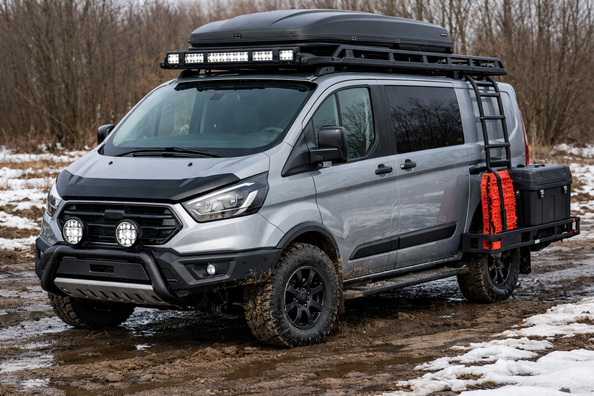

This upgrade plan is for those who use a Ford Transit Custom in slush, haul tools, drive through courtyards, dirt roads or construction sites, and don’t want to sweep half a bucket of sand out of the cabin every day. This isn’t about decorative tuning, but about what actually holds back dirt, water, salt and small impacts on a working vehicle.
The basic set for this scenario is simple: rubber floor mats, mud flaps, protection for the cargo-area/boot floor, and rear bumper edge protection. If the route is truly tough—with wet грунт and snow—then for a new vehicle it’s more important to choose the right transmission and traction setup than to spend money on exterior accessories.
In the dirty season, Transit Custom should solve three practical tasks: keep dirt from being tracked into the cabin, reduce how much grime gets thrown onto the lower bodywork, and avoid scraping paint off the rear bumper during daily loading. If you achieve that, the vehicle is easier to wash, stays tidy-looking longer, and is less annoying to use on the job.
An important nuance is that compatibility here isn’t universal. For mats, the floor type, transmission and front-seat configuration matter; for mud flaps—the generation, wheel-arch geometry and whether there’s a sporty body kit; for cargo-area protection—whether it’s a van or passenger version, and which wheelbase.
Number one is rubber floor mats. They deliver the fastest effect: water, slush and clay stay in the mat instead of going under the pedals, into the carpet or into the floor seams. For a work vehicle, this is a basic purchase, not a comfort option.
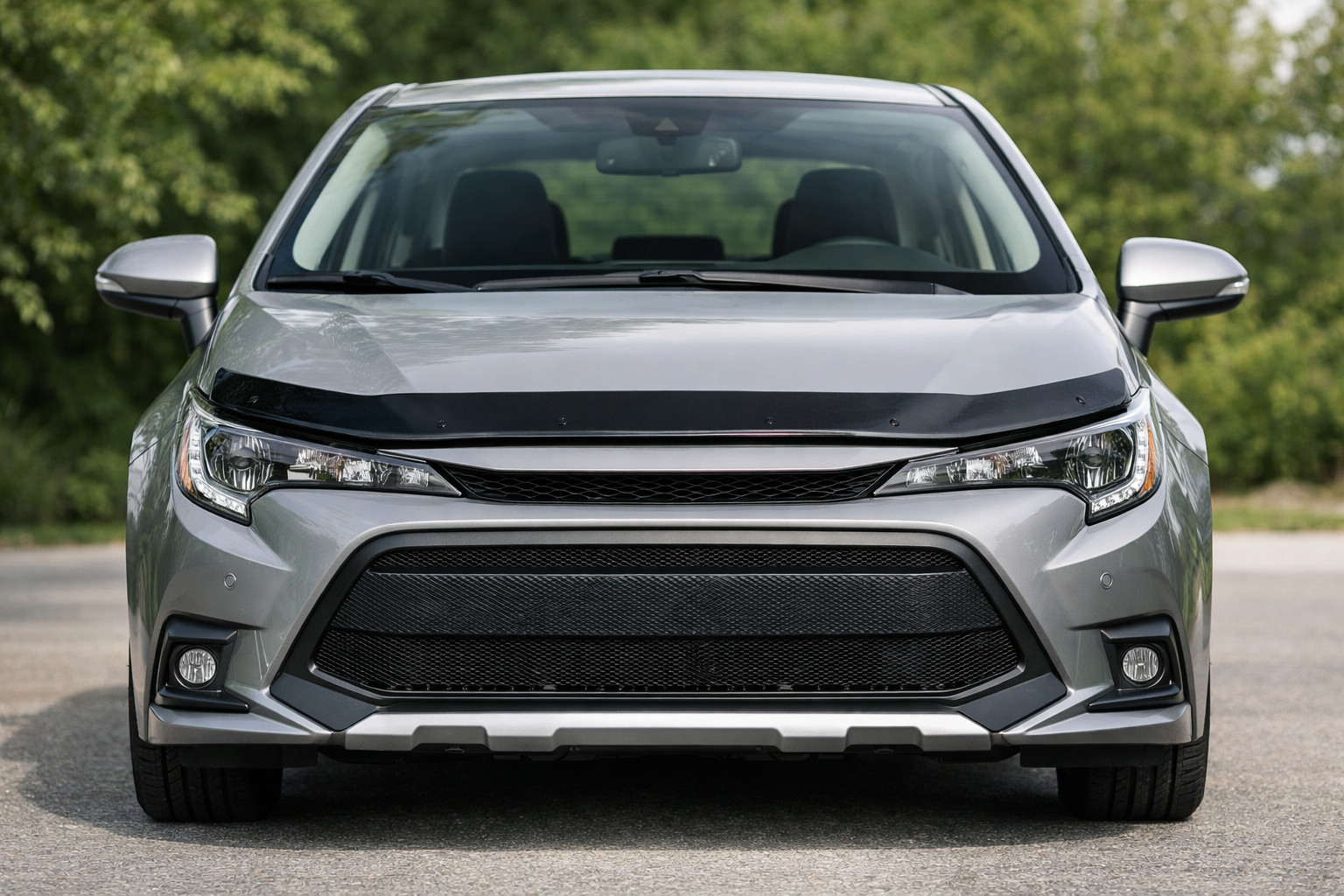
Second priority is front mud flaps. They reduce the amount of dirt, salt and small stones thrown onto the sills, doors and lower body. If the vehicle often reverses up high curbs or has a non-standard arch, you should check fitment separately before buying.
Third, choose what matches your work routine. If you constantly load boxes, tools or materials, it makes sense to add rear bumper edge protection right away. If the main problem isn’t the bumper but wet gear inside, then install cargo-area floor protection earlier.
| Upgrade | Why it’s needed | Who really benefits |
|---|---|---|
| Rubber floor mats | Collect water, clay, sand and slush; make cleaning easier | Anyone who gets into the vehicle with wet footwear or works where there isn’t clean asphalt around |
| Front mud flaps | Reduce dirt, salt and stones being thrown onto the body and sills | Couriers, service crews, installers, vehicles with frequent trips out of town |
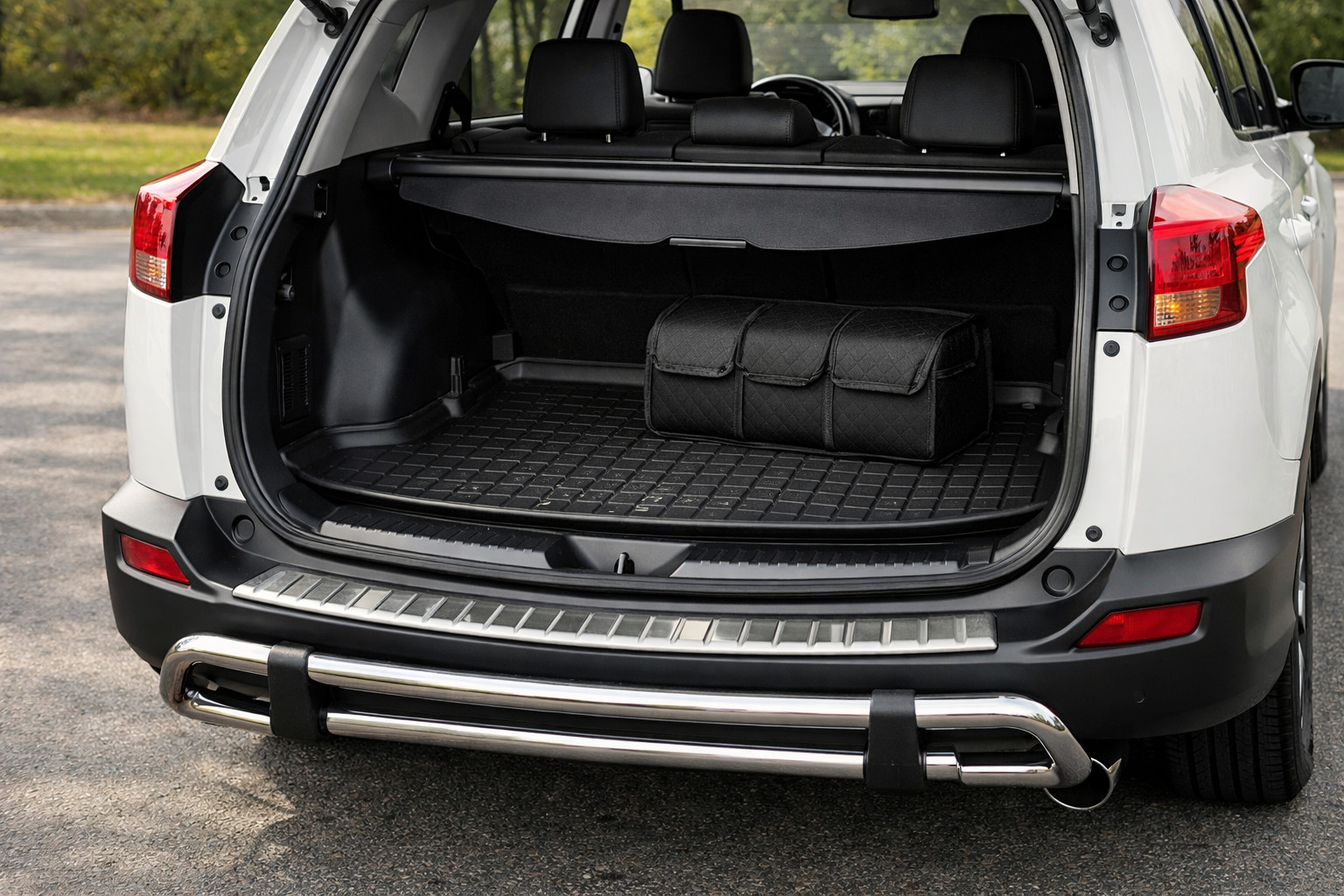
| Rear bumper edge protection | Takes scratches from boxes, cases and slippery wet cargo | Those who load and unload the vehicle every day |
| Cargo-area/boot floor protection | Prevents dirt and moisture from soaking into the surface; speeds up washing | Vans, passenger versions with work gear, crews with wet equipment |
| Rear mud flaps | Add protection in slush and on the highway when the rear also gets heavily sprayed | Long wheelbase, vehicles with frequent long runs, vehicles with a trailer or muddy driveways |
DD Tuning expert comment: the most common mistake is buying universal mats or mud flaps without checking the vehicle configuration. On Transit Custom, the difference isn’t only the model year—seats, transmission, floor type and arch shape also matter. The second typical mistake is spending on exterior body kits before covering the floor, spray protection and the bumper edge.
Second stage includes upgrades that aren’t as noticeable from day one, but work well over long-term use. This is cargo-area/boot floor protection and a rear bumper trim. They’re especially useful where the vehicle is used as a tool, not as family transport.
If you’re only choosing a new Transit Custom for tough routes, then the “second stage” should be considered not an accessory, but the right technical configuration. For slippery courtyards, gravel, snow and wet грунт, all-wheel drive or a mechanical limited-slip differential will bring more benefit than any arch extensions or decorative trims.
This group includes window deflectors, seat covers and some decorative trims. Deflectors are genuinely useful if you often drive with the window slightly cracked in the rain, but they won’t save you from dirt on the floor. A driver’s seat cover can also be appropriate if you regularly get in wearing wet clothing, but that comes after mats and mud flaps.
Arch extensions, chrome elements and other visual décor don’t provide a primary benefit for a dirty-season scenario. They may look good, but they don’t solve either the wet cabin issue or the scratched bumper issue.
Most often, people waste money on cheap universal mats. They have gaps around the edges, slide around, hold dirt worse, and may simply not match the floor shape. For a work van, this is “saving” that quickly stops being a saving.
The second mistake is picking mud flaps at random, especially for versions with altered wheel-arch geometry. In the best case they sit crooked; in the worst case they catch a curb or don’t fit at all. The third typical unnecessary expense is decorative arch extensions and exterior body kits before the basic dirt-protection tasks are covered.
| Scenario | What to install first | What can be postponed | What’s optional |
|---|---|---|---|
| Daily city driving in slush | Rubber floor mats, front mud flaps | Rear mud flaps, seat cover | Arch extensions, decorative trims |
| Work with постоянним loading | Rubber floor mats, rear bumper edge protection, cargo-area floor protection | Front mud flaps, if it’s mostly asphalt | Window deflectors, exterior décor |
| Dirt roads, construction sites, snow | Rubber floor mats, front mud flaps, floor protection | Rear mud flaps, bumper trim depending on loading frequency | Any visual body kit without a practical function |
More expensive upgrades are justified where the vehicle works daily and downtime for cleaning or touch-up painting isn’t acceptable. First, it makes sense to buy precisely fitted rubber floor mats if the driver constantly drives in грязь: they fit the floor better and don’t leave open areas along the edges.
Second, don’t save on shape and fit if you need proper protection for the front arches: it’s better to get compatible front mud flaps than to force-fit a universal set that either hangs crooked or tears off quickly.
Third, with daily loading, bumper edge protection pays off. If boxes, equipment or slippery cases regularly pass through the rear opening, then bumper trims are cheaper than constant touch-up painting. And if you’re only ordering a vehicle for mud and snow, the most expensive—but also the smartest—decision is not décor, but the right traction for your route.
From a customer’s experience: for a work Transit Custom that drove between the city and private sites, they first looked for something “tougher” on the outside. In the end they settled on rubber mats, front mud flaps and rear bumper protection, and postponed decorative parts. The result was simple: less wet dirt in the cabin, the bumper edge doesn’t get scratched, and washing after a shift takes noticeably less time.
For a Ford Transit Custom in the dirty season, the smartest package doesn’t start with décor, but with the things that catch water, clay and impacts every day: mats, mud flaps, floor protection and bumper edge protection. After that you can add comfort options or more expensive solutions for your work routine—but only after checking compatibility for your specific configuration. This material is based on real selection experience, practice and real usage scenarios, not on a formal accessory checklist.
| ✔ | Rubber floor mats really hold back water, slush, mud, and sand, so dirt doesn’t get under the pedals or into the floor seams. For a work vehicle, that gives a quick effect already after the first drive in slush. |
| ✔ | Front mud flaps reduce the splash of dirt, salt, and small stones onto the sills, doors, and lower body. This is especially useful for city trips, drives out of town, and work on dirt roads. |
| ✔ | Rear bumper edge protection takes scratches from boxes, cases, and slippery wet cargo. It is practical for vehicles that are loaded and unloaded every day. |
| ✔ | Protection for the cargo area or trunk floor prevents dirt and moisture from soaking into the covering and makes washing easier. This is useful for vans and versions that carry tools or wet gear. |
| ✔ | The author separately emphasizes that for tough routes, all-wheel drive or a mechanical limited-slip differential can bring more benefit than exterior styling. This is an important practical tip if the vehicle is still being chosen. |
| ✘ | Many items require precise matching to the vehicle’s configuration, not just a “universal” kit. For floor mats, mud flaps, and floor protection, the floor type, gearbox, seats, wheelbase, and arch shape all matter. |
| ✘ | Rear mud flaps and some other items are not a top priority in every scenario. They are recommended to be postponed if the main problems are a wet cabin, dirt on the floor, or scratches on the bumper. |
| ✘ | Window deflectors, seat covers, and decorative trims do not solve the basic tasks of the dirty season. They can be useful only after floor mats, mud flaps, and bumper protection are already in place. |
| ✘ | Cheap universal floor mats often leave gaps, shift around, and hold dirt worse. For a work van, this can end up being only apparent savings without proper cabin protection. |
Shipping to EU
Wholesale and retail
Own warehouse
Опис продукту
Подарунки не надаються при оформленні покупки у кредит під 0,01% або при покупці частинами.