22.08.2026
106
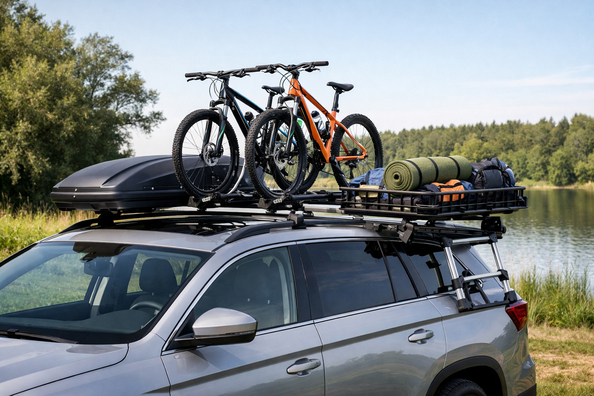
This upgrade plan is for those whose car lives in three modes: country house runs, sport, and a few seasonal trips with a load on the roof. The point isn’t to buy the biggest accessory right away, but to build a system that actually solves 70–80% of your tasks and doesn’t turn daily driving into noise, extra height, and constant worry about overloading.
The logic is simple: start with the base—crossbars and the right mounting for your specific roof—then add one main module for your scenario: a roof box, a basket, or dedicated mounts. Without the make, model year, roof type, and body style, you can’t honestly name an exact load limit or a compatible box size, so you should check not “looks like it’ll fit,” but the roof’s dynamic load limit, crossbar spread, clearance to the tailgate, and the vehicle’s overall height.
For country house trips, sports, and seasonal roof hauling, the system has to cover three different jobs at once: move volume out of the cabin, handle weather where it matters, and avoid requiring a full reconfiguration of the car for every trip. That’s why there’s no universal answer like “only buy a box” or “only install a basket” here.
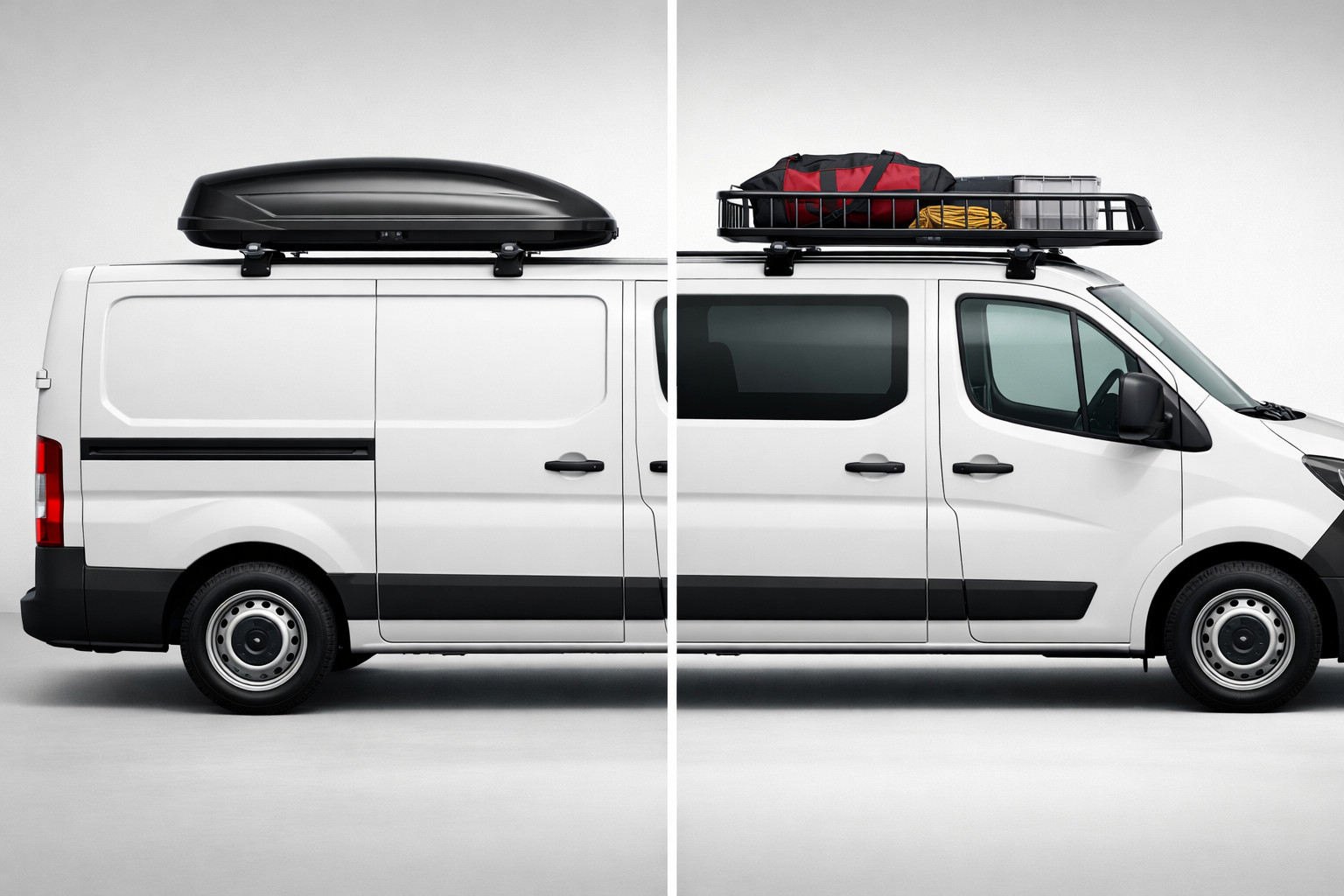
If you more often carry clean bags, sleeping bags, winter clothing, skis, or other luggage that needs protection from water and prying eyes, a closed roof box should be the priority. If we’re talking about sacks, folding chairs, jerry cans, tools, or other bulky and not perfectly clean items, an open format is more practical. And if one sport clearly dominates everything else, a dedicated mount can sometimes be smarter than a large all-purpose module.
The first thing to install isn’t a box or a basket—it’s the base roof rack: crossbars, feet, and a fit kit for your specific roof type. The crossbars are the mounting point for every next solution. Buying the top module without understanding the base is the shortest path to wind noise, play, compatibility problems, or plain overload.
After that, choose the carrying format. For a mixed scenario, the winning setup is usually “a solid base plus one working module,” not a pile of everything at once.
| Upgrade | Why it’s needed | Who truly benefits |
|---|---|---|
| Crossbars with the right mounting | Create the base for any roof module and define system compatibility | Anyone planning roof carrying at least a few times per season |
| Closed roof box | Provides a dry, enclosed, and relatively quiet place for gear without bringing dirt into the cabin | Families, travelers, skiers, anyone carrying clothes, bags, sleeping bags, kids’ items |
| Roof basket | Lets you carry bulky, wet, or awkwardly shaped items you don’t want in the cabin | Those who often go to the country house, carry tools, jerry cans, sacks, garden equipment |
| Ski or snowboard mounts | Secure dedicated gear without needing to buy a large roof box | Those for whom winter sports are regular and other hauling is secondary |
| Roof bike carrier | A dedicated solution for a bicycle without extra roof volume | Those who carry a bike occasionally and are willing to lift it onto the roof |
DD Tuning expert comment: The most common mistake is buying the biggest box or basket based on photos, without calculating the weight of the crossbars and the accessory itself. As a result, there’s less usable payload left for gear than expected—and the tailgate may not open fully. If your route includes gravel, don’t load the system to the upper limit and keep heavy items between the crossbars, not at the edges.
The second stage starts when you understand your real use case, not an imagined one. If after installing the base it becomes clear that most trips are suitcases, kids’ items, seasonal clothing, and gear, then adding a roof box is logical. If country house trips with large, dirty, or non-standard items dominate, a basket works better.
At the second stage, don’t buy both a box and a basket “just in case.” For most owners, one main module is enough; a second only makes sense when the scenarios truly occur equally often. For sports, dedicated mounts are often a better value than a box if you regularly carry one type of equipment and don’t want unnecessary volume on the roof.
More expensive aerodynamic crossbars, a lower-profile box, an easier mounting mechanism, and less whistle at highway speeds are about comfort, not the basic ability to carry something. It makes sense if the system stays on the car often, you drive a lot on highways, or you regularly park where height is critical.
But there’s an important nuance: real comfort often comes not from a “better-looking” accessory, but from the right habit. Empty crossbars, a basket, or any other module are best removed between trips. This reduces noise and drag and prevents you from driving every day with a roof setup that’s only used a few weekends a month.
| What to install first | What you can postpone | What is not required |
|---|---|---|
| Crossbars, feet, and a fit kit for your roof | More expensive aerodynamic bars if trips are rare | Driving around with empty crossbars all the time |
| Checking the dynamic limit, crossbar spread, and tailgate clearance | A larger box volume after the first season of use | Buying the biggest format “just in case” |
| One main module: a box, a basket, or sport mounts | A second module for a rare scenario | A basket for items that must be protected from rain and dirt |
| Straps or a cargo net if you choose an open format | A separate winter solution if sport is occasional | Overpaying for looks without gains in quietness, weight, or convenience |
A more expensive base is justified when the system will stay on the car often, not three times a year. In that case, it’s better to buy a properly matched base roof rack once than to fight whistle, looseness, and questionable compatibility later.
If your main scenario is travel, winter clothing, suitcases, kids’ items, or other luggage that needs protection from rain and to be kept locked, a more expensive roof box usually delivers noticeably more benefit than a cheap large option bought only for volume.
When sport isn’t occasional but regular, dedicated ski mounts can be more logical than a universal box: less unnecessary volume, a simpler setup for specific equipment, and less overpaying for what you don’t use.
From a customer’s experience: For a family wagon, they first looked for one big “do-it-all” solution—for country-house runs, vacation, and winter trips. After checking weight, height, and tailgate opening, they dropped the largest box and settled on crossbars and a moderately sized box. In the end, they got not the maximum liters, but a system they actually use—without extra noise and the constant feeling that the car is overloaded.
For a mixed scenario, the correct order is almost always the same: first the base, then one main module for the real task, and only after a season—targeted add-ons. Most often, people make mistakes when they buy for the picture or “with room to spare,” rather than for their scenario. This material is based on real selection experience, practice, and real use cases, where the main thing is not the number of accessories, but the logic of installing them.
| ✔ | It is first suggested to assemble a base of crossbars, supports, and a fit kit for the specific roof. This is practical, because without the proper base the upper module may create noise, play, or compatibility issues. |
| ✔ | There is a clear division by use cases: a box for dry and valuable items, a basket for large or dirty cargo, separate mounts for sports gear. This helps avoid buying unnecessary items for every trip. |
| ✔ | Attention is drawn to checking the dynamic load, crossbar spread, and trunk opening before purchase. This approach reduces the risk of overloading and problems with access to the trunk lid. |
| ✔ | The recommendation to remove the empty system between trips makes direct practical sense. It reduces noise, air resistance, and unnecessary fuel consumption in everyday driving. |
| ✔ | The material points out when more expensive solutions really make sense: if the system is often on the car or a quieter and more convenient set is needed. This helps spend money on what gives a real benefit, rather than on a запас “just in case”. |
| ✘ | To choose a system without mistakes, you need to separately measure and check many parameters: roof type, dynamic limit, crossbar spread, vehicle height, and clearance to the trunk. For a person who just wants to quickly buy a solution, this is quite a cumbersome process. |
| ✘ | There is no universal option here, and the second module is advised only after the real use scenario becomes clear. That is, some decisions will have to be postponed and, perhaps, bought later separately. |
| ✘ | An open basket for cottage items is practical, but it is not suitable for a clean trunk. If you make the wrong choice, items will suffer more from rain, dirt, and open access. |
| ✘ | Roof bike mounting is indicated as not the most convenient solution if a bicycle is carried often, especially on a tall vehicle. Constantly lifting the bike onto the roof is inconvenient, so this option is not suitable for everyone. |
Shipping to EU
Wholesale and retail
Own warehouse
Опис продукту
Подарунки не надаються при оформленні покупки у кредит під 0,01% або при покупці частинами.