25.05.2026
248
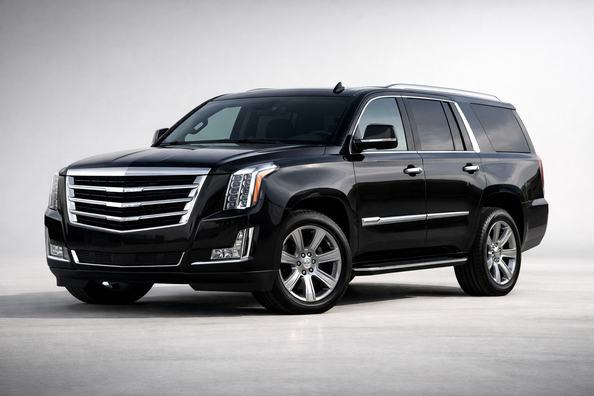
Cadillac Escalade 2020–present is not just a big SUV, but effectively two different vehicles under the same name: 2020 closes out the previous generation, and from 2021 a fully updated Escalade begins, with a different level of space, technology, and comfort. In short, it’s a vehicle for those who truly need three rows, a big reserve of pulling power, a high equipment level, and a strong presence on the road.
At the same time, the Escalade can’t pretend to be compact. It’s wide, long, expensive to run, and it doesn’t forgive an impulsive “city car” purchase. That’s why before choosing, it’s important to understand not only engines and trims, but also how the 2020 model year differs from 2021+ in real-world use.
The Escalade sits in the large premium three-row SUV segment alongside the Lincoln Navigator, BMW X7, Mercedes-Benz GLS, and Jeep Grand Wagoneer. But in feel it’s closer to the American format of luxury: more size, more visual mass, and more emphasis on space and long-distance travel than on agility.
It’s best suited to families that genuinely use the third row, trailer owners, people with frequent intercity trips, and those who want one large vehicle instead of a minivan and a crossover at the same time. It’s not the best option for those who mostly drive in the city center, look for fuel efficiency, or aren’t ready to live with large exterior dimensions every day.
2020 is the last year for the fourth-generation Escalade. It’s an older architecture with a less practical cargo area behind the third row and a noticeably less modern interior. On the used market, 2020 often attracts with its price, but in space and the sense of “newness” it clearly loses to its successor.
From 2021, the fifth generation launched. This is where the Escalade gained independent rear suspension, a longer wheelbase, a significantly better third row, an almost flat cargo floor, and a curved instrument-and-infotainment panel with a combined 38-inch diagonal. In practical terms, that means easier access to the third row, more legroom, and a cargo area that no longer feels like a compromise.
The main engine for the Escalade in this period is a gasoline 6.2-liter V8 with 420 hp and 624 N·m. It’s paired with a 10-speed automatic and suits the model’s character well: torque is always on tap, passing is easy, and towing doesn’t feel stressful.
Also, in some years and markets a 3.0-liter Duramax turbo-diesel was offered, rated at 277 hp and 624 N·m, also paired with the 10-speed automatic. The key here is not to generalize: diesel availability depends on the model year and market, so a specific vehicle should be verified by VIN and its actual equipment. Drivetrain can be rear-wheel drive or all-wheel drive; for everyday use the diesel is more appealing for consumption, while the V8 better matches expectations for a big American SUV.
The Escalade retains a body-on-frame design, and you feel it directly in its logic: the vehicle isn’t made for tight courtyards, but for heavy loads, long drives, and towing. The most important change after 2020 isn’t just a new body, but a different level of practicality thanks to the new rear suspension and longer wheelbase.
With ground clearance, it’s important not to invent extra details: the fixed figure varies by version, but in practice what matters more is that the Air Ride air suspension can change ride height by almost 102 mm. In real life, that means it’s less about the catalog number and more about whether this option is present or not.
| Parameter | Value | What it means in practice |
|---|---|---|
| Generation | 2020 — fourth; 2021–present — fifth | The difference between 2020 and 2021+ is huge; it’s not just a facelift |
| Length | 2020: 5179 mm, ESV 5697 mm; 2021+: 5382 mm, ESV 5763 mm | Parking and maneuvering take getting used to, especially in the ESV |
| Wheelbase | 2020: 2946 mm; 2021+: 3073 mm, ESV 3404 mm | The new generation is better for the second and third rows |
| Width | 2020: 2045 mm; 2021+: 2380 mm with mirrors | The vehicle is very wide either way; underground garages should be evaluated realistically |
| Engines | 6.2 V8 420 hp, 624 N·m; 3.0 diesel 277 hp, 624 N·m | V8 — for torque and character; diesel — for long routes and lower consumption |
| Transmission | 10-speed automatic | Great for highway driving, but it’s worth checking the transmission service history carefully |
| Cargo volume behind the third row | 2020: 430 L; 2021+: 722 L, ESV 1175 L | One of the key reasons to look specifically at 2021+ |
| Maximum cargo volume | 2021+: 3412 L; ESV 4027 L | The ESV is especially advantageous for travel and a large family |
| Suspension | Air suspension changes ride height by almost 102 mm | Easier loading, easier to live with the size, and better for trips out of town |
| Towing | 2020 — up to 3765 kg; 2021 — up to 3720 kg | One of the model’s strengths, if a trailer isn’t a rare use case for you |
| Fuel tank | 2021+: 90.8 L; ESV 107.1 L | Good driving range, but fill-ups aren’t cheap |
The big leap happened in 2021. The new Escalade received an interior that truly matches its price: a large curved display panel, a higher-quality presentation, powerful AKG audio, a rich set of cameras, and noticeably better comfort for second- and third-row passengers. In the standard body it’s usually a 7-seater; in the ESV it can be up to 8.
Safety equipment is strong as well: automatic braking, forward-collision warning, lane keeping, 360-degree view, parking assists, adaptive cruise control, head-up display, night vision, and the brand’s highway driving system with automatic lane changes on certain versions. The 2020 equipment isn’t poor either, but it’s the 2021+ that delivers the feel of a modern flagship rather than just a big expensive SUV.
In daily life, the Escalade shows its best where there’s space: suburban routes, highways, intercity travel, family outings, transfers, and trips with lots of luggage. On narrow streets, its dimensions start setting the pace: more time for parking, more cautious maneuvers, and higher demands on surrounding visibility.
Fuel consumption should also be assessed without self-deception. For the V8, depending on year and drivetrain, it’s roughly 13.8–14.7 L/100 km in the combined cycle; for the diesel it’s about 10.2–10.7 L. On top of that, it’s worth checking the service history: some vehicles had complaints about harsh shifts, transmission jolts, and occasional electronic glitches, so a pre-purchase inspection is a must here.
The Escalade has no trouble making an impression. The only question is whether this format matches your use case. If it does, the vehicle gives you a lot; if not, its size and appetite start to wear you out very quickly.
| Pros | Cons | From an owner’s point of view |
|---|---|---|
| Very spacious cabin, especially in 2021+ and ESV | Large exterior dimensions | Families using three rows will be happy, but city parking will become a daily task |
| Powerful V8 and strong towing capability | High fuel consumption | Great for trailers and highway use, extra expense for short city trips |
| Modern interior and rich equipment in 2021+ | More complex and expensive tech | Comfort is high, but maintenance should be planned in advance |
| Better third row and cargo area after the generation change | The 2020 model already feels noticeably older in concept | If you need practicality, 2021+ is almost always more justified |
| Quietness and comfort on long routes | You need to carefully check the transmission, suspension, and recall history | Buying without diagnostics is risky here even in an expensive trim |
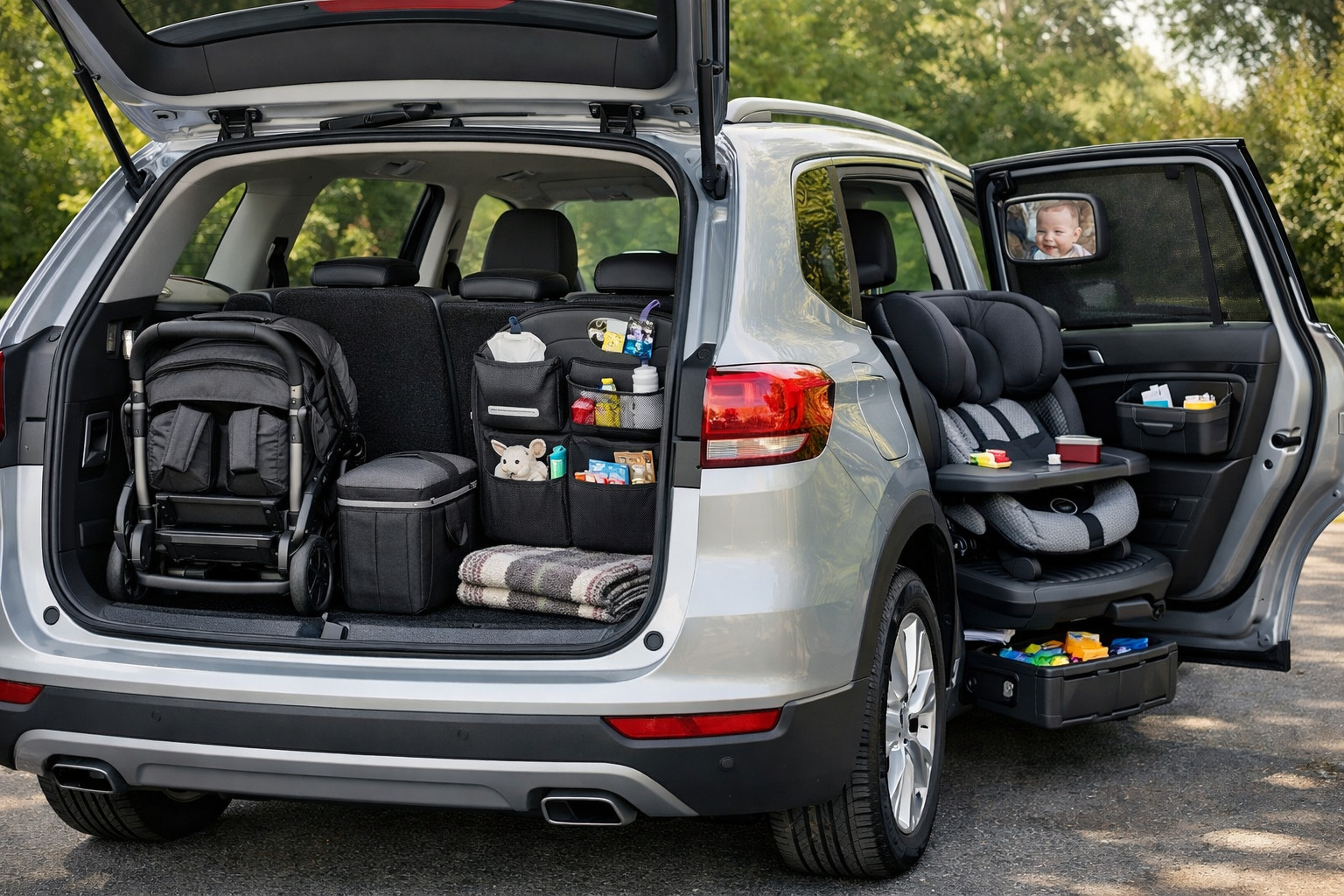
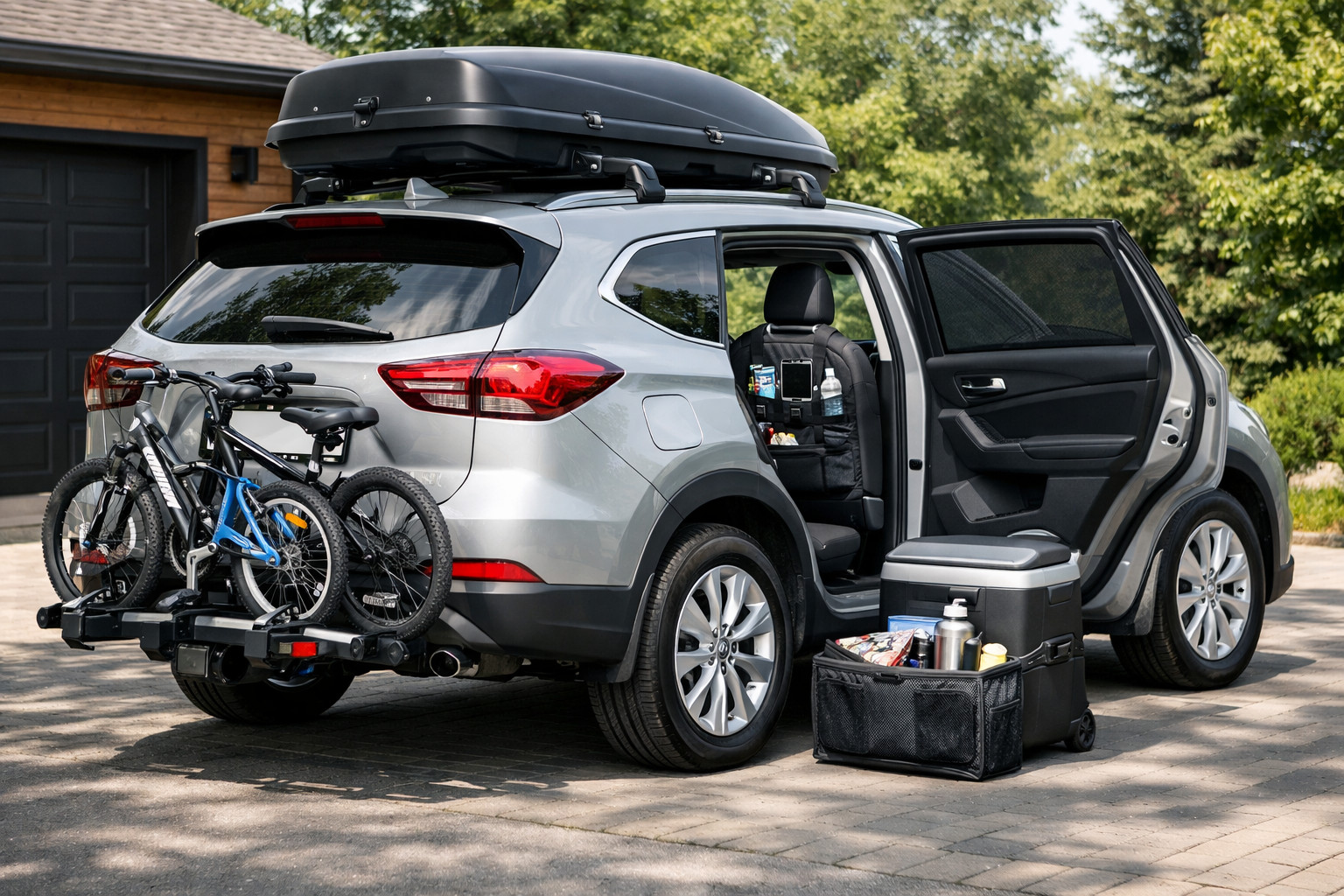
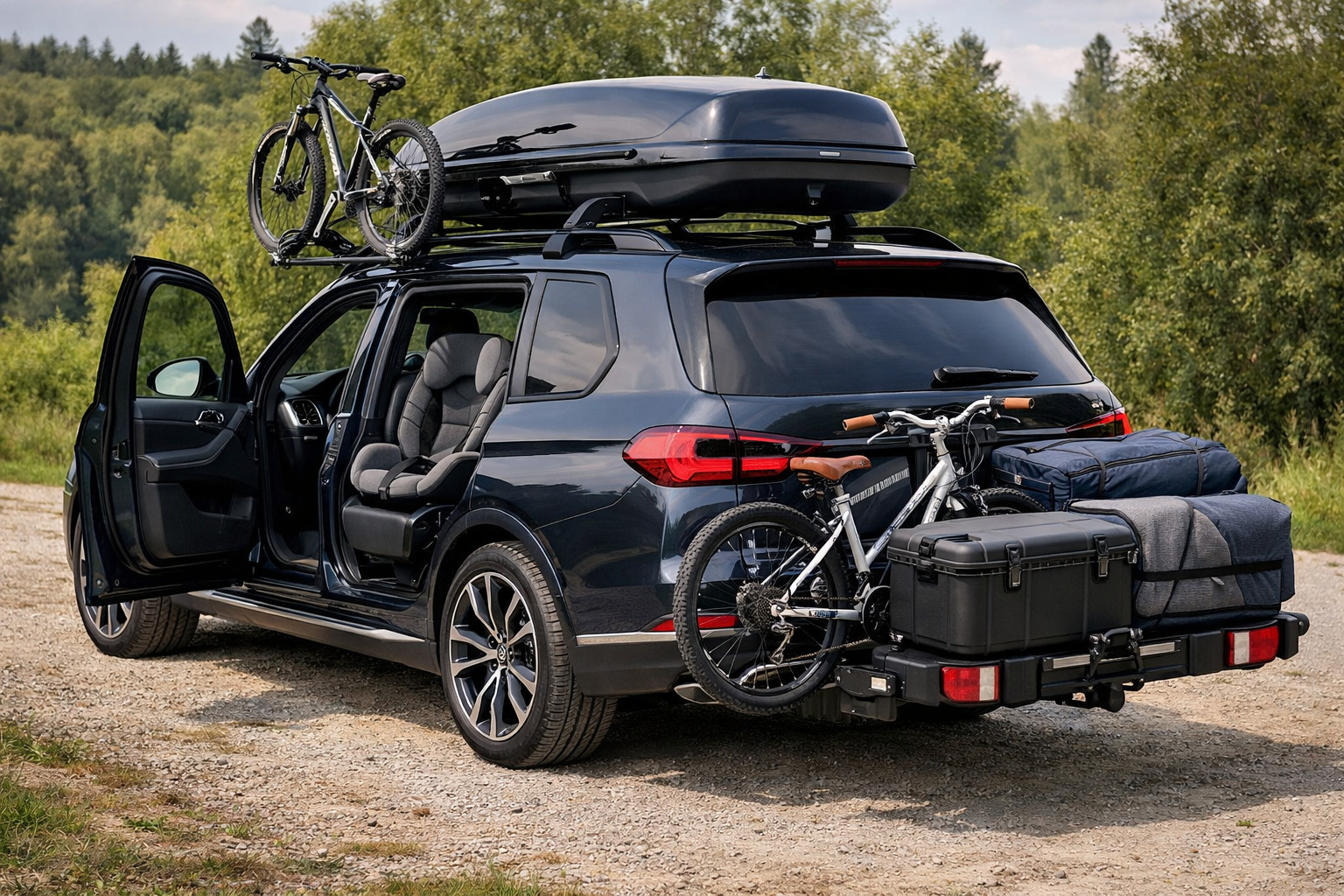
For the Escalade, the smartest approach to upgrading is not trying to make it look even “heavier” on the outside, but boosting practicality: protecting the body from daily wear, improving comfort for family trips, tidy interior enhancements, and well-thought-out solutions for the large cargo space. On this model, targeted accessories usually work better than a chaotic set of flashy but low-utility parts.
Cadillac Escalade 2020–present makes sense for those who need a truly large premium SUV without compromises in space, pulling power, and road presence. But the main takeaway is simple: 2020 and 2021+ shouldn’t be put on the same level just because they share a name, because the new generation is significantly stronger in interior quality, practicality, and the sense of modernity.
If you need a city car without extra costs, the Escalade will be too large and demanding. But if you need three rows, towing, long trips, and a reserve of space without constant compromises, it’s one of the most convincing options in the class. The material is based on real selection experience, practice, and real-world use cases—not abstract catalog impressions.
| ✔ | After 2021, the Escalade became significantly more practical: it has a better third row, more legroom, and a noticeably larger trunk behind the third row. For family trips and regular use of all three rows, this is a real advantage. |
| ✔ | The 6.2-liter V8 delivers plenty of power and is well suited for towing and highway overtakes. For a large SUV, this is exactly the kind of character you expect for everyday and long-distance use. |
| ✔ | In 2021+, the cabin became more modern and better equipped, with a large curved instrument panel, camera systems, and a strong set of safety assistants. This improves comfort and convenience on long trips. |
| ✔ | The Escalade feels at home on highways and intercity routes: it is quiet, comfortable, and suitable for long journeys with passengers and luggage. For people who often drive out of town, it is a very fitting format. |
| ✔ | The air suspension with ride-height adjustment makes the vehicle more convenient in everyday situations. It helps both when loading items and when you need to make life a little easier with its large dimensions. |
| ✘ | The Escalade is very large and wide, so it is not convenient for everyday city use. Parking, maneuvering in courtyards, and underground parking garages require constant attention. |
| ✘ | It has a high appetite for fuel, especially with the V8. For short city trips, this quickly turns into noticeable expenses. |
| ✘ | You should not buy this model without a thorough inspection: the article mentions complaints about rough shifts, transmission jerks, and some electronic glitches. This means you need proper diagnostics and a check of the service history before buying. |
| ✘ | The 2020 model year is already significantly more dated in concept, especially in terms of the cabin and trunk practicality. If you need a large family SUV, the 2021+ version looks much more logical. |
Shipping to EU
Wholesale and retail
Own warehouse
Опис продукту
Подарунки не надаються при оформленні покупки у кредит під 0,01% або при покупці частинами.