01.05.2026
515
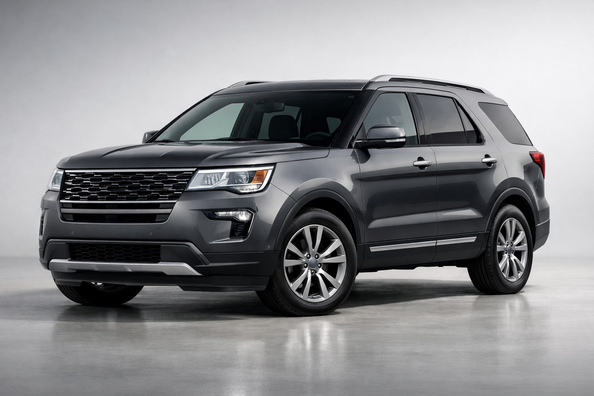

The new-format Ford Explorer is a big three-row crossover for family life, long trips, and towing—not an attempt to pass itself off as premium. The key nuance here is this: 2019 was the last year for the previous Explorer, and an all-new generation arrived already as a 2020 model year vehicle.
So before buying, it’s important not to confuse two different cars. If you need space, pulling power, a big trunk, and a solid set of electronic driver aids, the new Explorer is worth a look. But if your priority is the roomiest possible third row, an ultra-soft ride, or a more upscale-looking interior finish, you should compare it with alternatives especially carefully.
Explorer sits in the class of large family crossovers with three rows of seats. Its strong point is the combination of a roomy cabin, a large cargo area behind the third row, and torquey engines—so the model is often considered not only as a family hauler, but also as a vehicle for trailers, travel, and active recreation.
In the new generation, Ford bet on a rear-wheel-drive platform with available intelligent all-wheel drive. In practice, this brought a more tied-down feel on the highway and a good reserve of pulling power, but it didn’t turn Explorer into a benchmark for comfort or interior finish. This is a vehicle for people who need functionality, not pretty promises in the cabin.
For this model, it’s critical to look at the year. 2019 is the last year of the previous generation with older hardware, a 6-speed automatic, and front-wheel drive or all-wheel drive depending on the version. Starting with the 2020 model year, a completely new Explorer launched with a different architecture, a rear-wheel-drive base, and a 10-speed automatic.
It’s the new Explorer that is the “large family crossover in a new format” usually discussed in the context of 2020 and later. It came with gasoline and hybrid versions, as well as sportier trims with a powerful 3.0-liter V6. If you specifically want the older 2019 Explorer, it should be evaluated separately—without mixing it up with the new generation.
As for engines, the lineup turned out to have different characters. The base 2.3-liter turbo in the new generation provides enough performance for a family vehicle, the 3.3-liter hybrid is interesting for those who drive a lot in the city, and the 3.0-liter V6 is for buyers who want extra pulling power and more eager acceleration.
| Period | Engine | Power and torque | Transmission | Practical meaning |
|---|---|---|---|---|
| 2019, previous generation | 2.3 L turbo | 280 hp / 420 N·m | 6-speed automatic | A rational choice if you want an older Explorer without a V6 |
| 2019, previous generation | 3.5 L naturally aspirated | 290 hp / 346 N·m | 6-speed automatic | A calmer character, without an emphasis on low-end pull |
| 2019, previous generation | 3.5 L turbo | 365 hp / 475 N·m | 6-speed automatic | The stronger version of the previous generation |
| From the 2020 model year | 2.3 L EcoBoost | 300 hp / 420 N·m | 10-speed automatic | The most versatile choice for everyday use |
| From the 2020 model year | 3.3 L hybrid | 318 hp combined / 437 N·m | 10-speed hybrid automatic | Interesting for city driving and a calmer driving style |
| From the 2020 model year | 3.0 L EcoBoost V6 | 365 or 400 hp / 515 or 563 N·m | 10-speed automatic | For towing, highway driving, and those who find the base engine not enough |
A weak spot of early cars in the new generation is complaints about the 10-speed automatic’s behavior. This doesn’t mean every example is problematic, but when choosing, it’s worth separately checking shift smoothness, service history, software updates, and completed recall campaigns.
The new generation has a unibody, a 3025 mm wheelbase, and genuinely large exterior dimensions. This provides a good reserve of space for the second row and luggage, but in the city the Explorer doesn’t feel compact: its width and length are immediately noticeable in parking. Ground clearance in the 201–211 mm range allows you to drive bad roads calmly, but it’s not a direct replacement for a body-on-frame SUV.
| Parameter | Value | What matters |
|---|---|---|
| Wheelbase | 3025 mm | Adds highway stability and interior room |
| Length | 5050–5062 mm | A large body you need to account for in tight parking |
| Width | 2004 mm without mirrors, 2268 mm with mirrors | The vehicle is wide, especially in courtyards and parking garages |
| Height | 1775–1783 mm | Comfortable seating position, decent headroom |
| Ground clearance | 201–211 mm | Good for curbs, dirt roads, and winter use |
| Seating capacity | 6 or 7 | Depends on the second-row configuration |
| Trunk | 515 L behind the third row, 1356 L behind the second, 2486 L behind the first | One of the model’s practical strengths |
| Fuel tank | 67.8–76.5 L | Capacity depends on the powertrain |
| Towing | 2268–2540 kg | Depends on the engine and towing package |
The rear-wheel-drive base made the Explorer more interesting on the highway than the older vehicle, but it didn’t eliminate all compromises. On rough surfaces there are complaints about suspension hopping, aerodynamic noise, and minor rattles—especially on early vehicles.
Inside, Explorer is strong where it truly matters for a family: a comfortable high seating position, good visibility, decent front seats, and a large trunk even with the third row up. But the third row itself isn’t class-leading, so adults are more comfortable there on short trips rather than on a long journey.
In terms of safety equipment, the vehicle looks convincing: the standard Co-Pilot360 driver-assist suite, and in higher trims a 360-degree camera, automatic parking, and a 12.3-inch digital instrument cluster. When buying used, separately check the history related to the rearview camera, the rear axle bolt, and the seatback locking mechanism—on this model, these are not minor details.
In daily life, Explorer is most appreciated by those who truly use its format: carrying kids, stuff, a stroller, gear, going on vacations, or towing a trailer. As for fuel consumption, a practical reference is: 2.3-liter versions—about 9.8–10.2 L per 100 km combined, the hybrid—around 8.4–9.4 L, and 3.0-liter versions—about 11.8 L. The exact number depends on drivetrain, tires, load, and driving style.
If you mostly need the vehicle for city driving and parking garages, you should buy the Explorer only with a full understanding of its size. But if you need a versatile family vehicle for highways and travel, this is exactly where it shines: a big tank, a roomy trunk, strong pull, and adequate geometry for bad roads.
From an owner’s perspective, Explorer isn’t about a wow effect—it’s about a set of useful qualities. Its pros and cons become clear within the first few weeks of use.
| Pros | Cons | What it means in practice |
|---|---|---|
| Large trunk and decent cabin capacity | The third row isn’t class-leading | Great for kids and luggage, but don’t expect minivan-like space |
| Powerful engines and good pull | Early vehicles may draw complaints about the 10-speed automatic | Explorer is strong under load, but a used example needs more careful checking |
| A solid set of safety systems | There were recalls on important components | The electronics are useful, but service history is a must |
| Comfortable seating position, visibility, practicality | Interior materials and overall perceived quality won’t please everyone | Convenient day to day, but it doesn’t look more expensive than it is |
| Better pull and a more composed feel in the new generation | Possible wind noise and ride-smoothness remarks | Strong on the highway, but not perfectly quiet and not the softest |
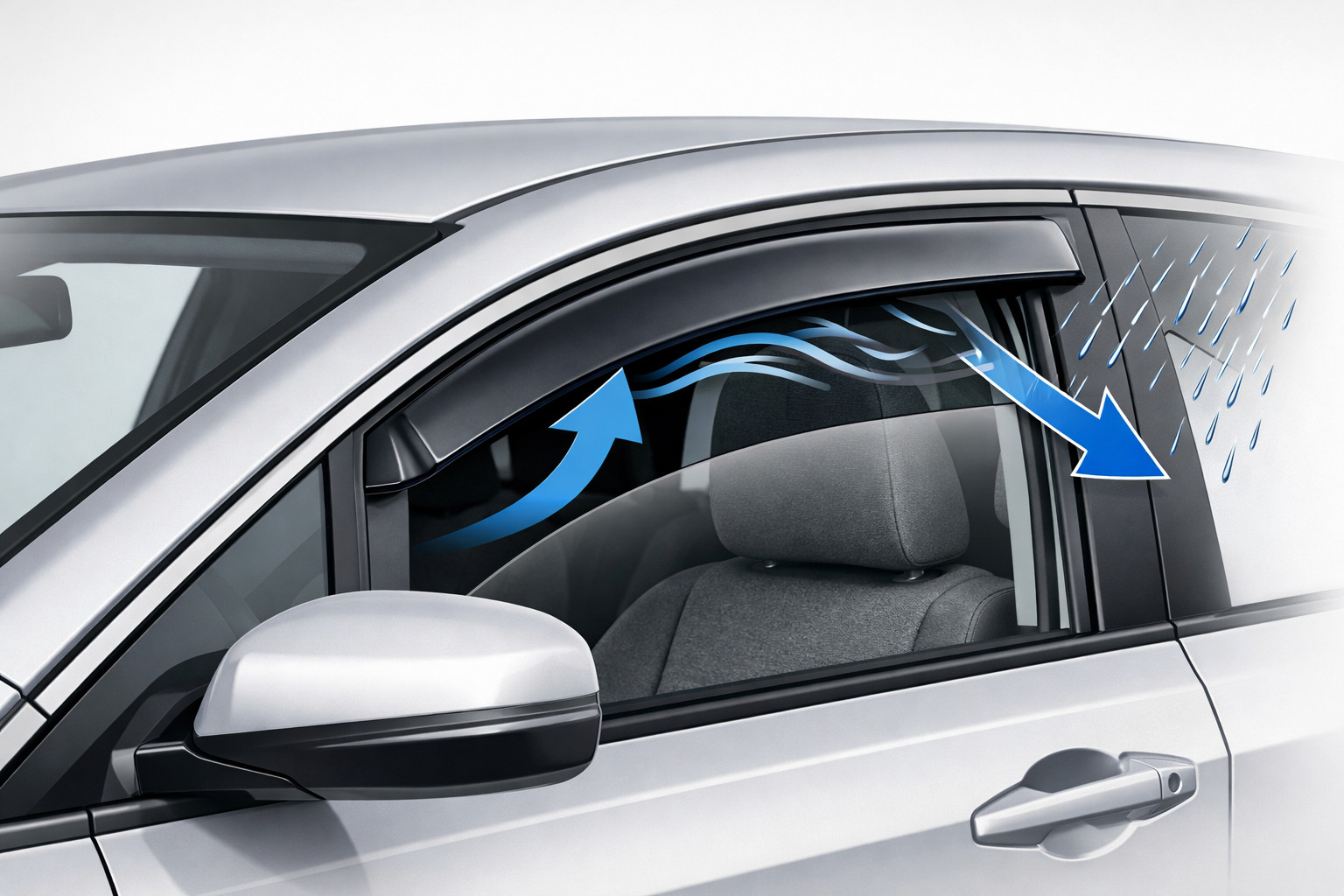
For the Explorer, a utilitarian approach works best rather than a decorative one. This model truly benefits from items that protect the body and interior or add useful capacity: floor mats, trunk sill protection, a roof rack, wind deflectors, and sometimes running boards. Excessive exterior body add-ons rarely bring real benefits here and sometimes only add weight and noise.
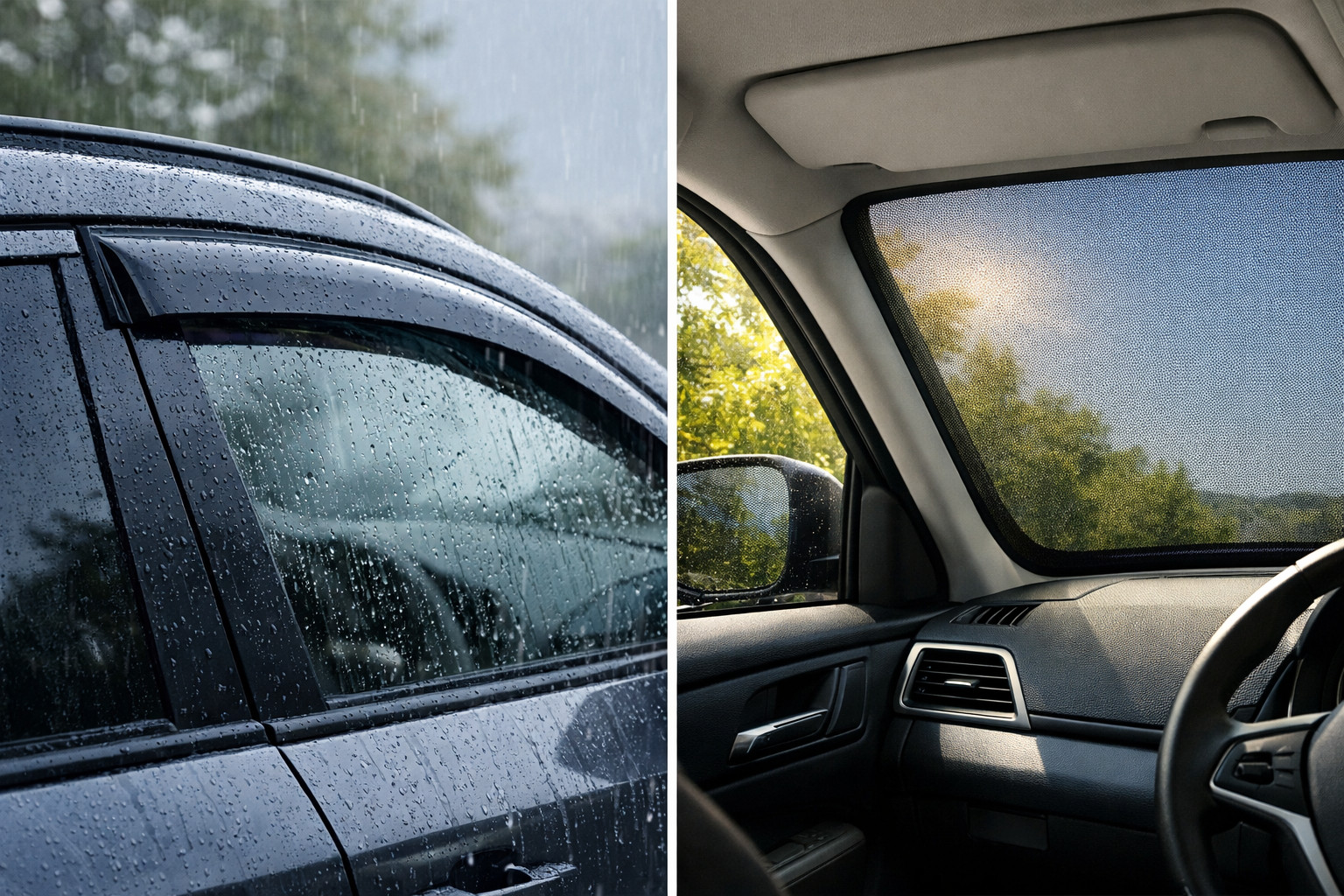
If the vehicle is used as a family hauler, it makes sense to start with trunk protection and solutions for long trips. For the city and shoulder seasons, window deflectors and a rear bumper protector also make sense, because these areas suffer the fastest.
The new-generation Ford Explorer is a strong option for those who need a large family crossover with a solid reserve of pull, a roomy trunk, and modern safety systems. It’s worth buying not for its interior trim, but for its practicality, towing ability, and comfort in long-distance use.
The key to a good purchase is simple: don’t confuse 2019 with the truly new generation, carefully check early vehicles with the 10-speed automatic, and plan useful accessories right away for your use case. This piece is based on real selection experience, hands-on practice, and real usage scenarios—not dry catalog talking points.
| ✔ | A large trunk and decent cabin space make the Explorer convenient for family use, trips with luggage, and carrying gear. Even with the third row raised, there is still useful cargo space. |
| ✔ | The powerful engines provide strong pull, which is noticeable on the highway and when towing. This is useful not only for acceleration, but also for trips with a load or trailer. |
| ✔ | The car has a good set of safety systems, including Co-Pilot360, and higher trims offer a 360-degree camera and automatic parking. For a large crossover, this really makes everyday use easier. |
| ✔ | A comfortable high driving position and good visibility make life easier in the city and on the highway. This is especially noticeable during daily trips with children and a large cabin. |
| ✔ | The new Explorer is better composed on the highway and has a good reserve for rough roads thanks to the 201–211 mm ground clearance. For long-distance use and suburban routes, this is a practical advantage. |
| ✘ | The third row is not the roomiest in the class, so adults are comfortable there only on short trips. For long journeys, it is more of a compromise than a full-size seat. |
| ✘ | Early cars of the new generation have complaints about the operation of the 10-speed automatic. Before buying a used example, it should be checked separately for smooth shifting and service history. |
| ✘ | The model had recalls for important components, so the service history matters a lot. Without checking this point, buying a used Explorer becomes riskier. |
| ✘ | The cabin materials and overall sense of quality may disappoint those expecting a more premium look. This crossover is more about functionality than trim impressions. |
| ✘ | On uneven roads, there are complaints about ride smoothness, as well as wind noise and small rattles. For those expecting a very quiet and soft SUV, this will be a noticeable drawback. |
Shipping to EU
Wholesale and retail
Own warehouse
Опис продукту
Подарунки не надаються при оформленні покупки у кредит під 0,01% або при покупці частинами.