12.06.2026
201
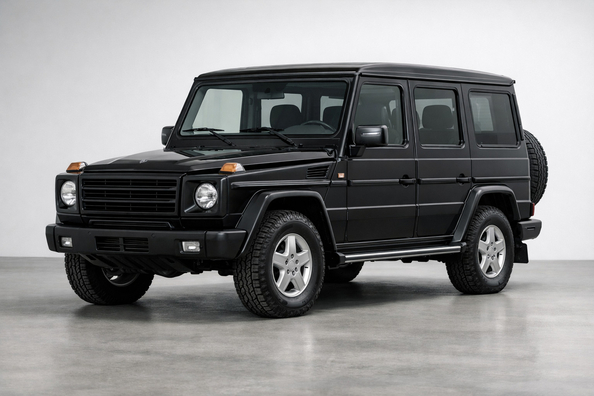
Mercedes G-Class W463 1990-2018 is not a “premium crossover in a boxy body”, but an old-school off-road tool that, right up to the end of its lifecycle, kept permanent all-wheel drive, low range, three differential locks, and solid axles front and rear. That’s why it’s very strong where the normal road ends, but on asphalt it pays for it with noise, a harsh ride, mediocre handling, and high fuel consumption.
No romanticizing: the W463 suits someone who truly values off-road capability, pulling power, long-term image durability, and is ready to live with everyday compromises. If you need quietness, a roomy second row, easy parking, and moderate running costs—this is not the G-Class for you.
The W463 occupied a rare niche between a true off-roader and a status car. Over its life the model became more expensive, more powerful, and more luxurious, but the core logic didn’t change: it’s a vehicle that first knows how to drive on difficult surfaces, and only then tries to be comfortable.
On the used market, the W463 holds up thanks to recognizability, strong liquidity, and a huge number of versions—from calmer civilian trims to very powerful AMG models. But it’s worth buying not for the image, but for a specific scenario: off-road, towing, bad-weather trips, demanding routes.
The civilian W463 series launched at the end of 1989 and effectively covers 1990-2018. Over this time the vehicle didn’t change its philosophy, but went through a series of updates: adding comfort, electronics, new engines, and expensive trims, while never abandoning its off-road architecture.
Key milestones appeared along the way: the rare 500 GE of 1993-1994 with 241 hp, the G 500 from 1998, the first G 55 AMG in 1999, and from 2004—the G 55 AMG Kompressor with 476 hp. In 2008 the G 500 received 388 hp, and in 2010 the G 350 BlueTEC arrived with 211 hp. After the model entered the US market, demand surged, and it was there that the G-Class finally cemented itself as an expensive, flashy, yet still very utilitarian off-roader.
The W463 lineup was broad, and the engine set varied by year and market. If we take confirmed late versions, then by the end of the cycle the model was already living in the format of large gasoline engines with very serious torque. The transmission on late gasoline versions for the 2018 model year is the 7-speed automatic 7G-TRONIC.
| Version | Engine | Power | Torque | Transmission |
|---|---|---|---|---|
| G 550 | 4.0 L V8 biturbo | 416 hp | 610 N·m | 7-speed automatic |
| AMG G 63 | 5.5 L V8 biturbo | 563 hp | about 761 N·m | 7-speed automatic |
| AMG G 65 | 6.0 L V12 biturbo | 621 hp | about 1001 N·m | 7-speed automatic |
The key here isn’t just the numbers, but the character. Even the regular G 550 is already very quick, while the G 63 and G 65 turn a heavy off-roader into an almost absurdly dynamic machine. At the same time, the entire series retains permanent all-wheel drive, a two-speed transfer case, and three differential locks—meaning the off-road hardware here isn’t decorative.
The W463 body is boxy and very upright, but that doesn’t mean record interior space. In terms of chassis, right up to the end of production the vehicle stayed faithful to the old layout: solid front and rear axles, springs, gas-charged shock absorbers. This very foundation delivers capability, but also explains the harshness and specific behavior on asphalt.
| Parameter | Data |
|---|---|
| Generation | W463, 1990-2018 |
| Length | 4764 mm in G 550; 4769 mm in AMG G 63/G 65; 4501 mm in G 550 4x4² |
| Width with mirrors | 2056 mm in standard versions; 2189 mm in G 550 4x4² |
| Height | 1954 mm in G 550; 1938 mm in AMG; 2235 mm in G 550 4x4² |
| Wheelbase | 2850 mm |
| Ground clearance | 205 mm in G 550 per brochure, but another factory document lists 235 mm; 196 mm in AMG; 437 mm in G 550 4x4² |
| Fording depth | 600 mm in regular versions; 1000 mm in G 550 4x4² |
| Trunk | 660 L behind the second row and 2127 L with the seats folded, by the factory method up to the roof |
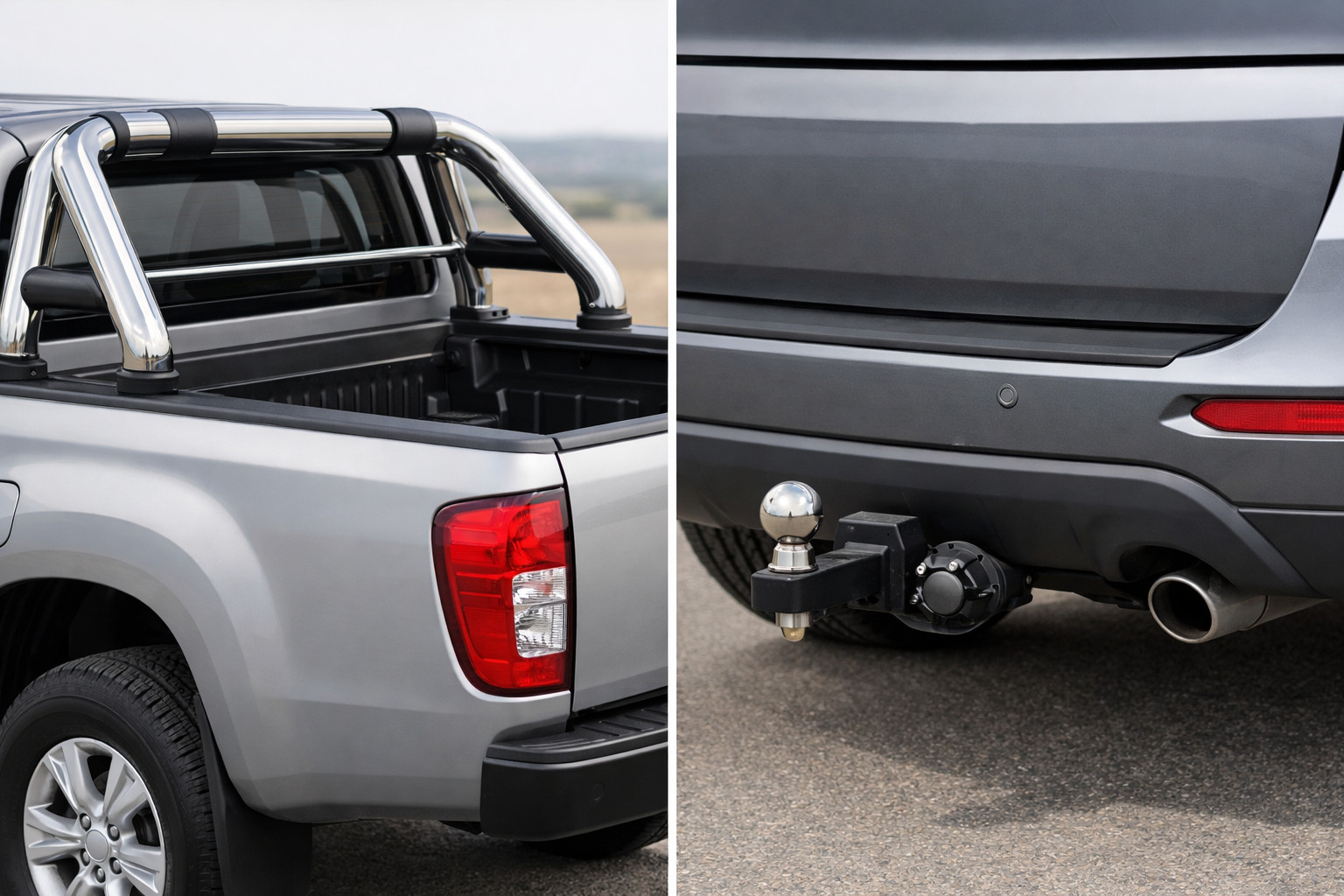
| Towing | Up to 3500 kg braked trailer |
| Roof load | 150 kg |
For AMG, documents even show discrepancies for approach and departure angles, so you need to look at the specific version and the specific market. But the overall conclusion is simple: the geometry and drivetrain of the W463 are truly off-road, not just styled to look like off-road.
By the end of production the cabin looked and felt much more expensive, but space didn’t become a strong point. The vehicle seats five; there’s enough room up front, but the rear bench isn’t as generous as you’d expect from the exterior dimensions. Seating is high, getting in and out takes effort, and the side-hinged rear door with the external spare wheel is inconvenient in tight parking.
Comfort also comes with big caveats. Noise, upright seating, a stiff ride, and heavy steering are typical W463 traits, especially compared to newer large SUVs. On the safety side, however, for 2018 the equipment is already decent: six airbags, ESP, ABS, traction control, tire-pressure monitoring, a rear-view camera, parking sensors, blind-spot monitoring, and adaptive cruise control.
In the city, the W463 quickly reminds you that it’s heavy, tall, and not very rational. A reference for fuel consumption on late versions is as follows: G 550—about 18.1 L/100 km in the city and 16.8 L/100 km on the highway, AMG G 63—19.6 and 15.7 L/100 km, AMG G 65—21.4 and 18.1 L/100 km. In the G 550 4x4² consumption is even higher. Plus it requires premium-grade fuel.
Then comes the cost of ownership: expensive tires, insurance, taxes, servicing. In harsh climates you need to watch closely for corrosion, especially around the running boards and under the rear washer. If the scenario is daily short city trips, the W463 is more often tolerated than enjoyed.
The main advantage of the W463 is that it honestly does what its looks promise. The main drawback is that you pay for it every day, even if you see off-road only once a month.
| Pros | Cons |
|---|---|
| Three locks, low range, solid axles, and real off-road capability | Harsh ride, noise, and weak on-road handling |
| Very torquey and powerful engines, especially the late V8 and V12 | High fuel consumption and expensive upkeep |
| Holds its value well and is instantly recognizable | Cabin is tighter than you’d expect for the body size |
| Can tow up to 3500 kg and carry 150 kg on the roof | Inconvenient access to the trunk due to the side door with the spare wheel |
| Huge personalization potential | Risk of corrosion and wear in body details on older vehicles |
Who it suits: someone who often drives on bad roads, tows a trailer, carries heavy gear, or simply wants real off-road mechanics without imitation. Who it doesn’t suit: anyone looking for family long-haul comfort, a spacious second row, and reasonable monthly costs.
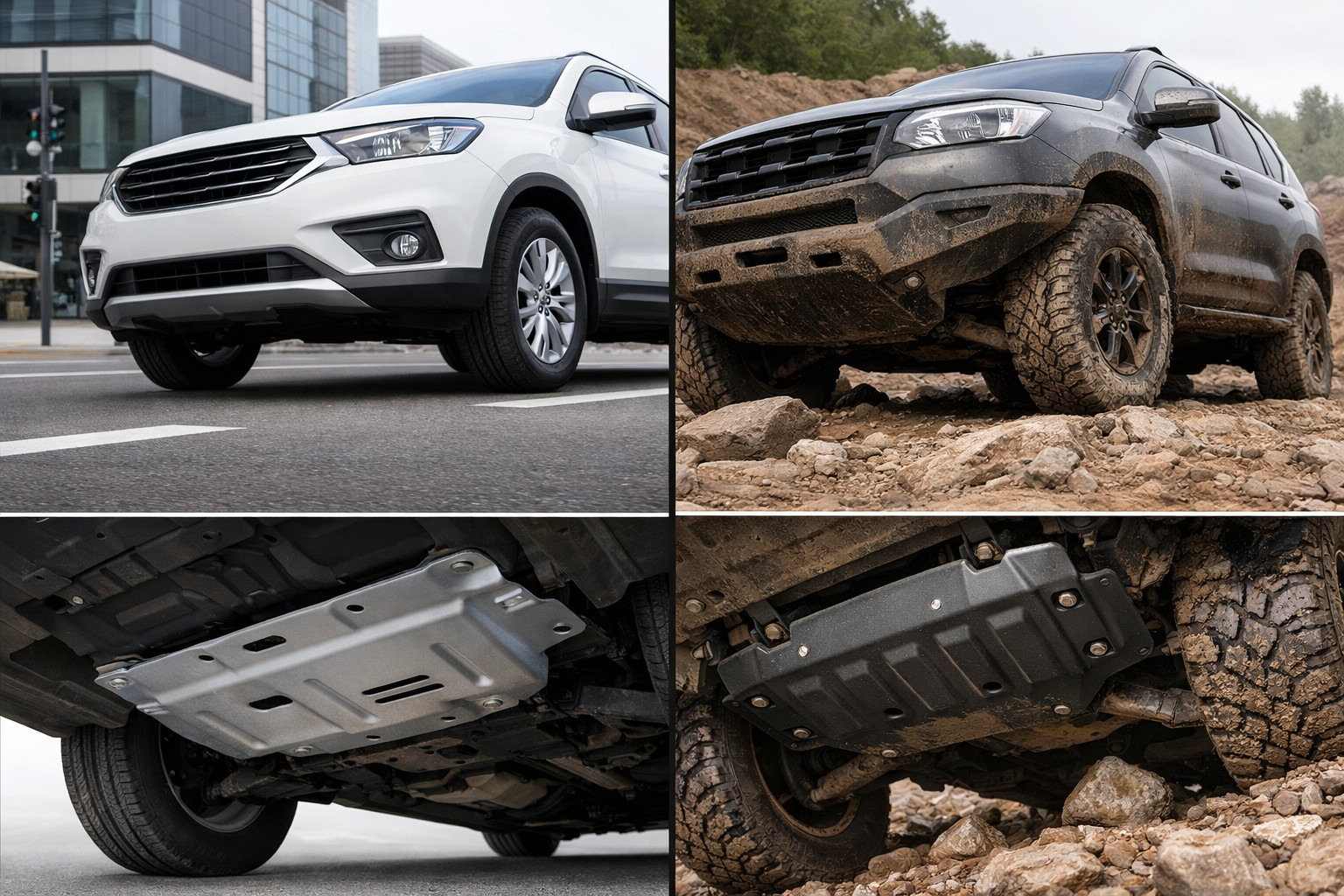
For the W463, tuning makes sense only when it solves a specific task. In the catalog for W463, it’s logical to start with engine skid plate protection if the vehicle goes off asphalt, and with a trunk liner if you regularly carry tools, jerry cans, tow straps, or dirty gear back there.
There’s less point in accessories that add weight and noise but don’t improve your use case. The old W463 is heavy, harsh, and sensitive to details as it is, so first you should cover protection and the practicality of the cabin and trunk, and only then think about exterior decor.
Mercedes G-Class W463 1990-2018 is old school without embellishment: very strong off asphalt, very distinctive on the outside, but tight, noisy, and expensive in everyday life. If you need a real off-roader with powerful engines and strong resale value, it still makes sense. If you just want an expensive big SUV for daily use, it’s better to look elsewhere. This material is based on real selection experience, hands-on practice, and real use scenarios—not on romanticizing the G-Class image.
| ✔ | A true off-road platform: permanent all-wheel drive, low-range gearing, three differential locks, and rigid axles deliver very high capability off-road. On difficult surfaces, this is not an imitation but a genuinely effective setup. |
| ✔ | Strong torque and plenty of power in later versions. Even the G 550 is fairly quick, while the AMG G 63 and G 65 offer very impressive performance for such a heavy vehicle. |
| ✔ | Well suited for practical tasks: it can tow up to 3500 kg, has a large trunk, and a high roof load of 150 kg. This makes it useful for a trailer, gear, and trips in difficult conditions. |
| ✔ | High resale value and strong recognition on the used market. The model has a wide range of versions, so you can choose either a calmer option or a very powerful AMG. |
| ✔ | By 2018, the safety equipment had become quite complete: ESP, ABS, traction control, a rear-view camera, parking sensors, blind-spot monitoring, and adaptive cruise control are all included. |
| ✘ | On asphalt, the W463 is not very pleasant for everyday use: a stiff ride, noise, and heavy steering noticeably reduce comfort. Handling is also average, especially when compared with modern large SUVs. |
| ✘ | Fuel consumption is high even in regular versions, and it is even higher in AMG models. Premium fuel is also required, which raises day-to-day running costs. |
| ✘ | The cabin is not as spacious as it seems from the outside. This is especially noticeable in the rear row, and getting in and out of the vehicle requires effort. |
| ✘ | Everyday convenience is weak: the side rear door with the spare wheel is inconvenient in a tight parking space. For the city and short trips, this creates more inconvenience than benefit. |
| ✘ | Ownership is expensive: tires, insurance, taxes, and maintenance are not cheap. Older vehicles also need corrosion checks, especially around the running boards and under the rear washer. |
Shipping to EU
Wholesale and retail
Own warehouse
Опис продукту
Подарунки не надаються при оформленні покупки у кредит під 0,01% або при покупці частинами.