03.05.2026
333
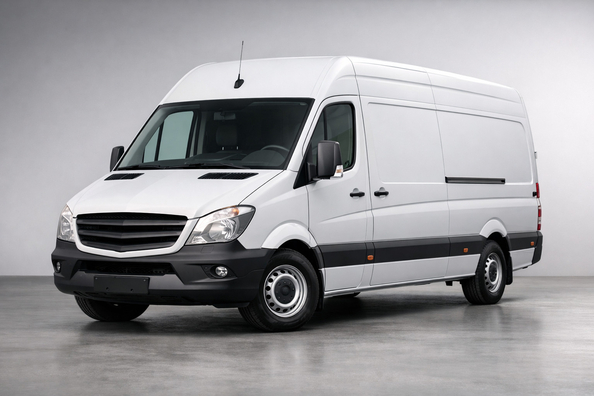
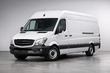
Mercedes Sprinter W906, aka NCV3, still remains one of the strongest bases for builds in the large van class. The reason is simple: many body variants, big usable volume, high payload, decent factory preparation for upfits, and a solid set of basic safety features for its time.
But as a used vehicle it’s not a “trouble-free blank canvas.” Before buying, it’s important to look not only at the engine and mileage, but also at corrosion, paint condition, recall history, body height for your routes, and whether you can live with the stiff and noisy behavior of an empty van.
The W906 entered a segment where the main rivals were the Ford Transit, Ram ProMaster, and Nissan NV, but it bet not on a low entry price, but on platform versatility. This is a van for those who need a base for a camper, a service vehicle, a mobile workshop, a passenger conversion, or intercity transport. If your main criterion is the softest possible ride when empty and minimal body-related risks on the used market, the Sprinter needs especially careful inspection.
The Sprinter W906/NCV3 is the second generation of the model. In Europe it launched in 2006, in North America later, and the series ended in 2018. This generation is what made the Sprinter a very flexible platform: there were cargo, passenger, and mixed versions, two wheelbase options, three body lengths, two roof heights, and the passenger version could seat up to 12 people.
For the modification market this matters: the W906 is easy to find as a bare cargo van for a full conversion, as a ready base for service equipment, or as a long, high-roof vehicle where the factory geometry is already right for work and hauling bulky cargo.
There isn’t one single “correct” engine set for all W906s: the range depended heavily on the market, year, and emissions standard. From confirmed late configurations for the North American NCV3, we have a 3.0-liter V6 turbo diesel with a displacement of 2 987 cm³, output of 188 hp, and torque of 441 N·m. It was paired with a 5-speed automatic, drive was rear-wheel, and 4x4 was an on-demand option.
In practice, this means the following: it’s better to choose a Sprinter W906 not “by body name,” but by the specific VIN and engine code. Different markets have different diesel versions, so before buying you should verify not forum lists, but the actual equipment of the specific vehicle. If you’re looking at the late V6, it’s a good option for heavy bodies, highway use, and towing, but it’s not a vehicle for quick acceleration.
One of the main reasons for the W906’s popularity is the body itself. In cargo form, length could be 5 929, 6 963, or 7 359 mm, width without mirrors — 2 024 mm, height — from 2 680 to 2 751 mm. Wheelbase — 3 658 or 4 318 mm. Maximum cargo compartment volume reached 15 008 l, floor length — up to 4 926 mm, and interior height — up to 1 976 mm.
| Parameter | Data |
|---|---|
| Production period | 2006–2018 |
| Generation | W906 / NCV3, second generation |
| Engine of the confirmed late version | 3.0 l V6 turbo diesel, 2 987 cm³, 188 hp, 441 N·m |
| Transmission | 5-speed automatic |
| Drivetrain | Rear-wheel drive, optional 4x4 |
| Wheelbase | 3 658 mm or 4 318 mm |
| Body length | 5 929 / 6 963 / 7 359 mm |
| Width | 2 024 mm without mirrors, 2 426 mm with mirrors |
| Height | 2 680–2 751 mm depending on version |
| Ground clearance | There is no single universal value: it depends on version, weight, roof, and 4x4 |
| Cargo compartment volume | Up to 15 008 l; in the passenger version, luggage/cargo volume up to 5 388 l |
| Payload / towing | Up to 2 583 kg / up to 3 402 kg |
| Fuel tank | 93 l |
| Roof load | 300 kg for the standard roof, 150 kg for the high roof |
| Turning circle | 13.6–15.7 m |
In terms of the suspension, it’s a typical large commercial vehicle: it feels best under load, and when empty it can be harsh over small bumps. For builds this is even a plus — there’s reserve in weight capacity and geometry, but for a real project it’s important to calculate height, equipment mass, and suspension behavior once loaded.
In the cabin, the Sprinter W906 stands out not for luxury, but for work-focused logic. A high seating position, good visibility, simple ergonomics, and large glass areas help both in the city and on the route. For its class, the model received a very decent safety set: stability control that accounts for load, crosswind assist, a rear-view camera, and front, side, and curtain airbags.
The weaker point is acoustic comfort in an empty van. Without sound deadening and interior trim, the cabin is boomy; at speed you can hear wind noise, and the high roof adds limitations for parking garages. On the other hand, the high seating position and headroom are exactly what make the W906 a convenient base for passenger or camper conversions.
In daily work, the W906 is better than you’d expect from a large van. The shorter wheelbase turns within 13.6 m, so in the city the vehicle isn’t as clumsy as it looks. For long routes, the large 93 l tank and a service interval of up to 32 187 km are useful, although in reality you still need to consider operating conditions and the condition of the specific engine.
You have to be realistic about fuel consumption: there isn’t one universal official number for all W906s, because there are too many body styles and configurations. In real life, other things matter more: where and how the vehicle worked before, whether the body is worn out, whether the automatic transmission was serviced, and whether recall campaigns for steering and airbags have been completed. For the owner, the main risk here isn’t the model itself, but a poorly inspected used example.
As a base for modifications, the Sprinter W906 is very strong, but its advantages only work when the body and technical condition haven’t been neglected. Below is a quick summary of what an owner actually feels.
| Pros | Cons |
|---|---|
| A very wide choice of bodies, lengths, and roof heights for different tasks | Corrosion and weak paint quality are among the main reasons for disappointment on the used market |
| Large cargo volume and high payload | An empty van rides harshly and noisily |
| Good visibility and decent maneuverability for the class | Some high-roof versions won’t fit into regular parking garages |
| Strong factory base for upfits and conversions | Engines and trims vary greatly by market and year, making it easy to choose wrong |
| A reasonable safety set for a large van | There are historical recalls that must be checked before purchase |
From an owner’s perspective, the biggest plus is that the W906 can be adapted for work without radical body fabrication. The biggest minus is the temptation to buy a cheap “project base,” and only then discover rust, body fatigue, and the need for expensive restoration.
With the W906, tuning makes sense when it solves a specific task: moving cargo to the roof, improving rear visibility, making the cabin more convenient for daily work, or preparing the vehicle for trips and long routes. It’s better to start not with decorative elements, but with what genuinely makes operation easier.
If the vehicle is being built into a camper or a service format, after the basic accessories it makes sense to move on to soundproofing, interior equipment, lighting, and protection for the areas that suffer most in daily work.
The Mercedes Sprinter W906 2006–2018 is still a strong base for modifications if you need volume, payload, body flexibility, and the ability to build a vehicle for a specific task. It’s not the best option for those looking for the quietest and easiest-to-buy used van without a deep inspection, but as a platform for a camper, a service vehicle, or a work conversion, the model is still very convincing. The material is based on real selection experience, hands-on practice, and real-world use cases, so the main takeaway is simple: the W906 is worth investing in when you’re buying a solid body and immediately building the vehicle for your work, rather than trying to rescue a tired base.
| ✔ | A wide choice of body styles, lengths, and roof options makes it possible to tailor the W906 to a specific task — from a cargo van to a camper or service vehicle. |
| ✔ | The model offers a large usable load space and high payload capacity, so it is well suited for carrying bulky cargo and for conversions. |
| ✔ | The factory base for upfits and conversions is well designed: the body has good geometry for work, passenger, and expedition projects. |
| ✔ | For a large van, the Sprinter W906 has a decent safety package: load-adaptive stability control, crosswind assist, and several airbags. |
| ✔ | The short wheelbase provides acceptable maneuverability in the city, while the large fuel tank and long service intervals are useful for intercity and work routes. |
| ✘ | On the used market, one of the main issues is corrosion and poor paint quality, so the body condition needs to be checked very carefully. |
| ✘ | An empty Sprinter rides harshly and noisily, so without additional sound insulation it is not comfortable for everyday use. |
| ✘ | Tall versions may not fit in standard parking garages, which limits their convenience in the city. |
| ✘ | Engines and trim levels vary significantly by market and year, which makes it easy to make a mistake when choosing a specific example. |
| ✘ | There are historical recalls that need to be checked before buying, and that adds another mandatory inspection step. |
Shipping to EU
Wholesale and retail
Own warehouse
Опис продукту
Подарунки не надаються при оформленні покупки у кредит під 0,01% або при покупці частинами.