06.06.2026
355
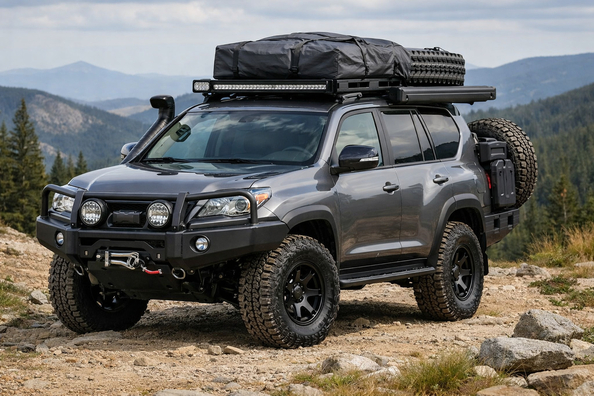
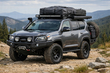
This upgrade plan is for those who want to give their car an expedition look without turning a daily driver into a heavy, noisy, uncomfortable project. The scenario is simple: trips into nature, dirt roads, forest tracks, sometimes a few days on the road—without hardcore mud and rocks.
The smartest approach is this: start with what genuinely helps you drive, fix small issues in the field, and keep gear from rolling around the cabin. Next—things that improve camp comfort. And only then—expensive or heavy elements that look the part but don’t always add real value.
If you strip away the marketing, an expedition setup should cover five tasks: not fear a typical puncture, allow you to drop and restore tire pressure, have the minimum for self-recovery, carry cargo properly, and avoid dumping everything on the roof. That’s what gives the vehicle a tidy, functional look without the theatrics.
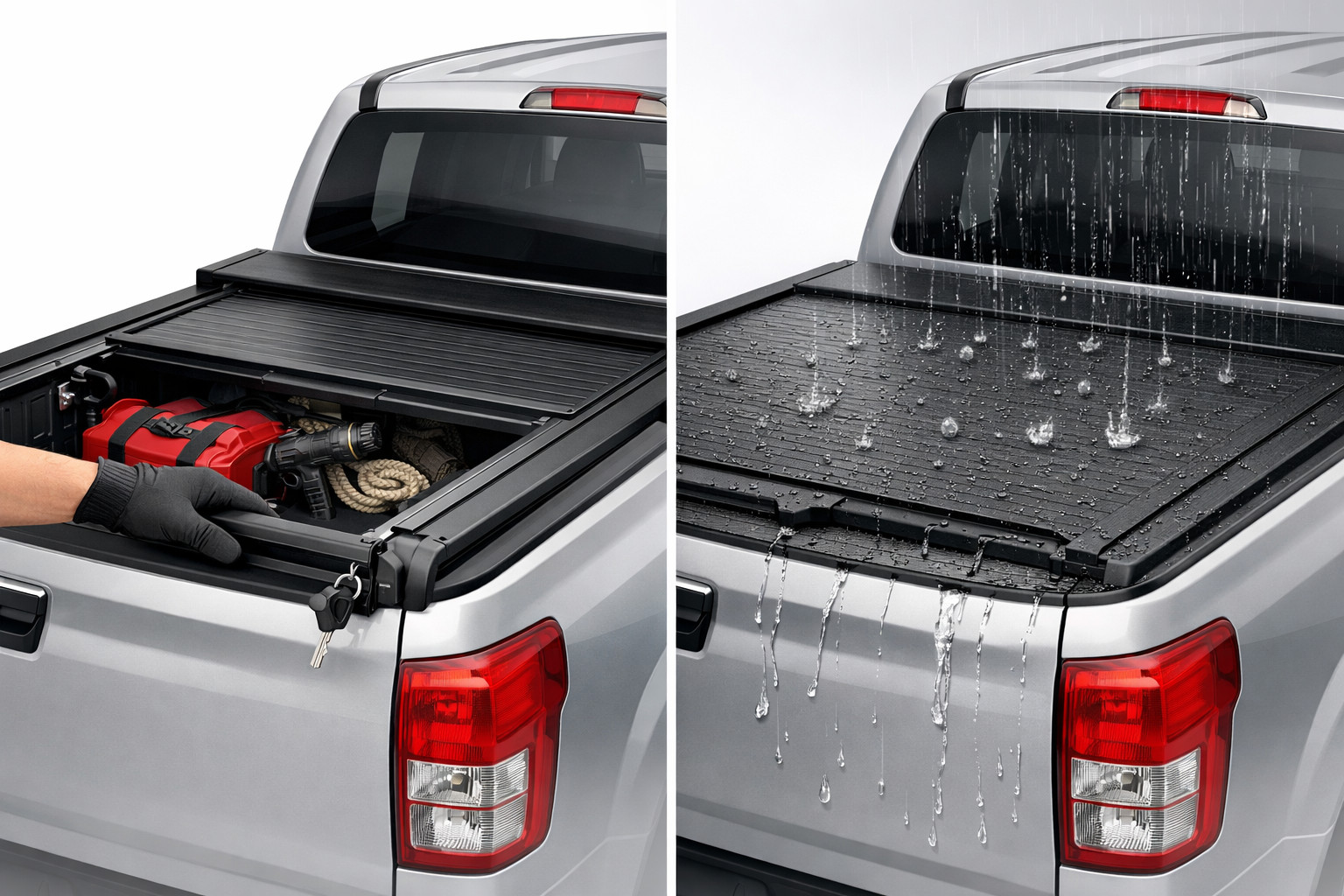
It’s important not to confuse the image with the actual use case. For a crossover that spends 80% of its time on asphalt, one set of all-terrain tires and smart cargo organization will bring more benefit than a tall lift and a huge roof basket. For a pickup, the logic is slightly different: heavy gear is often better carried over the bed rather than on the cab roof.
Step one: all-terrain tires with a balance between asphalt and dirt. For most routes, this is more useful than a starter lift: the vehicle works better on broken roads, feels more stable on loose surfaces, and doesn’t completely lose daily comfort.
Second: a full-size spare, repair kit, and jack. This—not a winch—covers the most common field hassles. Third: a compressor, because airing down without the ability to quickly air back up only solves half the problem.
Fourth: a basic recovery kit: strap, soft shackles, tree saver, gloves, damper. Fifth: weight management: heavy items low and close to the center of the vehicle, light and bulky items higher. This isn’t a minor detail: an overloaded roof ruins handling faster than it looks in photos.
| Upgrade | Why it’s needed | Who it truly benefits |
|---|---|---|
| All-terrain tires | Improve traction on dirt, gravel, wet roads and add confidence off asphalt | Almost anyone who regularly leaves pavement but doesn’t want to live with aggressive tires every day |
| Full-size spare and repair kit | Cover the most typical punctures and small issues on the road | Everyone, without exception—especially on long routes |
| Compressor | Lets you manage tire pressure and return the vehicle to normal road mode after dirt sections | Those who often drive on sand, rocks, washboard/gravel roads, or on winter trips |
| Basic recovery kit | Makes it possible to safely pull the vehicle out of a minor bog-down without complex equipment | Those who don’t drive only on dry field roads |
| Cargo organization in the cabin or trunk | Reduces chaos and speeds up access to tools, water, and a first-aid kit | Anyone who carries gear regularly, not once a season |
| Water запас, first-aid kit, communications, navigation | Increase autonomy and safety without unnecessary load on the vehicle | Those who travel beyond the usual recreation spots or camp overnight in the field |
DD Tuning expert comment: the most common mistake is buying a rack, lights, and an awning before the first proper trip—then realizing what’s missing isn’t decor, but a compressor, a spare, and order in the cargo area. The second typical story is putting heavy gear on the roof when it could have been placed lower. If the vehicle is a daily driver, every extra kilogram up top is felt very quickly in body roll, noise, and fuel consumption.
When the base is in place and after a few trips you can see the real weak points, it makes sense to look at the second line. That’s a roof rack or crossbars if things physically no longer fit inside; an awning if you have regular long stops; a fridge or separate power if trips start to last longer than one day.
This also includes work lights near camp or for slow technical sections. But suspension should only be touched when you have a constant load: water, fuel, tools, gear, passengers. A lift for looks—especially a big one—often brings more compromises in geometry and handling than real benefits.
An awning, rooftop tent, large boxes, ladders, spaced-out auxiliary lighting—this is no longer about basic readiness, but about camp comfort and the desired vehicle image. It can be appropriate, but only if you actually use it often on trips.
For example, an awning is justified for family outings, fishing, camping with frequent stops. But if stops are short and trips are rare, it’s extra weight and extra cost. Same with a rooftop tent: it sets up fast and looks convincing, but it’s heavy, expensive, and often eats up almost the entire allowable roof load.
Most often, three things get bought without real need: overly aggressive tires, an overly tall lift, and heavy roof add-ons. The result: the vehicle drones on the highway, brakes worse, rolls more, and starts to annoy in everyday life.
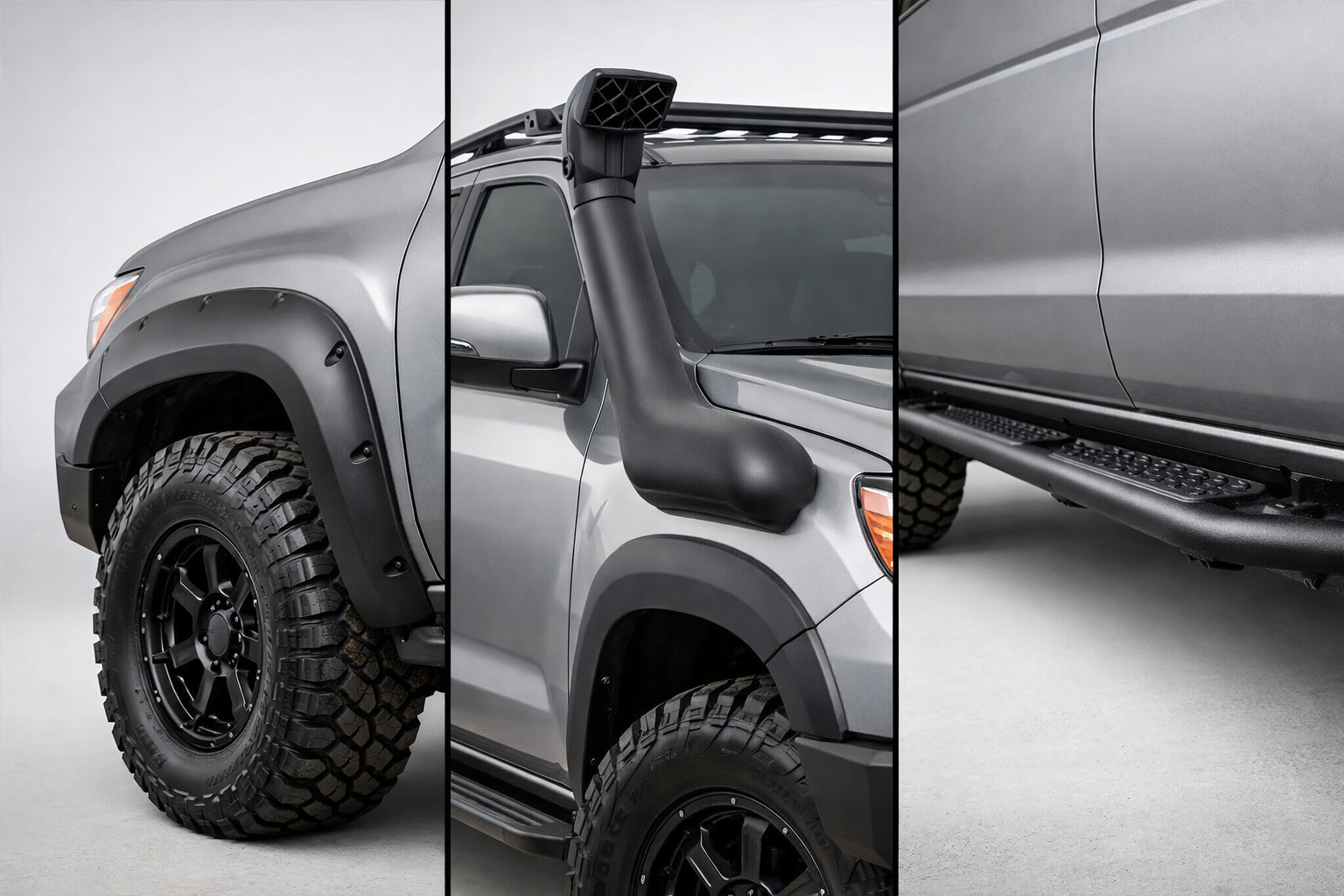
People also often overpay for a light bar, even though for most routes normal factory headlights plus a couple of work lights are enough. A snorkel without regular dust or water crossings is also rarely necessary. A winch is powerful, but on easy group routes it’s lower priority than tires, a compressor, a spare, and a strap.
| What to install first | What can be postponed | What’s not mandatory |
|---|---|---|
| All-terrain tires and pressure control | An awning for irregular trips | A light bar for slow routes |
| Full-size spare, repair kit, jack | A roof rack if things still fit inside | A rooftop tent for 2–3 trips a year |
| Compressor and basic recovery | A fridge and separate power for short trips | A snorkel without dust and water crossings |
| Organizing heavy cargo low in the vehicle | Suspension until a constant heavy load appears | A winch on simple routes when traveling with other vehicles |
More expensive items make sense when they remove a specific discomfort that repeats on every trip. If you consistently run out of space inside, then it’s worth looking at roof racks and crossbars—but first check the allowable load for your specific vehicle and for the rack itself.
If you regularly camp for several hours or sleep outdoors in summer, then it’s logical to look at awnings. For occasional trips, it’s a nice but not a top-priority purchase.
If a route often ends in darkness, you have night approaches to camp, or you need proper light around camp, then choosing auxiliary vehicle lighting is justified. But a winch, complex suspension, or a heavy roof kit should pay off in real conditions—not just a desire to make the vehicle look tougher.
From a customer’s experience: people often come in for a rack and lights because they want an expedition look right away. After a conversation and the first trips, some of them start with tires, a compressor, a spare, and an organizer, adding an awning only when stops truly become regular. In the end, the vehicle looks put together, but it doesn’t turn into a heavy, inconvenient daily driver.
For an expedition look without overdoing it, a simple logic works: first tires, pressure, spare, compressor, recovery, and proper cargo placement; then camp comfort; and finally expensive and heavy solutions, if the scenario itself calls for them. This way you get not just an image, but a vehicle that’s genuinely better prepared for trips.
This material is based on real selection experience, hands-on practice, and real-world use cases: useful upgrades first, nice-to-have ones only after testing on trips, and marketing clutter cut out before you buy.
| ✔ | They first recommend installing what really helps on trips: all-terrain tires, a spare wheel, a repair kit, a jack, and a compressor. This solves typical dirt-road problems and doesn’t make the vehicle inconvenient for everyday use. |
| ✔ | A basic recovery kit and proper load placement provide practical benefits without major changes to the vehicle’s structure. Heavy items low and light ones higher up directly improve handling and reduce clutter in the car. |
| ✔ | The upgrade plan is built step by step: first the essentials, then camping comfort, and only after a few trips — more expensive solutions. This approach reduces the risk of buying unnecessary items. |
| ✔ | The material clearly separates what is truly useful from what only makes sense under certain conditions: an awning, roof rack, refrigerator, or additional suspension. This helps avoid spending money on things that do not fit your scenario. |
| ✔ | It is also emphasized that for a daily driver, it is important to avoid overloading the roof and overly heavy solutions. This is practical because it keeps noise, fuel consumption, and handling at an acceptable level. |
| ✘ | The article clearly shows that some popular additions are often unnecessary for this scenario: a light bar, snorkel, roof tent, or winch. If you buy them without a real need, the car becomes heavier and less convenient. |
| ✘ | Even useful items like a roof rack or awning have limitations: they add weight, noise, and can worsen handling. For rare outings, this may be an unjustified expense. |
| ✘ | A lift and complex suspension are not recommended as a first step, because they can bring more compromises than benefits. The material explicitly says that without constant heavy loads, they make no sense. |
| ✘ | Preparation does not solve everything at once here: first you need to check your real trips, and only then decide what else to buy. This means extra time and several stages before the final setup. |
Shipping to EU
Wholesale and retail
Own warehouse
Опис продукту
Подарунки не надаються при оформленні покупки у кредит під 0,01% або при покупці частинами.