03.07.2026
242
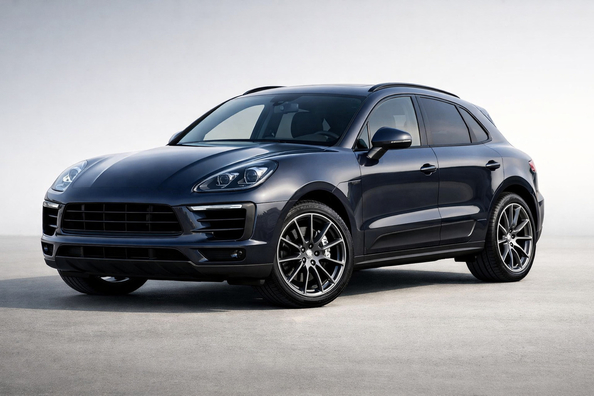

Porsche Macan 2014–2024 is one of those cases where a compact premium crossover is bought not for the biggest trunk and not for the lowest running costs, but for the feeling behind the wheel. In its first generation, the Macan bet on precise steering, the active PTM all-wheel drive system, and a quick 7-speed PDK gearbox, so in the city it doesn’t feel heavy, and on the highway it doesn’t turn into just a tall family car.
This model suits someone who wants a daily crossover with the character of a passenger-car Porsche. It’s not the best option for a big family, regular trips with five people, or when maximum practicality is the priority: the rear row is tight and the trunk isn’t record-setting for the class.
The Macan entered a segment long dominated by the BMW X3, Audi Q5, and Mercedes-Benz GLC, but it arrived with a different emphasis. While most rivals try to combine comfort, space, and status, the Macan was tuned from the start for handling, chassis response, and the driver’s seating position.
That’s exactly why the model became a mass success for the brand: over the production years, Porsche delivered more than 850,000 Macans worldwide. That says a lot about the car’s positioning: it isn’t the roomiest in the class, but it’s very clear in its mission for those who want a crossover that doesn’t dilute the driving sensations.
On the used market, the Macan is often chosen not as a “small Cayenne,” but as a standalone model with its own character. The logic is simple: less body, sharper chassis, more alive steering. The compromise is obvious too—less practicality, especially in the rear.
Within the 2014–2024 scope, we’re talking about the first-generation Porsche Macan with the 95B index. This is the generation that debuted in 2014 and remained the gasoline backbone of the lineup until the arrival of the new, fully electric Macan in 2024.
Over the life of the first generation, the model was updated more than once, but the most noticeable technical refresh came in 2022. Then the Macan received an updated front end, a redesigned center console, a 10.9-inch infotainment screen, and more powerful engines in the current lineup.
So when choosing, it’s important not to mix early cars, facelift versions, and the final gasoline Macans before the generational change. In feel it’s one car from one generation, but in equipment, engines, and small day-to-day нюances, there are differences between years.
The Macan engine lineup depended on the year and market, so there isn’t a universal list for all countries. But the overall scheme is the same: almost the entire essence of the model rests on the combination of a turbo engine, the 7-speed PDK, and the active PTM all-wheel drive with a multi-plate clutch.
| Version | Engine | Power | Torque | 0–100 km/h |
|---|---|---|---|---|
| Macan Turbo, launch 2014 | 3.6 L V6 biturbo | 400 hp | not specified in the provided data | 4.8 s |
| Macan S Diesel, early years | 3.0 L diesel V6 | 245 or 258 hp depending on market | not specified in the provided data | about 6.3 s |
| Macan after the 2022 update | 2.0 L turbo, inline-four | 265 hp | 400 N·m | 6.4 s |
| Macan T | 2.0 L turbo, inline-four | 265 hp | 400 N·m | 6.2 s |
| Macan S | 2.9 L V6 biturbo | 380 hp | 520 N·m | 4.8 s |
| Macan GTS | 2.9 L V6 biturbo | 440 hp | 550 N·m | 4.5 s |
In real-world use, the post-update base 2.0-liter Macan is already enough for daily driving without feeling like an “empty” version. The Macan S is a very fast all-round choice, and the GTS makes sense when the owner truly wants a firmer, more tied-down chassis and the maximum performance of the gasoline range.
Diesel versions are interesting for high mileage, but here it’s especially important to look at the specific origin market of the car, because even the stated power of the early Macan S Diesel varied. In all cases, the Macan’s strong point is not the engine or the gearbox on their own, but how the powertrain works with the transmission as one very quick and intuitive response to the throttle.
By size, the Macan isn’t a micro-crossover, but it’s not a bulky heavyweight either. After the update, the body measures 4726 mm in length, 1922 mm in width, and 1621 mm in height, with a wheelbase of 2807 mm. In the GTS, width increases to 1927 mm and height drops to 1596 mm.
| Parameter | Data | What it means in practice |
|---|---|---|
| Dimensions | 4726 × 1922 × 1621 mm | In the city the Macan is still manageable, but the body is already wide for tight parking garages |
| Wheelbase | 2807 mm | Gives stability at speed, but doesn’t make the cabin record-spacious |
| Trunk | 458–1503 l | Enough for daily tasks and trips for two or three, but not a class leader |
| Towing | 2000 kg in the base version, 2400 kg in S/GTS | Can serve as more than just an urban crossover |
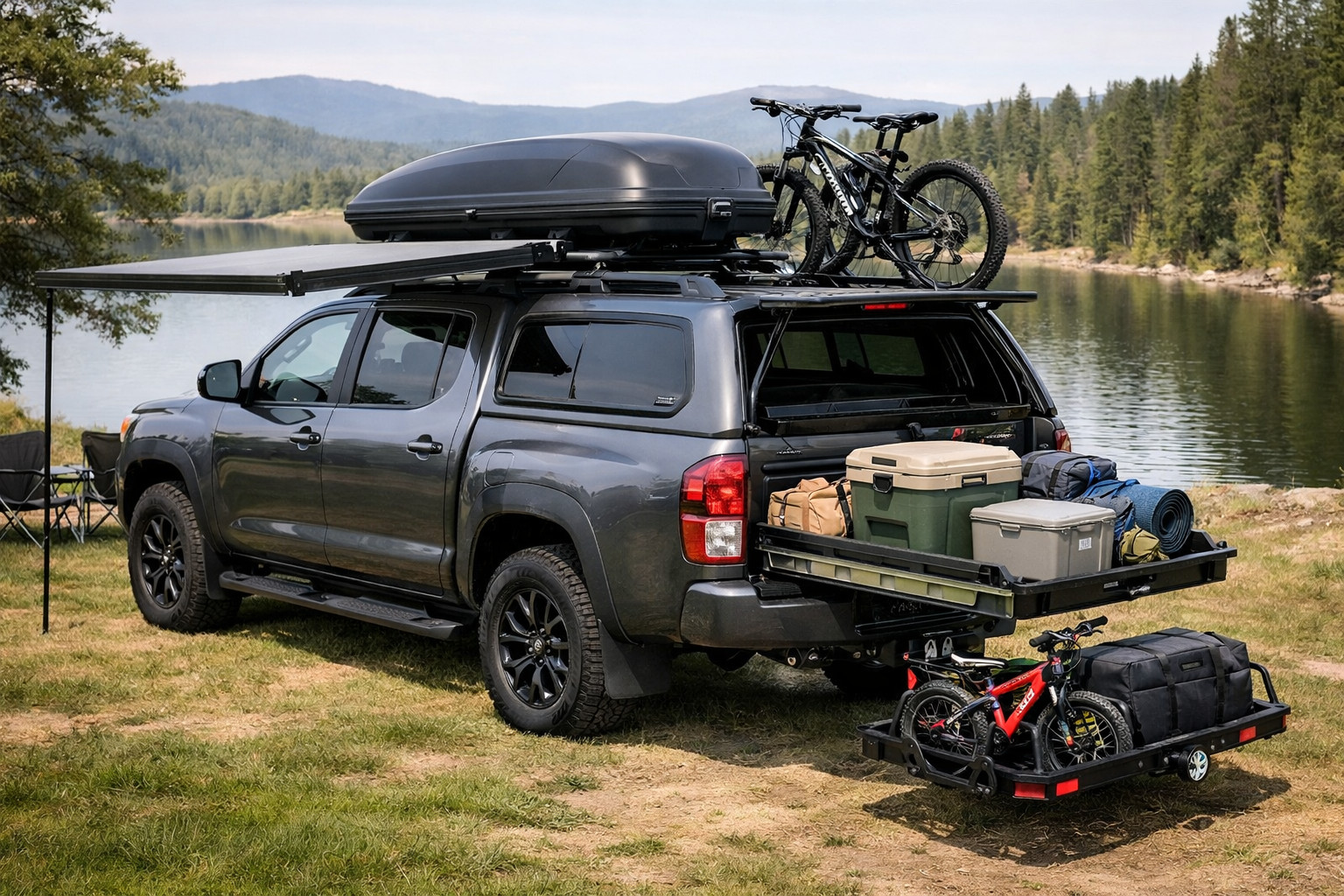
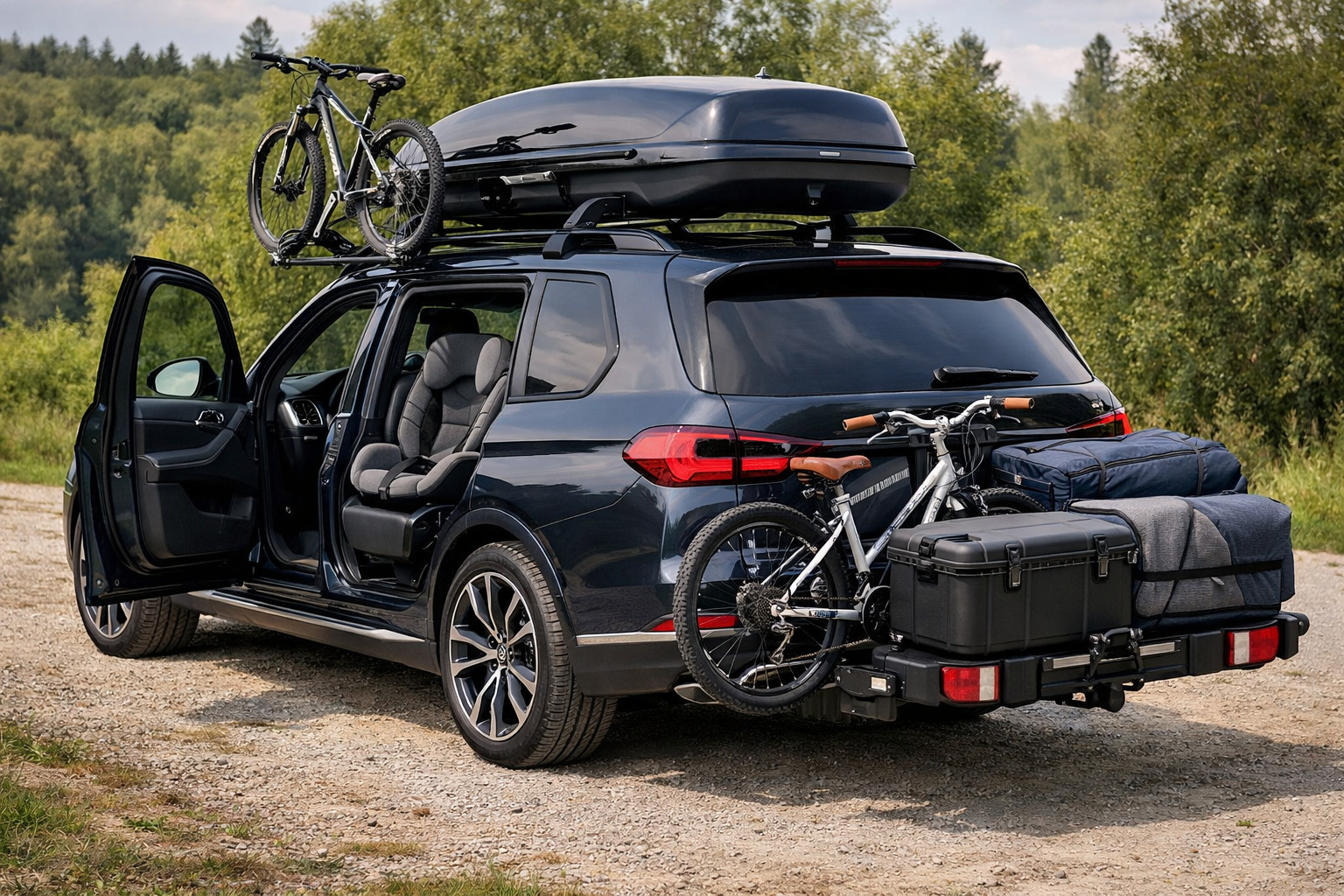
| Roof load | 75 kg | Roof rails and a roof box make sense for travel |
| Turning circle | 11.96 m | For the class, a normal figure for city maneuvers |
| Suspension | Front five-link, rear multi-link with aluminum components | This is where the precision and unusually “car-like” feel come from |
| Drivetrain and gearbox | PTM, all-wheel drive, 7-speed PDK | Fast shifts and very composed traction on corner exit |
A separate point is ground clearance. In the provided official specs there isn’t a single universal number for all versions, because height depended on the trim and suspension. For the GTS it’s explicitly stated that the sports air suspension lowers the body by 10 mm, so comparing “Macan ground clearance” without specifying the version is incorrect.
The chassis is one of the main reasons to buy this model. The electromechanical steering with a 14.3:1 ratio, a precise front axle, and a well-calibrated all-wheel drive deliver behavior that often puts the Macan above its rivals specifically in terms of driving enjoyment.
The Macan’s interior is built around the driver. The seating position and front seats are praised by almost everyone: it’s comfortable in the city, and on the highway your back doesn’t get tired as quickly as in many softer-tuned crossovers. But the rear row isn’t the model’s strong suit. For two adults on short to medium trips there’s enough space, but there isn’t room on the level of some rivals.
The 2022 update brought a new center console with touch-sensitive elements, an analog clock, and a 10.9-inch infotainment screen. Visually the cabin became more modern, but some owners consider the touch buttons less convenient than traditional physical keys.
For safety and everyday convenience, it’s important that in later versions lane departure warning and front and rear parking assist became standard. At the same time, the rear-view camera and certain small ergonomic details drew criticism, so it’s not worth idealizing the Macan interior: it’s strong in seating position and perceived quality, but not without debatable choices.
In the city, the Macan is convenient because it doesn’t feel big from the driver’s seat, although the actual width of over 1.92 m requires attention in narrow parking garages and near high curbs. The car suits a couple or a small family where the rear row is needed regularly, but without constant trips with four adults.
On the highway, the Macan opens up much more. The base engine no longer feels weak, and the S and GTS versions provide a big reserve of pull for overtaking. If you often drive far, practical figures matter too: the trunk is 458 l, and the S and GTS can tow a trailer up to 2400 kg.
As for fuel consumption, there are no miracles. For the late 2.0-liter Macan, the official WLTP range is about 10.1–10.7 l/100 km, for the S it’s 11.1–11.7, and for the GTS it’s 11.3–11.7 l/100 km. In real life these numbers depend heavily on wheels, traffic, and driving style, but the sporty versions are definitely not about saving fuel.
Another practical nuance: the Macan is often bought for the emotion, but used like a regular daily car. And here it’s good exactly as long as the owner accepts its compromises: the rear row is modest, the trunk isn’t record-setting, but the handling and the overall composure of the car deliver a tangible reason for such a purchase every day.
From an owner’s perspective, the Macan isn’t the “most sensible” crossover in the class, but it’s one of the most enjoyable to drive. That’s exactly why it’s loved, even when its everyday drawbacks are acknowledged.
| Strengths | Weaknesses | What it means in real use |
|---|---|---|
| Very precise chassis and steering | Stiffer versions can be tiring on poor roads | If your priority is steering feel, the Macan hits the mark; if you want softness, test-drive the S and GTS carefully |
| Fast, logical PDK behavior | Complex engineering requires attentive servicing | The car drives tightly, but saving on maintenance is a bad idea here |
| Strong engines in the later lineup | Fuel consumption is high in the fast versions | The S and GTS deliver lots of emotion, but aren’t for those who count every liter |
| Good driving position and front seats | Tight rear row | Fine for two or a small family; for regular long trips with rear passengers it’s already a compromise |
| High-quality feel on the move | Touch elements in the cabin aren’t for everyone | Driving is great; pressing the console every day isn’t always ideal |
| Decent versatility: roof, trailer, trunk | Practicality trails some rivals | You can use the Macan every day, but it’s not about maximizing space for the same money |
Who it suits: someone who drives daily alone or as a couple, loves a precise car response, and is willing to live with less space. Who it doesn’t suit: someone primarily looking for a family crossover with a roomy second row, lower ownership costs, and a softer character.
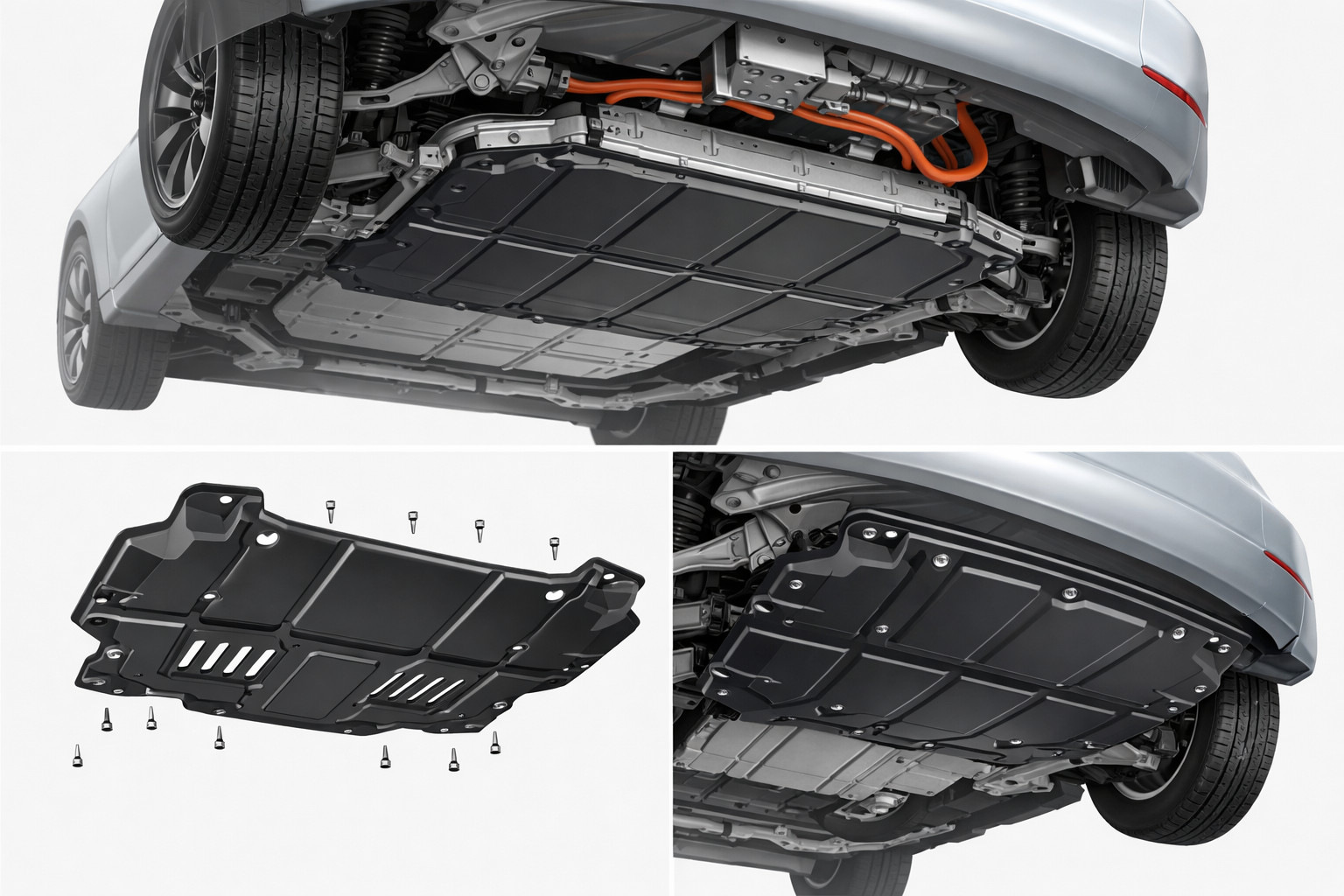
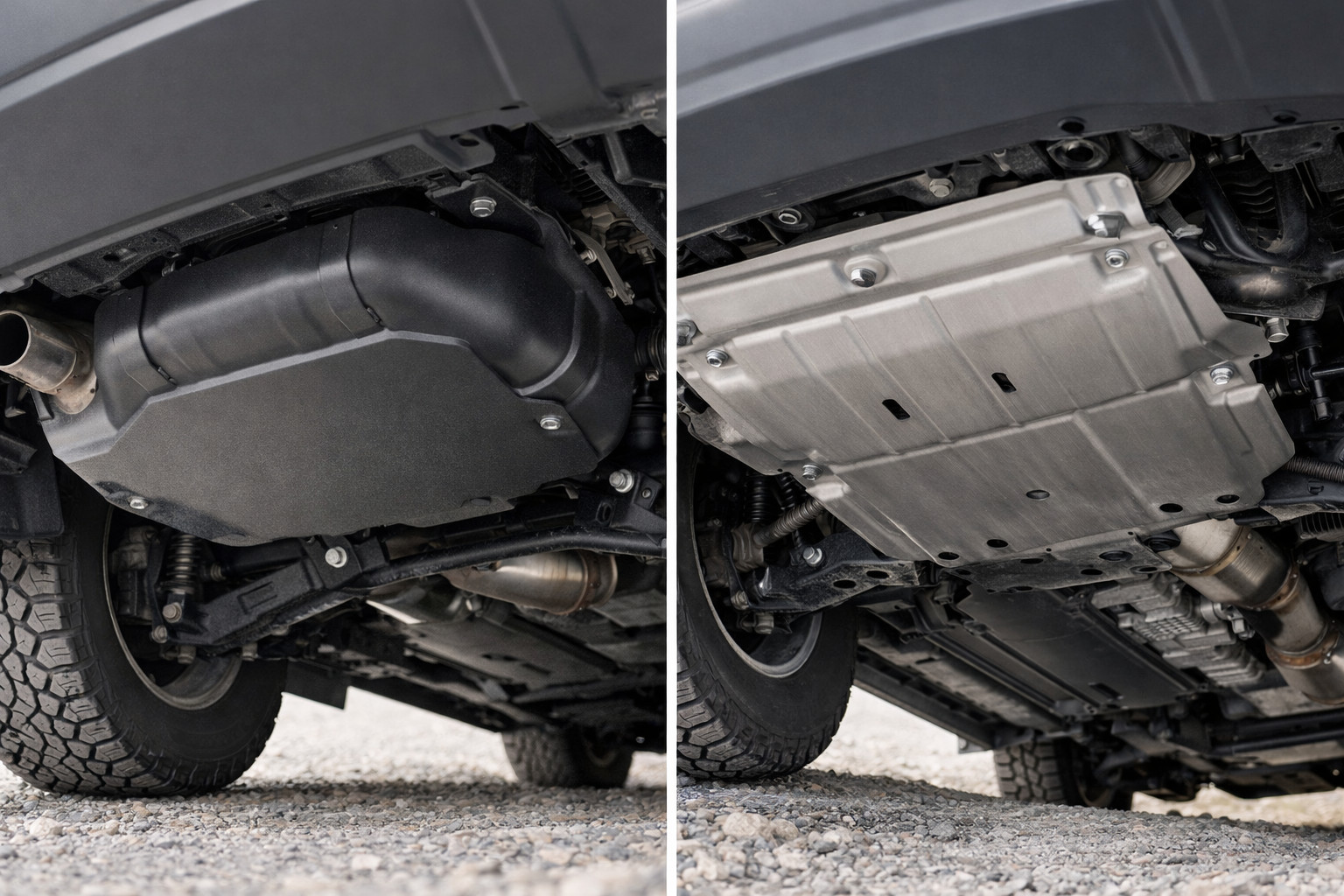
With the Macan, the most sensible tuning isn’t flashy—it’s practical. This model usually needs things that protect the body and interior in the city, not just emphasize a sporty image. If you need a complete starting point for compatible solutions, it’s worth beginning with the Porsche Macan 2014–2024 tuning page.
For the Macan, it’s especially important not to overload the car with decorative parts. This model is valued for its composure, so accessories are best chosen for function: cabin, trunk, roof, body protection. That way the end result doesn’t spoil the car’s character.
The Porsche Macan 2014–2024 is a strong choice for someone who wants a compact premium crossover with very lively handling, a good driving position, and the feel of a real Porsche in a daily format. The most balanced for everyday use look like the later versions with the 2.0-liter engine or the Macan S, while the GTS is more about prioritizing emotion over comfort.
If the main thing for you is space, the rear row, and максимально rational ownership, there are more practical options in the class. But if you want a crossover that delivers clear driving enjoyment every morning, the Macan still remains very strong. This material is based on real selection experience, hands-on practice, and real usage scenarios—not only on dry spec-sheet figures.
| ✔ | Very precise steering and a well-sorted chassis make the Macan one of the most enjoyable crossovers to drive. In the city it doesn’t feel heavy, and on the highway it delivers sharp responses and confident cornering behavior. |
| ✔ | The quick 7-speed PDK gearbox and active PTM all-wheel drive work well together with the engines. This delivers fast shifts and clear pull when exiting a corner. |
| ✔ | In later versions, even the base 2.0-liter engine is enough for everyday driving, while the Macan S and GTS have a big reserve of performance for overtaking and highway driving. For those who want not just to get around, but to drive fast and without strain, this is a noticeable advantage. |
| ✔ | The driver’s seating position and front seats are well suited for daily use and long trips. On the highway, your back gets tired more slowly than in many softer-tuned crossovers. |
| ✔ | The car retains some practicality: a 458 L trunk, towing capacity of up to 2000–2400 kg, and 75 kg on the roof. For a couple or a small family, this is usually enough. |
| ✘ | The rear row is cramped, and Macan is a poor fit for regular trips with four adults. This is not the crossover that stands out for second-row space. |
| ✘ | The trunk is not class-leading in size, so for a large family or frequent trips with lots of luggage it falls behind more practical rivals. This is especially noticeable if the car is used as the only family vehicle. |
| ✘ | The firmer versions, especially the S and GTS, can be tiring on rough roads. If you need a soft daily ride, these trims should definitely be tested on real roads. |
| ✘ | Macan’s technology is complex, so it’s not worth cutting corners on service here. Also, fuel consumption in the quicker versions is noticeably high, so this is not the best choice for those who watch every liter. |
| ✘ | There are debatable choices in the cabin: the touch elements on the center console are not for everyone, and the rear-view camera and some ergonomic details have drawn critical feedback. In other words, the cabin feels high-quality, but it is not without flaws in everyday use. |
Shipping to EU
Wholesale and retail
Own warehouse
Опис продукту
Подарунки не надаються при оформленні покупки у кредит під 0,01% або при покупці частинами.