01.05.2026
447
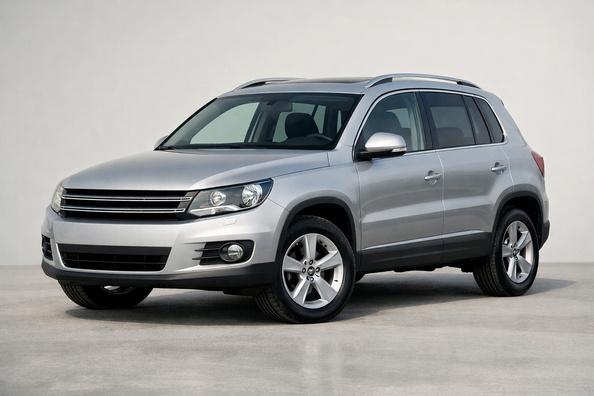
The first-generation Volkswagen Tiguan is a compact crossover for those who want a high seating position, proper handling, and sensible city-friendly dimensions without moving up to a large family vehicle. Within 2007–2016 this includes both early cars and updated versions after the 2011 facelift, and 2016 itself is a transitional year: in some markets the second-generation Tiguan was already on sale, while in others the first generation was still being sold.
The core logic of this model is simple: the Tiguan drives more engagingly than many practical rivals, has a high-quality interior, and feels at home in the city, but it doesn’t offer a class-leading trunk and can turn out to be expensive to own in older examples. That makes it a strong choice for a driver who wants a compact crossover with “car-like” manners, and a weaker choice for someone chasing maximum space, a softer ride, and the lowest possible service costs.
The first Tiguan entered the compact crossover segment as a more composed, driver-focused alternative to purely utilitarian models. With a length of around 4.43 m it’s convenient for courtyards, parking, and dense traffic, and a 12 m turning circle doesn’t make everyday maneuvers a wrestling match with the steering wheel. More about the generation logic can be found on the Tiguan 2007-2016 page.
In the market it sat somewhere in the middle between family practicality and the feel of a “more premium” car. That’s why the Tiguan was often chosen not for dry trunk-volume numbers, but for the combination of seating position, interior quality, punchy turbo engines, and confident highway behavior. Compared to some Japanese rivals it’s less utilitarian in character, but more pleasant for those who mostly drive alone or with one passenger.
The first-generation Tiguan, known as 5N, debuted in 2007. In 2011 the model received a major update: the styling was changed, equipment was revised, and the powertrain lineup was adjusted depending on the market. In 2016 the second generation had already launched globally, but the first Tiguan could still be found as a late or transitional offering.
For a used-car buyer this matters for two reasons. First, 2007–2010 cars and 2011–2016 cars can differ quite noticeably in equipment and engine choices. Second, in 2016 it’s easy to confuse a late Tiguan I with an early Tiguan II if you look only at the year in the documents rather than the body generation.
The model’s strong point is its turbo engines, which give the crossover good pull and lively response. But it’s important not to generalize: the engine lineup depended heavily on the market. For early cars, confirmed options include the gasoline 2,0 TSI with 170 and 200 hp, as well as the 2,0 TDI diesel with 140 hp. On later versions of the first generation, some markets also offered 2,0 TDI SCR diesels with 110, 150, and 184 hp.
There isn’t a single universal answer for transmissions across all years either. Tiguan I can be found with a 6-speed manual, a 6-speed automatic, and a 7-speed DSG, and the drivetrain can be front-wheel drive or 4MOTION. If you want a predictable, stress-free ownership scenario, you need to look not only at the engine but also at the transmission’s condition, service history, and the car’s market of origin.
| Engine | Power | Transmissions | Drivetrain | Practical takeaway |
|---|---|---|---|---|
| 2,0 TSI | 170 hp, 280 N·m | 6-speed manual or 6-speed automatic | depends on version | Plenty of pull for city and highway, but running costs and service won’t be budget-friendly. |
| 2,0 TSI | 200 hp, 280 N·m | 6-speed manual or 6-speed automatic | depends on version | The liveliest character, suited to those who value performance more than economy. |
| 2,0 TDI | 140 hp, 320 N·m | 6-speed manual | depends on version | A sensible choice for high mileage, provided the fuel system and maintenance are in good shape. |
| 2,0 TDI SCR | 110, 150 or 184 hp | 6-speed manual or 7-speed DSG | front-wheel drive or 4MOTION | Late versions in certain markets; before buying, be sure to verify the generation and specification. |
| Technical parameter | Value |
|---|---|
| Years covered in this overview | 2007-2016, first generation with the 2011 facelift |
| Length | 4426-4427 mm |
| Width | 1809 mm |
| Height | 1683-1703 mm depending on version |
| Wheelbase | 2604 mm |
| Ground clearance | about 200 mm, figures depend on market |
| Turning circle | 12.0 m |
| Trunk | 395-470 L, up to 1510 L with the rear row folded |
| Fuel tank | 64 L |
| Towing | up to 2000 kg braked, 750 kg unbraked |
| Roof load | 100 kg |
| Drivetrain and transmissions | front-wheel drive or 4MOTION; 6-speed manual, 6-speed automatic, 7-DSG |
In body type the Tiguan I is a classic compact crossover: not a lifted hatchback, but not a bulky family SUV either. That’s one reason the model fits city life so well. Depending on the market, quoted ground clearance can reach 200 mm, and versions with the Escape package had a 28° approach angle plus an off-road mode with hill descent assist. That’s enough for dirt roads, winter, and curbs, but serious off-roading isn’t its mission.
The suspension feels firmer than on some competitors. On a good road that’s a plus: the car feels tight and predictable. On broken pavement it’s a matter of taste, as the ride can feel a bit stiff.
It’s also worth remembering the trunk: the numbers vary a lot depending on market and measurement method. For European versions, early cars are around 395 L, later ones up to 470 L, but even then the Tiguan wasn’t a segment champion for cargo space.
The interior is one of the reasons people still look for this model. It’s tidy, mature in feel, and in many trims looks more expensive than you’d expect from a compact crossover of those years. The seats are comfortable, the seating position is high, and the overall ergonomics are typically Volkswagen: simple and logical.
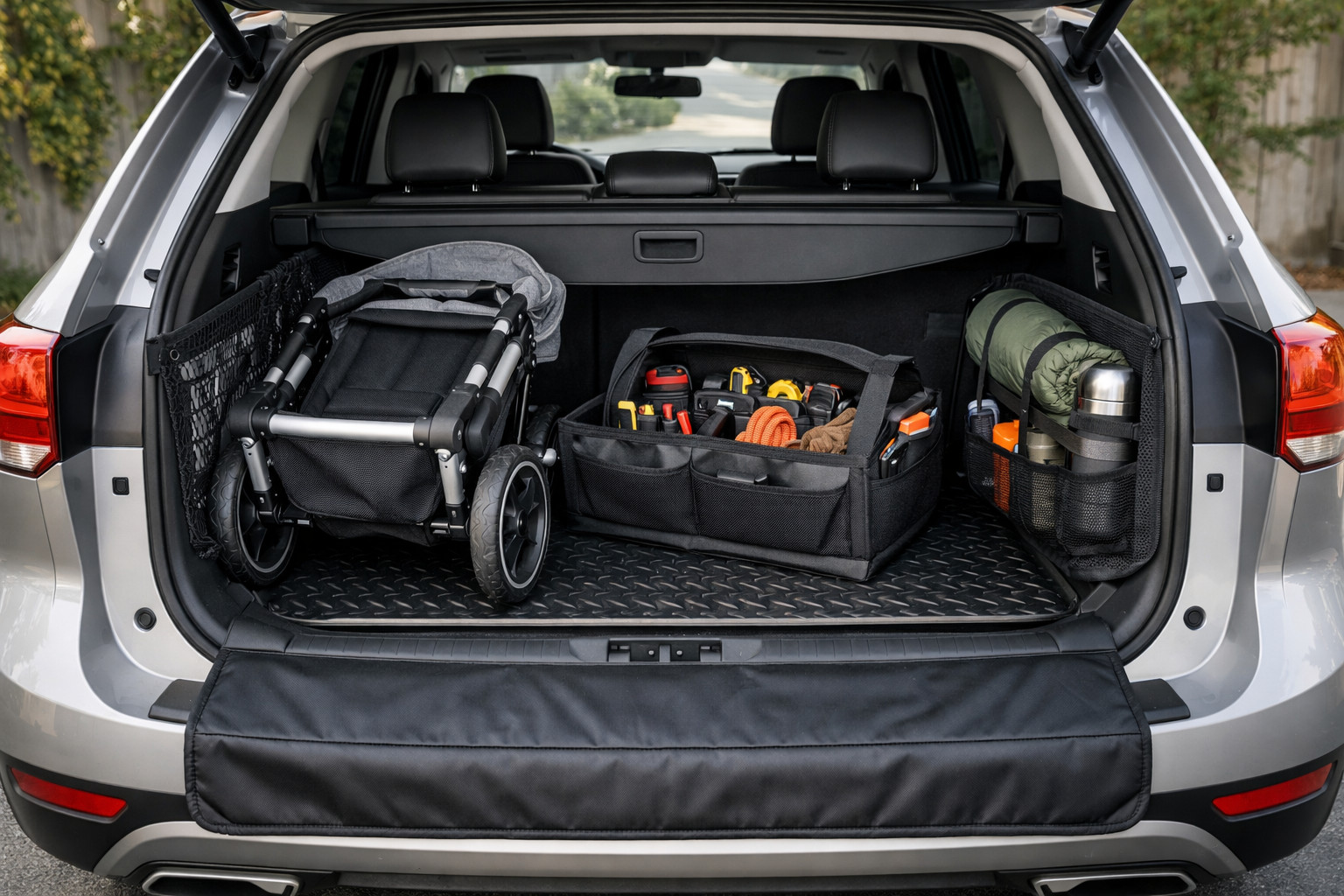
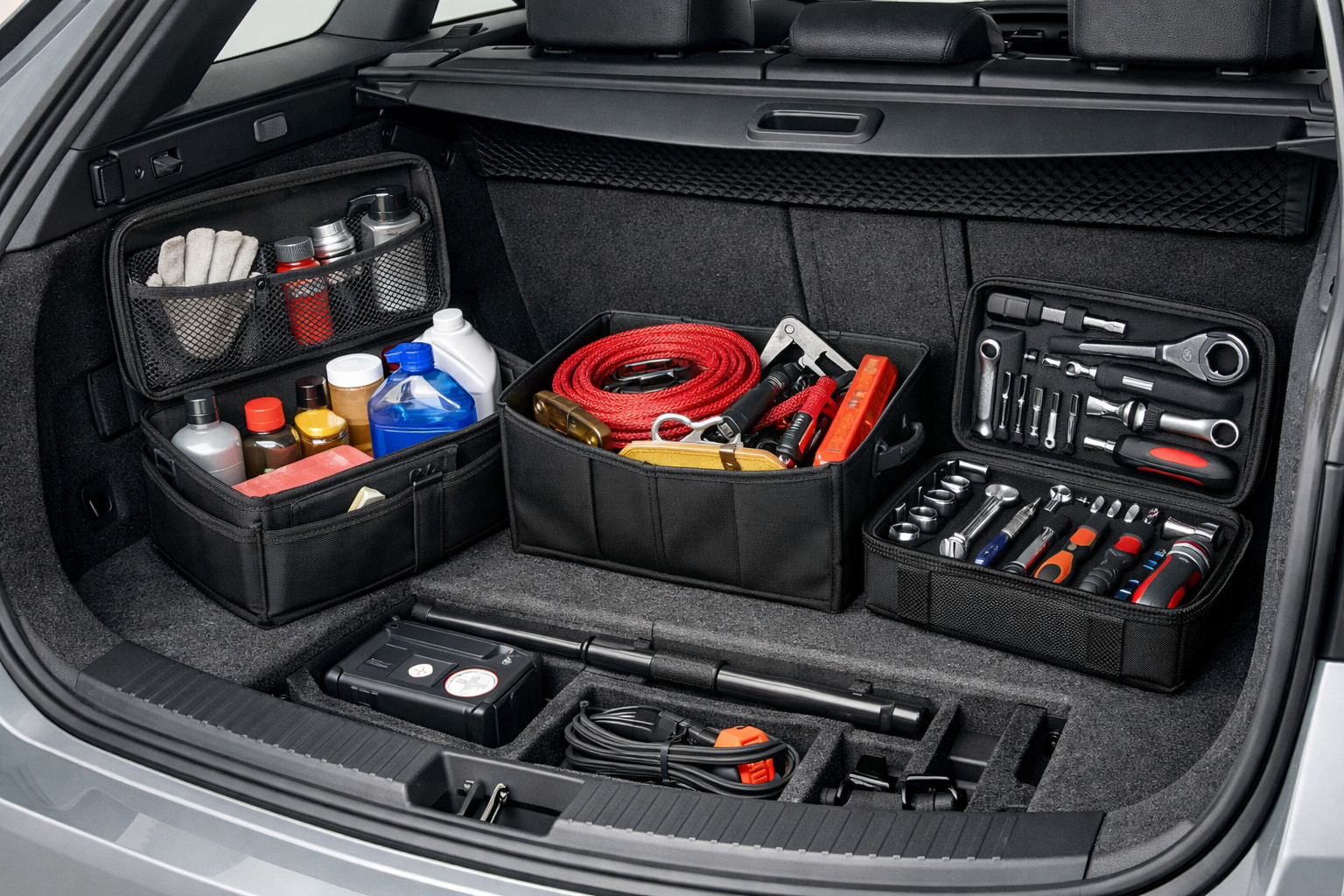
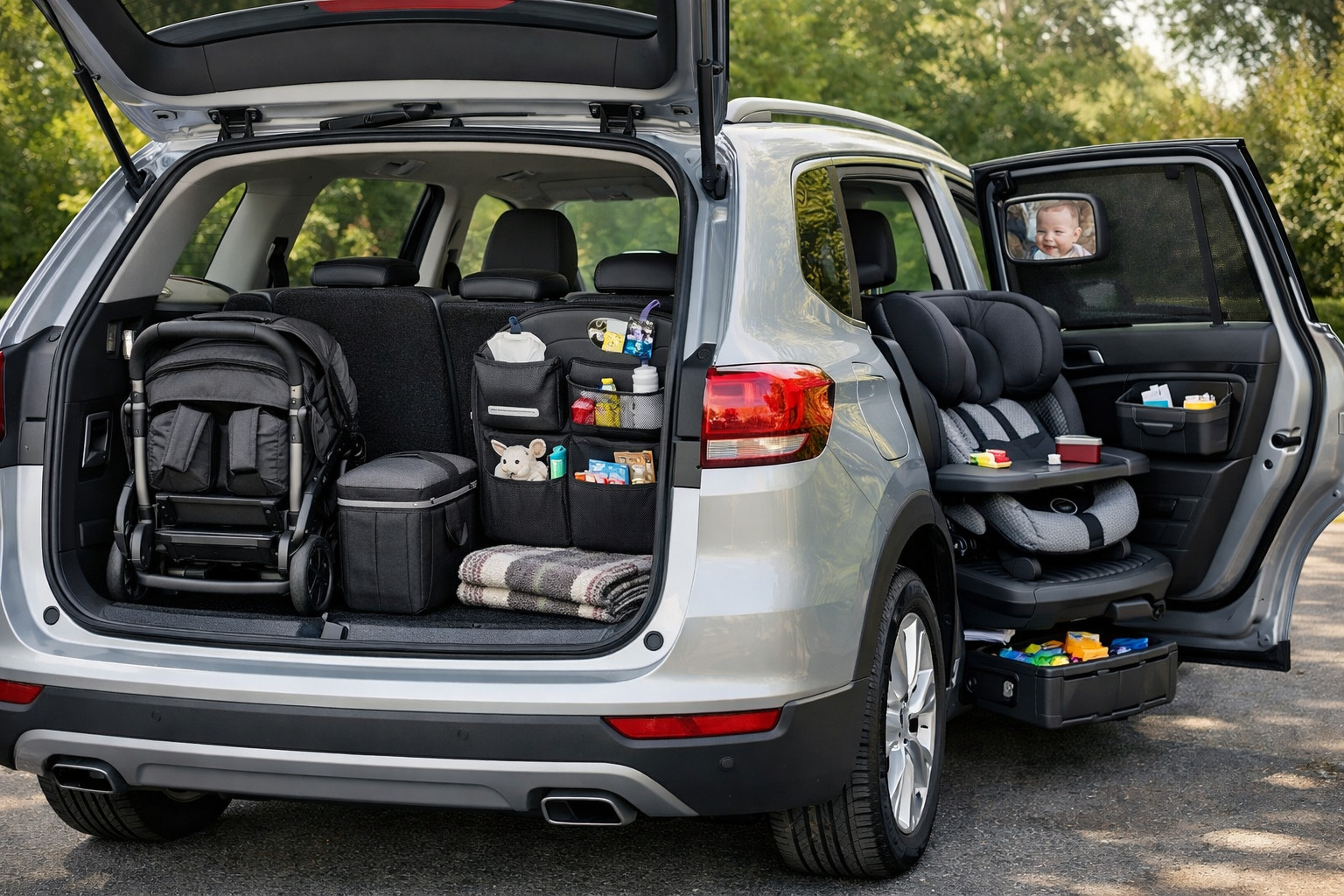
Practicality is well thought-out too: the rear row is split 60:40, sections can slide, and the layout lets you work flexibly with cargo. It’s a good option for a family with a stroller, a bike with the front wheel removed, or a set of gear for a short trip, but if you need maximum space with the seats up, some competitors will be more convenient.
On safety, Tiguan I was at a solid level for its time: stability control, traction control, electronic braking aids, and multiple airbags were part of the model’s toolkit, and 2012–2013 versions earned high marks in U.S. safety ratings. The downside today is obvious: the multimedia system and some electronics now feel outdated.
In daily life the Tiguan is convenient largely because of its format. It’s easy to park, doesn’t wear you down with its size, feels fine on the highway, and can tow a trailer up to 2000 kg in versions where that’s supported. For active use, the roof load of up to 100 kg is also useful—roof rails and a roof rack genuinely make sense here.
Fuel consumption needs a careful look. Early gasoline 2,0 TSI versions had official figures around 7.9–9.1 L/100 km depending on version, while later diesels in some markets were rated at 5.0–5.7 L. But these are different test cycles, and in real life an older gasoline Tiguan can’t be called economical. If your main criterion is minimal fuel spend, the model isn’t among the strongest in the class.
Another key factor is age and technical condition. Owners often mention expensive repairs to the turbocharger and water pump, carbon buildup on gasoline engines, transmission behavior at low speeds, and small electrical surprises. Before buying, it’s worth checking recall history separately, including the fuel pump on some 2009–2014 cars and airbags on certain 2015 vehicles.
As a used car, Tiguan I is good when you knowingly buy not “the most practical crossover in the world,” but a compact family vehicle that’s pleasant to drive. The most interesting examples are well-kept cars with transparent service history, and among the later years people most often recommend taking a close look at 2013–2014.
| Pros | Cons |
|---|---|
| Lively character, especially with 2,0 TSI | Trunk is more modest than in some competitors |
| High-quality, comfortable interior | Service and repairs can be expensive |
| City-friendly dimensions | The suspension may feel a bit stiff to some |
| 4MOTION AWD available and good winter capability | Fuel consumption in gasoline versions isn’t class-leading |
| Flexible second-row configuration | On older cars the electronics show their age |
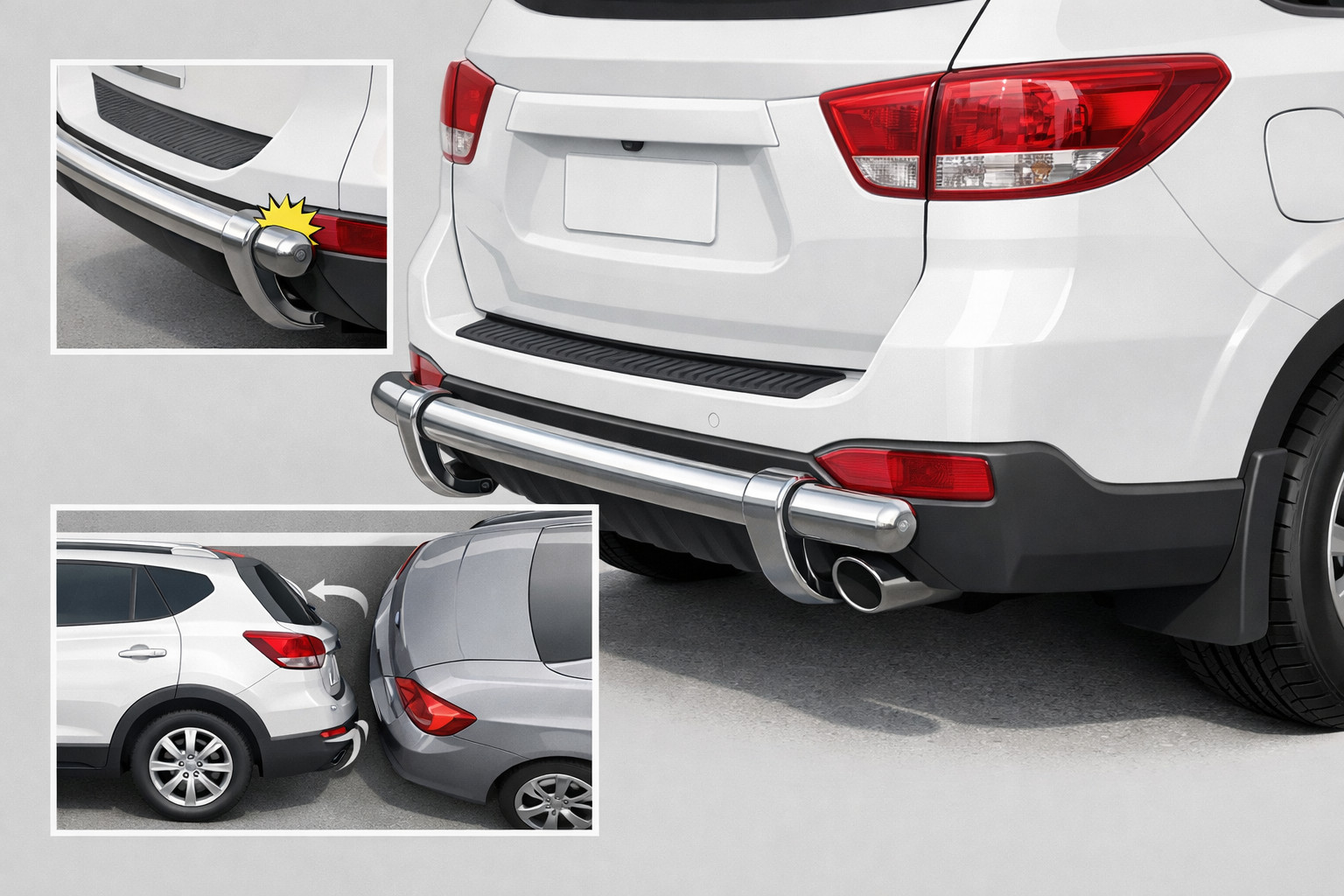
For the first Tiguan, tuning makes sense not as a decorative story but as a way to adapt the car for everyday life: protect the cabin, simplify trips with luggage, and preserve the body in areas of constant contact. It’s convenient to start from the Tiguan 2007-2016 page to confirm the generation and avoid mixing up the first body with later versions. For a practical approach, the selection of rubber floor mats for Tiguan and solutions for roof rails and roof racks will also come in handy.
The most logical accessories for this model are the ones that work every day: floor mats, roof solutions, and trunk-sill protection. They’re more useful than random exterior decor, especially if the vehicle is used as a family or travel car.
Volkswagen Tiguan 2007-2016 is a solid choice for anyone who wants a compact crossover with a good seating position, a mature interior, and a more lively drive than many purely practical rivals. But it’s not the best option for a buyer who needs the biggest trunk in the class, the softest possible ride, or the lowest risk of expensive repairs.
If you buy a well-maintained example, carefully check the engine, transmission, recall campaigns, and the real service history, the first Tiguan still makes a lot of sense. With a Tiguan, what matters isn’t the badge—it’s the condition of the specific car.
| ✔ | Responsive on the move, especially with the petrol 2.0 TSI. For city driving and the highway, the Tiguan drives briskly rather than just 'carrying passengers'. |
| ✔ | A quality, comfortable cabin for its class. The seating position is high, the ergonomics are simple, and the interior feels more premium than the average compact crossover of those years. |
| ✔ | Convenient city-friendly dimensions. A length of about 4.43 m and a turning radius of 12 m make it easy to park and maneuver every day. |
| ✔ | There are versions with 4MOTION all-wheel drive and decent winter capability. For slippery roads, curbs, and light off-road use, that is a practical advantage. |
| ✔ | The second row and trunk can be flexibly adapted to everyday tasks. The seats slide and fold, helping to carry large items without a constant compromise in comfort. |
| ✘ | The trunk is not the model’s strong point. Even in the better versions, the Tiguan falls behind some rivals in terms of capacity and does not look like a leader in practicality. |
| ✘ | Owning older examples can be expensive. The article mentions costs for the turbocharger, water pump, gearbox, and minor electrical issues. |
| ✘ | The suspension can feel a bit stiff on broken roads. The car is well put together, but comfort on poor surfaces will not be soft enough for everyone. |
| ✘ | The petrol versions cannot be called economical. For those looking for minimal fuel costs, the first-generation Tiguan does not seem like the best choice. |
Shipping to EU
Wholesale and retail
Own warehouse
Опис продукту
Подарунки не надаються при оформленні покупки у кредит під 0,01% або при покупці частинами.