12.06.2026
164
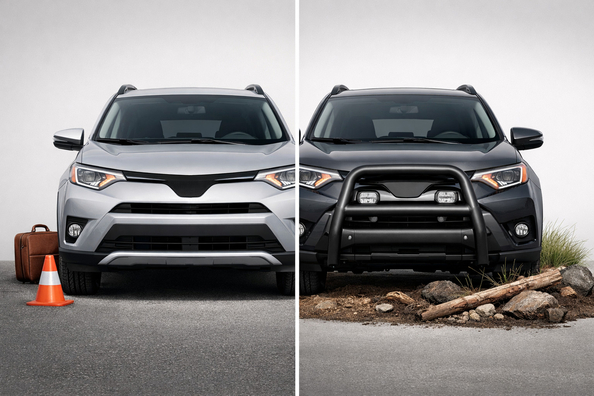
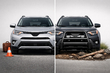
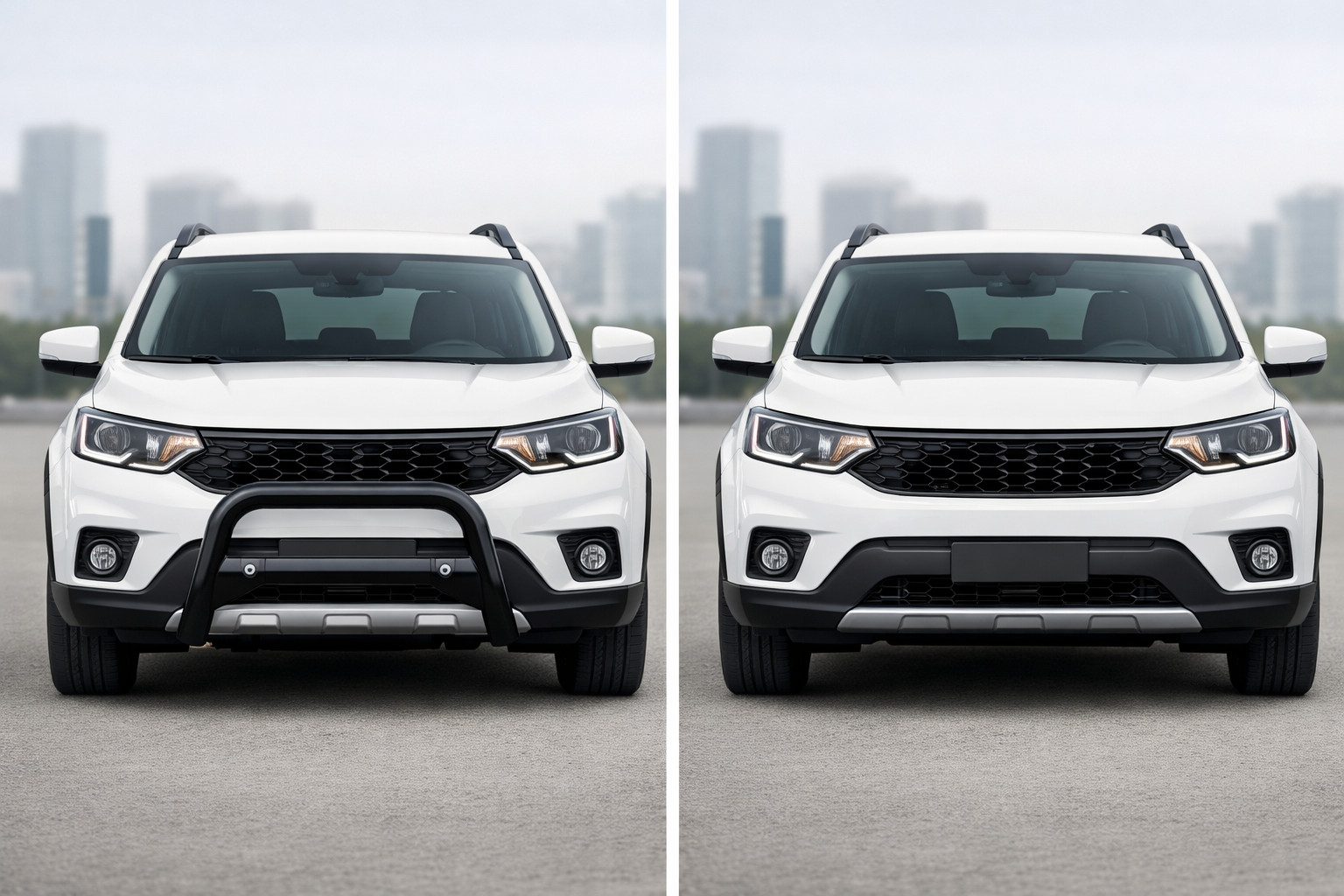
For a daily driver, a light front guard is usually the more sensible choice than a full-on heavy-duty bull bar. The reason is simple: in the city, parking, compatibility with parking sensors and cameras, proper front-end geometry, and avoiding extra load on the suspension matter more than the ability to withstand contact with bushes, animals, or mounted equipment.
The main mistake here is choosing by name or looks. In real-world selection, what matters is the shape, weight, mounting points, compatibility with airbags and electronics, and also where the car drives every week: city center, highway, rural roads, or work routes.
A light front guard is usually a compromise option for everyday use. It interferes less with the vehicle’s overall dimensions, more rarely causes issues with visibility and sensors, and doesn’t load the front axle as much. But its capabilities are limited too: it’s not a solution for regular hard impacts, a winch, or heavy auxiliary lighting.
A heavy-duty bull bar makes sense where there’s a real risk of hitting animals, branches, road debris, or where the vehicle’s front end is used as a tool rather than just a body panel. For a daily driver without those tasks, it often turns out to be unnecessary: more expensive, heavier, and more complicated to install and approve.
| Option | Strengths | Weaknesses | Who it’s for |
|---|---|---|---|
| Light front guard | Easier for daily use, less impact on overall dimensions, more often works better with sensors and parking, usually cheaper to buy and install | Limited real protection, not designed for heavy add-ons, less benefit in a serious impact | For those who drive mostly in the city and on highways and want a neat functional compromise |
| Heavy-duty bull bar | Better suited for contact with bushes, mud, animals; can serve as a base for auxiliary lights or a winch | More expensive, heavier, harder to install, more often conflicts with parking sensors, radars, and front-end geometry | For those who regularly drive rural roads, work in fields, or truly use additional mounted equipment |
DD Tuning expert comment: Most often, buyers overestimate the word “protection” and underestimate compatibility with the specific vehicle. If the car has front sensors, a camera, radar, or active driver-assistance systems, you should first check mounting and overlap zones, and only then look at the design. The second typical mistake is not calculating the full installation cost—because what makes it expensive isn’t only the bar itself, but also relocating electronics and modifying the front end.
This is for those who need a tidy frontal element without turning a daily car into a utility project. Its advantage is that it usually protrudes less forward, is easier to live with in everyday parking, and more rarely raises questions about visibility of the road in front of the vehicle.
From an installation standpoint, this format is often more logical: fewer chances you’ll need to relocate the radar, find a new spot for the plate, or put up with constant parking sensor beeps. But the word “often” matters: even a light construction can interfere with sensors if it runs right through their working zone or if the sensors were installed without accounting for the viewing angle.
In terms of wear and tear, it’s a gentler scenario for the front end, though everything depends on the exact weight and mounting. If the car lives in the city, drives through parking lots, yards, and on highways without off-road tasks, this option is usually enough.
People buy a heavy-duty setup not because it “looks tougher,” but because it has a specific job. That means frequent out-of-town routes, the risk of encountering animals, bushes, broken access roads, and the need for additional lighting or a winch. When these tasks truly exist, the extra cost is justified.
But for a daily driver, the downsides quickly become noticeable. The front end becomes bulkier, parking gets harder, and any incompatibility with cameras, sensors, or driver-assistance systems shows up immediately in use. Add to that extra load on the front axle and higher demands on installation quality: a crookedly installed heavy bar is far more annoying than a simple light guard.
A separate point is safety and formal compatibility. For vehicles with airbags and modern electronics, it’s critical that the construction is designed specifically for this model and does not block factory systems. The “we’ll mount it somehow and figure it out later” approach doesn’t work here.
If the car is used mostly in the city, carries family, parks daily in tight spaces, and has parking sensors or cameras, a light front guard almost always looks more reasonable. It brings fewer side effects and doesn’t force you to pay for capabilities you won’t use.
If the vehicle regularly sees rural roads, early-morning or night drives, sections with bushes, or a real risk of contact with animals, then the heavy-duty option no longer looks like overkill. The same applies to a work vehicle, where downtime costs more than the accessory, and auxiliary lighting or a winch is a tool rather than decoration.
An in-between scenario is a crossover that lives in the city most of the time but goes to the country house or fishing a few times a month. Here, a full bull bar is often unnecessary: a lighter format will cause fewer problems, and the real benefit of a heavy construction will remain unused.
| Scenario | What to choose | Why |
|---|---|---|
| Daily city driving, parking lots, courtyards | Light front guard | Fewer issues with dimensions, easier maneuvering, lower risk of conflicts with electronics |
| Highway and city without regular off-road | Light front guard | Doesn’t overload the front end and doesn’t make you pay for features that aren’t used daily |
| Frequent rural roads, driving in the dark | Heavy-duty bull bar | There’s real value in a stronger construction and the ability to mount additional equipment |
| Work vehicle, farm, forest, construction site | Heavy-duty bull bar | Keeping the vehicle operational matters more than saving weight and staying compact |
| City crossover with occasional trips into nature | Light front guard | Delivers a practical compromise without extra weight, complex installation, and everyday loss of convenience |
A more expensive heavy-duty option is justified when you don’t have an abstract “just in case,” but a repeatable scenario: night out-of-town trips, work on bad roads, constant risk of contact with bushes, or the need to install auxiliary lights or a winch. If that’s not the case, the extra money often goes into size, weight, and more complicated installation rather than real benefit.
For calm everyday use, it makes sense to start with a lighter format and look at front guard options. If you need a more massive construction for tougher tasks, it makes sense to separately compare available bull bars and side steps and use that as the basis for your specific vehicle model.
From a customer’s experience: a crossover owner was looking for a massive bar because he often drove the highway and wanted a “stronger” solution. After clarifying the route, it turned out that 90% of the mileage was city driving, parking lots, and family trips, and the main concern was minor contacts in tight parking spaces. In the end, he chose a light front guard, avoided relocating electronics, and kept normal everyday convenience.
For a daily car, a light front guard is usually the smarter choice: fewer risks for sensors and parking, less load on the front end, and simpler installation. A full bull bar is worth buying not for looks, but for a specific task—regular rural routes, work use, auxiliary lighting, or a winch.
The key to making the right choice is simple: honestly describe your routes and don’t overpay for features that don’t work in your driving pattern. This material is based on real selection experience, practice, and real usage scenarios—not an abstract split into the “prettier” and “more serious” option.
| ✔ | Lightweight front protection is better suited to everyday city driving: it interferes less with parking, vehicle dimensions, and the view ahead, and it also less often conflicts with parking sensors and cameras. |
| ✔ | This option is usually simpler and cheaper to install, because there is less chance of having to cut the bumper, move the license plate or sensors, or make additional modifications. |
| ✔ | Lightweight protection puts less load on the front axle, so it is a gentler option for the suspension in daily use. |
| ✔ | A силовий кенгурятник makes sense where there are real demanding tasks: country roads, the risk of contact with animals, bushes, mud, or the need to install a winch or additional lights. |
| ✔ | In work scenarios where the vehicle often drives on poor roads and functionality matters more than compactness, a силова конструкція looks justified. |
| ✘ | Light front protection is not designed for serious impacts, frequent contact with obstacles, or heavy accessories, so its protective function is limited. |
| ✘ | A силовий кенгурятник for a daily vehicle often turns out to be unnecessary: it is more expensive, heavier, and more difficult to install than is really needed for the city. |
| ✘ | A heavy силова конструкція can create compatibility issues with the car’s electronics — sensors, radar, camera — and require additional adjustments or relocation of components. |
| ✘ | Extra weight at the front increases the load on the suspension, so this option should be evaluated not only by the product price, but also by the condition of the front axle and any possible suspension modifications. |
Shipping to EU
Wholesale and retail
Own warehouse
Опис продукту
Подарунки не надаються при оформленні покупки у кредит під 0,01% або при покупці частинами.