07.07.2026
229
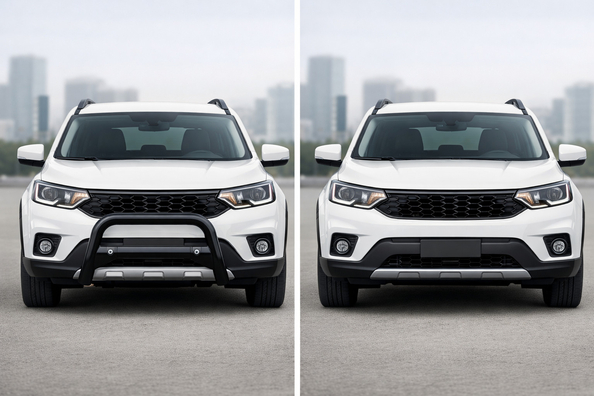
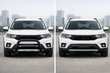
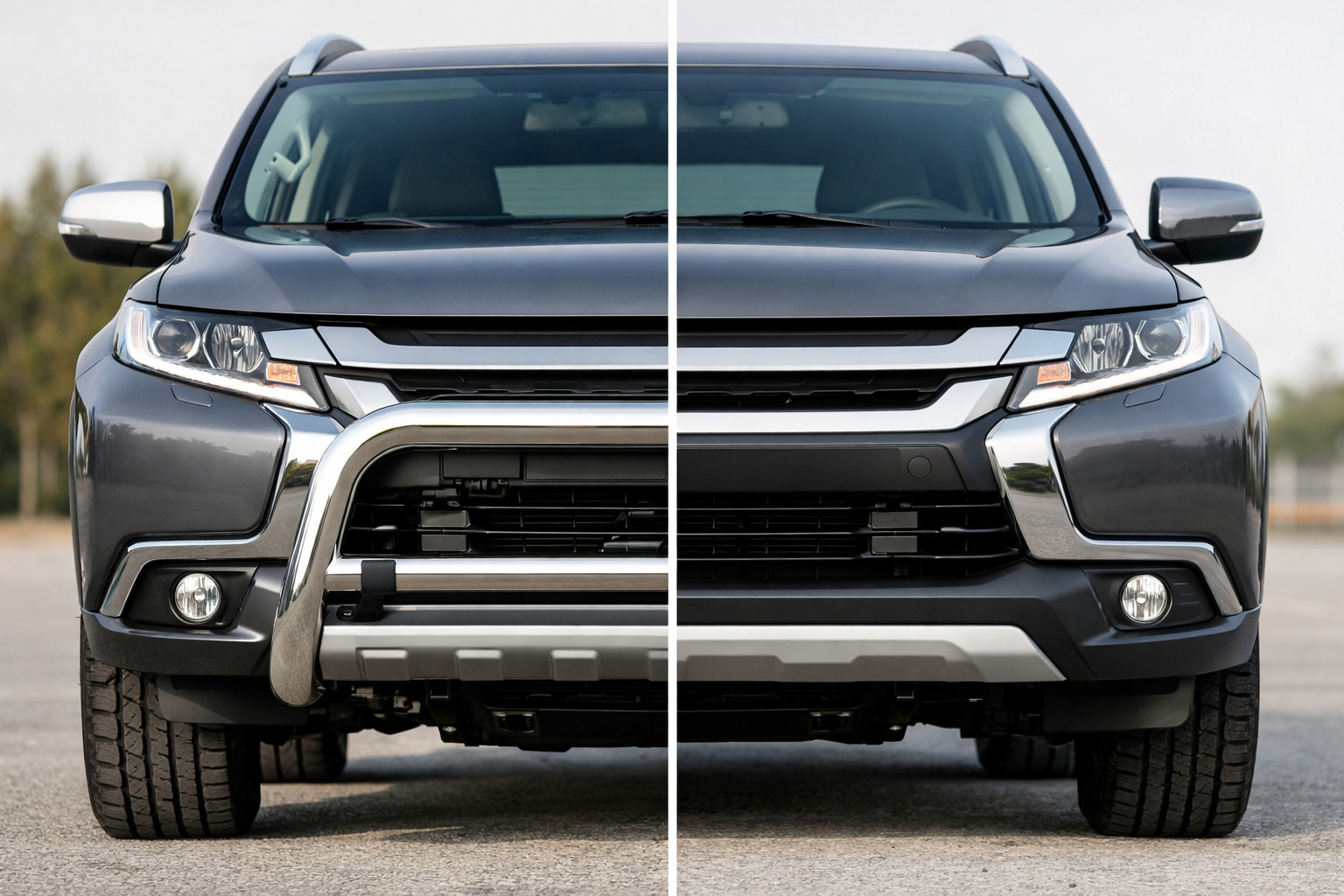
For a purely city car, a full bull bar most often doesn’t justify its weight, cost, or side effects. If the car lives in courtyards, parking lots, and dense traffic, the real choice is usually this: either install nothing, or choose a lightweight front protection designed for your specific model.
A full frontal bar makes sense not where you just want it to “look tougher,” but where there are trips onto rural roads, night routes, a risk of animal strikes, extra lighting, or other bolt-on equipment. In the city, what matters isn’t looks, but compatibility with airbags, parking sensors, and cameras; weight; parking practicality; noise; durability in road salt/chemicals; and the final price including installation.
The point isn’t whether the metal will withstand an impact, but which exact scenario you’re trying to cover. In the city, most contacts happen at low speed: a curb, a bollard, someone else’s bumper in a parking lot, a low barrier. For that, sometimes a lightweight front guard is enough, and sometimes it’s simpler to keep the factory front end without additional tubes.
A full bull bar provides more physical coverage of the front end, but it also brings more weight, worse pedestrian-friendliness, possible issues with sensors and cameras, and concerns about correct passive safety operation. So for the city the question is simple: do you truly need a heavy-duty structure, or are you trying to solve a small urban problem with an overly heavy tool.
Installation. The most important thing isn’t the tube itself, but the mounting method, compatibility with the specific model, and installation accuracy. Incorrect installation can cause misalignment, excessive gaps, sensor issues, and an unwanted effect on the crash deceleration profile.
Noise and everyday comfort. Aerodynamic noise depends on shape, how far it sticks out, and any mounted accessories. Compact solutions rarely whistle; bulky ones do so more often, especially if they protrude far forward.
Durability. Look at the material, welds, brackets, and behavior in winter road chemicals. Lighter aluminum solutions load the front end less but cost more; the lifespan of any system strongly depends on build quality and the operating environment.
Practicality. In the city, overall dimensions, parking convenience, access at the car wash, compatibility with parking sensors, camera, radar, and proper airflow to the radiator matter.
Price. You should calculate not only the product, but also installation, possible sensor relocation, modifications, certification, and consequences for daily use. A full bull bar is almost always the most expensive not only to buy, but throughout the entire installation chain.
| Option | Strengths | Weaknesses | Who it’s for |
|---|---|---|---|
| No additional front protection | No risk of extra weight, sensor problems, or overpaying for installation | Adds no protection against minor urban contacts | Those who drive mostly in the city and don’t need bolt-on equipment |
| Lightweight front protection | Works better for city use, adds less weight, can take minor contact | Won’t save you in serious impacts, requires careful compatibility checks with sensors | Those who want minimal practical protection without going to a heavy-duty format |
| Full bull bar | Maximum front-end coverage, suitable for harsher conditions and additional equipment | Most expensive, heaviest, less convenient in the city, can affect safety and driver-assist systems | Those for whom the city isn’t the main scenario, and who have rural roads, night highways, and wildlife risk |
DD Tuning expert comment: the most common mistake is buying a massive bar “just in case,” then after installation discovering the parking sensors are constantly beeping, the camera is looking at the tube, and the front of the car has become heavier. The second type of fail is choosing a universal solution without proper model-specific fitment and without checking mounting geometry. For the city, it’s almost always better to start with the scenario question, not the thickness-of-metal question.
This isn’t “saving on everything,” but often the smartest city option. You don’t interfere with the factory safety logic, don’t add weight, and don’t risk cooling, sensor, or radar issues. If the car drives daily in a dense urban environment, this is often enough.
The downside is obvious: in a minor contact, nothing will take the hit for you. If that’s exactly what you’re worried about, then it’s worth looking toward a compact solution rather than jumping straight to a full bull bar.
For the city, this is the most sensible compromise. It’s smaller, lighter, and usually works where city annoyances actually happen: the lower front end, the lower grille area, light parking-lot contact. If the design is model-specific and installed correctly, the chance of keeping factory convenience is higher.
But don’t overestimate it. This isn’t a heavy-duty structure for harsh routes. Its strength is practicality, not “surviving everything.” That’s why it looks more reasonable in a city scenario than a full bar.
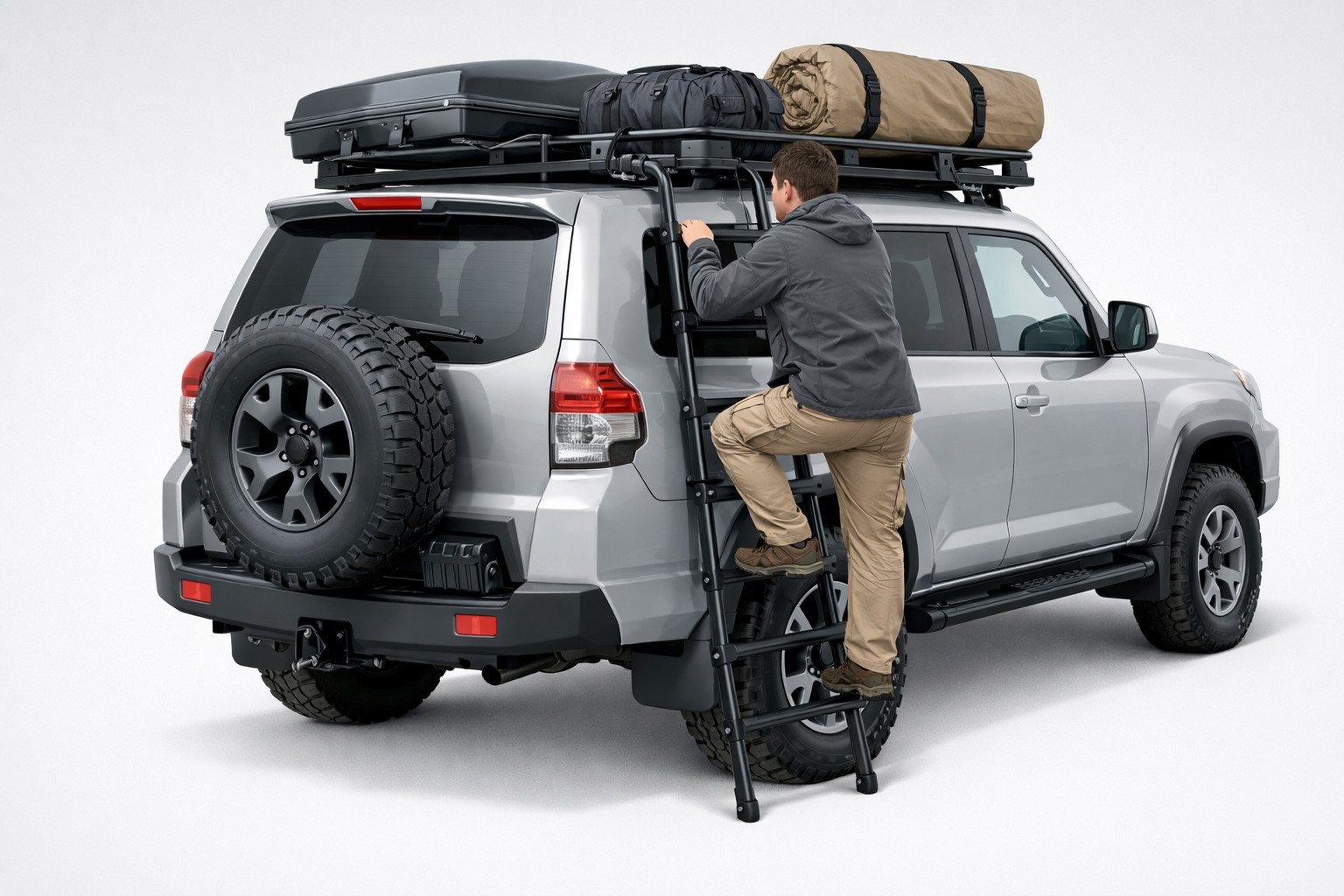
The full format really does provide more protection in height and width across the front end and is appropriate where there’s real out-of-town use: wildlife, remote roads, extra lighting, a winch, related protection. In such conditions it can be justified, especially if the city is only part of the route.
But in the city it’s often overkill. It adds weight to the front of the car, can reduce everyday comfort, create extra noise, interfere with sensors and cameras, and requires careful checks for airbag compatibility. Also, the benefit of such a bar shouldn’t be romanticized: at very low speeds it may help more than at high-speed impacts.
If 90% of your mileage is city driving—parking lots, malls, courtyards, and short trips—a full bull bar is usually unnecessary. In that case, either keep the factory front end, or install lightweight front protection if you want to feel calmer about minor touches.
If the car sometimes goes to a country house, dirt roads, or the suburbs, but without regular night highways and without wildlife risk, compact protection again looks like the healthier choice. The full format starts to justify itself only when city driving isn’t the main mode and the risks on your route are real, not imagined.
Owners of modern crossovers with tightly packed front ends should be especially careful: camera, radar, parking sensors, collision warning systems. Here, any universal construction without a vehicle-specific fit is a bad bet.
| Scenario | Best choice | Why |
|---|---|---|
| Daily city driving, tight parking | No protection or lightweight front protection | Lower risk for sensors, less weight, sufficient for real city tasks |
| City plus occasional out-of-town trips | Lightweight front protection | Adds practical reserve without moving to a heavy-duty format |
| Regular night highways, rural roads, wildlife risk | Full bull bar | Here, additional front-end coverage has real practical value |
| Modern car with radar, camera, and parking sensors | Only a model-specific compatible solution or no installation | The main risk isn’t the metal, but conflicts with safety and driver-assistance systems |
| Need extra lighting or other bolt-on equipment | A more expensive model-specific full option | Only then does a heavy-duty structure work not as decor, but as a functional unit |
A more expensive option makes sense not because it’s “premium,” but when it covers specific tasks: compatibility with safety systems, correct sensor placement, proper camera operation, proper vehicle-specific brackets, lower construction weight, or the ability to install additional equipment without backyard fabrication.
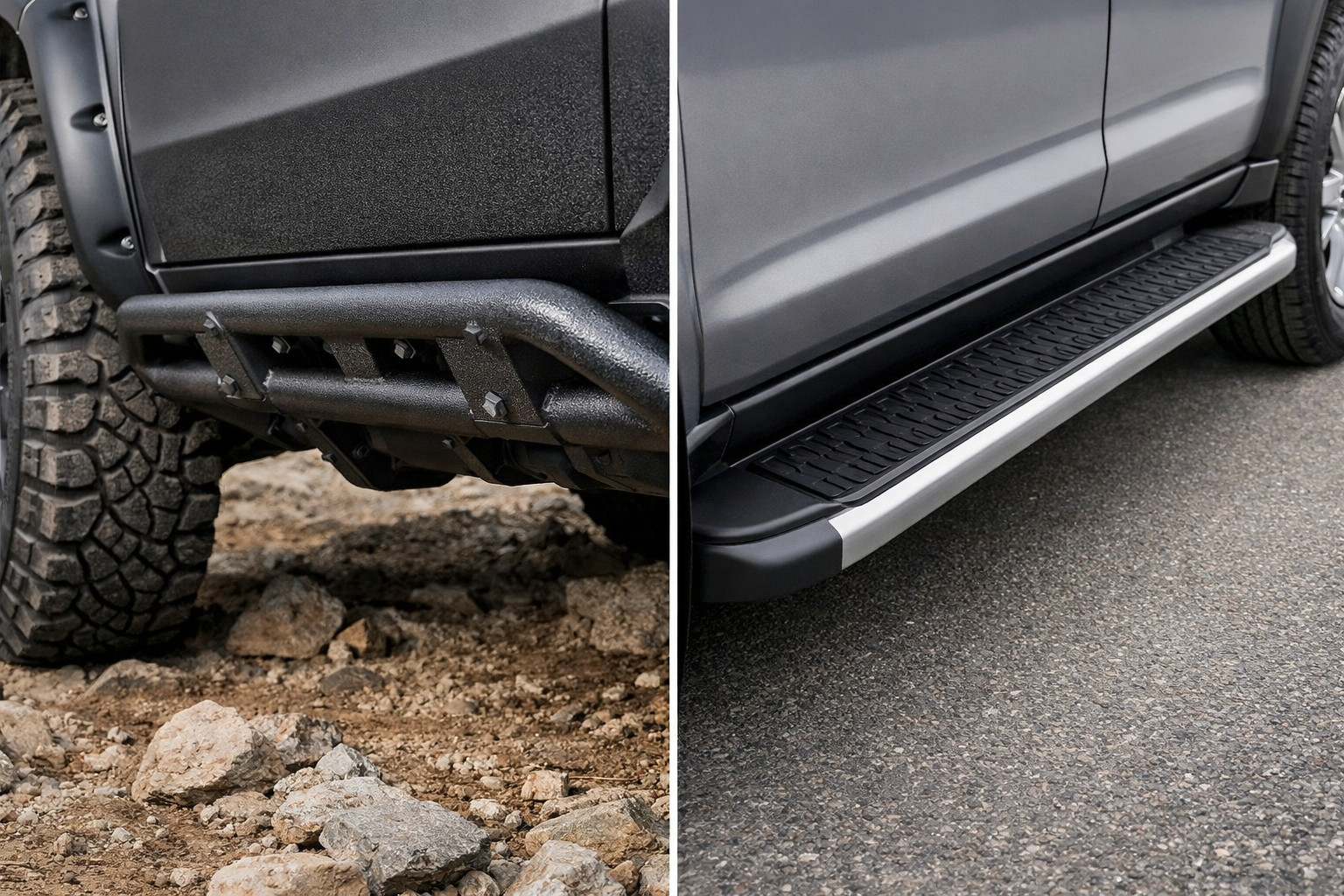
If you want to first understand the types of designs, take a look at the overview of bull bar types. For a daily driver, it’s also useful to separately compare front protection vs. a bull bar, and for practical selection in the catalog—browse the bull bars and side steps section.
In all other cases, a more expensive full bar for the city is usually an overpayment for potential you don’t use. If there are no real harsh conditions, it’s better to invest in compatibility and neat installation rather than maximum size.
From a customer’s experience: the owner of an urban crossover was looking for a full bull bar because they feared minor parking contacts. After matching the choice to the real scenario, it turned out the car rarely leaves the city, but uses parking sensors and a camera every day. In the end, they chose a lightweight model-specific front protection, keeping city convenience without extra front weight and without conflicts with electronics.
For the city, a full bull bar in most cases isn’t worth the hassle. If you need a practical compromise, look at lightweight front protection for your specific vehicle; if your main priority is preserving factory safety, sensors, and ease in daily driving, it’s often better to install nothing. The full format is justified when there are real out-of-town tasks, not just a desire to “reinforce” the front end.
This conclusion is based on real selection experience, installation practice, and live use cases: city driving rarely requires a heavy-duty solution, while mistakes with compatibility and unnecessary weight happen far more often than a genuine need for a full bull bar.
| ✔ | A full bull bar provides the greatest front-end coverage, so it is suitable where there are real off-road risks: night roads, rural roads, contact with an animal, or the need for additional lighting and mounted equipment. |
| ✔ | Light front protection looks like the most practical compromise for the city: it is smaller, lighter, and can take minor contact in parking lots or when hitting low obstacles. |
| ✔ | Choosing not to add extra protection preserves the vehicle’s factory safety logic, does not add mass to the front, and does not create risks for cooling, sensors, or radar. |
| ✔ | A vehicle-specific solution with proper installation better preserves compatibility with parking sensors, the camera, and other systems than a universal design not tied to a specific car. |
| ✘ | A full bull bar in the city is often unnecessary: it adds weight, makes parking more difficult, and can worsen everyday comfort without any real benefit in typical urban scenarios. |
| ✘ | There is a risk of conflict with electronics and safety systems: sensors, cameras, and airbags may work incorrectly or require additional setup. |
| ✘ | Such an option is usually more expensive not only on its own, but also because of installation, possible sensor relocation, modifications, and certification. |
| ✘ | A bulky design can create unnecessary noise and be less convenient in road chemicals and everyday use, especially if the mounting or shape is not ideal. |
Shipping to EU
Wholesale and retail
Own warehouse
Опис продукту
Подарунки не надаються при оформленні покупки у кредит під 0,01% або при покупці частинами.