27.05.2026
1193
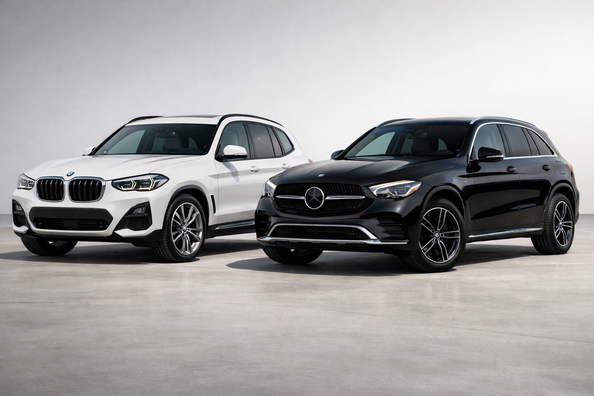

If you strip away the badges, the difference between the BMW X3 and the Mercedes-Benz GLC is fairly down to earth: the BMW X3 30 xDrive looks more practical thanks to a larger trunk, slightly bigger exterior dimensions, and a lower stated combined fuel consumption, while the Mercedes-Benz GLC 300 4MATIC counters with a quieter cabin, a smoother ride, and a more relaxed character.
That’s why for most family and everyday use cases the X3 more often comes out as the more rational choice, while the GLC is the nicer one if quietness and softness are top priorities. A separate fork in the road is simple: need a plug-in hybrid — look at the GLC 350e 4MATIC; need truly strong performance — at the X3 M50 xDrive.
Both models compete in the compact premium crossover segment, where buyers typically also consider the Audi Q5, Lexus NX, and Acura RDX. In base versions, the concept is almost the same: a 2.0-liter turbo gasoline engine, mild hybrid, automatic transmission, and all-wheel drive.
The difference is in the delivery. The BMW X3 is better suited to someone who wants one vehicle for everything: city, highway, family trips, luggage, kids’ stuff, sports gear. The Mercedes-Benz GLC makes more sense for a driver who, day to day, notices cabin quietness, suspension suppleness, and the overall sense of a more premium presentation more than the raw liters of cargo space.
Historically, the X3 has always stayed closer to BMW’s driver-focused school: quicker responses, more alert steering, less “numbness.” From the first generation, the GLC bet on comfort and quiet. In the latest generations, that difference remains, although both crossovers have become far more digital and more complex in terms of interface.
In mainstream versions, parity is nearly perfect. The BMW X3 30 xDrive has a 2.0-liter turbo gasoline engine with a 48-volt mild-hybrid system, 255 hp and 400 N·m, paired with an 8-speed automatic and xDrive all-wheel drive. The Mercedes-Benz GLC 300 4MATIC matches the same 255 hp and 400 N·m from a 2.0-liter turbo engine, but the gearbox here is a 9-speed and the all-wheel drive is 4MATIC.
In acceleration, the base versions are even: about 6.0 s to 97 km/h. After that, the differences begin. BMW offers the X3 M50 xDrive with a 3.0-liter inline-six, 393 hp and 580 N·m — a genuinely quick crossover with no caveats. Mercedes’ strong alternative move is different: the GLC 350e 4MATIC, a plug-in hybrid with 313 hp and 550 N·m, a 24.8 kWh battery, and up to 87 km of electric range. If your daily routes are short and you have regular charging, this version can genuinely change the economics of ownership.
By feel, the BMW looks a bit more substantial on the outside, but the Mercedes has a slightly longer wheelbase. In practice, the main point is different: the X3 wins big on trunk space. For a family, a long trip, or an active lifestyle, that’s not a minor detail — it’s a day-to-day difference.
| Parameter | BMW X3 30 xDrive | Mercedes-Benz GLC 300 4MATIC |
|---|---|---|
| Engine | 2.0 L, turbo gasoline, mild hybrid, 255 hp, 400 N·m | 2.0 L, turbo gasoline, mild hybrid, 255 hp, 400 N·m |
| Transmission | 8-speed automatic | 9-speed automatic |
| Drivetrain | all-wheel xDrive | all-wheel 4MATIC |
| Length × width × height | 4 755 × 1 920 × 1 661 mm | 4 717 × 1 890 × 1 641 mm |
| Wheelbase | 2 865 mm | 2 873 mm |
| Curb weight | 1 894 kg | 1 940 kg |
| Trunk | 892-1 900 L | 620-1 594 L |
| Ground clearance | needs to be verified by local specification | needs to be verified by local specification |
| Towing | 1 815 kg, in some configurations a different figure is listed | 1 588 kg |
On the road, it’s as expected: the GLC is usually perceived as quieter and softer, while the X3 feels more tied-down in corners. If you like a more precise steering response, the BMW is closer. If you want less fatigue in daily driving on imperfect asphalt, the Mercedes is often the more pleasant choice. The GLC 350e also gets a standard rear self-leveling air suspension, which matters for a loaded vehicle.
The BMW X3 bets on a large 14.9-inch curved display and a very digital presentation. It looks modern, but some owners are irritated by the touch-based logic, including climate control via menus. In the Mercedes-Benz GLC, the multimedia system isn’t simple either: it’s fast, but there are many touch interactions, and not everyone likes that level of dependence on the screen.
In terms of cabin feel, the GLC is more often perceived as quieter and more “premium” on the move. The X3, on the other hand, answers with practicality: more usable cargo space, a slightly wider body, and a more convenient role as a single do-it-all family vehicle. As for safety, both models can be very well equipped, but the set of driver assists depends on the market and trim, so when buying a specific car it’s worth separately checking for adaptive cruise control, lane keeping, cameras, and active parking systems.
In daily life, the BMW X3 wins where the car constantly works for practical needs: suitcases, stroller, boxes, weekend getaways, long highway runs. The extra trunk volume is noticeable immediately. Plus, the stated combined fuel consumption in the X3 30 xDrive is lower — about 8.1 L/100 km versus 9.0 L/100 km in the GLC 300 4MATIC.
The Mercedes GLC is stronger in the “daily city” mode: a quiet cabin, softer reactions to bumps, less fuss in how it feels. And if your commute is short and you have an outlet at home or at work, the GLC 350e can be the smartest pick in the whole pair. Separately for both models, it’s worth checking the VIN for recall campaigns: BMW had early issues related to the starter-generator and steering software, while Mercedes had issues related to a connection in the steering assembly.
| Model | Pros | Cons |
|---|---|---|
| BMW X3 | very large trunk, better combined efficiency, more responsive handling, strong M50 version | touch-based climate/menu logic, less relaxed cabin feel, questions around early recall campaigns, nuances with roof solutions in some markets |
| Mercedes-Benz GLC | quieter cabin, smoother ride, more refined everyday feel, available 350e plug-in hybrid | smaller trunk, higher consumption in the base gasoline version, complex interface, also has steering-assembly recall campaigns |
From an owner’s perspective, the takeaway is simple. If you care more about body utility and you want the car to cover the maximum number of tasks without paying extra for a different powertrain, the BMW X3 30 xDrive looks stronger. If, after traffic jams, expansion joints, and daily bustle, you value quietness and ride comfort more, the GLC is easy to choose even despite the smaller trunk.
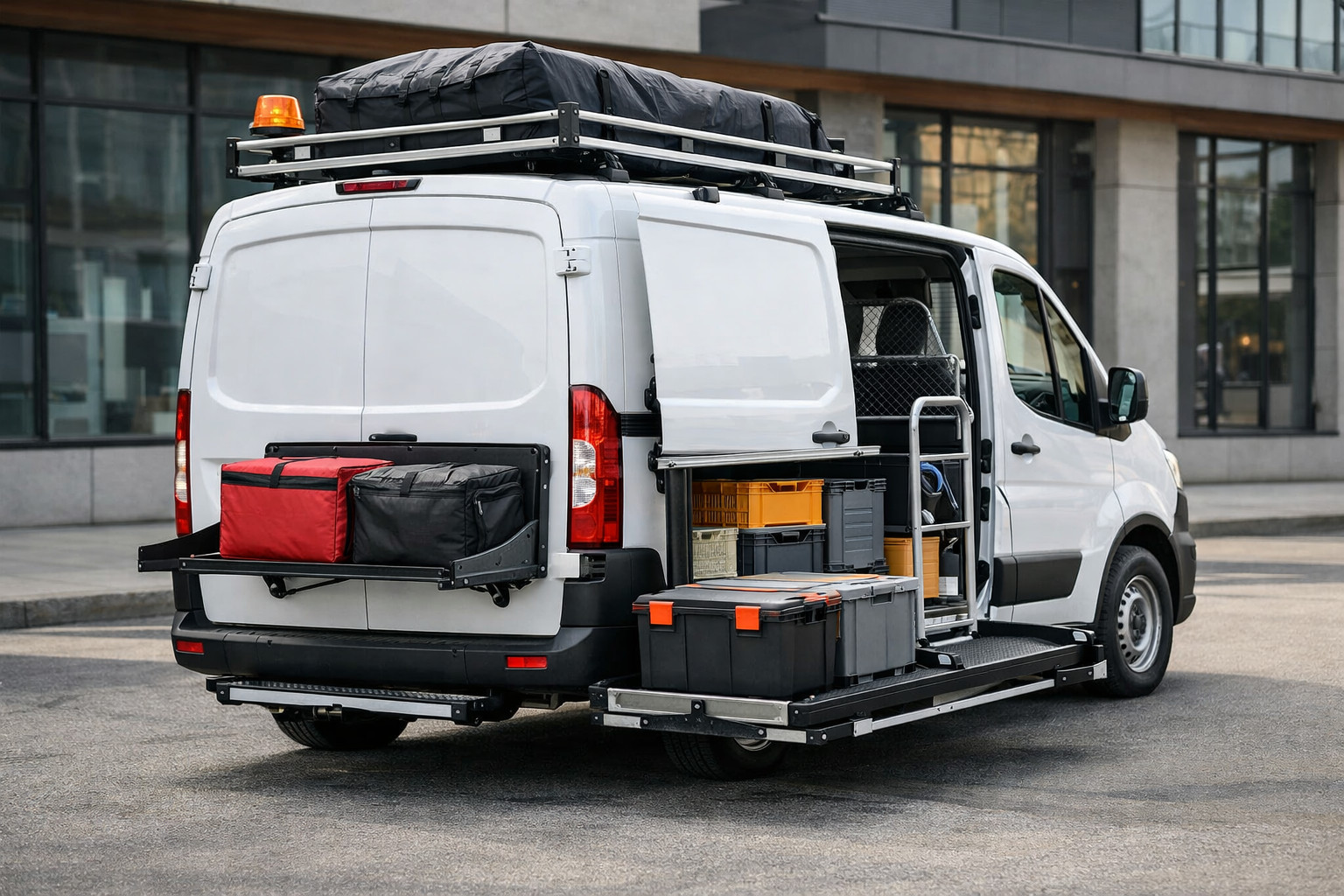
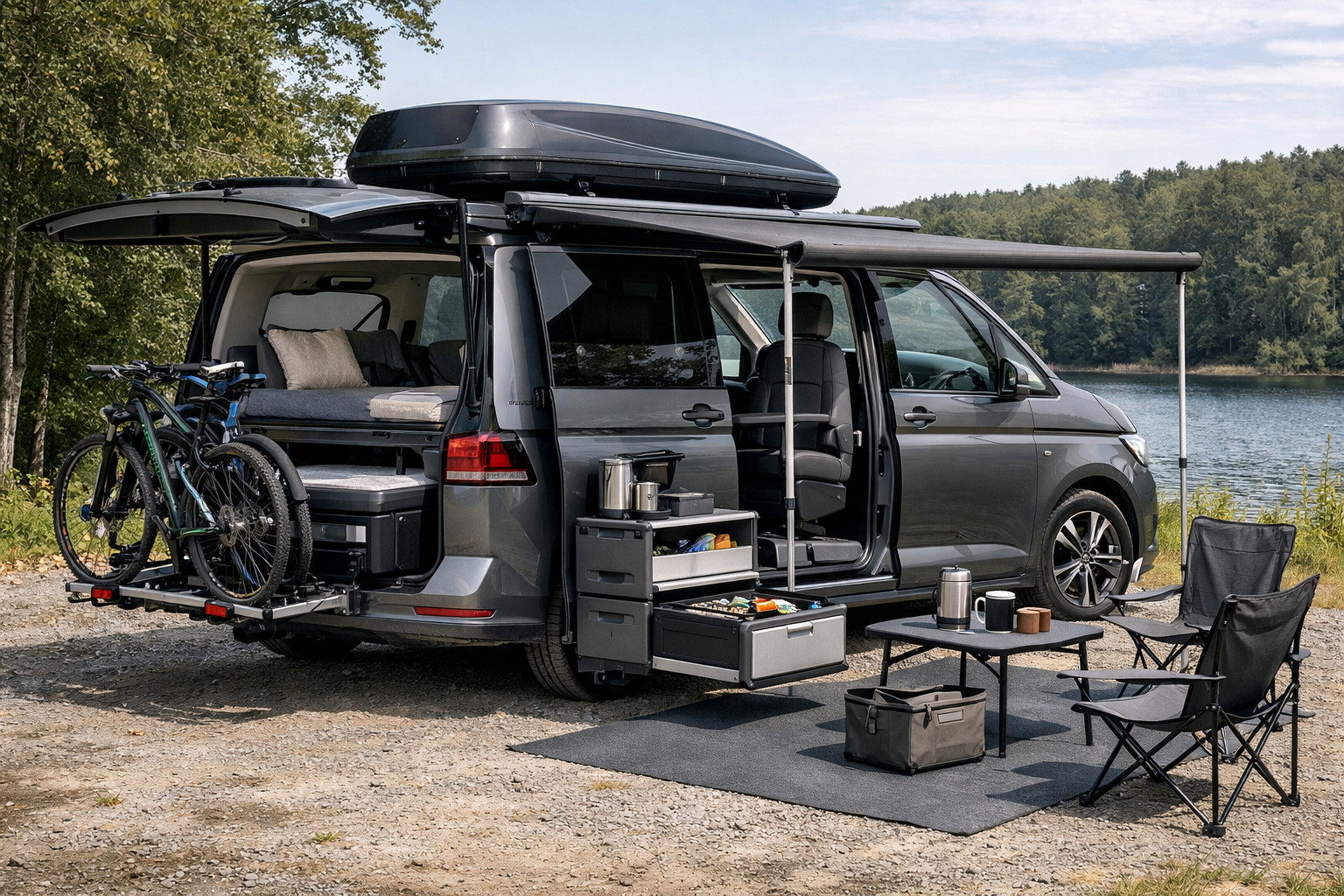
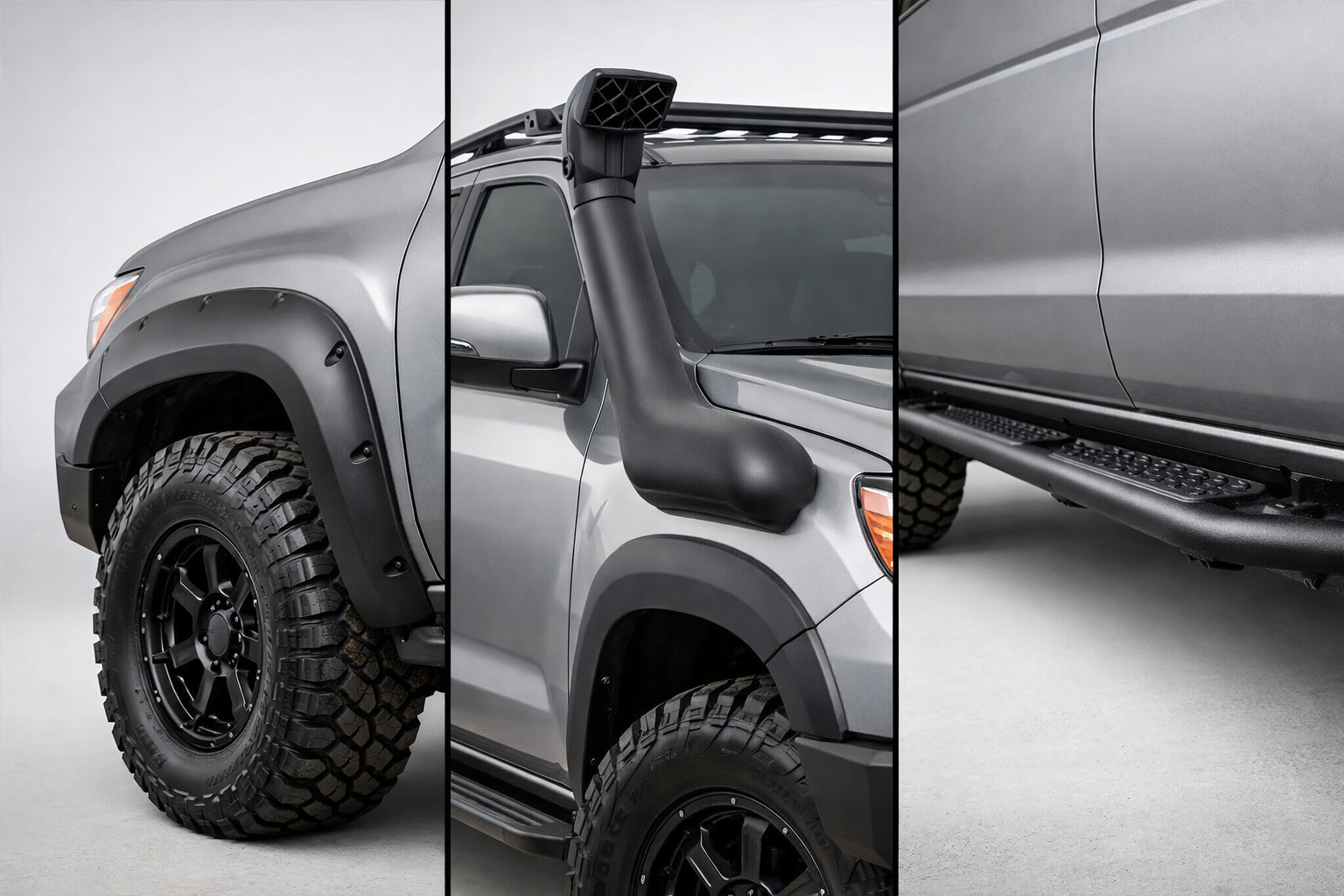
With these crossovers, the biggest value is not in aggressive exterior tuning, but in practical accessories. The first tier of usefulness is floor mats, trunk protection, roof solutions, and small interior add-ons. These are what truly affect everyday usability rather than simply changing the look.
For the X3, it makes sense to start with the trunk and cabin, because this BMW is often chosen specifically for its versatility. For the GLC, the question of carrying extra gear tends to come up sooner, so roof systems may turn out to be more important than decorative trim pieces.
If you need one compact premium crossover for every occasion, then for most buyers the BMW X3 30 xDrive looks like the more on-point choice: it’s more practical, roomier, and slightly more efficient. The Mercedes-Benz GLC 300 4MATIC is the one to buy when the priority isn’t numbers, but quietness, smoothness, and calm daily driving. And if you want a plug-in hybrid without switching to a full EV, the GLC has a strong trump card in the 350e.
This conclusion is based not on abstract promises, but on real selection experience, practical use, and real-world scenarios: a family car, an everyday city route, highway trips, luggage, fuel consumption, and day-to-day convenience. That’s exactly where the difference between the X3 and the GLC is felt most strongly.
| ✔ | BMW X3 has a much larger trunk, so it is better suited for family trips, suitcases, and everyday hauling. The article explicitly notes that this gives it a practical advantage in real-world use. |
| ✔ | The X3 30 xDrive has a slightly better claimed combined fuel consumption — about 8.1 l/100 km versus 9.0 l/100 km for the GLC 300 4MATIC. For those who drive daily, this is a noticeable plus. |
| ✔ | BMW X3 is described as more composed and livelier to drive, with more precise steering response. This makes it the better choice for those who do not want to lose the feel of a driver’s car. |
| ✔ | Mercedes-Benz GLC’s strong point is a quieter cabin and a smoother ride. If comfort in the city and less fatigue over rough roads are priorities, this model looks convincing. |
| ✔ | The GLC has a plug-in hybrid 350e 4MATIC with an electric range of up to 87 km. This is a practical solution for short daily trips if you have charging at home or at work. |
| ✘ | In the Mercedes-Benz GLC, the trunk is noticeably smaller than in the BMW X3. For family trips or carrying bulky items, this is no longer a minor compromise but a noticeable one. |
| ✘ | BMW X3 has a more digital and not universally convenient control logic, including climate control through menus and touch interactions. This can be annoying in everyday use. |
| ✘ | The GLC 300 4MATIC has a higher claimed combined fuel consumption than the X3 30 xDrive. If you are buying the base gasoline version specifically, fuel efficiency will not be its strong point. |
| ✘ | Both models are mentioned in the article as having recall campaigns: BMW for the starter-generator and steering software, Mercedes for the connection in the steering assembly. This does not mean there are problems in every car, but checking the VIN is mandatory. |
Shipping to EU
Wholesale and retail
Own warehouse
Опис продукту
Подарунки не надаються при оформленні покупки у кредит під 0,01% або при покупці частинами.