12.04.2026
324
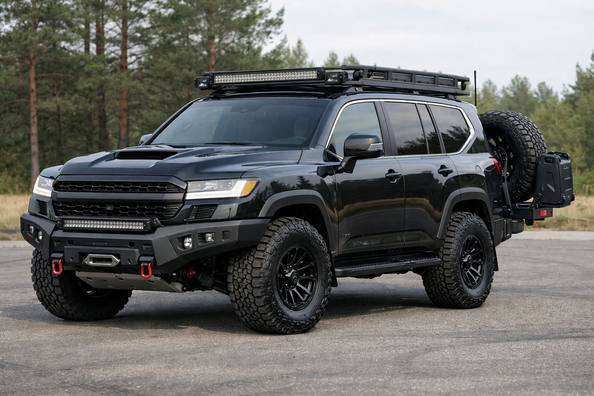
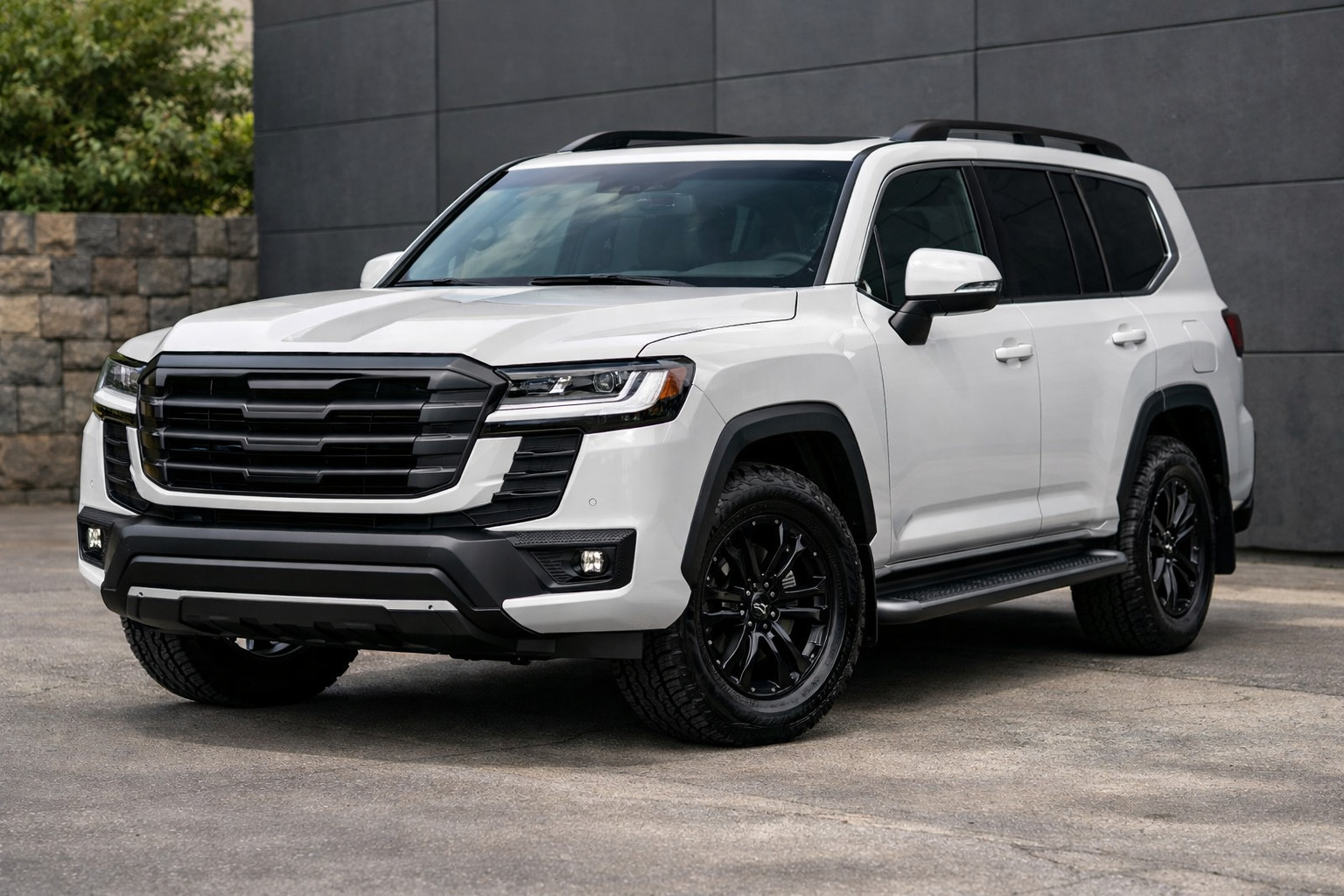
If the Toyota Land Cruiser 300 seems too calm on the outside, what works best isn’t a “body kit for the sake of a body kit,” but a consistent OEM+ upgrade: first remove visually heavy stock elements, then black out the chrome and grille, next move on to tires and wheels, and only after that—lighting, a roof rack, or armored protection. For the LC300 this is especially logical because the body already has strong presence, and excessive modifications quickly start to look heavier than they are practical.
The key here isn’t to make the vehicle “aggressive in photos,” but to build an exterior that works in real life: doesn’t obstruct visibility, doesn’t ruin the balance, doesn’t eat the budget, and doesn’t require cutting the body for no reason.
For the LC300 in this scenario, the upgrade needs to solve three things: reduce the “city” look, add a sense of width and mass, but not cross the line where styling starts to hurt practicality. That’s why the best changes are the ones you notice immediately, yet they don’t break the factory logic of the vehicle.
If the goal is simply “to look meaner,” the temptation to go widebody, large forged wheels, and an oversized front end will be strong. But for the Land Cruiser 300 that’s usually unnecessary: the vehicle is already large, and a successful result often comes from simpler steps—side steps, tires, darkened details, and a moderate off-road emphasis.
The first stage is what delivers the biggest impact for the least money and without complicated side effects. On the LC300, the quickest visual changes come from removing or replacing the stock side steps, blacking out the grille and chrome, and switching to a more aggressive AT tire on a moderate wheel diameter.
This is where the GR-S-like style works best: a black grille, less shine, calmer accents, and wheels without excessive diameter. If you want a targeted visual refresh without harsh tuning, a logo-less grille option also makes sense, for example the GR Sport grille without a logo.
| Modification | Why it’s needed | Who truly benefits |
|---|---|---|
| Remove the stock side steps | Immediately makes the silhouette look taller and less “urban” | Those who want the fastest effect without complicated tuning |
| Black out the grille and chrome | Tightens up the front end, removes excess shine, adds cohesion | Owners who want an OEM+ look without radical changes |
| AT tires on a moderate wheel | Add mass, work better in a mixed-use scenario | Those who drive both in the city and on poor roads |
| Small lift | Strengthens the off-road image and improves geometry | Those who actually leave the pavement |
| Behind-grille light bar | Adds light without a crude impact on appearance | Those who need nighttime practicality, not a show build |
| Nudge bar or armored bumper | Add protection and a more expressive front end | Those who drive highways, dirt roads, travel, or haul/cargo scenarios |
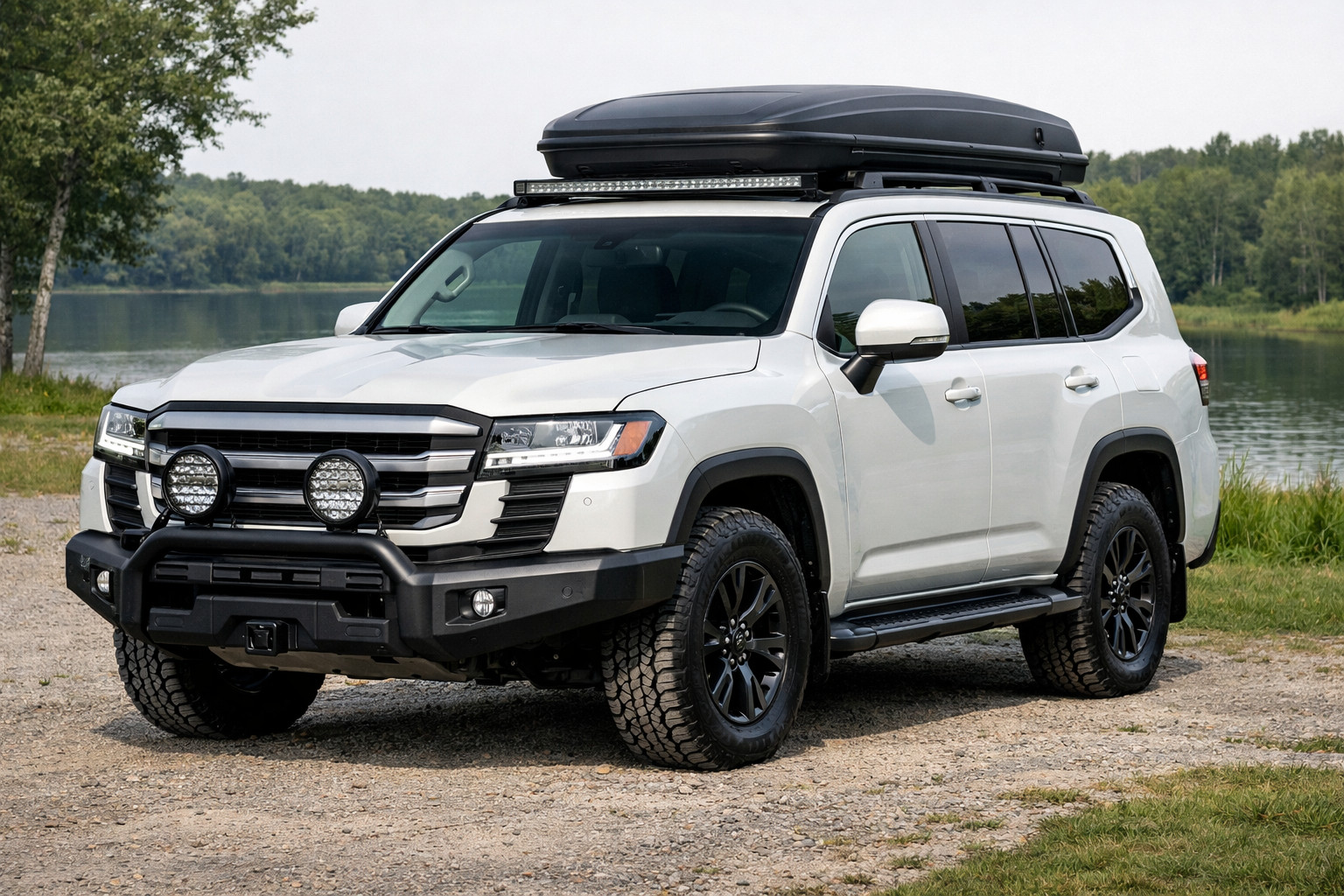
The second stage is no longer just about changing the look, but about reinforcing the use case. This is where lighting, a roof rack, front protection, recovery points, and useful off-road accessories fit naturally. If the vehicle really sees highway runs, night driving, dirt roads, or trips, these items make more sense than yet another decorative body kit.
For the LC300 it’s important not to overdo it: an armored bumper, a protective bar, or a light bar can already affect visibility via cameras and monitoring systems, and some solutions may require relocating the camera. That’s why the second stage should be done only after it’s clear what you truly need day to day.
There are upgrades that change how the vehicle is perceived but have little impact on real function. These include window deflectors, darkening отдельных elements, decorative inserts, some wheel-related choices, and small exterior accessories. They’re useful if you need to tidy up the look, but you shouldn’t expect a noticeable capability gain from them.
By contrast, wheels and tires are a borderline case: visually it looks like styling, but in practice it strongly affects handling, noise, comfort, and wear. So here you should focus not on the catalog effect, but on your usage scenario. For city driving and family trips, calm blacking-out and sensible tires are often enough.
A common mistake is buying upgrades that don’t match your use case. For example, installing a widebody, 559–610 mm wheels, or an overly aggressive body kit just because it’s noticeable. On the LC300 this often looks heavy and adds neither capability nor convenience.
The second mistake is overpaying for looks where you actually need function. If the vehicle is used mostly in the city, a massive armored front end, large roof platforms, and complex lighting solutions can be simply unnecessary. The third mistake is jumping into suspension right away when wheels and visual blacking-out are actually enough.
One more nuance: side steps don’t always need to be removed blindly. On gravel roads they can protect the rocker panels, and in a family scenario they can remain convenient as a step. So the decision isn’t universal—it depends on how exactly the vehicle is used.
| What to install first | What can be postponed | What is not mandatory |
|---|---|---|
| Removing the stock side steps | Light bar, nudge bar | Widebody kits |
| Blacking out the grille and chrome | Roof rack | Large-diameter forged wheels |
| AT tires on a moderate wheel | Small lift | Full armored front end if there’s no need |
| Light front protection | Recovery accessories if you don’t go off-road | Decorative trim with no function |
More expensive options make sense when they address a real need rather than just raising the bill. If the LC300 often drives in the dark, on highways, or on long trips, investing in lighting or an armored front end can be logical. If the vehicle regularly sees dirt roads, protection, recovery points, and a practical roof setup are more appropriate.
If it’s only about changing the look, it’s better not to go for an expensive show format. Otherwise the budget easily dissolves into details that deliver a lot of photo effect but little real value. If you specifically need a more premium OEM+ or an initially functional off-road kit, then it’s worth looking at the GR Sport grille without a logo, then the official LC300 accessories catalog, and only after that—lighting or protection solutions.
If the overly calm stock look of the Toyota Land Cruiser 300 bothers you, the smartest path is not radical tuning but a step-by-step OEM+ upgrade. First remove the side steps and excess chrome, then fit more appropriate tires and a calm black front end, and only then decide whether you need lighting, a roof rack, or armored protection.
The practical verdict is simple: for an urban and family LC300, visual blacking-out and wheels are enough; for travel and dirt roads, add functional accessories; widebody, excessive lift, and big forged wheels only make sense when there’s a specific task—not just the desire “to be noticeable.”
| ✔ | Removing the factory side steps, darkening the grille and chrome give a noticeable change in appearance without complex tuning. It is a quick way to make the LC300 look less “city-oriented” and give the front end a more cohesive look. |
| ✔ | AT tires on a moderate wheel add bulk to the vehicle and are better suited for mixed-use driving. Such a setup looks appropriate both in the city and on rough roads, without chasing an excessive wheel diameter. |
| ✔ | Behind-grille lighting, light front-end protection, and other functional accessories add practicality without mandatory radical changes to the body. This is useful for night driving, highways, and trips onto dirt roads. |
| ✔ | A gradual OEM+ approach makes it possible not to spend budget on unnecessary decorative solutions. First, you can make simple and noticeable changes, and only then decide whether more expensive additions are needed. |
| ✘ | A widebody, large forged wheels, and an aggressive body kit for the LC300 often look heavy and do not provide practical benefit. The article explicitly notes that such upgrades usually add neither off-road capability nor convenience. |
| ✘ | A силовий bumper, protective hoop, and light bar can affect visibility through cameras and monitoring. For some solutions, the camera may also need to be relocated, which complicates installation. |
| ✘ | Wheels and tires are not just styling, but a change that affects noise, comfort, and durability. Because of this, a poor choice can worsen daily use, especially in city and family driving. |
| ✘ | Removing the factory side steps is not always practical, because on gravel roads they can protect the side panels, and in family use they can be a convenient step. In other words, there is no universal solution here. |
Shipping to EU
Wholesale and retail
Own warehouse
Опис продукту
Подарунки не надаються при оформленні покупки у кредит під 0,01% або при покупці частинами.