24.03.2026
185
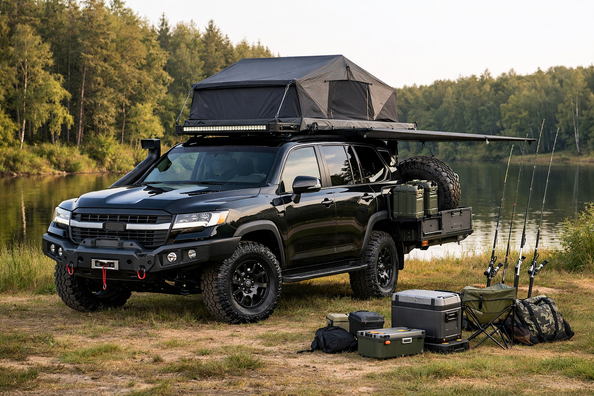
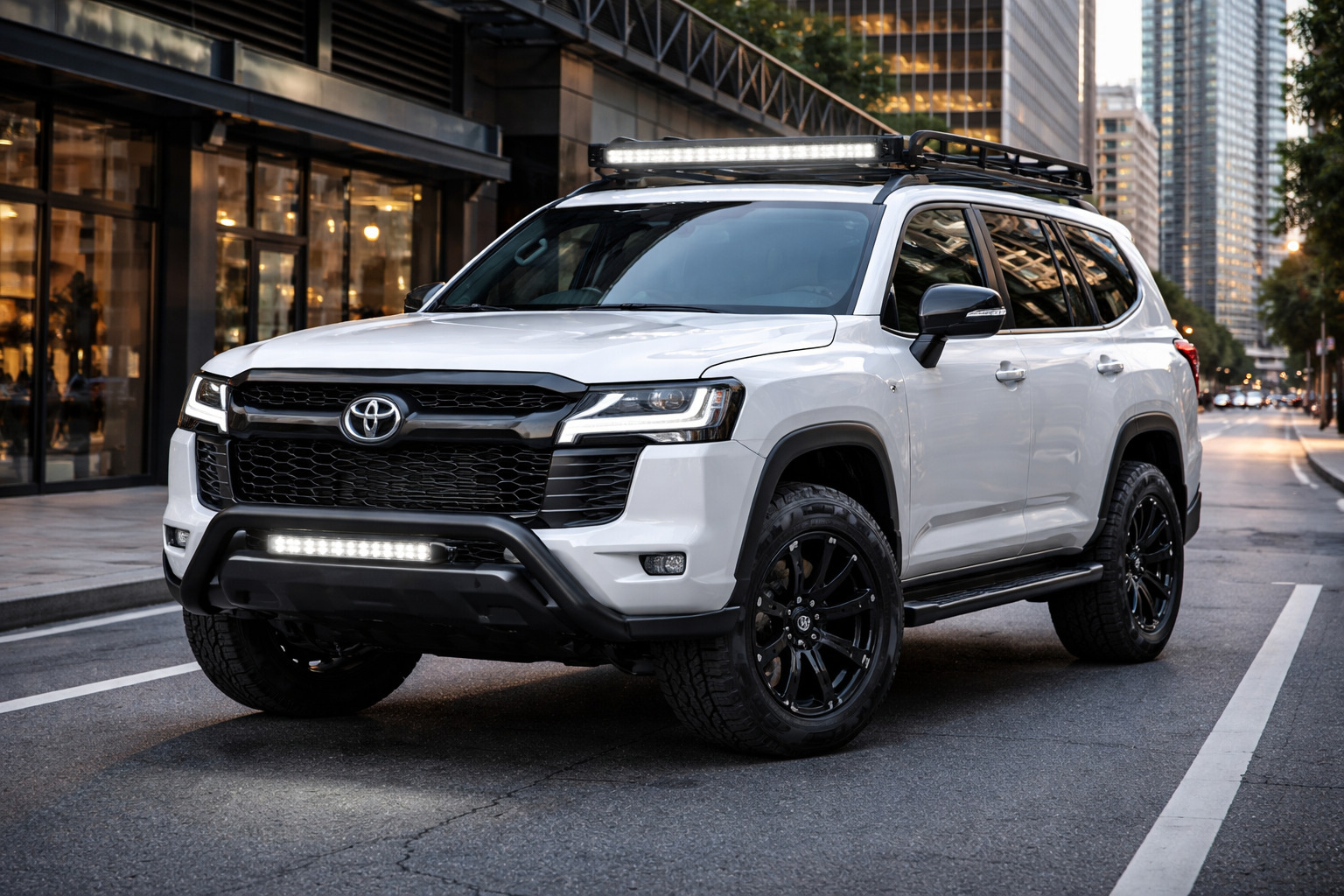
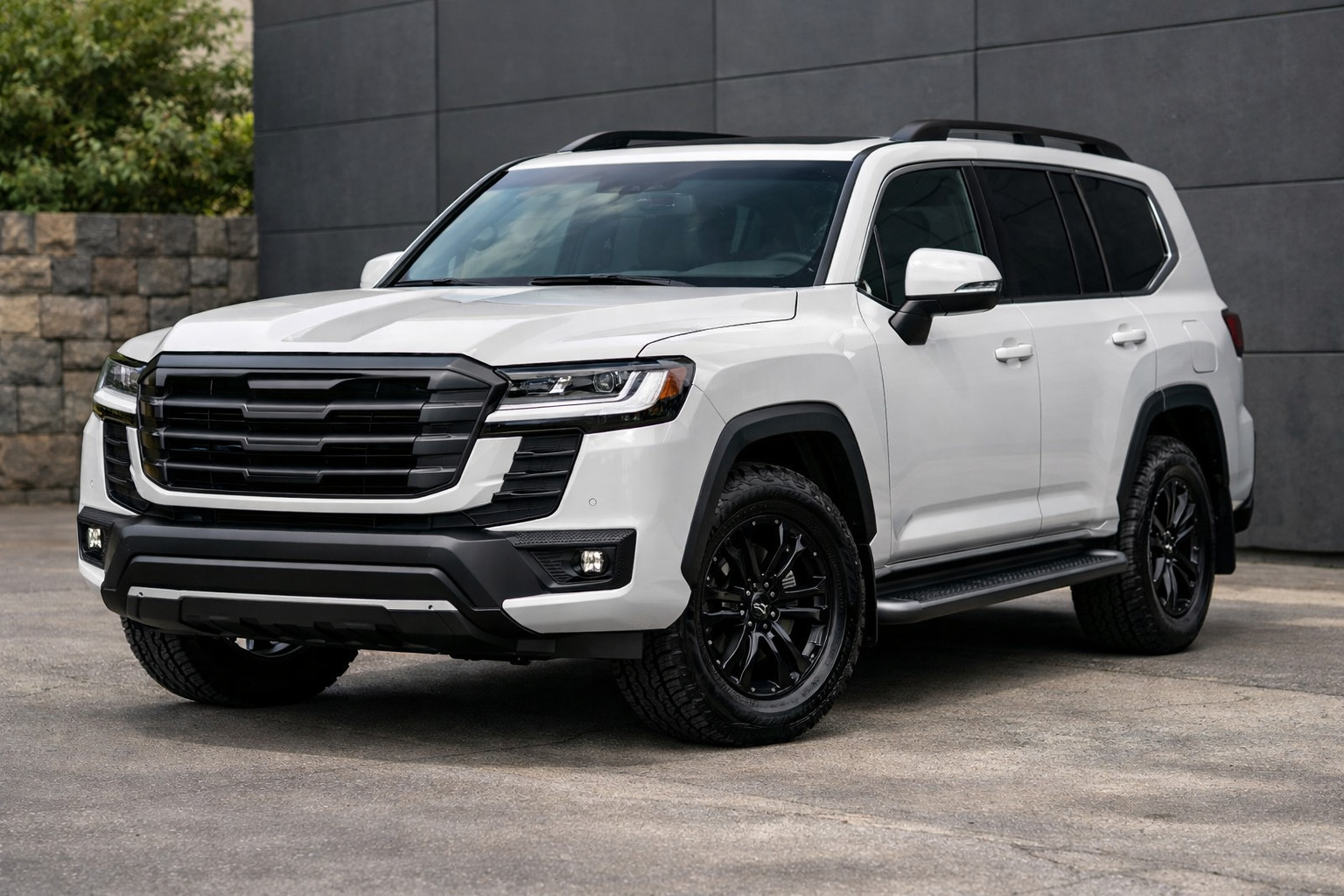
Toyota Land Cruiser 300 for fishing and outdoor trips makes sense to upgrade not “for looks”, but around 3 practical scenarios: (1) getting out of soft ground (sand/mud/clay), (2) having autonomous power for a fridge, lighting, and charging, (3) organizing gear so dirt and water don’t turn the cargo area into chaos. Then comes safety within what the design allows: for example, the technical specs list an official wading depth of 700 mm, and anything “deeper” already puts the electrics and sealing at risk.
Below is a logical order of upgrades (must-have → recommended → secondary), common mistakes, and a ready step-by-step plan you can actually apply to your fishing: from how you drive (one-off or regular runs on soft ground) to what loads you bring (fridge, compressor, tools).
This upgrade should make the Land Cruiser 300 “predictable outdoors”. Meaning you should have solutions when: the vehicle can’t move forward without lowering tire pressure or using assisted self-recovery; mud and moisture build up under bushes/near the water; and power is needed daily, even if you have to sit for periods without extended driving.
The practical logic is: first remove the causes of getting stuck (terrain readiness via tires + underbody protection + basic recovery), then build autonomous power for your equipment, and only after that “finish for convenience” (cargo organization, awning, lighting).
Top priority is reducing the risk of “not making it out” through proper tires and basic recovery tools. Most often it’s a combination of: terrain-capable tires + a compressor with a performance/power reserve + traction boards or other solutions to pull the vehicle out on soft ground without waiting for a tow.
Second priority is protection. For forest roads and rough terrain, it’s critical to protect what gets damaged fastest: the engine and drivetrain components. If you constantly scrape or drive where there are rocks/logs, you lose without protection—even with the right tires.
Third priority is power tailored to your actual consumers. The Land Cruiser 300 has a factory 2400 W inverter, but that doesn’t mean every scenario will be comfortable: the inverter as a tool may require the vehicle to be active, while a fridge and lighting are better supported by a separate autonomous setup (DC-DC + an auxiliary battery if needed).
| Upgrade | Why it’s needed | Who truly benefits |
|---|---|---|
| Terrain tires + pressure control (compressor) | Reduces ground pressure in sand/mud and lets you get out without “pedal to the floor” | Those who regularly approach water spots over soft ground |
| Traction boards/strap-based recovery solutions | Quickly provide grip when a wheel sinks | Self-reliant anglers who don’t want to depend on outside help |
| Underbody protection (engine/drivetrain) | Reduces the chance of punctures/expensive damage when driving ruts, rocks, logs | Anyone who drives not only on pavement, but on the “road to the shoreline” |
| Winch and/or recovery points | Gives control in the toughest situations when basic self-recovery isn’t enough | Those who often travel in groups/tow, or truly get stuck more than once per season |
| Autonomous power (DC-DC + auxiliary battery), sometimes for the inverter | Keeps the fridge/lighting/charging running without “testing your luck” | Couples and groups traveling longer than one day or bringing power-hungry gear |
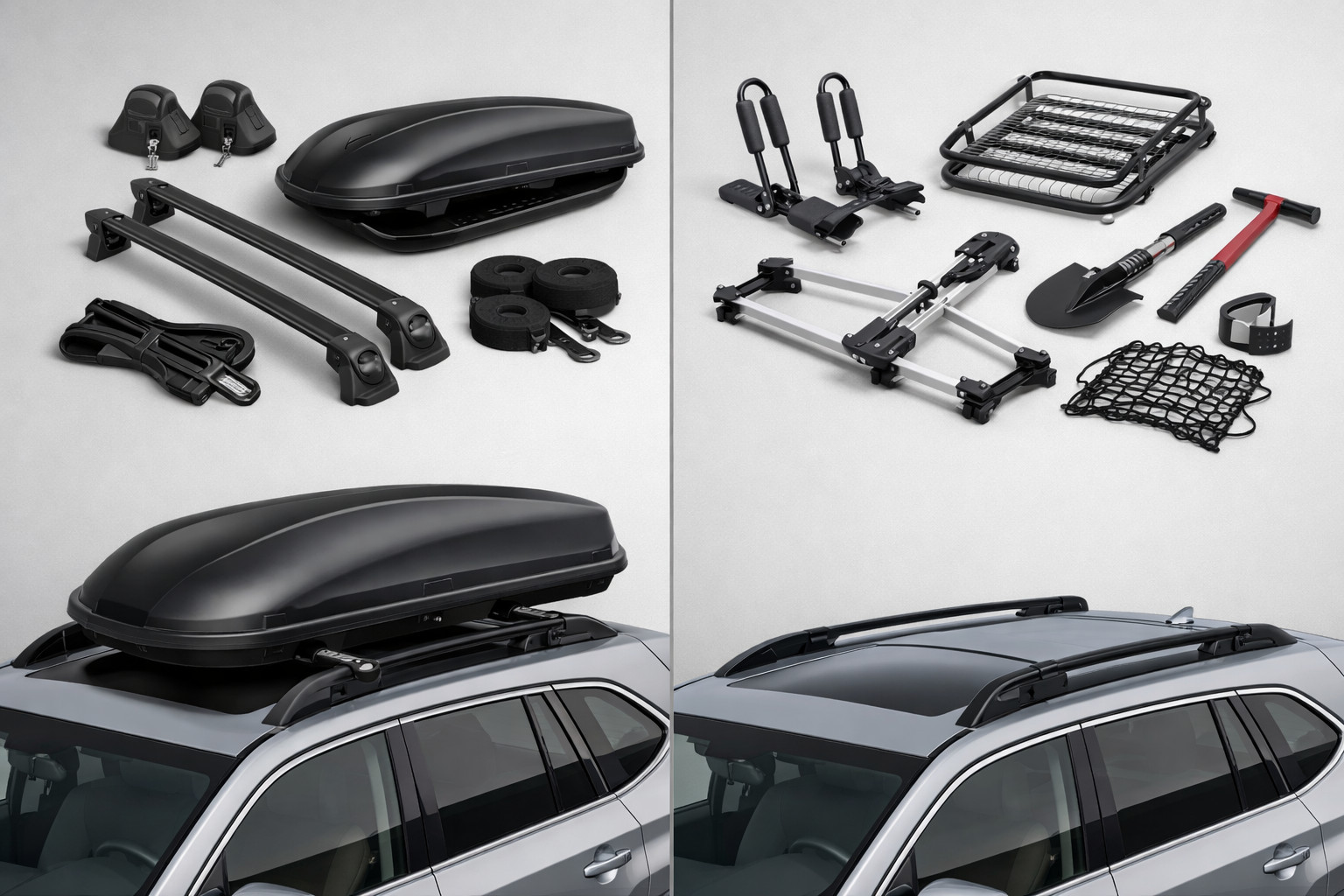
| Cargo organization + sealed storage | Water and dirt don’t get spread throughout the cabin and your gear | Anyone carrying tackle, groundbait, cookware, thermoses, live/wet items |
The water guideline is simple: if you’re really getting close to the official 700 mm limit, “geometry + sealing” is what matters. Upgrades like a snorkel do not automatically give you a new “guaranteed” wading number—risks remain, so plan for real conditions, not wishful thinking.
The second stage is when you’ve already solved “how to get there and how to get out”. Next, it’s logical to add what improves electrical stability and campsite convenience: an awning/shelter, extra lighting for evening fishing, and quality solutions for storage and for protecting wiring/outlets.
An important detail about electrics: compressors, fridges, and winches can have different peak loads. For example, the ARB CKBLTP12 compressor has a stated maximum total current up to 90 A at 150 psi and a duty cycle up to 90%. If you haven’t done basic electrical prep (cables, grounds, battery logic), the “second stage” in real life turns into repairs.
An awning and lighting are about your scenario. If you go to the shore for a few hours and part of that time is at dusk, it’s better to first ensure proper shelter and safe work around the vehicle than to spend the budget on external “add-ons”.
Comfort and looks have their place, but only after the vehicle “covers” the core tasks. This category usually includes decorative elements, some “for-the-photos” lighting, and improvements to external protection without real gains in recovery or electrics.
The right compromise is choosing solutions that add function at the same time. For example, a box/containers and an awning are both about convenience and real-world practicality in rain/dew. But anything that only changes the look should not affect whether you make it home.
The most common mistake for fishing setups is buying “expensive and pretty” instead of buying for the scenario. For example, people install external parts that do little for getting unstuck, or overpay for things they won’t use regularly.
In electrics, another story repeats: people look only at “inverter watts” and forget that real autonomous power is not just output, but runtime, voltage drop, charging logic, and safe connections. Same with a winch: it may be “unnecessary” for your level of trips, but it’s definitely needed if you truly practice recovery regularly.
Another typical wasted purchase is solutions that increase risk (for example, conductors/components without adequate protection against water and wading). It’s better to do wiring/connections correctly once than to replace them after every season.
| Install first | Can be postponed | Not required |
|---|---|---|
| Terrain tires + basic pressure control | Extra exterior lighting “just for illumination” | Decorative elements without a practical function |
| Traction boards/recovery solutions (downtime insurance) | Complex cargo tie-down systems if you haven’t decided on a layout yet | Add-ons that only change the look |
| Underbody protection (engine/drivetrain) | Large awning if you don’t often do long stops | “Universal” solutions not matched to your real gear |
| Autonomous power for a fridge and charging (DC-DC + battery if needed) | Interface upgrades (sockets/USB/panels) after you’ve defined the loads | An inverter as separate magic if DC logic is enough for you |
| Cargo organization against water and dirt (containers/mats/boxes) | Extra “small” accessories if they don’t solve access to tackle | Trendy but bulky systems that make packing harder |
| If you often get stuck on soft ground — a winch/recovery points and proper electrical prep | A second winch/excess traction hardware without a need | A winch “just in case” if trips are rare and self-recovery is sufficient |
Why this order: first you address the incidents that happen most often (got stuck, damaged the underbody, drained the battery at camp, can’t pack up/everything is dirty). Appearance and “comfort for comfort’s sake” are most often an overpayment after the basic system already works.
More expensive solutions make sense when you’re covering not a “possibility”, but a “guaranteed scenario”: so you don’t have to stop, don’t have to repair wiring after every trip, and don’t lose time due to a weak autonomous system.
A telling example is power supply. If you have a fridge and want stability, it’s more logical to build a DC-DC system around real load than to rely on chance with an inverter. You can look at the approach to upgrading electrics on the LC300 in the article about tuning Toyota Land Cruiser 300, but the main idea is the same: a systematic setup matters more than the “highest” number.
The same applies to recovery: if you regularly drive on soft ground, a winch can be justified. But keep in mind that for WARN ZEON 12 the stated motor current peak is up to 252 A (at the 12,000 lb rating). That means: an expensive winch without quality electrical prep and a proper battery is paying extra for problems.
And one more case where more expensive is better: protection. When you drive where rocks “land” on the sump/transmission, thickness and material are not aesthetics—they reduce the chances of losing the trip to mechanical damage.
For fishing and outdoor trips in a Toyota Land Cruiser 300, the most rational upgrade order is: tires + pressure control + basic recovery, then underbody protection, then autonomous electrics for the fridge and lighting, and only after that — cargo organization and comfort (awning/lighting). A winch and the most expensive solutions are logical only when your real scenario consistently runs into difficult recoveries, or when you’re ready to strengthen the electrical system for peak loads accordingly.
If you want to move without chaos, define what “breaks the trip” for you: you got stuck, damaged the underbody, ran out of power, it’s inconvenient to work around the vehicle. Choose components for that—then tuning works as a tool, not as a set of expensive compromises.
| ✔ | A clear priority of "not getting stuck/not getting out": tires for dirt, pressure control, and basic recovery tools reduce the risk of getting stuck in the typical scenarios faced by anglers. |
| ✔ | Underbody protection (engine and transmission) works as insurance against mechanical damage from rocks, ruts, and logs, rather than as a decorative upgrade. |
| ✔ | Independent power for a fridge and lights (DC-DC + additional battery if needed) provides more predictable operation while parked than relying only on the factory 2400 W inverter. |
| ✔ | Organizing cargo against water and dirt (containers/boxes/sealed storage) keeps things tidy and provides quick access to gear even after contact with damp terrain. |
| ✘ | The inverter in the article is considered as a tool rather than a "universal solution," so without a separate independent electrical system, discomfort may arise due to the vehicle activity requirements, runtime, and voltage drops. |
| ✘ | A winch and/or recovery points only make sense if serious stuck situations happen with real frequency; without proper electrical preparation, this is more likely to add costs and potential problems than solve the task. |
| ✘ | There is a risk of "confusing needs with wants": external elements or electrical solutions bought without tying them to the scenario may have almost no effect on the ability to get there and get out. |
Shipping to EU
Wholesale and retail
Own warehouse
Опис продукту
Подарунки не надаються при оформленні покупки у кредит під 0,01% або при покупці частинами.