06.07.2026
194
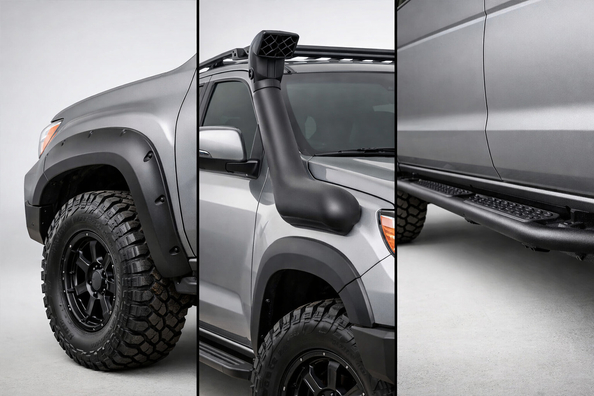
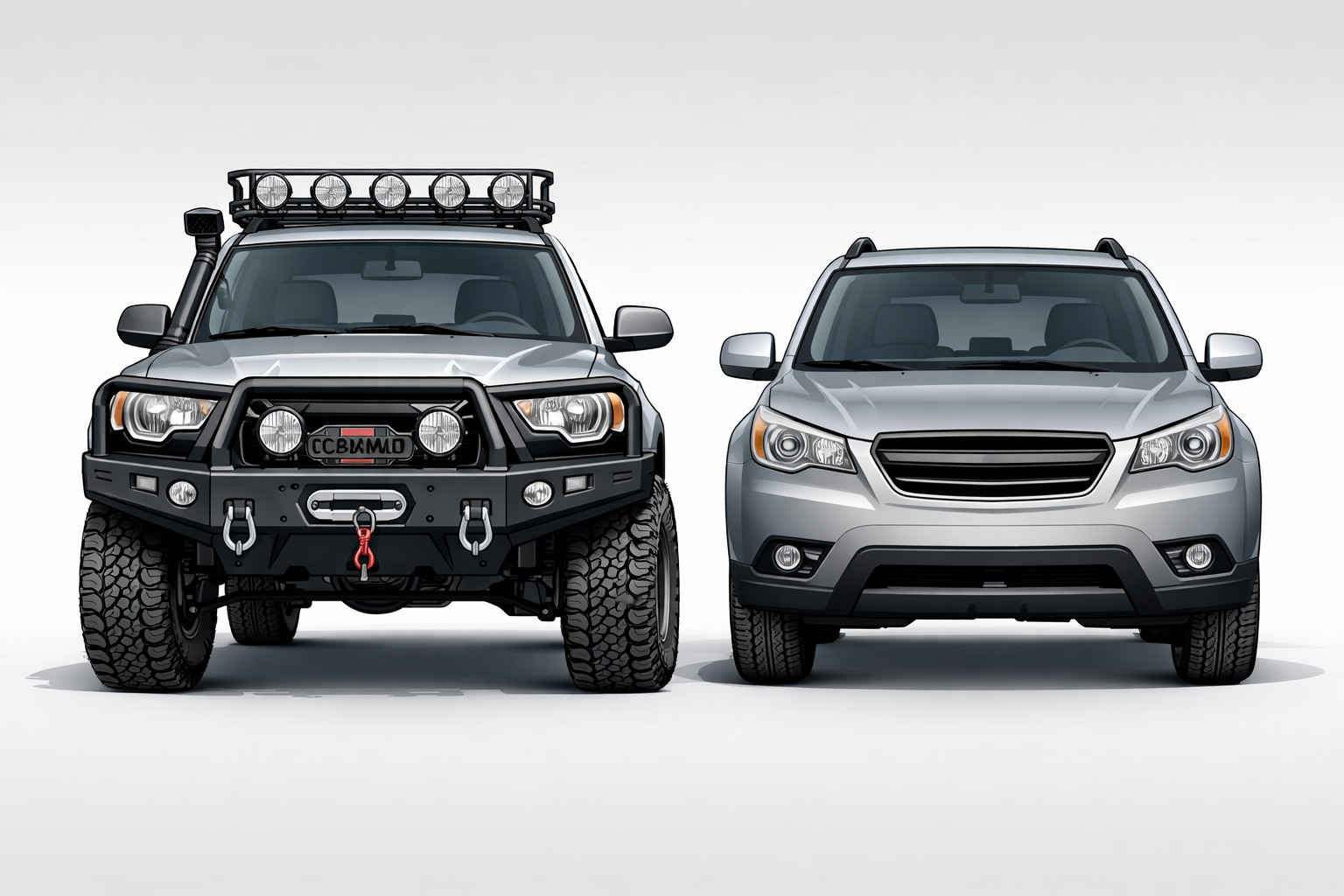
If you’re choosing your first off-road accessory without tying it to a specific model, most often the logic leads to rock sliders. They cover the most expensive risk zone: the lower side panel, the body sills, and the points where the vehicle actually hits a rock, rut, stump, or curb. A snorkel is installed first not “just in case,” but when you truly deal with dust, sand, or regular water crossings. Fender flares are justified first when the wheel already sticks out past the arch, the body constantly gets peppered with stones and mud, or you need to legally cover the tire width.
So the question isn’t what looks cooler, but what addresses your main risk first. If you’re hitting the terrain with the side of the vehicle — sliders. If the main issue is the intake and dust — a snorkel. If your arches, doors, and paint are suffering from the tires — fender flares.
These three accessories solve completely different tasks, so a direct “what’s better” comparison without a scenario often misleads. Rock sliders are protection and a support point, sometimes capable of taking the vehicle’s weight. A snorkel changes the air intake point and reduces the risk of ingesting water or fine dust at fender level. Fender flares add tire coverage, reduce mud on the body, and partly protect the arch from stones — but they’re not armor.
That’s why the first thing to install shouldn’t be the cheapest or the most eye-catching item, but the one that gives the biggest practical effect on your route. For most vehicles that actually drive on rocky or narrow forest trails, that’s rock sliders. For dusty or water-heavy expeditions — a snorkel. For wide tires and constant grime along the side — fender flares.
Installation. A snorkel is almost always the most demanding in terms of accuracy: holes in the fender, work around the A-pillar, and watertight joints. Fender flares are often easier to install—some kits even without drilling—but still require careful fitting. Rock sliders don’t always require cutting the body, but the kit is heavy and installation is tied to structural mounting points.
Noise. This matters primarily for the snorkel: sometimes you get a changed intake sound or a slight aerodynamic hum, but it’s usually not the main drawback. Fender flares themselves rarely create noise issues if installed straight. With rock sliders, the issue isn’t noise but how they behave in winter: snow, mud, and salt can pack underneath them.
Service life, practicality, and price. Metal sliders last a long time, but the coating needs attention after impacts and winter chemicals. A snorkel made from quality plastic serves for years if assembled correctly and doesn’t have air leaks. Fender flares are cheaper than the other two options, but dirt can build up between the flare and the fender and eventually rub the paint. Budget-wise the guideline is simple: flares are usually the most affordable, a snorkel is mid-range, and true rock sliders are the most expensive.
| Option | Strengths | Weaknesses | Who it’s for |
|---|---|---|---|
| Rock sliders | Real protection for the side, can support the vehicle’s weight, useful on rocks and in ruts, don’t reduce breakover angle in well-designed setups | Expensive, heavy, not every kit is a true rock slider, coating needs care after impacts and winter use | For those who drive on bad roads, in the woods, on rocks, and in narrow ruts |
| Snorkel | Raises the intake, helps in dust, sand, and water, useful for expedition-style travel | More complex installation, drilling required, needs watertight sealing, doesn’t make the vehicle “submersible” | For those who often drive in dust, through water crossings, or in dry sand |
| Fender flares | Cover the tire, less mud and stones on the body, often cheaper, sometimes no drilling | Don’t protect the body like a structural element, can rub the paint, with large tires you must check suspension travel and tire clearance | For those with wide wheels, protruding tires, or constant mud thrown along the sides |
DD Tuning expert comment: The most common mistake is buying a snorkel “for looks” and postponing side protection, even though the vehicle actually sits on the sill on the very first outing. The second typical story is grabbing any sliders without checking whether they’re truly a structural design and not just a reinforced step. With fender flares, people often underestimate tire clearance: after installation, a lift or steering lock can reveal a problem that isn’t visible at rest.
This is the best first upgrade if your vehicle regularly touches the terrain with its side. Proper rock sliders work as protection and as a load-bearing element, not as a decorative step. That’s exactly why they save you from expensive repairs to the body sill, door opening, and lower side panel.
The downsides are real too: weight can be around 36 kg per set, branded solutions often cost more than a snorkel, and powder coating doesn’t like being ignored after rocks and winter chemicals. Even more important: not all products called “heavy-duty” handle the vehicle landing on a rock equally well.
A snorkel makes sense where the intake suffers from dust, sand, or the risk of ingesting water at the level of the factory intake. It’s not a magic tube for any off-roader, but a very specific tool for specific conditions. If you drive in open steppe, quarries, dry dirt roads in a convoy, or regularly cross water, the benefit will be noticeable.
But the cost of an installation mistake is highest here. On typical kits it’s several hours of work, large holes in the fender, mounting near the pillar, and a requirement for watertight sealing of all connections. Noise-wise, a snorkel is usually not a disaster, but the main limitation is simple: it doesn’t replace sealing other components and doesn’t give you a license to mindlessly drive into deep water.
Fender flares are useful when the wheel has become wider or the wheel offset has changed enough that the tire throws mud and stones straight into the doors and the rear of the arch. They can also provide the required tire coverage: in some series it’s about 19 mm, in others much more. So the effect strongly depends on the specific series and the specific vehicle.
Their weak point is that they’re not structural protection. They won’t save you from contact with a rock the way a rock slider will. Plus, dust and debris accumulate between the flare and the fender, and with big tires you need to separately check for tire contact at full steering lock or during suspension travel.
If the vehicle mostly sees farm roads, rocks, deep ruts, shoulders, and forest trails, install rock sliders first. They come into play more often than you’d think and protect parts whose repair is painful both in budget and bodywork.
If your routes are dust, convoys, dry sand, and frequent crossings through shallow or medium-depth fords, a snorkel may be the smarter first investment. Not because it’s trendy, but because your main risk is different: not a hit to the side panel, but the air intake at fender level.
If the issue is more everyday—wheels protrude, arches are constantly splashed, doors get chipped by small stones—then the vehicle needs fender flares sooner. This is especially logical on a daily driver with large tires where there’s no harsh rocky off-road, but there is constant dirt and abrasive spray on the body.
| Scenario | Best choice | Why |
|---|---|---|
| Forest, rocks, ruts, tight passages | Rock sliders | The highest chance of damaging the sill and lower side panel—not the intake or arches |
| Dusty routes, sand, expedition travel | Snorkel | Higher intake point and lower risk of ingesting dust or water at the factory intake level |
| Wide tires, mud on doors, stones hitting arches | Fender flares | Adds tire coverage and reduces debris thrown onto the body |
| Daily driving with occasional trips outdoors | Usually rock sliders or fender flares | A snorkel often won’t show its value here if there’s no real dust or water |
| Tight budget and you need maximum effect from the first purchase | Based on route risk: flares for mud, sliders for terrain contact | A snorkel delivers a strong effect only in specific conditions, not all the time |
A more expensive solution is justified when it addresses not aesthetics, but a costly risk. If the vehicle truly works its side against the terrain, saving on slider construction usually ends up costing more than the kit itself, so it makes sense to look at rock sliders right away, not decorative alternatives.
With a snorkel, it makes sense to buy not the cheapest one, but the one with clear geometry, a proper mounting kit, and good fitment to the body. If you’re unsure whether you need it, it’s useful to first go through how to choose a snorkel and only then decide whether it should be the first upgrade or the second.
With fender flares, paying extra is reasonable when you need precise tire coverage, a more durable material, and proper fit without warping. If the task is specifically to cover the tire and protect the arches from dirt, it makes sense to look at fender flares for your body, rather than grabbing the first universal option you see.
From a customer’s experience: an SUV owner initially wanted to install a snorkel because he often went fishing and associated it with water. After a conversation, it turned out that most of his damage came not at fords, but in ruts—when he sat the side on soil and rocks. In the end, he installed rock sliders first, and the snorkel was postponed to the next stage because the sliders immediately addressed his real problem.
If you need a short answer, in most cases rock sliders are the best first choice: they offer the most universal body protection and the biggest practical effect on poor roads. A snorkel comes first only when you truly have a lot of dust, sand, or water. Fender flares come first when the main problem is protruding wheels, grime along the side, and arches getting peppered with stones.
The key is not to buy an accessory for the photo. This material is based on real selection experience, hands-on practice, and real usage scenarios: what the vehicle hits, what breaks first, and which upgrade actually changes how it’s used—not just how it looks.
| ✔ | Side steps are the most versatile as a first upgrade: they protect the lower side, the body sills, and the areas that actually get hit by rocks, ruts, or curbs. For vehicles that drive on poor roads, this delivers the biggest practical benefit. |
| ✔ | A snorkel has a very clear purpose — dust, sand, and water crossings. If the route really involves that, it reduces the risk of taking in water or dirt at the standard intake level. |
| ✔ | Bushwackers are useful for vehicles with wide wheels or protruding tires: they reduce mud and stone spray onto the body and help cover the wheels in width. |
| ✔ | In terms of installation, Bushwackers are often simpler than a snorkel, and some kits can be fitted without drilling. This makes them a less complicated option for a first modification if wheel-arch protection is what you need. |
| ✔ | The article focuses on choosing based on the scenario, not appearance: for contact with terrain — side steps, for dust and water — a snorkel, for dirt along the sides — Bushwackers. This helps avoid spending money on an accessory that does not solve the main problem. |
| ✘ | A snorkel is more complicated to install: it requires holes in the fender, precise mounting near the pillar, and tight sealing of the joints. If fitted without a real need, the benefit may be minimal. |
| ✘ | Bushwackers are not a heavy-duty protection and will not save the body from a serious hit with a rock the way rock sliders do. Also, dirt can build up between the flare and the fender, which can rub the paint. |
| ✘ | Side steps are usually the most expensive and heavy, and their coating needs care after stones and winter chemicals. It is also important that this is a real heavy-duty structure, not just a bulky step. |
| ✘ | For Bushwackers and a snorkel, correct fitment for a specific vehicle is critical. In the first case, wheel clearance must be considered; in the second, fit precision and sealing, otherwise problems may appear after installation. |
Shipping to EU
Wholesale and retail
Own warehouse
Опис продукту
Подарунки не надаються при оформленні покупки у кредит під 0,01% або при покупці частинами.