29.05.2026
609
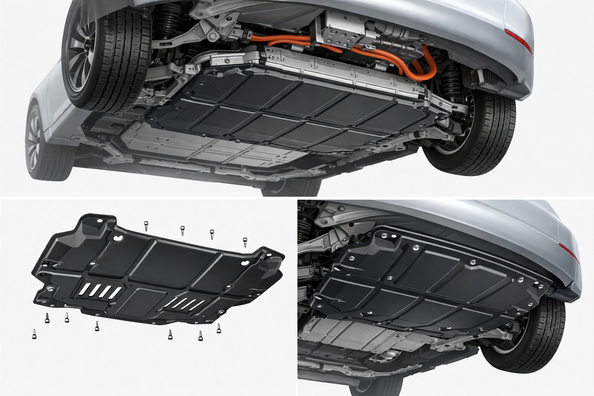
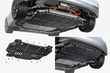
In an EV, the battery, cables, and part of the cooling circuits are located underneath, so a hit on ice, a deep pothole, a stone, or the edge of a rut doesn’t just strike plastic—it can hit expensive components. That’s why the question isn’t whether protection is needed at all, but whether the factory panels are enough for your roads and your driving style.
For everyday asphalt, the stock aero panels plus a normal inspection are often enough. For gravel, snow banks, broken roads, construction sites, and trips off-road, it makes more sense to look at a vehicle-specific reinforced shield and install it only using the correct procedure: no drilling into the battery case, no DIY brackets, and with a check of all adjacent components after installation.
In most electric cars, the battery pack occupies the lower part of the body. That’s great for the center of gravity, but it makes the underbody a critical zone: there’s less clearance to obstacles, and the consequences of an impact are more expensive than a typical scrape underneath an ICE car.
The second reason is confusion between aerodynamic panels and real protection. Factory plastic often works well against dirt and airflow, but it’s not designed for hard contact with a stone, a pothole edge, or packed snow.
Start not with buying a shield, but with evaluating the scenario. If you drive on smooth city roads almost all the time and the issue appeared after one specific hit, you need an inspection of the damage first. If you regularly drive on gravel, slush, potholes, or dirt, the problem is systemic—and then you need protection matched to your operating conditions.
A practical check is simple. See whether the lower panel is hanging or scraping the road, whether there are fresh scratches, dents, broken clips, signs of fluid, or unusual rubbing against the road. If after an impact you get power limitation, overheating messages, or other faults, this is no longer about plastic—you need a service center trained for high-voltage systems.
The best option after a strong underbody contact is a lift and an inspection not only of the shield, but also of the battery case, high-voltage cables, cooling hoses, and the pass-through points under the protective panels. For some EVs, this kind of check is part of the regular schedule roughly every 13,000 km, but after an impact you shouldn’t wait for the next planned service.
DD Tuning expert comment: the most common mistake is replacing only the torn plastic and not looking at what happened behind it. The second typical issue is buying a universal shield because it’s cheaper, and then getting misalignment, extra gaps, or conflicts with factory components. Selection should be done not only by the car model, but also by year, battery version, and real-world driving conditions.
| Symptom | Likely cause | What to do |
|---|---|---|
| The lower panel is hanging or scraping the road | Broken clips, cracked aero panel, mounting deformation after an impact | Don’t stop at clips: lift the car and check adjacent underbody components |
| Fresh deep scratches or dents underneath | Contact with a stone, pothole, ice, or curb | Inspect the shield, battery case, cables, and hoses; after a hard hit, go to an EV service center |
| Errors, power limitation, overheating | High-voltage system damage or disrupted cooling | Don’t experiment—run diagnostics and inspect high-voltage components |
| Fluid traces after an impact | Possible cooling circuit damage | Stop driving until the cause is identified; check hoses and connections |
| Constant noise of stones hitting the underbody on gravel | Normal abrasive effect for this surface, weak protection of the lower zone | Consider a reinforced vehicle-specific shield and, additionally, mud flaps or fender liners |
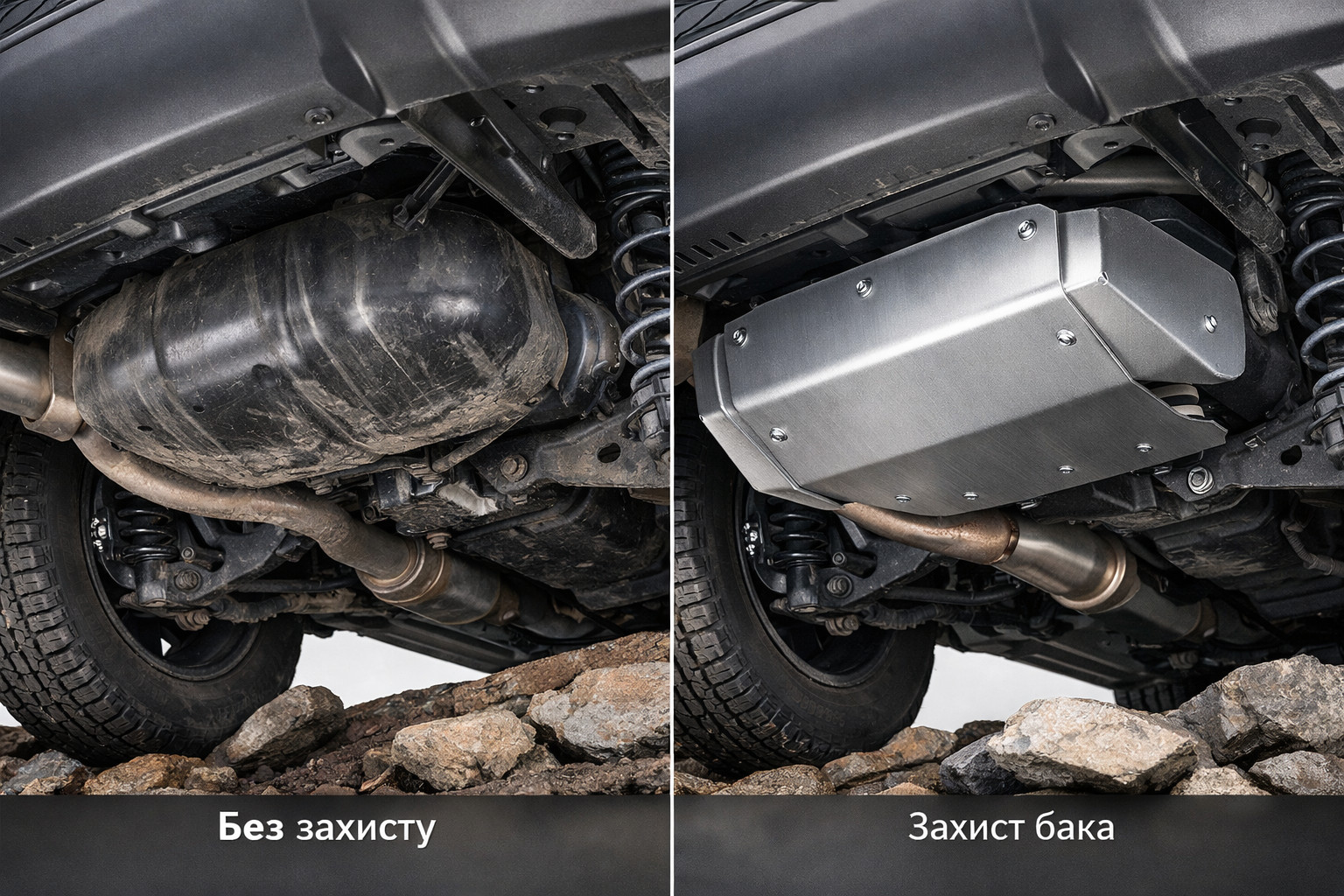
Vehicle-specific shield. For gravel, loose roads, snow, and potholes, a reinforced aluminum or metal protection plate that follows the geometry of the specific vehicle and mounts to factory points works best. For daily asphalt, excessive armor often provides no noticeable benefit.
Correct installation. Drilling the battery case, aero panels, or new holes in the battery area is not allowed. Install according to the factory mounting logic, checking clearances to cables and hoses, and use the torque specs from the technical documentation for your exact model.
Regular inspection and underbody washing. After winter, off-road driving, or driving through mud, the underbody should be washed, and after any impact it should be inspected. This truly reduces the risk of missing fastener corrosion, dirt buildup, and hidden damage.
A universal shield that “almost fits” is a bad idea. Even if you manage to bolt it on, it may sit crooked, steal ground clearance, or press where it shouldn’t.
Replacing only clips and plastic without inspecting the battery compartment also often creates a false sense that the problem is solved. If the impact was noticeable, cosmetics don’t replace checking hoses, cable protection, and the battery case itself.
Also, don’t expect a thin factory plastic panel to turn into armor just because it’s secured with new push clips. It does its job, but its capabilities are limited.
If the main threat isn’t hard impacts but constant dirt, salt, and fine gravel, then accessories related to the shield make sense. For example, fender liners reduce buildup in the arches and the lower body, and vehicle-specific mud flaps for ID.4 or mud flaps for Audi e-tron help block some stones and road chemicals. They won’t save the battery from a direct hit, but they work well as an additional protective layer in everyday use.
Parts replacement is mandatory if a metal shield is deformed, an aero panel is torn, mounting points are broken, or there are signs of contact with hoses and cables. If your route is calm city driving and there have been no underbody impacts, sometimes it’s enough to keep the factory configuration and not overpay for a heavy solution.
| Solution | When it works | When it’s not worth spending money |
|---|---|---|
| Factory aero panels plus regular inspection | City driving, decent asphalt, careful driving without frequent hits | If you regularly face gravel, ruts, ice, and hard underbody contacts |
| Reinforced aluminum shield | Gravel, loose roads, winter banks, potholes, frequent trips outside the city | If the car is driven only on smooth city streets and impact risk is minimal |
| Metal shield for harsh conditions | Poor roads and a higher risk of stronger underbody contact | When it’s installed “just in case” without real need and without checking compatibility |
| Mud flaps and fender liners | To reduce the stream of stones, dirt, salt, and moisture | If you expect them to protect the battery from a direct impact |
| Replacing only clips or plastic | Only after an inspection confirms the damage is superficial | After a strong hit when hidden components haven’t been checked |
| EV service inspection after an impact | Always justified with dents, punctures, errors, or fluid traces | Saving money here isn’t worth it—this is how expensive failures get missed |
From a customer’s experience: an EV owner was looking for “just a new lower panel” because after an icy rut it started scraping underneath. After a proper inspection, it turned out that not only the plastic was damaged, but also the mounting of the protection near the battery area, so replacing only clips made no sense. In the end, he installed a vehicle-specific shield for his routes and kept the car free of unnecessary heavy armor where it wasn’t needed.
For an electric car, the best approach is simple: first assess the risk, then choose protection for the specific model and driving conditions, and entrust installation to technicians who understand high-voltage system design. On asphalt, factory panels, underbody washing, and regular inspection are often enough; for gravel, potholes, snow, and off-road use, a reinforced vehicle-specific shield makes sense. This material is based on real selection experience, practical work, and real-world use cases—not on the myth that “the thicker the metal, the better” for every EV.
| ✔ | For city driving, the standard panels or a lightweight composite guard are often enough, so there is no need to install a heavy kit right away. This lets you protect the underside of the car without adding unnecessary weight. |
| ✔ | A model-specific guard mounted to the factory points is better suited to an electric vehicle than a universal sheet. It takes into account ventilation, service points, and the location of high-voltage components. |
| ✔ | Aluminum kits offer a good balance of weight and strength for mixed city driving and rough roads. The article directly calls them the optimal option for most such scenarios. |
| ✔ | Local reinforcement of the most vulnerable areas helps avoid overloading the entire underside of the car. This is more practical than trying to cover the entire battery with a single sheet. |
| ✔ | After proper installation, the risk of damage to the lower panels and the appearance of extraneous road noise is reduced. The car is also less vulnerable to impacts from curbs, stones, and potholes. |
| ✘ | A solid heavy “tray” under the entire battery can bring more compromises than benefits. It can needlessly increase weight and reduce ground clearance. |
| ✘ | Steel protection handles a strong impact better, but it is heavier and requires anti-corrosion protection. For a lighter electric car, this can be a noticeable drawback. |
| ✘ | After a strong impact, aluminum is not always worth repairing, and sometimes it is easier to replace the part. In other words, it is not the best choice for very harsh conditions. |
| ✘ | Improper installation can cause vibrations, resonance, and minor rattles. There is also a risk of hitting the battery casing, cooling lines, or high-voltage wiring if the clearances are not checked. |
Shipping to EU
Wholesale and retail
Own warehouse
Опис продукту
Подарунки не надаються при оформленні покупки у кредит під 0,01% або при покупці частинами.