21.05.2026
888
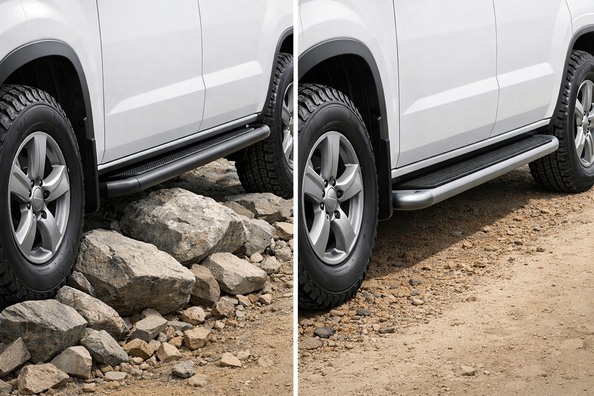
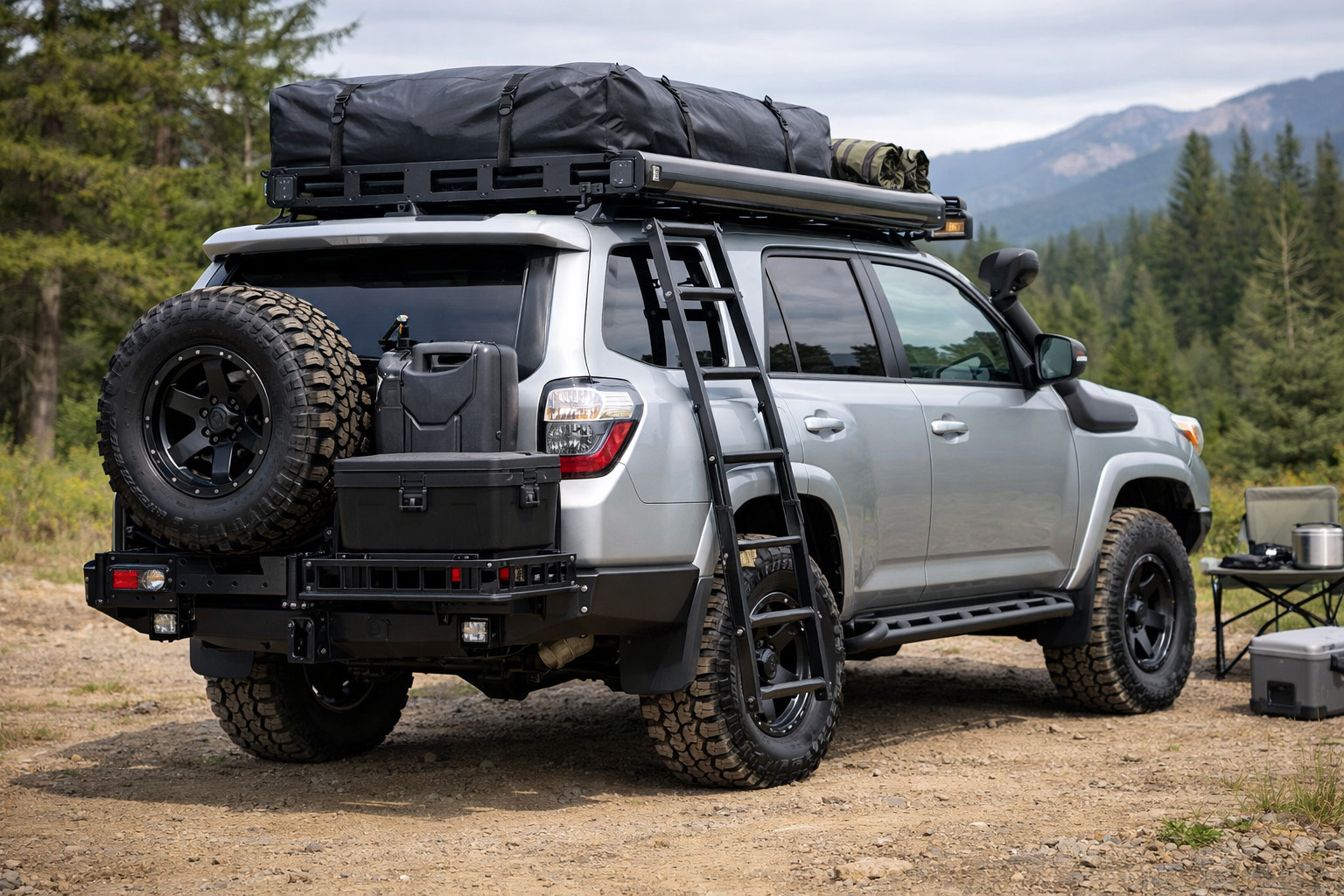
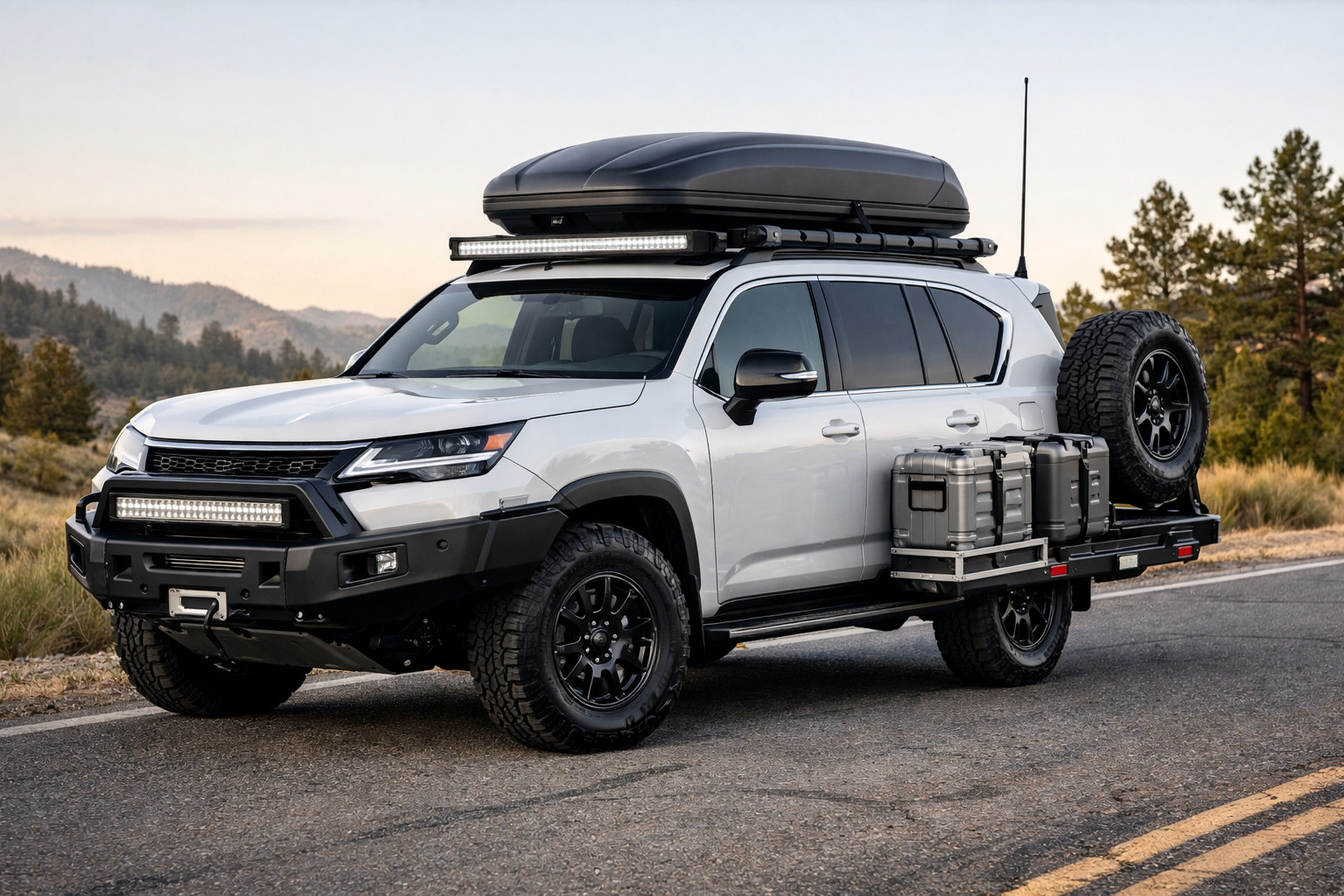
On bad roads, the question is not which side step looks more massive, but what will become the lowest point along the side of the body. Standard fixed side steps often hang 51–102 mm below the frame and can take away 51–127 mm of side clearance, so they are the first to catch ruts, ice, or a rock. Retractable running boards in the folded position have almost none of this drawback, but preserving the vehicle’s geometry comes at the cost of a more complex mechanism.
So the answer depends on your route. For everyday entry into a crossover or pickup, a low-profile fixed side step is enough; for broken roads and deep snow, retractable solutions make more sense; and for regular contact with ruts you need not a decorative accessory, but heavy-duty rocker protection.
A bad road quickly shows the difference between a step for convenience and a rocker panel for protection. If an element hangs lower than the body, it eats into your geometric clearance and becomes the first point of contact. That’s why in ruts, snow, and when climbing out of a hole, a regular wide side step often gets in the way earlier than the vehicle itself.
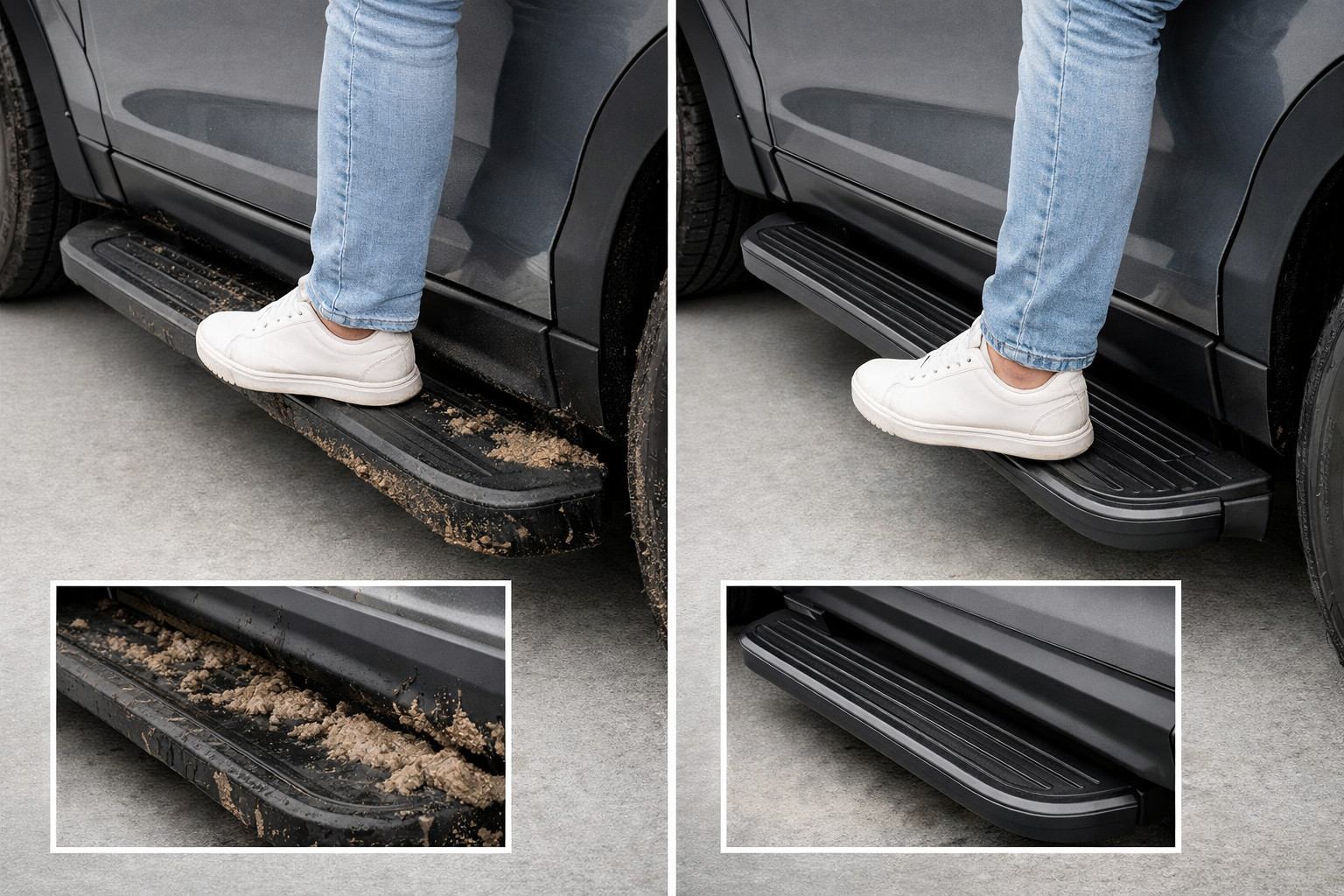
Retractable systems have a different weak spot: hinges, guides, the motor, and sensors. When dirt, water, ice, and salt pack into them, friction increases, the board starts making noise, won’t reach the end of travel, or stops halfway.
DD Tuning expert comment: The most common mistake is choosing running boards only by platform width and looks. For broken roads, you first check how low the assembly hangs relative to the frame, and only then look at design. The second typical mistake is trying to revive a sticking mechanism with random lubricant without thorough washing and drying.
| Symptom | Likely cause | What to do |
|---|---|---|
| The side step catches a rut or snow | Low hang, overly wide or low-slung design | Switch to a low-profile option or to heavy-duty protective rock sliders |
| The retractable running board doesn’t fold fully after winter | Dirt, ice, salt in hinges and guides | Wash, dry, test with 5–10 cycles, then service regularly |
| The board stops halfway through its travel | Contamination or assembly misalignment | Start with cleaning, then check alignment and mounting |
| The platform is slippery in rain and mud | Smooth surface or a worn pad | Choose a ribbed metal platform or replace worn pads |
| The bracket bent after an impact | A decorative step was acting as protection | Don’t keep straightening it endlessly—upgrade to a stronger design type |
If the main goal is not to lose clearance on broken roads, retractable running boards or high-mounted heavy-duty solutions work best. When folded, they interfere less in ruts and deep snow—but only with regular care.
If the vehicle drives daily in the city, on highways, through yards, and only occasionally goes onto dirt roads, a more practical choice is a low-profile fixed side step made of aluminum or stainless steel with a non-slip surface. It’s simpler, cheaper to maintain, and handles salt and mud better than a complex retractable mechanism without care.
In salty environments, what actually helps is not one-time lubrication, but regular cleaning of moving parts—sometimes once every 30 days. If the assembly still binds after washing and drying, the problem is no longer dirt, but misalignment or damage.
Once the cause is clear, you shouldn’t replace parts with the same ones—you should switch to the right type of design for your route.
If the frame is intact and only the pads, end caps, or mounts are worn, sometimes it’s enough to replace those parts. But if the assembly is already misaligned or regularly hits ruts, it’s cheaper to move to a different class of accessory right away.
| Solution | When it works | When it’s not worth spending money |
|---|---|---|
| Retractable running boards | When it’s important to keep clearance and the vehicle drives in snow, ruts, and uneven yards | If you’re not ready to regularly wash and service the mechanism in salt and mud |
| Low-profile fixed side step | For the city, highways, rough asphalt, and moderate dirt roads | If the vehicle often bottoms out sideways in deep ruts or drives over rocks |
| Heavy-duty protective rocker | When real contact with terrain is possible and you need to protect the body | If the vehicle almost never leaves asphalt and you only need easier entry |
| Regular cleaning and servicing of the mechanism | For retractable systems in winter, salt, and mud | If the problem is already a bent bracket or the wrong running board type was chosen |
| Switching to a wide decorative side step | Only when the vehicle hardly ever sees bad roads and you need a wide step | If the main issue is snagging, loss of clearance, and impacts to the brackets |
From a customer’s experience: a crossover owner was looking for the widest possible side step because he often carries children and drives on a broken access road. After inspection, it became clear the old set was already collecting snow and catching ruts with its lower edge. As a result, instead of another wide decorative model, he chose a lower-profile option with a ribbed surface and kept convenient entry without constant snagging.
For bad roads, the best option is not the most expensive one, but the one that matches your real scenario. Need maximum clearance—look at retractable or high-mounted heavy-duty solutions; need simplicity and less risk of winter failures—choose a low-profile fixed side step; need protection from terrain contact—don’t waste money on decorative models. This material is based on real selection experience, maintenance practice, and real-world usage scenarios—not on advertising promises.
| ✔ | When retracted, running boards barely reduce side clearance, so there is less chance of hitting the lowest point on the side of the body in ruts, deep snow, and on rough roads. |
| ✔ | A low-profile fixed step has a simpler design, is cheaper to maintain, and handles salt and mud better if the vehicle is mostly driven in the city, on highways, and on moderate dirt roads. |
| ✔ | Rock sliders make sense where real contact with the terrain is possible: they are better suited for ruts, rocks, and snowbanks than decorative running boards. |
| ✔ | A ribbed or anti-slip surface is more practical in rain and mud, as it reduces the risk of slipping when getting in. |
| ✔ | For retractable systems, regular cleaning and drying of the hinges and guides really restores operation if the cause was dirt, ice, or salt. |
| ✘ | Fixed running boards often hang lower than the frame and are the first to catch ruts, ice, or rocks, which makes them a weak point on bad roads. |
| ✘ | Retractable sills are more complex to maintain: dirt, water, ice, and salt get into the mechanism, which can cause it to make noise, stick, or not fully extend. |
| ✘ | A wide decorative running board provides a convenient step, but it does not solve the snagging problem and does not replace proper sill protection. |
| ✘ | If the mounting has already bent or the assembly has repeatedly hit ruts, a simple straightening or one-time lubrication will not solve the problem for long — usually the design type needs to be replaced. |
Shipping to EU
Wholesale and retail
Own warehouse
Опис продукту
Подарунки не надаються при оформленні покупки у кредит під 0,01% або при покупці частинами.