11.07.2026
209
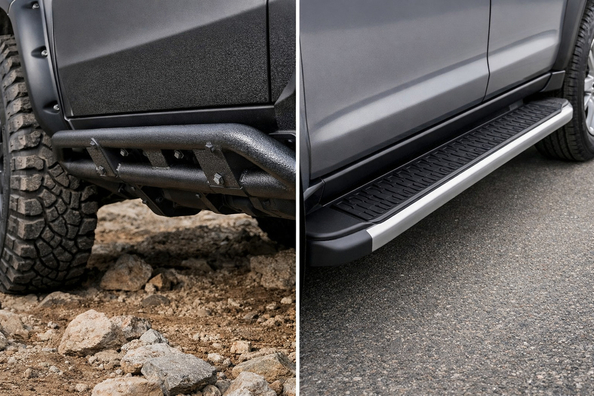
In short: for city driving, highway trips, daily loading of kids or parents, and normal access to the roof, it makes more sense to choose regular side steps. If the vehicle regularly runs in ruts, through snow, on forest roads, or there’s a risk of dropping the rocker onto an obstacle, you should be looking toward rock sliders. The difference here isn’t about looks—it’s about whether you need a convenient step or real side protection.
The confusion comes from naming: under the term “rock sliders,” different manufacturers may mean both a truly rigid protective element and a step hybrid. That’s why you should choose not by photos, but by the mounting type, weight, stated load rating, ground-clearance loss, and how the vehicle is used most of the time.
Regular side steps are primarily made for convenience. They provide a stable step, are often installed into factory mounting points without drilling, and are usually lighter and cheaper. For a tall crossover, pickup, or body-on-frame SUV that lives in the city, this is often more than enough.
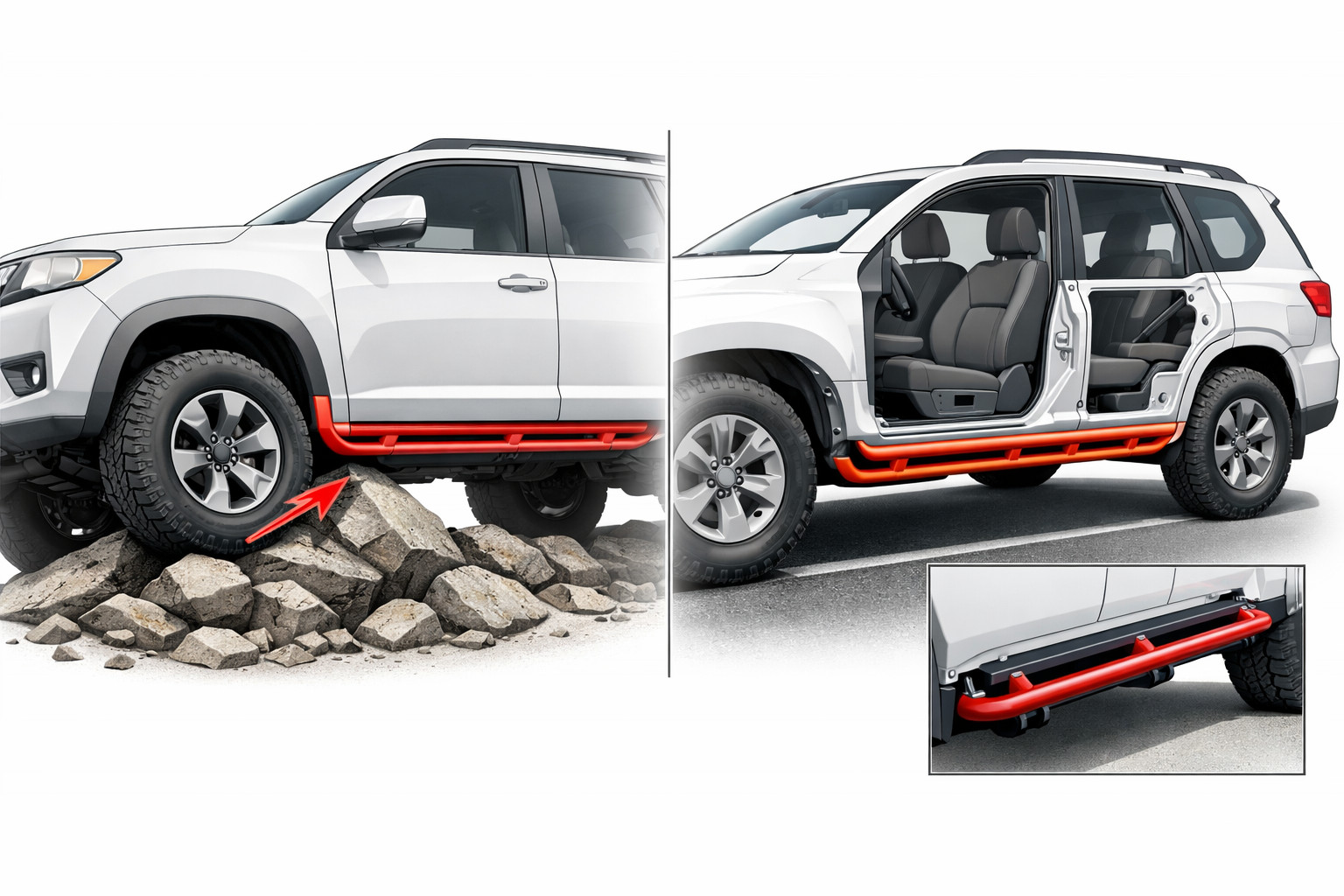
Rock sliders are needed when contact with terrain isn’t theory but a routine reality. Their job is to take the hit, prevent damage to the body’s rocker panel, and in some designs withstand serious loads. But you pay for it with weight, price, and less day-to-day comfort.
| Option | Strengths | Weaknesses | Who it’s for |
|---|---|---|---|
| Regular side steps | Convenient entry, easier installation, lower weight, lower price, normal access to the roof | May reduce side ground clearance, not designed for serious impacts, worse for harsh off-roading | City, highway, family vehicle, occasional trips onto light dirt |
| Rock sliders | Protects the body rocker, better durability, sometimes can serve as a jack point, often doesn’t reduce clearance | Heavier, more expensive, more demanding to install, can collect slush and create noise if there’s play | Regular off-road use, snow, ruts, rocky routes, work pickup or SUV |
DD Tuning expert comment: Most often the mistake is the same—people look at the shape of the tube or step pad, but don’t check where the kit actually mounts and what load it truly holds. If the vehicle even occasionally drops a side into a rut, looks become secondary. And vice versa: installing a heavy-duty option just for easier entry in city use usually doesn’t make sense.
Their main advantage is everyday usefulness. Step width, lower placement, and easier access make them more comfortable for kids, older people, and anyone who often uses a roof rack. In OEM-style designs they’re often installed into ready mounting points and don’t require drilling.
The downside is that this convenience often costs you geometry. If the step sits lower than the body’s strength line, it will be the first to catch snow, the crown of a rut, or a rock. It isn’t designed for real impacts, so after a hit it may deform itself or bend a bracket.
This is no longer just a step, but a protective element. If the design is tied into the frame or strong factory points, it handles contact with obstacles better and can save the body from expensive repairs. On some kits, manufacturers explicitly allow significant vertical load and use as a support point, but you must verify this for the specific model rather than assume it automatically.
The compromise is obvious: a rock slider is heavier, more expensive, and often less friendly in daily use. In winter, ice and dirt can build up on it, and after a few months you should check fastener torque so no extra noises appear. If the vehicle mostly drives on asphalt, this durability often simply doesn’t get used.
For city use, the answer is usually simple: regular side steps. They do a better job as a step and don’t make you pay for strength you won’t use.
For a mixed scenario, it depends on how often you go out and the real risk of damaging the rocker. If it’s a few trips a year on dry dirt roads, a decent step is enough. If the vehicle regularly sees snowy ruts, deep shoulders, forest roads, or rocks, it’s worth looking at the heavy-duty format or a hybrid with a removable step.
For heavy off-road use, a regular step is an unnecessary risk. You need an element that not only doesn’t hurt geometry, but actually takes the contact. If your main need is simply easier entry, a rock slider is almost certainly overkill.
| Scenario | Best choice | Why |
|---|---|---|
| City, highway, family trips | Regular side steps | Better step, lower weight, easier installation, and lower price |
| City plus cottage trips, gravel, light dirt | Regular side steps or a compact hybrid | Protection isn’t critical yet, but platform shape and height already matter |
| Regular snow, ruts, trips into the woods | Rock sliders | Lower risk of damaging the body rocker and better durability against contact |
| Work pickup or SUV | Rock sliders | Higher loads, harsher conditions, protection matters more than soft entry comfort |
| Mixed use without extremes | Rock sliders with a removable step or retractable running boards | Balances everyday convenience with better geometry off-road |
A more expensive option is justified when the risk of hitting the rocker is regular, not imaginary. If the vehicle really drives where there are ruts, rocks, snow banks, or heavy side contact, it makes sense to look right away at rock sliders with proper mounting and a clear purpose.
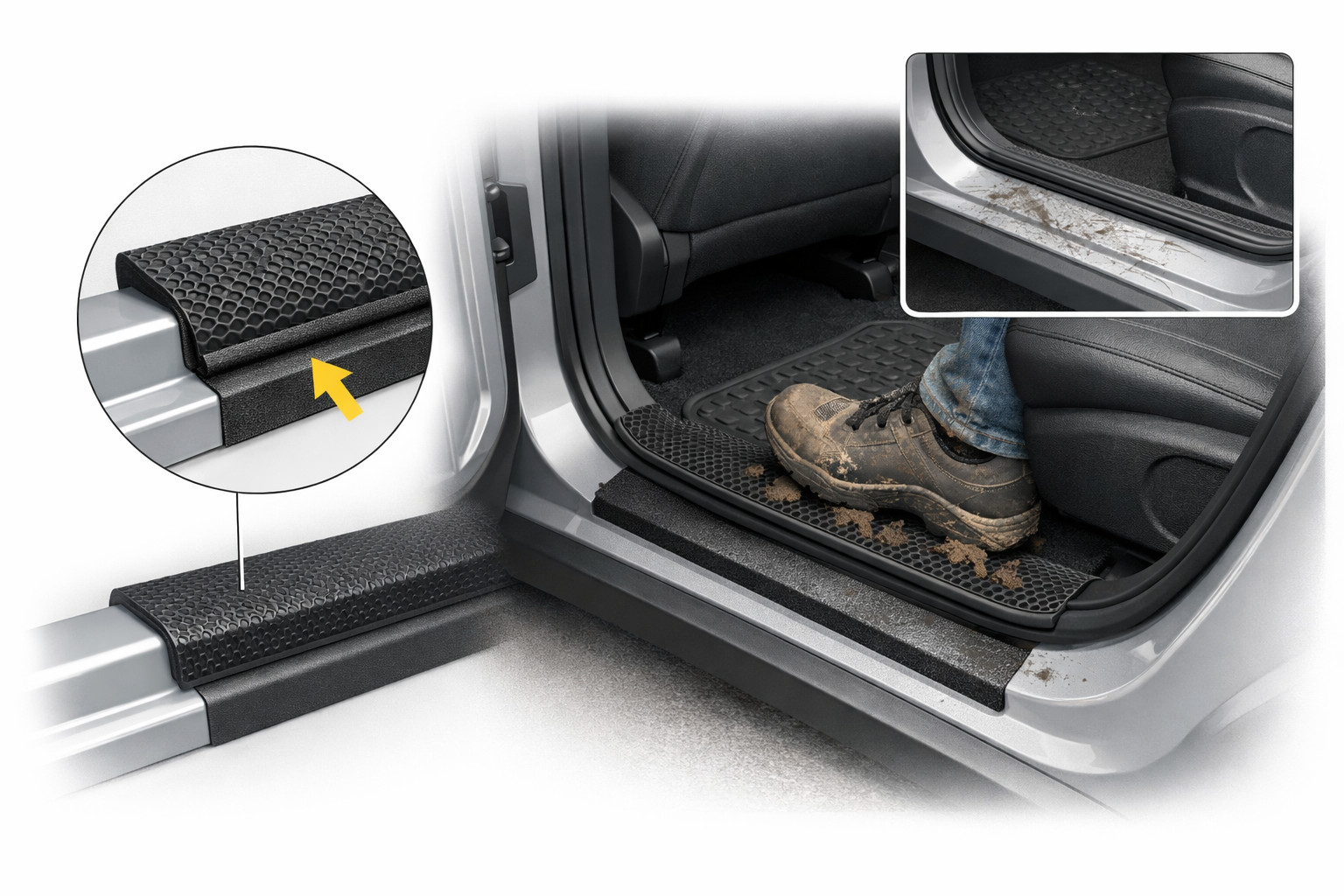
If, instead, we’re talking about daily entry, family use, frequent roof access, and not wanting to overload the vehicle with extra metal, it’s more logical to compare side steps by step width, offset, and how much they stain clothing. It’s a small detail only in photos—in real life, platform geometry decides a lot.
For mixed use, the smartest “expensive” route isn’t “maximum steel,” but a compromise: rock sliders with a removable step or retractable running boards. Before buying, it’s also useful to read the practical breakdown of why side steps stain your pants, because that’s often where it becomes clear whether you need protection or simply convenient access to the cabin.
From a customer’s experience: the owner of a body-on-frame SUV initially wanted regular side steps because the vehicle mostly drove in the city. After several winter trips into ruts and constant fear of catching the side of the body, he switched to a heavy-duty option with a step that can be removed before heading off-road. As a result, he kept comfortable entry in the city, and on trips the main complaint disappeared—the fear of damaging the rocker.
Without any extra hype, the choice is simple: for city and highway use, choose regular side steps; for regular harsh use, choose rock sliders. If your scenario is mixed, the best performers are compromise solutions with a step you can remove, or with a retractable mechanism. The key is to look not at the name and not at photos, but at mounting, ground clearance, noise, weight, service life, and your real usage pattern.
This material is based on real selection experience, hands-on practice, and real usage scenarios: who gets into the vehicle every day, who drives in snow, and who truly risks the rocker off-road. That—not fashion—is what determines the right choice.
| ✔ | Standard side steps are more convenient for everyday entry and exit: they provide a stable step, useful for children, older people, and frequent access to the roof. For city and highway use, this is more practical than a heavy-duty option. |
| ✔ | In many factory configurations, standard side steps are installed into ready mounting points without drilling. This makes installation easier and reduces the risk of complications during fitting. |
| ✔ | Heavy-duty rock sliders are better suited for regular off-road use, snow, ruts, and rocky trails. They can take contact with obstacles and protect the rocker panel from damage. |
| ✔ | For some heavy-duty kits, the manufacturer allows significant vertical load and use as a support. This is useful if the vehicle really works in harsh conditions, not just carries passengers. |
| ✔ | In mixed use, compromise solutions work well — a rock slider with a removable step or a retractable side step. They combine better off-road geometry with decent everyday convenience in the city. |
| ✘ | Standard side steps can reduce side clearance and catch snow, ruts, or rocks earlier. Because of this, they are less suitable for tough off-road driving. |
| ✘ | If the step hangs below the vehicle’s load-bearing line, it is not designed for a serious impact. After contact, it may deform itself or pull the bracket along with it. |
| ✘ | Heavy-duty rocker panels are heavier, more expensive, and more demanding to install. In the example given, a set of standard side steps weighed about 17 kg, while a heavy-duty set weighed about 44 kg. |
| ✘ | Heavy-duty solutions can start creaking or knocking if the fasteners loosen or the tightening is disturbed. In winter, dirt and ice also build up on them, adding maintenance hassles. |
Shipping to EU
Wholesale and retail
Own warehouse
Опис продукту
Подарунки не надаються при оформленні покупки у кредит під 0,01% або при покупці частинами.