23.05.2026
1160
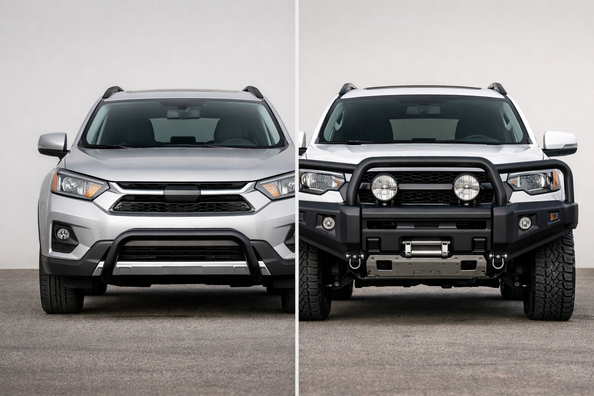
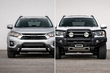
For daily driving in the city, on highways, and on typical everyday routes, a compact front guard is usually the smarter choice. A heavy-duty option is justified not on its own, but for a specific task: frequent rural roads, a real risk of hitting animals, bushes, or rocks, or the need to mount a winch.
The main mistake is judging by looks alone. In real-world selection, weight, compatibility with sensors and the front camera, installation complexity, how the car behaves in everyday maneuvers, the service life of the mounts and front suspension matter more—and only then the tube shape or the shine of the finish.
The point isn’t which option looks more “serious,” but which provides sufficient protection without unnecessary day-to-day compromises. For a city crossover or passenger car, a heavy-duty structure often adds things you’ll feel every day: more weight on the front axle, more complicated installation, worse compatibility with parking sensors and a front camera, and sometimes more wind noise at speed.
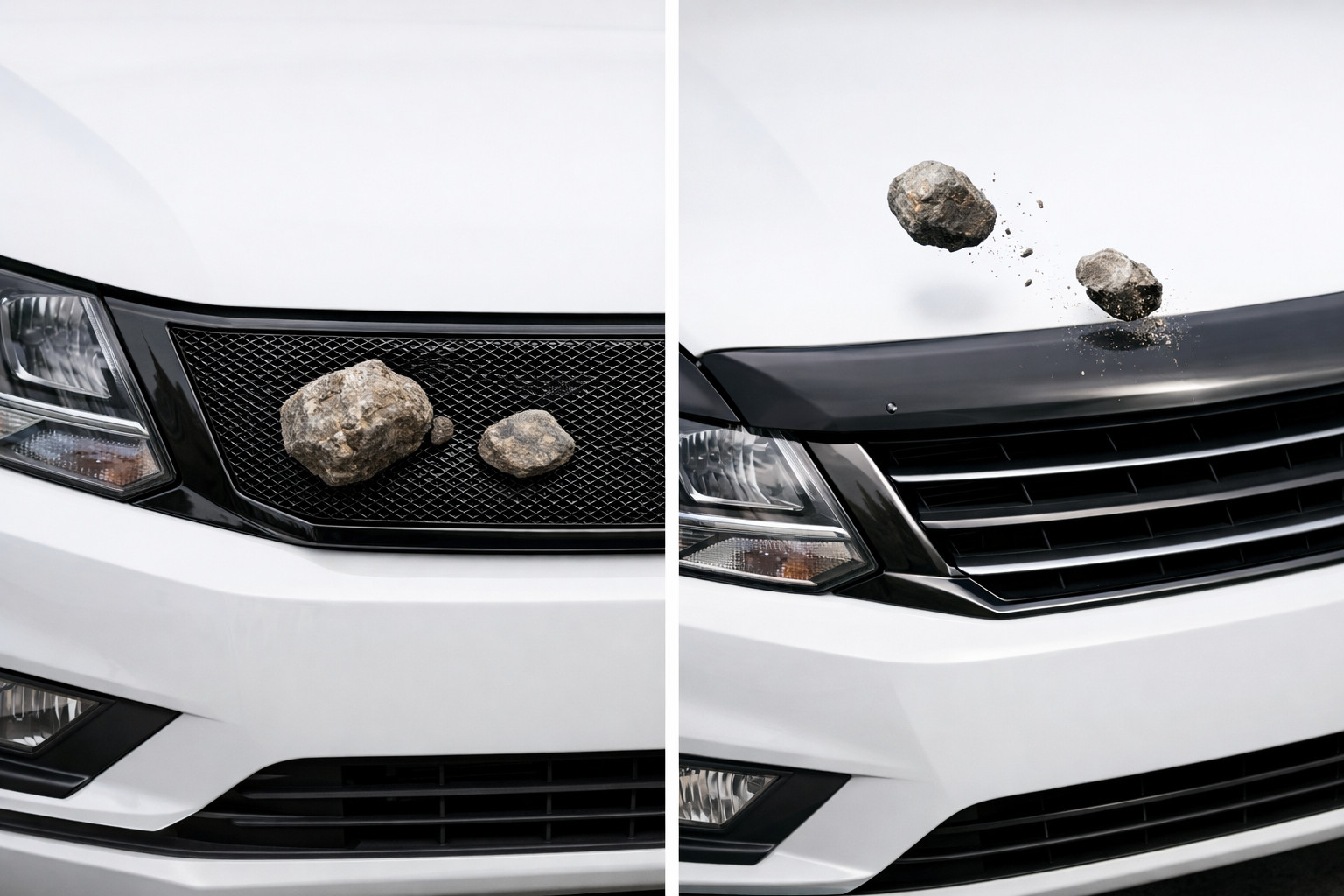
A compact guard covers the basic scenario of minor contacts and keeps parking convenience. A heavy-duty one makes sense where an impact isn’t theoretical but a regular risk—and where you also need a winch platform, additional lighting, or genuinely reinforced mounting.
You should compare not by photos, but by practical criteria:
| Option | Strengths | Weaknesses | Who it’s for |
|---|---|---|---|
| Compact front guard | Lower weight, easier installation, more convenient in the city, less likely to interfere with parking and electronics, usually noticeably cheaper | Less strength reserve in serious contacts, not suitable for a winch, sometimes still requires precise sensor checks | Daily driving, city, highway, family crossover, vehicles without regular heavy loads |
| Heavy-duty front guard | Better strength reserve, relevant for rural roads, bushes, rocks, and heavier-impact scenarios; can serve as a base for a winch and additional equipment | Higher weight, more complex installation, higher risk of conflicts with sensors and camera, more expensive; on some models the price difference can be up to about three times | Pickups, body-on-frame SUVs, work vehicles, regular driving on harsh roads |
DD Tuning expert comment: most often, the ones who make mistakes are those who choose a heavy-duty guard from photos, and only after installation run into issues with parking sensors, the camera, and extra weight up front. A second typical miss is not уточнити, whether a specific model is rated for a winch and whether there are proper brackets for your exact vehicle. If the car is a daily driver, you should start not with tube thickness, but with your routes, electronics, and the real need for a heavy-duty setup.
Its main advantage is that it doesn’t change the everyday nature of the car. The vehicle stays closer to its usual reactions, is easier to park, and there’s less chance of surprises from the front sensors. That’s why for the city and daily use this is usually the more logical choice.
In terms of installation, this option is more often simpler, but that doesn’t mean “install it and forget it.” After installation, you need to check the operating zone of the front sensors, the camera, and the distance to the bumper. On some vehicles, correct tube positioning is exactly what determines whether there will be false triggers.
The weak point of the compact format is the limit of its capabilities. It won’t save you from a large animal, a hard hit on a dirt road, or winch work. So it’s not a “small heavy-duty guard,” but a separate product class with its own real purpose.
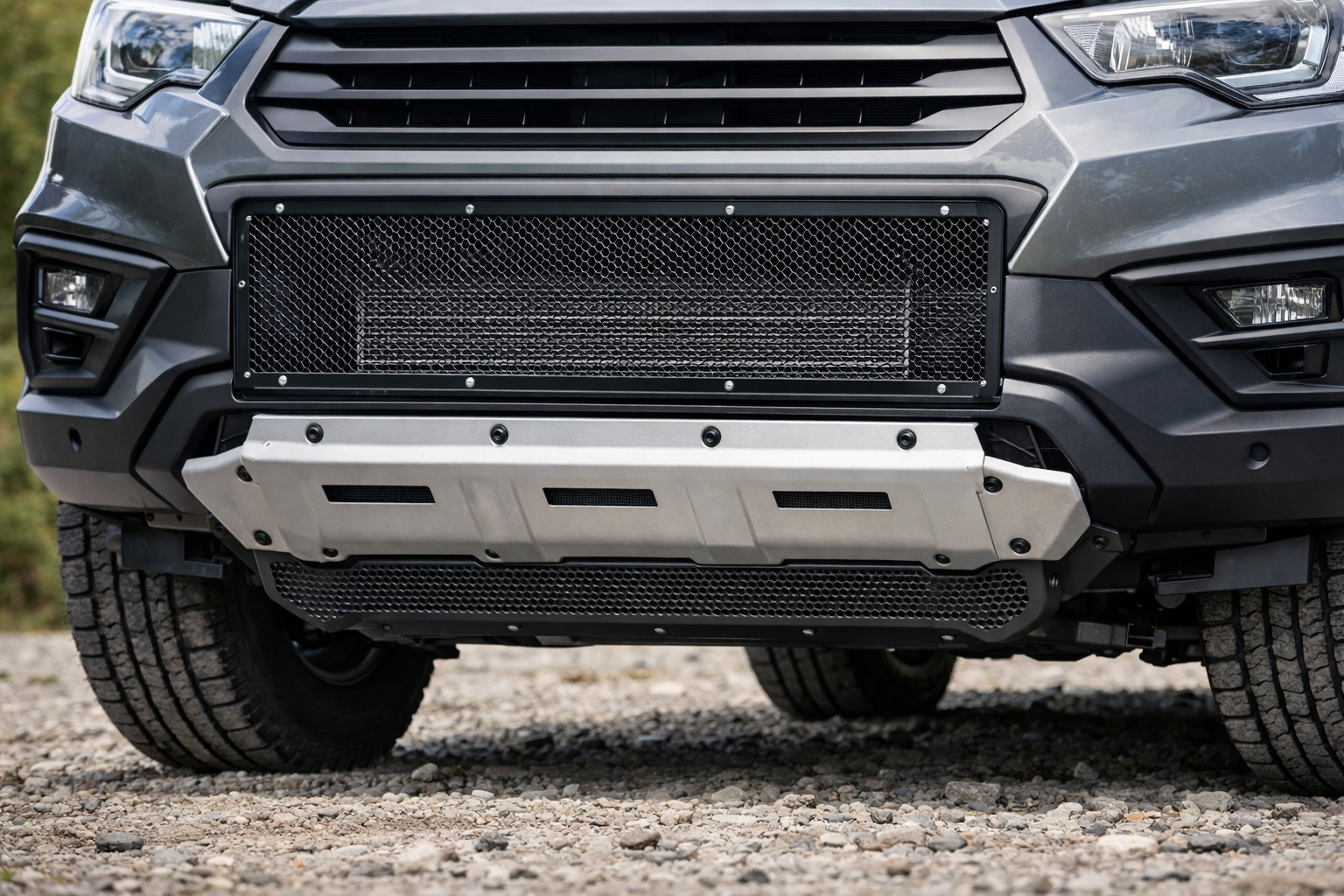
This is no longer a city accessory, but a functional part for a harsher scenario. People choose it when they need a higher strength reserve, protection on rural roads, support for a winch, or a base for additional equipment. For a work pickup or SUV that regularly sees tough routes, this choice can be fully justified.
But strength comes with compromises. More mass affects the front axle and mounts, and if you add a winch it may require a completely different approach to the suspension. Installation is more often more complex: relocating sensors, checking the camera, and sometimes additional modifications.
For durability, look not only at the shape, but also at the material. Aluminum structures are lighter; steel is usually better for hard use, but without proper coating it suffers faster from winter road salt. For a daily car, this is sometimes more important than the guard type itself.
Two heavy-duty options can behave very differently. If a guard is engineered for a specific model, has sensible geometry, doesn’t protrude too far forward, has manufacturer documentation, and accounts for airbag operation, that’s one level of risk. A homemade or universal product without proper geometry is a completely different one.
For the city, courtyards, parking lots, daily commutes, and family trips, a compact option is almost always better. It interferes less with maneuvers, conflicts less often with electronics, and doesn’t add noticeable front-end heaviness.
If you have a pickup or a body-on-frame SUV that truly drives early morning or evening on rural roads, along forest belts, with work loads, or with a plan for a winch, then a heavy-duty guard makes sense. But it should be part of a thought-out setup, not a standalone decoration.
There’s also a third scenario: someone wants it “just in case.” For that motivation, a heavy-duty option is usually unnecessary. For most daily vehicles, it’s more practical to choose a compact solution—or skip a heavy front end altogether in favor of other genuinely useful upgrades.
| Scenario | What to choose | Why |
|---|---|---|
| City driving, underground parking, daily maneuvers | Compact front guard | Less impact on convenience, less likely to create problems with sensors and visibility |
| Highway, cottage trips, occasional dirt roads without harsh conditions | Compact front guard | Provides basic protection from minor contacts without extra weight and complex installation |
| Rural roads with a real risk of hitting animals or bushes | Heavy-duty front guard | Here you already need a bigger strength reserve, not just light protection from small bumps |
| Pickup or SUV with a plan for a winch | Heavy-duty front guard rated for the load | A compact structure doesn’t cover this load—neither functionally nor in mounting |
| Family crossover with front sensors, a camera, and rare trips out of town | Compact option or skipping a heavy-duty guard | In this scenario, compatibility with electronics, visibility, and everyday comfort matter more |
A more expensive solution makes sense when you can clearly answer three questions: where the car actually drives, whether a winch is needed, and whether you’re ready to accept the weight and more complex installation. If at least two out of three answers are “no,” overpaying for a heavy-duty guard usually doesn’t pay back in either practicality or comfort.
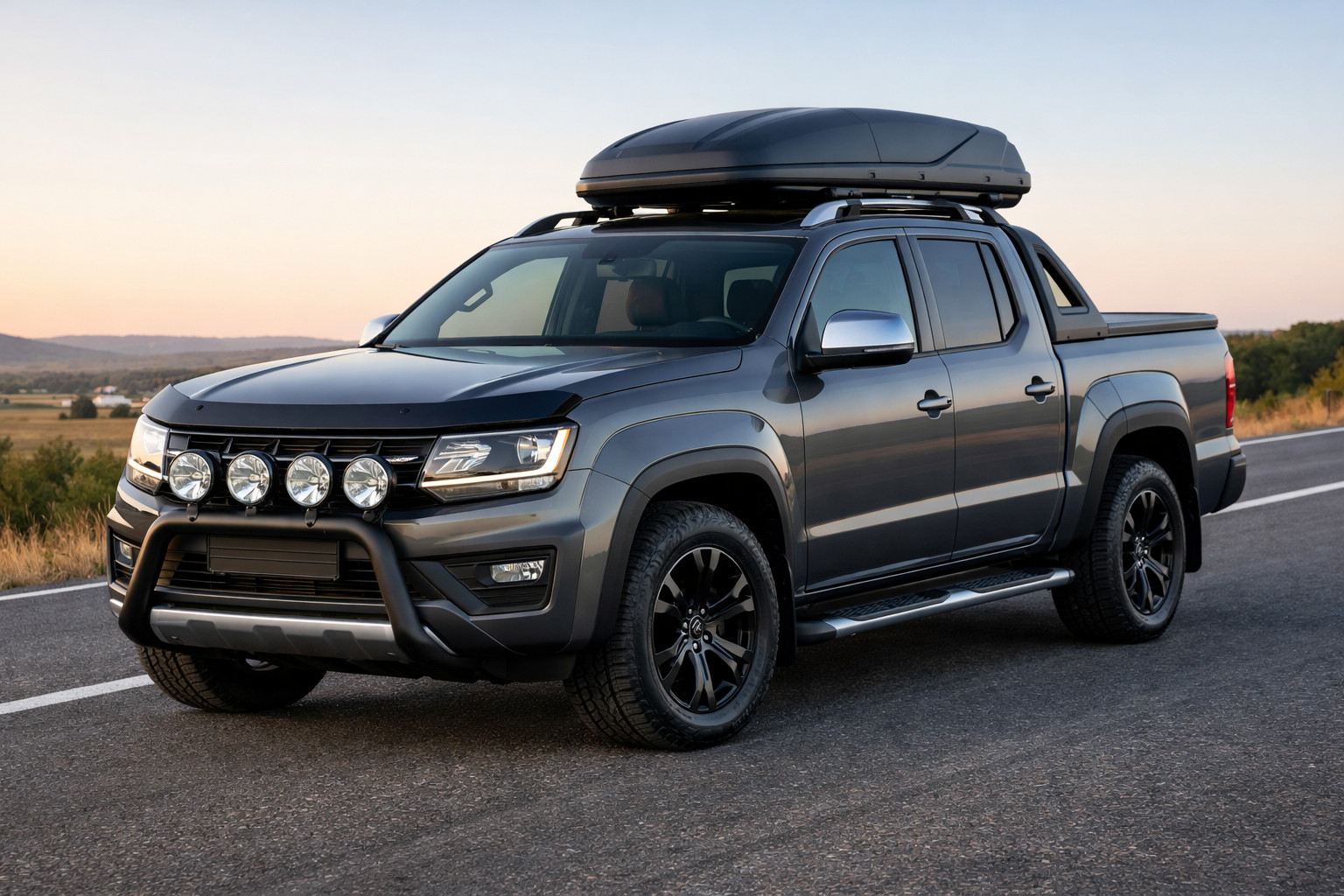
Start with the front protection catalog to see the types of construction for your vehicle. If you’re unsure between a compact guard, a “whisker” style, or a more pronounced front end, it’s useful to check the breakdown of options for Amarok. And when the goal is not looks but survivability on bad roads, sometimes it’s more important to first evaluate engine skid plate protection, and only then invest in a heavy-duty front guard.
From a customer’s experience: a crossover owner wanted a heavy-duty front guard because he’d scraped the bumper a few times when exiting the yard and often drove to a cottage. After reviewing the routes, it turned out the main challenges were tight parking, winter slush, and curbs—not hard impacts off-road. In the end, he chose a compact option with sensor checks after installation and got protection without daily discomfort in the city.
For daily driving, the smarter choice in most cases is a compact front guard. A heavy-duty option is worth buying only when you have a regular tough-use scenario, a need for a winch, or a real risk of serious contacts—not just the desire to make the car look more aggressive.
In short: city, parking lots, family trips, highway without extremes—compact. Rural routes, a work pickup, frequent driving on harsh roads—heavy-duty, but only certified and model-specific. This material is based on real selection experience, hands-on practice, and real use scenarios—not on pretty catalog photos.
| ✔ | A compact front guard is usually better suited to everyday driving in the city and on the highway: it interferes less with parking, maneuvering, and the operation of front sensors. For a family crossover or passenger car, it is a more practical option without unnecessary compromises. |
| ✔ | This type of guard is lighter and simpler to install, so it less often requires additional work with brackets or relocating cameras and sensors. This reduces the risk of installation errors. |
| ✔ | The compact format is usually cheaper not only to buy, but also in related installation and modification costs. For a daily driver, this matters if you do not need a heavy-duty guard for demanding conditions. |
| ✔ | It provides basic protection from minor contacts in yards, parking lots, and typical city scenarios. At the same time, it does not add noticeable weight to the front end. |
| ✔ | For vehicles with front sensors and a camera, the compact version is more likely to maintain normal compatibility with the electronics. This makes it more predictable in everyday use. |
| ✘ | Compact protection has a limited strength reserve and is not designed for serious impacts or hard contact on poor roads. It does not cover scenarios where a true heavy-duty element is needed. |
| ✘ | It is not suitable for installing a winch or other heavy accessories. If that is required, the compact format no longer solves the need. |
| ✘ | Even in the compact version, after installation you still need to check the operating area of the sensors and camera. On some vehicles, incorrect positioning can cause false triggers. |
| ✘ | If the route regularly includes country roads, bushes, stones, or the risk of impacts with animals, compact protection may prove insufficient. In such a scenario, you will either have to accept less protection or switch to a more massive solution. |
Shipping to EU
Wholesale and retail
Own warehouse
Опис продукту
Подарунки не надаються при оформленні покупки у кредит під 0,01% або при покупці частинами.