07.06.2026
992
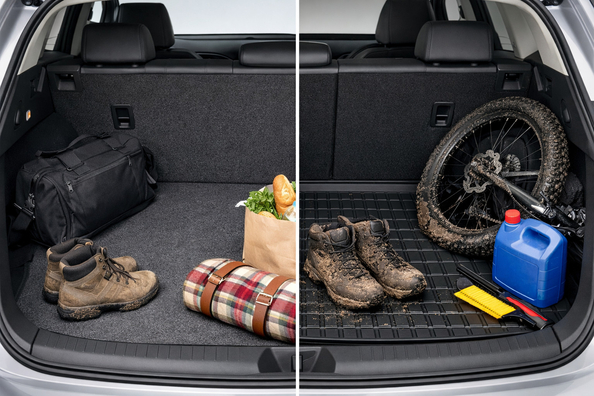
In short: for a dry city trunk, suitcases, and everyday shopping, a textile mat usually makes more sense; for snow, water, dirt, a dog, tools, and wet items—a rubber one. In most cases the mistake isn’t the material, but the scenario: people buy a neat option for dirty use or, наоборот, choose a purely utilitarian mat for situations where quietness and a tidy look matter more.
Both types can be made to fit a specific trunk precisely and installed without complicated mounting. But in real life, five things make the difference: how easy it is to wash, whether cargo will slide, how the mat handles seasonal moisture, whether it adds noise, and whether the price is justified for your exact usage pattern.
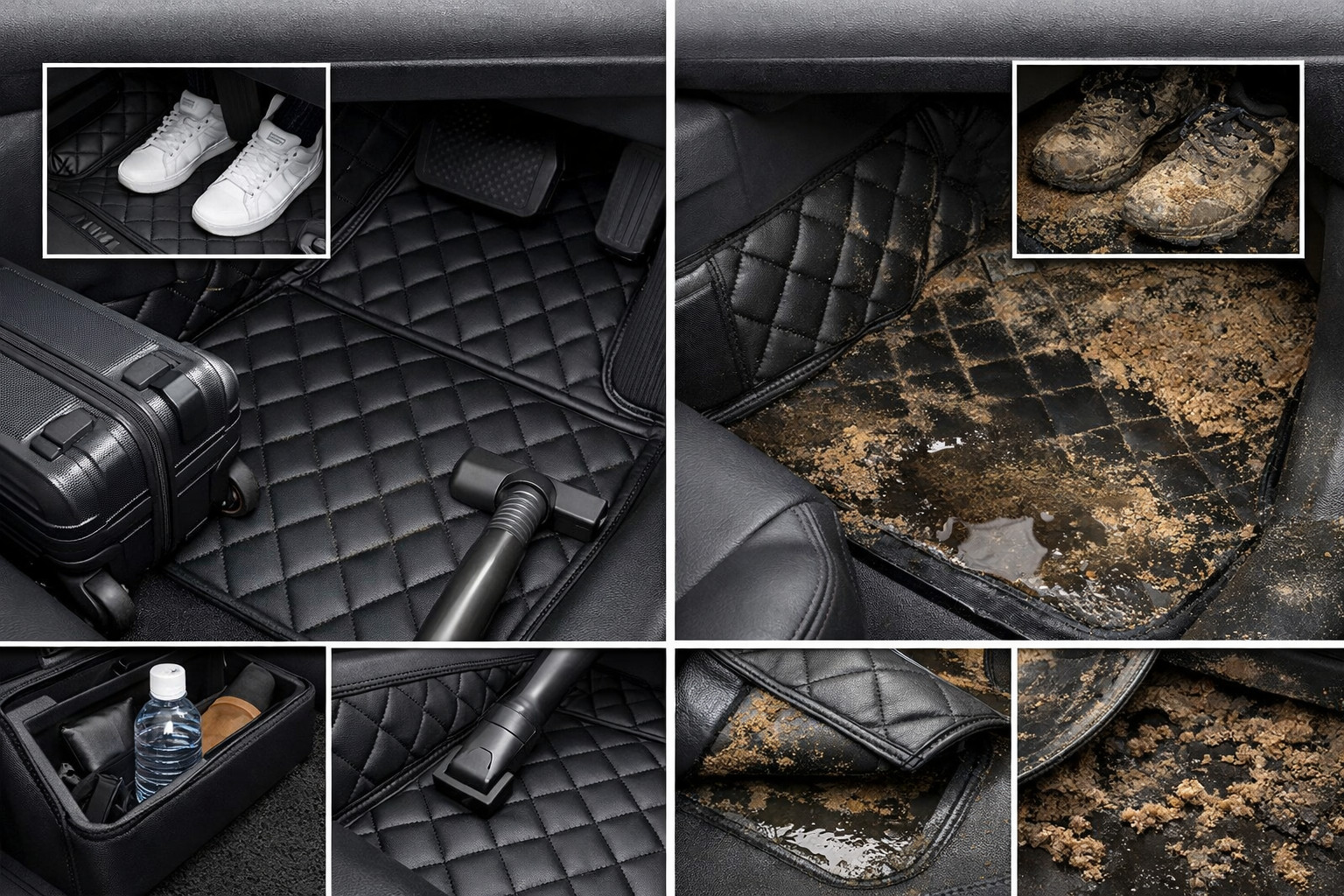
The idea is simple: a textile mat works best where the trunk is almost always dry and clean. It looks neater, feels softer under cargo, often dampens small rattles better, and gives a more “interior-like” feel.
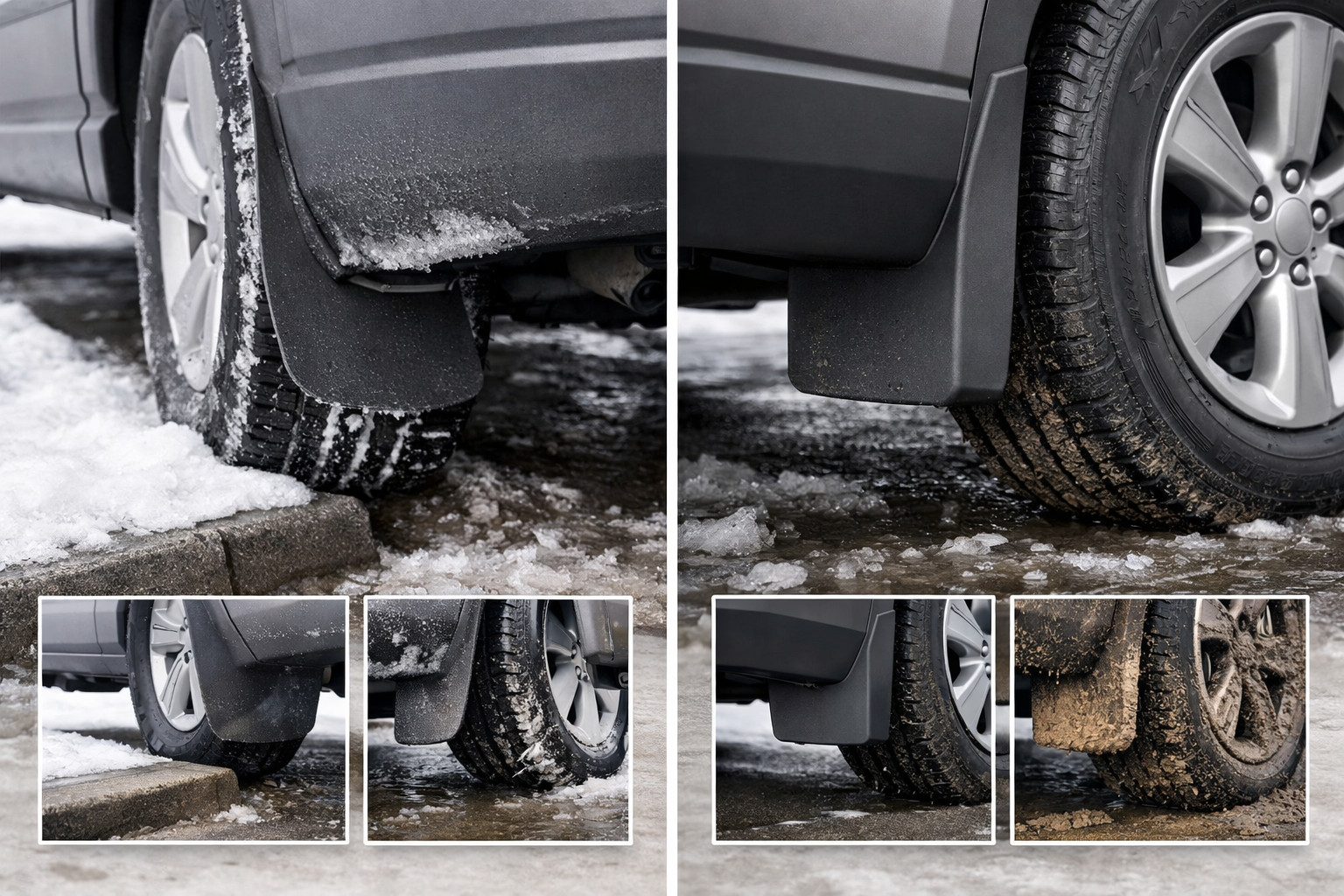
A rubber mat is the right choice when the trunk regularly sees wet boots, a stroller after rain, grocery bags in winter, jerry cans, tools, or a dog’s paws after a walk. Its main advantage isn’t looks, but the fact that water and dirt stay on the mat instead of soaking into the trim and trunk floor.
The third important point is trunk configuration. For some cars, floor height, underfloor storage, organizers, or an adjustable shelf matter. If you don’t account for this, even a good mat will either sit poorly or block access to the lower compartment.
| Option | Strengths | Weaknesses | Best for |
|---|---|---|---|
| Textile | Neat look, softer under cargo, often quieter on the move | Handles water, salt, hair, and dirt worse; takes longer to clean | Those who mostly carry dry items and want a tidy trunk |
| Rubber | Contains water and dirt better, usually has raised edges, washes quickly | May look more basic; with a poor fit it can be slippery or shift | Those who deal with winter, wet items, pets, tools, frequent trips out of town |
| Reversible | Gives two modes: neat and practical | A compromise option, not always the best in each specific scenario | Those whose trunk is sometimes clean, sometimes dirty, without one clear use case |
DD Tuning expert comment: most often people go wrong when they look only at the material and don’t check the trunk’s shape. The second typical mistake is choosing a universal mat for a car with underfloor storage or an adjustable floor height: it seems cheaper, but then it either slips or gets in the way of daily access to compartments. If you have a dog, a stroller, or winter use, it’s better to rule out textile solutions right away—without illusions.
A textile mat is worth buying not because it’s “better,” but because it’s nicer in a clean trunk. Suitcases, bags, electronics boxes, or clothing sit softer on it, the trunk looks more well-kept, and small shifts of items feel quieter.
Its limit starts where water, sand, and hair appear. The pile collects fine dirt, and after the rainy season or winter it takes longer—and is less pleasant—to clean. If the trunk is used as a work compartment, textile loses its nice appearance noticeably faster.
A rubber mat is chosen for practicality. Raised edges and surface texture help contain meltwater, snow, sand, stains, and small debris. In real life, that means one simple thing: you clean faster and worry less about the factory trunk trim.
But rubber isn’t universal magic either. If the material is stiff or the shape isn’t precise, it may not sit perfectly, and some items on a smooth surface can move more than the owner expects. That’s why it’s not just the word “rubber” that matters, but the exact shape, texture, and compatibility with your trunk.
If your use is mixed, a reversible option becomes the compromise: a softer side for everyday driving and a more dirt-resistant side for the cottage, sports, or winter trips. It isn’t always the most durable solution, but it’s logical for those who don’t want two separate accessories for different seasons.
For city use—when the trunk mostly holds bags, a backpack, a suitcase, or kids’ items without dirt—the textile option looks convincing. It doesn’t make the trunk look utilitarian and often hides small everyday clutter better.
For winter, suburban trips, and active trunk use, rubber is almost always more rational. It handles wet snow, sand, road salt, fishing or sports gear, and an animal’s paws after being outside.
For work, delivery, tools, and frequent loading/unloading, rubber also wins. But if you rarely use the trunk and want to keep the feel of a tidy interior, there’s little point in overpaying for a strictly utilitarian solution.
| Scenario | Best choice | Why |
|---|---|---|
| Daily city driving, dry shopping, suitcases | Textile | Looks better, is gentler on cargo, feels less like a “work” accessory |
| Winter, wet snow, dirt, de-icers | Rubber | Holds moisture more easily and doesn’t require complicated cleaning after every trip |
| Dog, stroller, sports equipment | Rubber | Easier to remove hair, sand, and water; lower risk for trunk trim |
| Work, tools, frequent loading | Rubber or a more rigid protector | Handles dirty daily use better and cleans faster |
| Mixed use with no clear favorite | Reversible | Balances a neat look and practicality without locking into one scenario |
Paying extra makes sense not for the material itself, but for a precise fit, the right floor configuration, a better lip, and less hassle in daily life. If you want to keep the trunk looking neat and don’t carry dirty items, it makes sense to look at textile trunk mats. If you have winter, outdoors, pets, or work trips, it’s more practical to compare rubber trunk mats right away.
A separate case is when the trunk often carries jerry cans, tools, building materials, or rigid containers. Then it can be justified to look at plastic trunk liners too, because they’re better suited to a rougher scenario than a regular mat. In other words, a more expensive solution is justified where it truly saves cleaning time and reduces wear on the trim.
From a customer’s experience: a crossover owner first looked for a textile option to keep the trunk looking neat. After the first winter with a stroller, grocery bags, and wet boots, he switched to a rubber mat with a raised lip. In the end, he’s happy not with the looks, but with the fact that the trunk stopped requiring a separate cleanup after every bout of bad weather.
In real life, a textile mat makes sense where the trunk is dry, clean, and what matters more is neatness, gentler handling of cargo, and slightly better acoustic comfort. A rubber mat makes sense where there’s water, dirt, winter, a dog, tools, or simply regular heavy use.
If you’re unsure, don’t ask “what’s more premium,” ask “what will I be washing in a month.” That alone eliminates half the mistakes. This material is based on real selection experience, practice, and real usage scenarios—not abstract descriptions of materials.
| ✔ | A textile mat is better suited to a dry city trunk: it looks neater, absorbs suitcases, bags, and boxes more softly, and adds less noise while driving. |
| ✔ | A rubber mat is more practical in wet and dirty conditions: it keeps water, snow, and dirt on the surface instead of letting them get into the trunk lining. |
| ✔ | A rubber version is easier to maintain in everyday use: it is enough to rinse or wipe it down, while textile needs a vacuum cleaner and takes longer to clean of hair and small debris. |
| ✔ | Model-specific mats for a particular trunk usually fit more precisely, cover the corners better, and do not interfere with the underfloor compartment or the adjustable shelf. |
| ✔ | A double-sided version offers a compromise for mixed use: on clean trips, it can look neater, and in dirtier ones — the more practical side. |
| ✘ | A textile mat quickly loses its purpose in a trunk where there is regularly water, sand, salt, or hair: it handles such use worse and is harder to clean. |
| ✘ | A rubber mat may look simpler and does not always lie perfectly flat, especially if the shape is inaccurate or the material is too stiff. |
| ✘ | Universal mats often save money only on paper: in practice, they can shift, not cover the corners, or get in the way of access to the lower compartment. |
| ✘ | A double-sided option does not solve everything at once: it is a compromise that will not be the best in either a completely dry or a very dirty scenario. |
Shipping to EU
Wholesale and retail
Own warehouse
Опис продукту
Подарунки не надаються при оформленні покупки у кредит під 0,01% або при покупці частинами.