17.05.2026
217
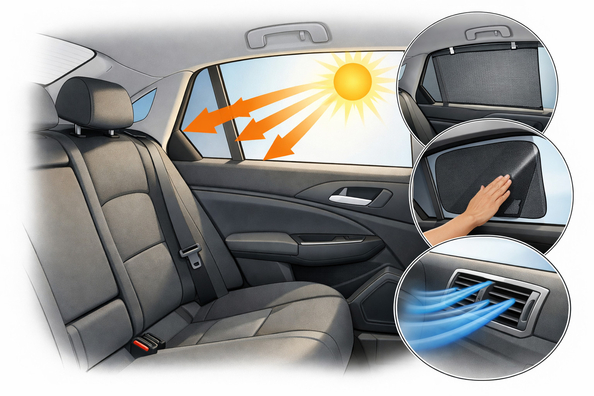
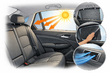
When a rear passenger feels intense heat coming from the side window, the problem usually isn’t that the A/C is “weak”. The main heat enters through the glazing: it can account for up to 50–70% of the cabin’s heat load, and a closed car left in the sun heats up very quickly—especially in the first 30 minutes. A slightly cracked window barely changes the situation.
The key sign is simple: if it burns more on one side, it’s not just hot air in the cabin—it’s direct solar load through a specific window. So the real solution isn’t simply to “add more cold”, but to reduce heating through the rear side windows and rear windshield, and prevent the cabin from overheating while parked.
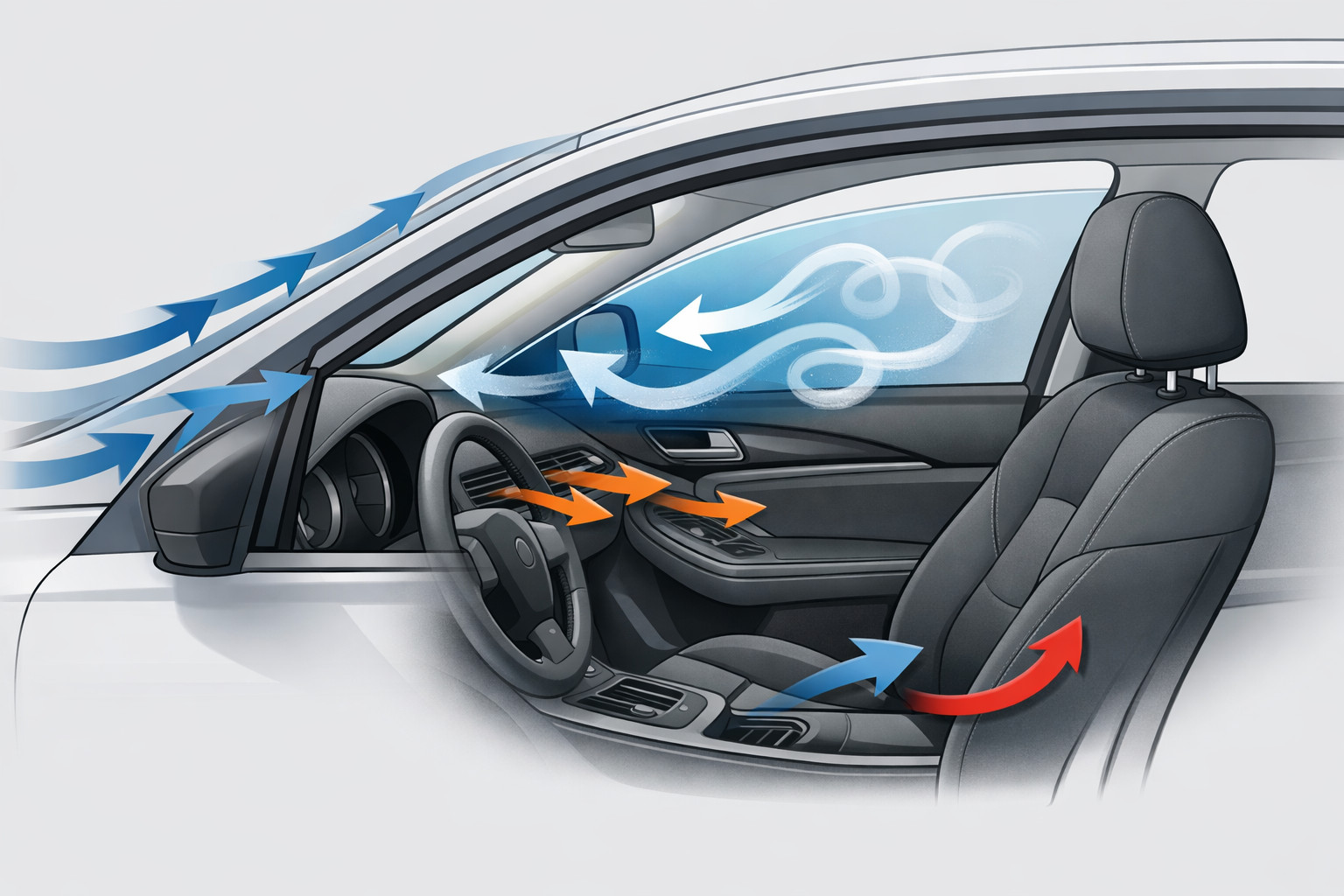
Glass lets solar energy through, then the trim, seat belts, seats, and the person sitting by the window heat up. It doesn’t feel like general stuffiness, but like localized heat on the shoulder, arm, cheek, or neck. That’s why a passenger may complain that it “burns on the side” even when cool air is already coming from the vents.
In the rear row the issue is often worse. There’s often less direct airflow, and the side windows are larger and closer to the passenger. If the car sat in the sun before the trip, the already overheated cabin adds to the direct solar load, making the first 10–20 minutes of driving the most uncomfortable.
DD Tuning expert comment: The most common mistake is hunting for the darkest film possible or installing universal suction-cup shades and expecting a heat-reflective result. If the passenger’s shoulder and face are what’s burning, first you need to block that specific window or reduce how much it heats up—not just crank the A/C harder. For a quick result, precise shade fit matters; for a stable effect while driving, it’s heat reflection that matters—not a dark color.
| Symptom | Likely cause | What to do |
|---|---|---|
| It burns only on one side, even though the cabin is already cooler | Direct sun through a specific side window | Start by protecting that exact window: heat-reflective film or a well-fitted shade |
| Worst in the first 10–20 minutes after parking | The cabin is already overheated before driving | Vent briefly with outside air, then switch to recirculation, and don’t leave the car in direct sun without a screen or shade |
| Rear passengers feel much worse than front passengers | Less airflow to the second row plus a large side glass area | Check airflow direction and strength to the rear, don’t block air outlets, add window protection |
| The glass looks dark, but in summer it still “roasts” | Factory tint without sufficient heat reflection | Evaluate not darkness, but the ability to reduce solar and IR load |
| A cheap shade reduces glare a bit, but the heat remains | Incomplete window coverage, poor fit, large gaps around the edges | Use vehicle-specific or tightly fitted solutions instead of universal ones |
| Everyone feels equally stuffy | Not only sun, but weak cooling for the rear row | Look for the cause in air distribution and cooling mode, and treat window protection as part of the solution |
While driving, the best approach is reducing solar load through the rear side windows and rear windshield. If you choose one step with a noticeable effect specifically for rear passengers, it’s usually heat-reflective ceramic or IR film on those areas. What matters here isn’t darkness, but the ability to reflect heat.
When parked, the strongest effect comes from external shading or parking in the shade. The less the glass heats up before people get in, the easier it is for the A/C—and the lower the chance the rear passenger will feel that side-window burn right from the start.
Brief ventilation before cooling is also useful. If the car sat in the sun, it’s worth exhausting the hottest air outside first, and only then switching to recirculation. This doesn’t replace window protection, but it noticeably eases the first minutes of the trip.
Well-fitted shades help when you need fast, removable protection. They won’t make the cabin cold by themselves, but they do remove the localized hit of sun to a rear passenger’s face, shoulder, and arms.
If you need quick, removable, and straightforward protection for kids or second-row passengers, it makes sense to start with sunshades. It’s a practical option when you want to remove direct sun impact without permanent work on the glass.
If you’re used to briefly ventilating the cabin before driving or sometimes drive with a small window gap, window deflectors can be useful. But it’s important to understand their role: they add convenience for ventilation—they don’t replace protection from solar heating.
Replacing film or reviewing an existing solution makes sense when the glass seems tinted, yet rear passengers are still hot. In that case, focus not on color, but on real heat reflection, and be sure to check tint levels against current regulations.
| Solution | When it works | When it’s not worth spending money |
|---|---|---|
| Ceramic or IR film on the rear side windows and rear windshield | Daily driving in the sun, large side windows, regular rear passengers | When the problem isn’t the sun but weak cooling of the entire cabin, or when film is chosen only by the “darker is better” principle |
| Well-fitted shades | Removable protection from direct rays is needed, especially for children | If the expectation is to sharply cool the entire cabin while parked without other measures |
| External reflective screen or parking in the shade | The car regularly sits in the sun for 20–30 minutes or longer | If discomfort appears only while driving from the side window, not after parking |
| Brief ventilation before switching on recirculation | The cabin is already overheated and you need to quickly drop the starting temperature | When people expect this alone to stop the sun heat hitting the passenger’s side |
| Deflectors and a small window gap | Supplementary ventilation is needed, less buffeting, protection from raindrops | When real cabin temperature reduction or protection from direct sun is expected |
From a customer’s experience: A common scenario is a family car where a child sits rear right, and that side starts “burning” within minutes on a sunny route. First they try a cheap suction-cup shade, but it covers only the center of the glass and quickly becomes annoying. After switching to a tightly fitted shade and using a proper ventilation routine before starting, the discomfort doesn’t disappear completely in extreme heat, but it stops being locally unbearable.
If rear passengers feel burning heat from the side window, in most cases the cause is direct solar load through the glazing—not just the cabin air temperature. What really works is a combination: reduce glass heating, avoid overheating the car while parked, and don’t rely on cracked windows or random cheap shades. This material is based on real selection experience, practical know-how, and real use cases—not on the myth that the problem can be solved only with a stronger A/C.
| ✔ | The main way to reduce heat is to block solar load through the rear side windows and rear window. For everyday driving in hot weather, heat-reflective ceramic or IR film works best, because it reduces heat buildup rather than just darkening the glass. |
| ✔ | When parked, exterior shading or parking in the shade helps the most. If the cabin and glass do not have time to overheat, the air conditioner can cool the car more easily at the start, and passengers do not feel as much heat from the side. |
| ✔ | A short ventilation before switching on recirculation really makes the first minutes of the trip more comfortable. It vents the hottest air outside, which is especially useful after parking in the sun. |
| ✔ | Well-fitted sunshades provide quick, removable protection from direct sunlight. They are useful when you need to block a local blast of sun in the face, shoulder, or arm of a rear passenger, especially for children. |
| ✘ | Slightly open windows almost do not solve the overheating problem. They may provide only minimal relief, but the direct solar load through the glass does not go away. |
| ✘ | Very dark glass on its own does not guarantee protection from the heat. If the film is not heat-reflective, it can still feel noticeably hot inside the cabin. |
| ✘ | Universal suction-cup sunshades often work poorly. They often cover only part of the glass, leave gaps along the edges, and do more to cut glare than to really reduce heat. |
| ✘ | Using only the air conditioner is not enough to solve the problem. It cools the air, but does not stop direct sunlight through the hot glass, so local heat near the window can remain. |
Shipping to EU
Wholesale and retail
Own warehouse
Опис продукту
Подарунки не надаються при оформленні покупки у кредит під 0,01% або при покупці частинами.