19.05.2026
258

This upgrade plan is for those who drive to the dacha every week and carry bags, seedlings, tools, jerrycans, boots, or wet items in the car. The key here isn’t to make the car look “more impressive”, but to reduce dirt in the cabin, avoid scratching the trunk, and stop small cargo from sliding from side to side at every turn.
If your route is almost entirely asphalt, the fastest impact will come from floor mats and trunk protection. If the way to the dacha includes dirt roads, puddles, and stones, mud flaps—and sometimes underbody protection—move higher on the priority list. A roof box isn’t a default need; it’s only for when the factory cargo volume is genuinely not enough.
For dacha trips, the car takes on three loads at once: dirt from footwear, friction and scratches during loading, and trunk chaos from small items. So the right upgrade shouldn’t just add accessories—it should solve these three problems in the right order.
Another task is not to lose everyday convenience. If trips happen weekly, solutions should be easy to wash, quick to remove, and not get in the way of daily use. For some body styles, protecting the trunk sill matters more; for others, access to the underfloor compartment is key—so it’s worth checking large trays and 3D mats specifically for your car.
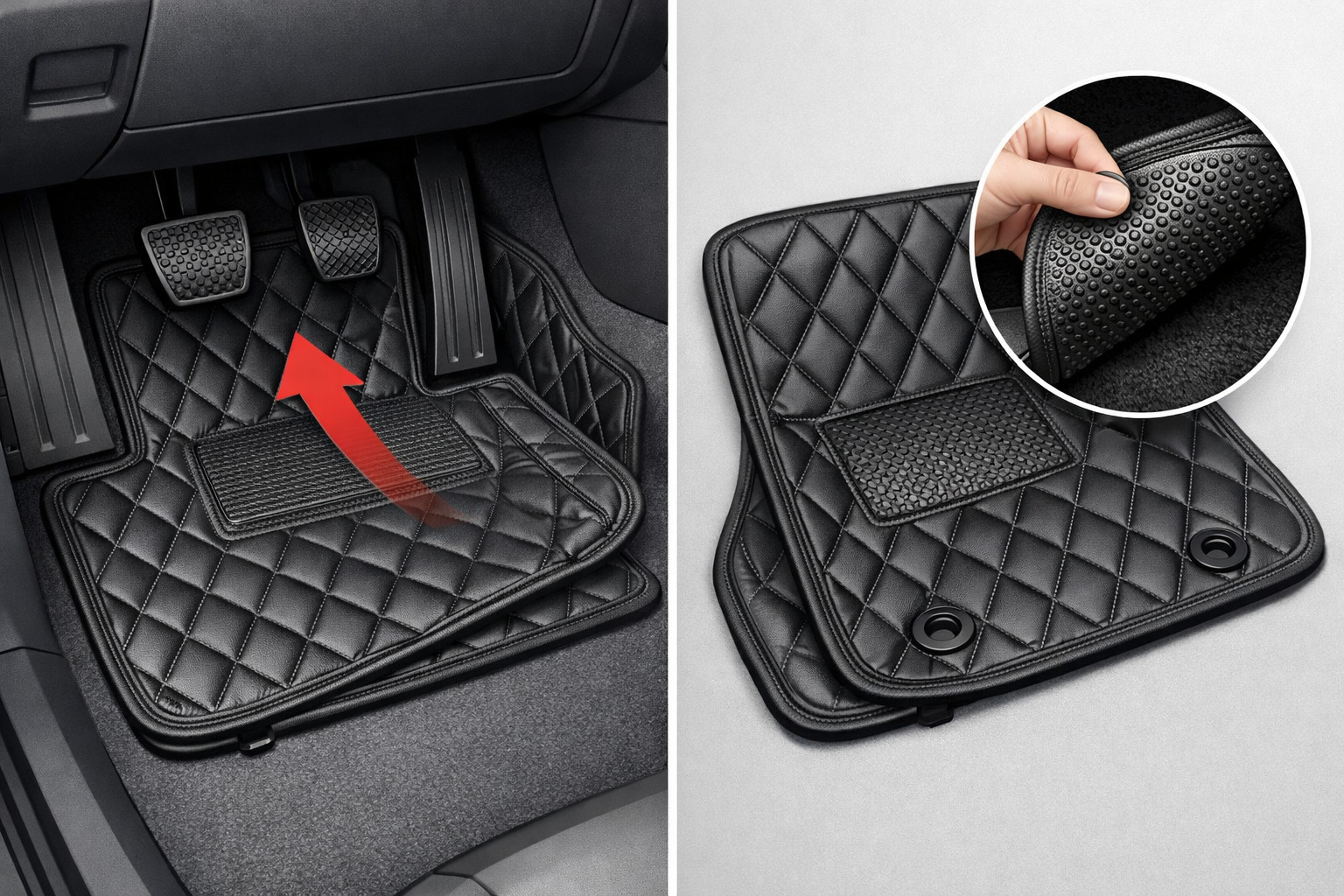
Level one is rubber or all-season cabin mats and a trunk mat or tray. This most noticeably reduces the amount of dirt, water, and sand in the car, and cleanup after a trip becomes much easier. If you’re choosing between a “nice-looking” accessory and these two items, the priority for the dacha scenario is obvious.
The second sensible purchase in the same wave is a trunk sill protector if you often drag crates, bags, buckets, or garden gear. This area gets scratched first. If your cargo is mostly light, you can get a trunk net or organizer earlier instead, because they quickly remove the mess in the trunk.
| Upgrade | What it’s for | Who really benefits |
|---|---|---|
| Rubber cabin mats | Hold water, soil, sand and are easy to wash | Anyone who drives out of town weekly, especially in the shoulder seasons |
| Trunk mat or tray | Protects the floor from spills, dirt, and abrasion from bags and crates | Those who carry seedlings, tools, groceries, jerrycans, garden gear |
| Trunk sill protector | Reduces scratches during loading and unloading | Those who regularly pull heavy or rigid items over the bumper edge |
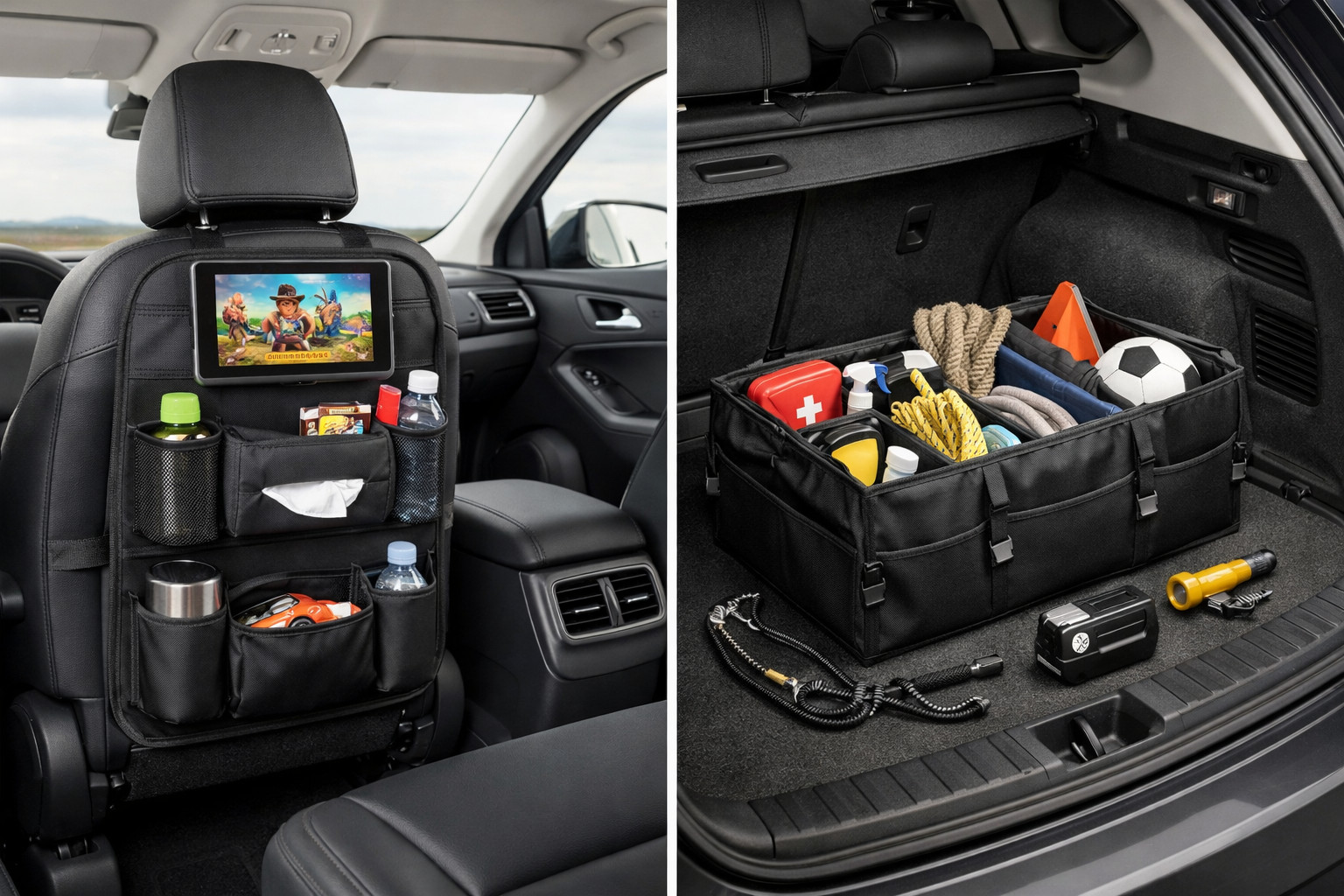
| Trunk net or organizer | Secures small items so they don’t roll around the trunk | Those who often carry shopping, bottles, car chemicals, pruners, gloves, small tools |
| Mud flaps | Reduce dirt and small stones thrown by the wheels | Those who often drive on dirt roads or wet, broken roads |
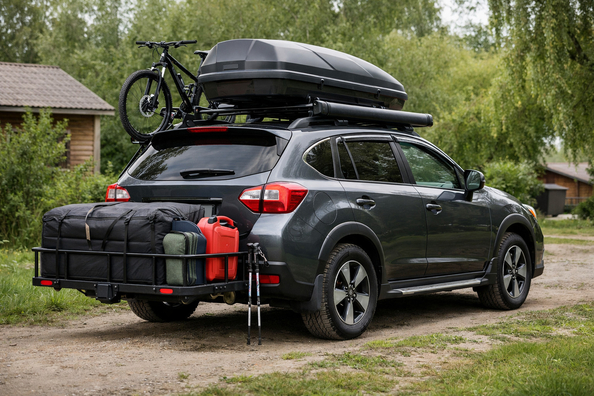
| Roof box | Adds volume for light but bulky items | Those whose trunk is consistently overloaded, not just once a season |
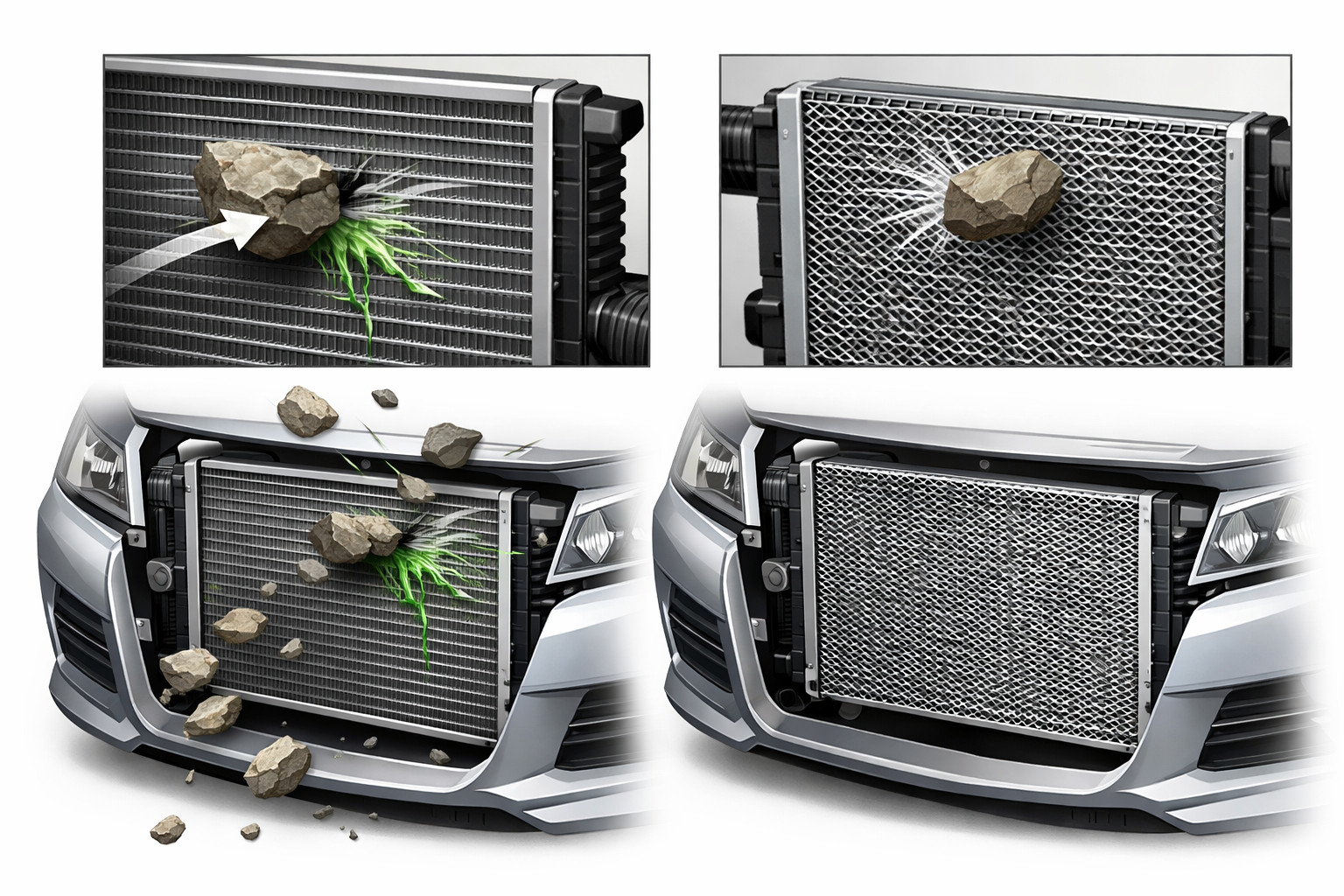
| Underbody or engine protection | Adds extra safety margin on stones, branches, and rough dirt roads | Those who actually drive on bad roads, not just asphalt up to the turn to the dacha |
DD Tuning expert comment: The most common mistake is starting with a big roof box because it’s a noticeable purchase, while the real problem is usually a dirty cabin and a cluttered trunk. Another typical story is universal cut-to-fit mats instead of a vehicle-specific set. If you’re planning a roof solution, first check the mounting type, garage entry height, and the roof load rating together with crossbars, the box, and the cargo.
The second stage is what not everyone needs, but it adds a lot of value in specific conditions. First of all, mud flaps: in a dry city their effect is less dramatic, but on wet dirt roads they noticeably reduce grime along the sides of the body and impacts from small stones.
This also includes a trunk net or organizer if small items ride in the car all the time. But it’s important not to overestimate them: a net works well with bags, bottles, and totes—not with heavy crates or sacks. If the road to the dacha is truly rough, underbody protection can be a second-stage upgrade—but only after assessing the real road, not “just in case”.
In this scenario, some accessories sit on the line between usefulness and cosmetics. For example, a trunk sill protector is very practical with frequent loading, but if you open the trunk once a week for a few shopping bags, its effect will be smaller than that of a proper tray inside.
An organizer is also more about everyday order and comfort than basic protection. It nicely disciplines the trunk, but it doesn’t replace a mat or tray. Anything that doesn’t reduce dirt, doesn’t make loading easier, and doesn’t add real capacity quickly turns into marketing clutter in the dacha scenario.
There’s one main mistake: buying for the picture rather than the real route and cargo type. For weekly dacha trips, it’s better to spend the budget on things that wash easily, protect surfaces, and simplify loading.
| What to install first | What you can postpone | What isn’t mandatory |
|---|---|---|
| Rubber cabin mats | Trunk sill protector if you load rarely | A large roof box if the factory trunk is enough |
| Trunk mat or tray | Net or organizer if there’s already no chaos in the trunk | Underbody protection for an easy asphalt route |
| Mud flaps with regular dirt-road driving | A roof box for a few peak trips per season | Universal cut-to-fit mats if a model-specific solution exists |
For a roof setup, always check three things: whether you have roof rails or factory mounting points, what roof load limit is specified for your car, and whether the vehicle will become too tall for parking, a car wash, or a garage. The total limit includes the crossbars, the box itself, and its contents.
More expensive solutions are justified when the car truly serves as “dacha transport” every week, not just a few times per season. If the trunk is constantly full, it makes sense to look immediately at a roof base in the format of a rack for factory mounting points, not temporary compromises. Then you can separately evaluate choosing a roof box: for dacha runs, a mid-size volume is usually logical, not the biggest box “just to have reserve”.
Another case for a pricier upgrade is a regularly bad access road to the property. If it’s not just dust, but stones, hard ruts, and a risk of bottom contact, then it’s worth reading not ads, but specifically assessing whether you need engine protection. But on a normal asphalt route, these costs can often be postponed without losing practicality.
From a customer’s experience: at first, the person was looking for a big roof box because it seemed like there was never enough space for dacha trips. After подбору, they started with cabin mats, a trunk tray, and a net for small items—and that alone was enough to make trips calmer and cleaner. A few weeks later they added mud flaps, and kept the box only for periods when they really carry bulky light items.
For weekly dacha trips, the logic is simple: first protect the cabin and trunk, then bring order to the cargo, then address road grime, and only after that think about the roof or serious underbody protection. This order delivers the most value for the money and avoids overpaying for things that look good but help little in real life.
The material is based on real selection experience, hands-on practice, and real use scenarios: what dirties the car, what scratches the trunk, what adds order, and what people buy without needing it. If you choose upgrades specifically for your route and cargo type, the car doesn’t become “more equipped”—it simply becomes more convenient for weekly dacha trips.
| ✔ | Rubber or all-season floor mats in the cabin and a cargo mat or liner in the trunk really reduce the amount of dirt, water, and sand in the car. After trips, such a car is much easier to clean. |
| ✔ | Cargo sill protection is useful if you often load boxes, bags, buckets, or tools over the bumper edge. It reduces the risk of scratches in the area that gets scratched first. |
| ✔ | A cargo net or organizer helps when small items are constantly rolling around in the car. They quickly keep things in order and stop bags, bottles, or tools from sliding around the trunk. |
| ✔ | Mud flaps have a noticeable effect on wet dirt roads or rough roads. They reduce dirt along the sides of the body and impacts from small stones from under the wheels. |
| ✔ | If the route is truly harsh, underbody or engine protection gives extra margin on rocks, branches, and ruts. But it is installed only after assessing the actual road, not just “for good measure”. |
| ✘ | A large roof box is often bought too early, although the main problem in a country-house scenario is usually a dirty cabin and chaos in the trunk. If the stock capacity is enough, such an upgrade simply does not provide any noticeable benefit. |
| ✘ | Universal trim-to-fit floor mats can sit worse than model-specific ones. Because of this, they often protect the areas where dirt accumulates the most less effectively. |
| ✘ | A cargo net is not a universal solution, as it is sometimes presented. It works well for light small items, but it is of little help with heavy boxes or bags. |
| ✘ | Underbody protection for a route that is basically just asphalt and normal access to the plot looks like an unnecessary expense. In such a case, floor mats and a trunk liner will be more practical. |
Shipping to EU
Wholesale and retail
Own warehouse
Опис продукту
Подарунки не надаються при оформленні покупки у кредит під 0,01% або при покупці частинами.