25.04.2026
238
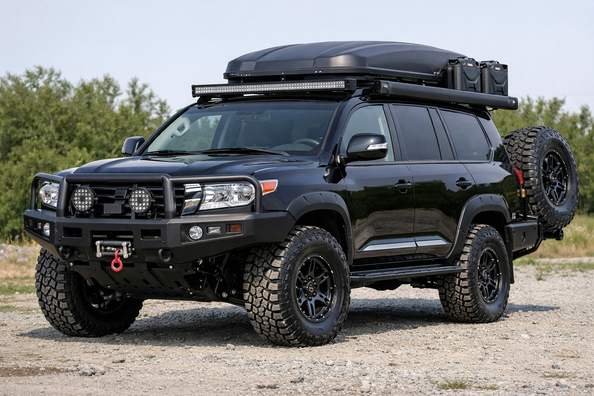
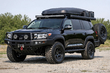
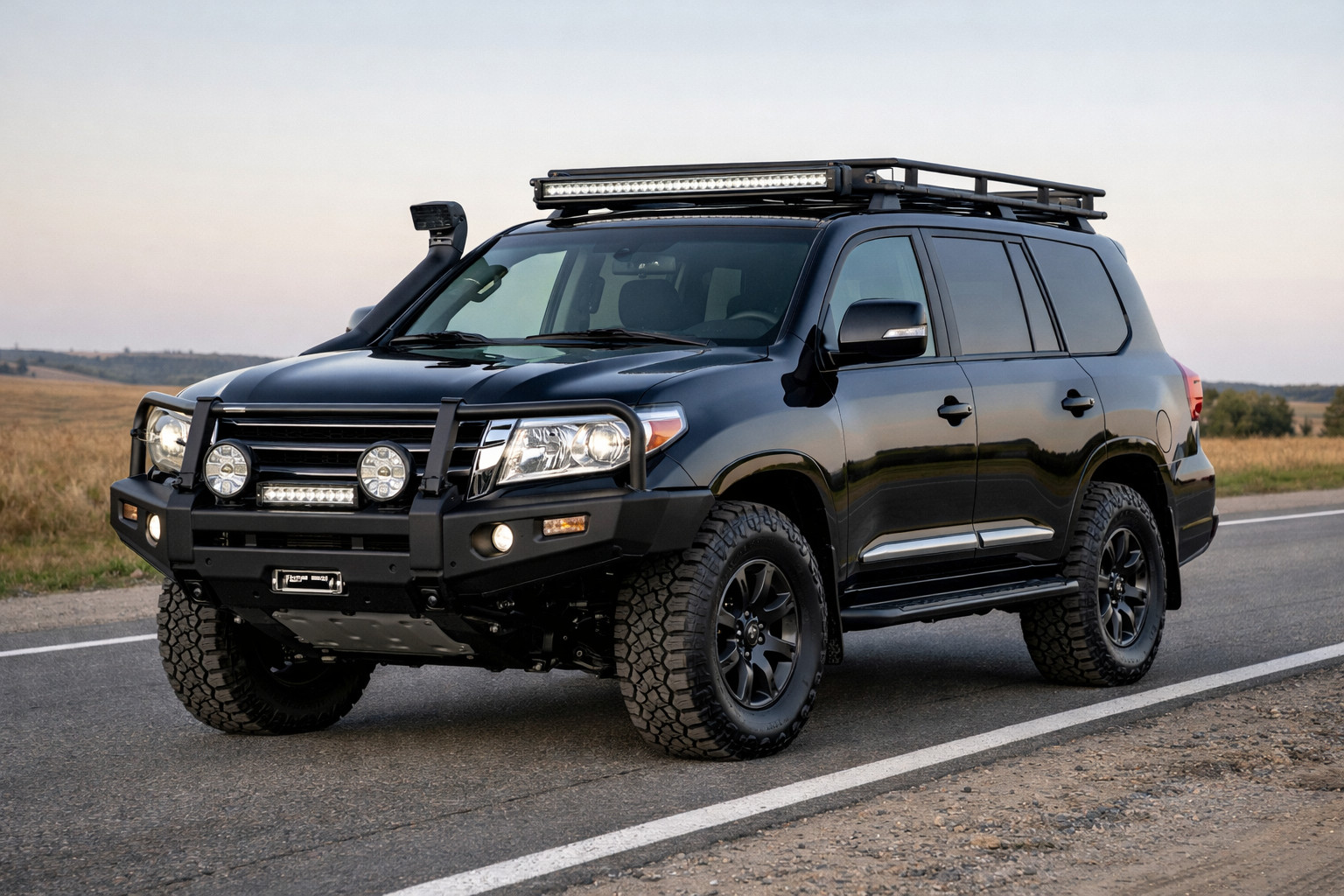
This upgrade plan is for anyone who bought a Toyota Land Cruiser 200 in stock or near-stock form and wants to make the vehicle smarter for daily driving, family trips, highways, gravel, forest roads, and occasional challenging terrain. The goal here isn’t to build a heavy “show” project, but to add what truly improves traction, durability, and control.
The LC200 already has a strong foundation: full-time 4WD, KDSS, off-road electronic aids, and factory protection for key components. So after purchase, the best approach isn’t “the more steel, the better,” but “benefit first, then weight”: start with tires, rock sliders, and a basic self-recovery kit, and only go heavy and expensive once you understand your real use case.
For most owners, the right scenario for an LC200 looks like this: it should stay quiet and comfortable for everyday use, cruise confidently on the highway with family and luggage, and not be afraid of dirt roads, rocks, ruts, and broken access roads to a campsite. That’s exactly what the first modifications should be built around.
If you don’t drive alone into deep mud or long remote routes, a winch, heavy bumpers, and a big lift aren’t a day-one necessity. If your route regularly includes rocks, deep ruts, or constant heavy load, then priorities shift toward protection, suspension, and load management.
Also consider your interior layout. Vehicles with a third-row seat require a different approach to cargo organization, so some trunk and roof solutions only make sense after answering a simple question: do you need the third row all the time or not.
First — tires. They change how the LC200 behaves more than anything else right after purchase. For mixed use, a quality all-terrain tire in stock size or a moderately increased size is usually enough. Larger sizes like 285/65 R18 or 275/70 R18 are only worth considering after checking clearances, the vehicle’s real weight, and your route. In most scenarios, the factory 18-inch wheels can be kept without issues.
Second — rock sliders. Heavy-duty side steps are useful not only on rocks. They protect the sills in ruts, help with getting in and out, and in the city they often save you from minor door dings in tight parking lots.
Third — additional underbody protection if needed. The LC200 already has basic factory protection, so this isn’t always a day-one purchase. But if you run rocky routes, deep ruts, or tend to drive straight through instead of detouring, underbody armor quickly stops being theoretical.
Fourth — a compressor and a basic self-recovery kit. Being able to air down for the surface and then air back up for the highway often brings more benefit than expensive metal add-ons. This block also includes a recovery strap, shackles, tire repair kit, deflator, and traction boards.
| Modification | Why it’s needed | Who really benefits |
|---|---|---|
| Tires | Improves traction and control, reduces wheelspin, and performs better on gravel, sand, and mud | Practically anyone who leaves the pavement and drives with cargo or family |
| Rock sliders | Protect the sills from terrain contact and can serve as a step for roof access | Those who drive in ruts, on rocks, forest roads, and park in tight spaces |
| Underbody protection | Shields vulnerable components from impacts from below | Those whose routes include rocks, ledges, stumps, deep ruts |
| Compressor and deflator | Lets you adjust tire pressure to the surface without compromising the drive back | Anyone who often switches between pavement and dirt and back |
| Self-recovery kit | Helps handle typical stuck situations without a winch | Those who drive out of town, especially not in a large convoy |
| Suspension | Compensates for constant added mass and improves behavior under load | Those who already added armor, cargo, a winch, or constantly carry a heavy setup |
| Winch | Adds a safety margin for solo routes and places without quick assistance | Those who travel alone, in winter, in mud, or far from recovery services |
DD Tuning expert comment: The most common LC200 mistake is buying big wheels, a roof platform, and a heavy front end before the owner understands where the vehicle actually drives. After that, the vehicle gets heavier, sags, brakes worse, and the suspension ends up needing replacement not by choice, but because of the consequences. If your scenario is mixed, first gain traction through tires, pressure, and underbody protection—not extra weight up top.
Suspension is a typical second-stage upgrade. It’s better to choose it not “for the future,” but after a few trips and understanding the vehicle’s constant weight. If the LC200 remains near-stock and there’s no extra load up top, an expensive suspension may deliver less benefit than expected. But if you already have armor, cargo, gear, and frequent fast runs on washboard roads, the value appears very quickly.
A winch is also a second-stage item. Not everyone needs it: in many scenarios a basic self-recovery kit covers most tasks. But for solo trips and long remote drives, it’s no longer a luxury. Just remember that a hidden install may require trimming the factory plastic and adds load to the front axle.
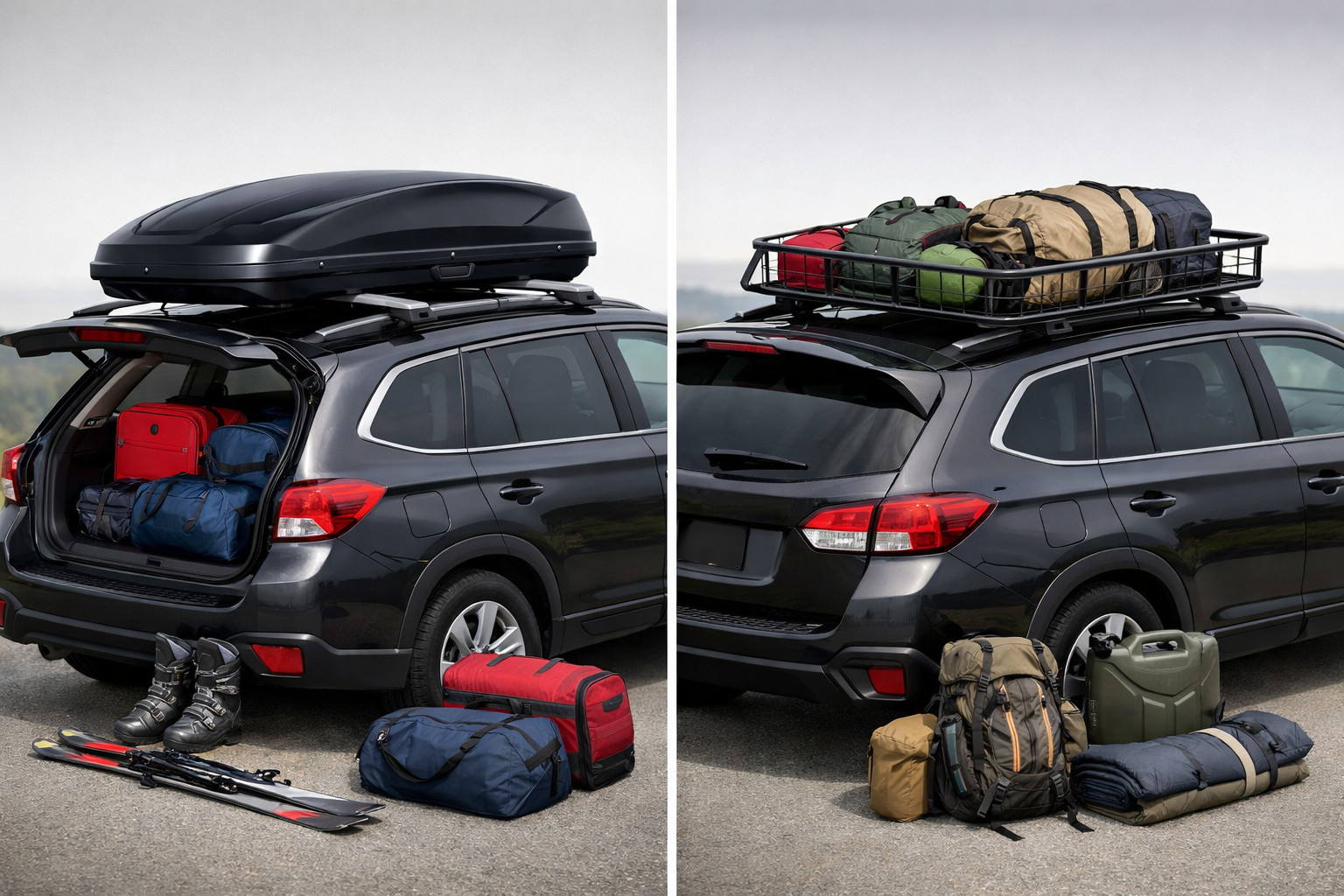
Cargo organization belongs here as well. If you don’t need the third row, you can build a thoughtful setup for tools, a compressor, and gear. If you do need it, don’t rush into large systems—first understand what actually rides in the vehicle every week.
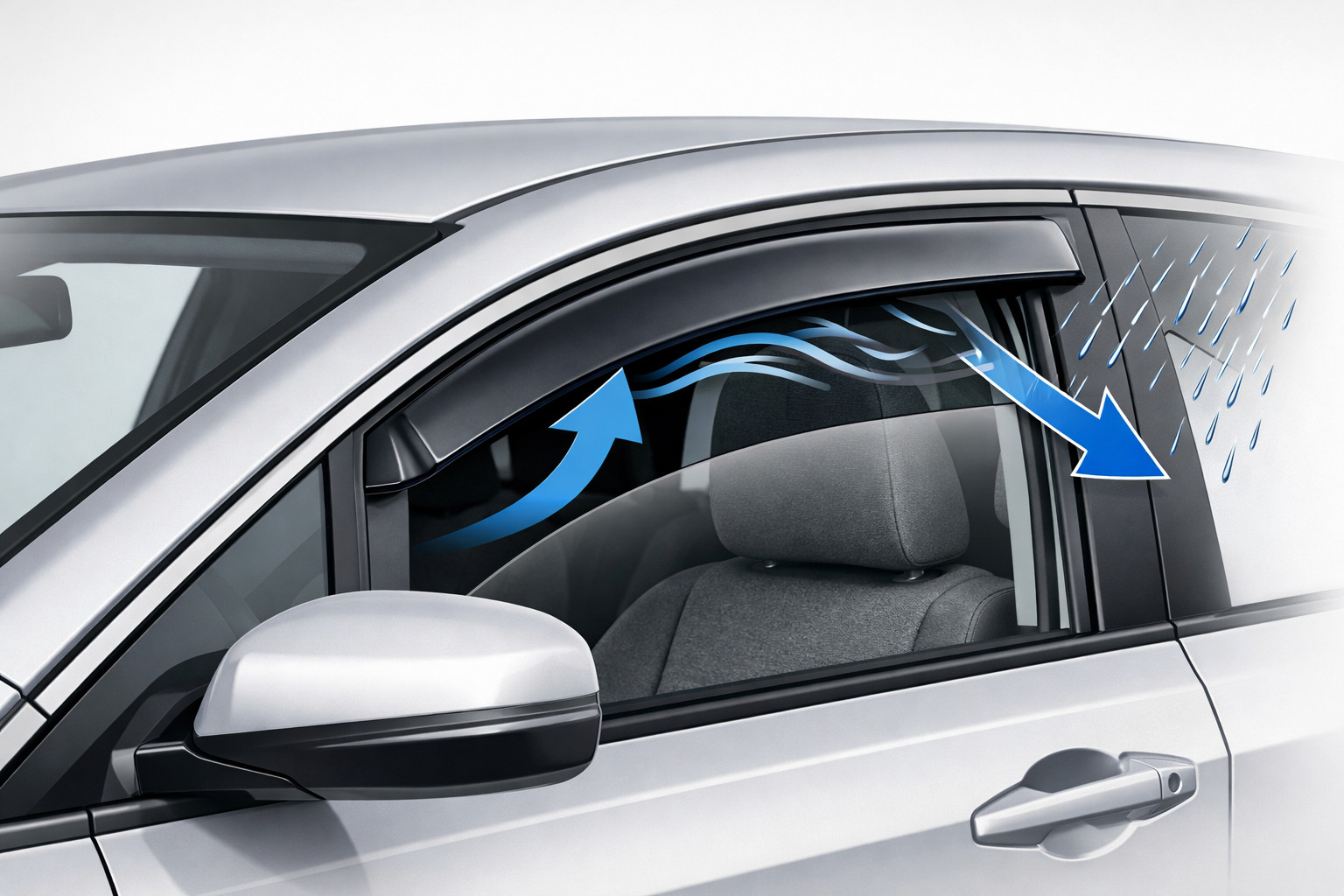
Useful but not priority items include floor mats for the cabin and cargo area, window deflectors, seat covers, neat side steps for easier entry, and crossbars or a light roof rack if you truly carry something on top. These make daily use more pleasant, but they don’t replace tires, protection, and proper tire pressure.
Be cautious with decorative trims, chrome, aggressive exterior elements, and full body kits. They may change the look, but they don’t solve any of the core post-purchase tasks for an LC200. If your budget is limited, comfort extras should come after the functional basics.
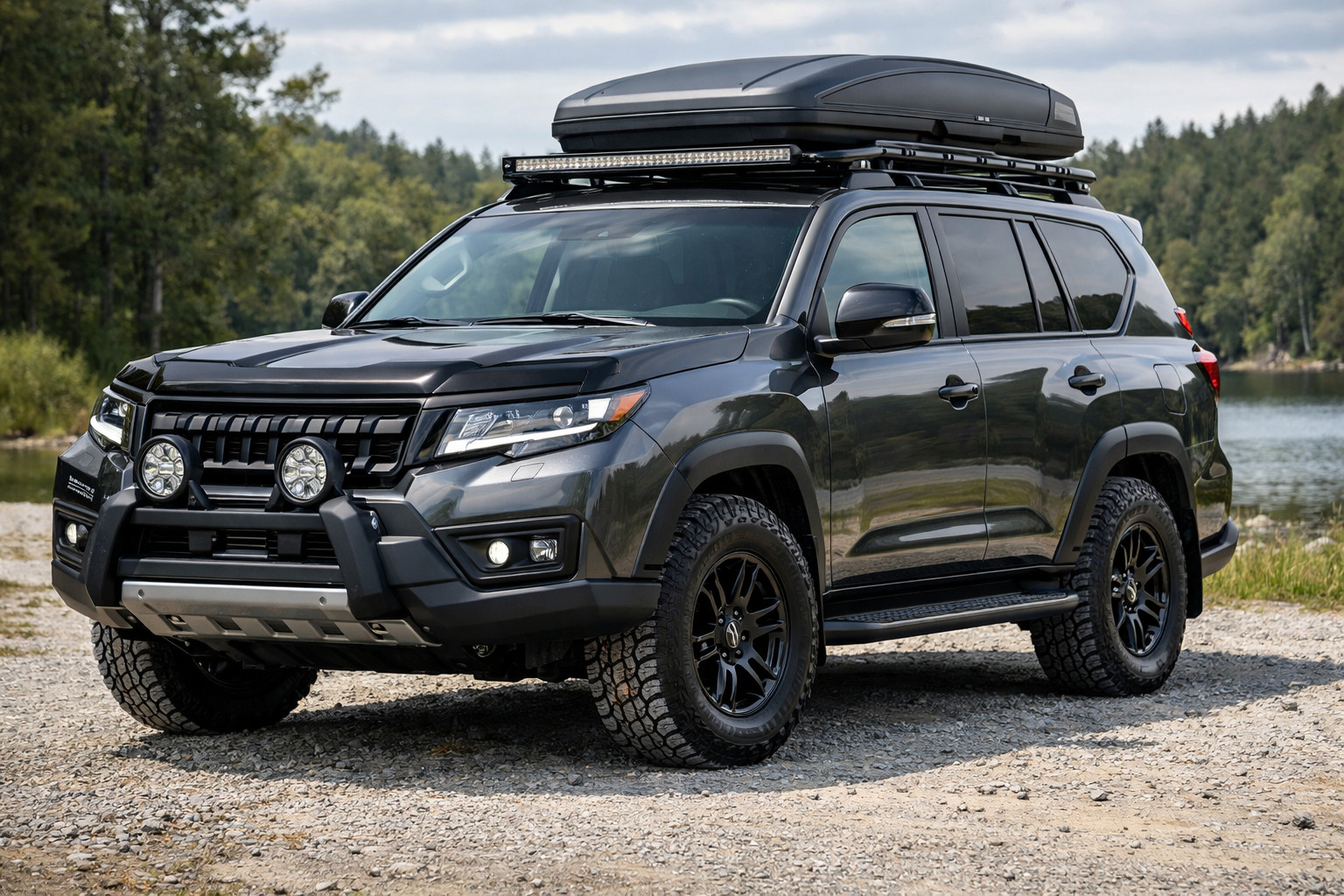
Roof solutions should also be divided into truly needed and just trendy. For light gear, crossbars are sometimes enough. A full roof platform only makes sense when bulky cargo or a tent lives up top permanently, and you understand the implications for weight, noise, and center of gravity.
The most common mistake is buying for someone else’s picture instead of your own scenario. On the LC200 it often looks like this: expensive wheels instead of proper tires, a big lift with no constant weight, a full roof platform with no real cargo, heavy bumpers for a city vehicle—and then complaints about acceleration, braking, and body roll.
The second mistake is overpaying for looks. Factory wheels are strong enough in many scenarios, so replacing them right after purchase usually doesn’t make sense. It’s more practical to invest in tires, pressure management, protection, and a self-recovery kit.
The third mistake is copying builds without checking the baseline. If someone shows a suspension or lift setup from a Lexus LX570, that doesn’t mean it can be blindly repeated on a Land Cruiser 200: the suspension logic is different. Likewise, big tires can trigger extra costs the owner didn’t plan for.
| Scenario | What to install first | What can be postponed | What’s not required |
|---|---|---|---|
| City + highway + nature trips | Tires, compressor, tire repair kit, basic self-recovery kit | Underbody protection, rock sliders | Winch, big lift, heavy bumpers, new wheels |
| Forest, ruts, rocks, frequent off-asphalt driving | Tires, rock sliders, underbody protection, self-recovery kit | Suspension, winch | Full roof platform without constant load |
| Solo routes far from help | Tires, self-recovery kit, compressor, underbody protection | Winch, suspension matched to real weight | Decorative exterior tuning |
| Constant heavy cargo and equipment | Tires, weight assessment, suspension matched to load | Winch, roof system | Unnecessary decorative elements and expensive wheels purely for looks |
More expensive solutions make sense when you’ve already exhausted the vehicle’s simple resources and you clearly understand what’s missing. It helps to first review all products for the LC200, and then separately double-check whether you really need underbody protection or full-size roof racks.
Premium suspension is justified if the vehicle carries additional mass permanently, you often drive fast on corrugated gravel roads, or you want fine-tuned handling under load. A winch is justified for solo trips, winter routes, and places without quick assistance. And expensive roof systems and heavy front-end components only make sense when they’re not decor, but an answer to constant load and a specific route.
If the vehicle remains a family all-rounder with regular travel and moderate off-road use, expensive solutions easily turn into extra weight and unnecessary costs. In that scenario, an LC200 is often better mildly upgraded than overloaded.
From a customer’s experience: after buying an LC200, the owner initially planned wheels, a big lift, and a roof platform because that’s what looked “right.” After discussing the route, he started with tires, a compressor, rock sliders, and a basic self-recovery kit, and postponed the suspension to the next season. As a result, the vehicle stayed comfortable for daily driving, and after a few trips they only added underbody protection—without unnecessary spending and without fighting the vehicle’s own weight.
A Toyota Land Cruiser 200 doesn’t need chaotic tuning right after purchase. The smartest order is: tires, sill protection, a basic self-recovery kit, underbody protection if needed, and only then suspension, a winch, and roof solutions. This way you get more benefit, less unnecessary mass, and fewer chances to waste budget on things that only work in photos.
This material is based on real selection experience, hands-on practice, and real LC200 use cases. That’s why the main advice is simple: don’t start with expensive and heavy parts until you understand what the vehicle lacks in your specific routine.
| ✔ | The first recommendation is to install tires, and this really delivers the biggest improvement in traction, handling, and performance on dirt, sand, and in mud. For mixed use, you can keep the stock 18-inch wheels if they do not create clearance limitations. |
| ✔ | Rock sliders are useful not only off-road, but also in the city. They protect the sills in ruts and on rocks, and are also convenient when getting in and out and when accessing the roof. |
| ✔ | A basic self-recovery kit looks more versatile than expensive heavy-duty modifications at the start. A compressor, deflator, recovery strap, shackles, repair kit, and traction boards really cover typical situations without a winch. |
| ✔ | The approach of delaying the suspension upgrade makes sense: it is recommended to install it only after understanding the vehicle’s actual weight. This reduces the risk of spending money on a solution that is not needed for an almost stock LC200. |
| ✔ | The plan neatly separates modifications by use case, so it is easier not to overload the vehicle with unnecessary items. For family trips and moderate off-road use, it helps preserve comfort and avoid ruining daily driving with heavy elements. |
| ✘ | The article gives almost no exact guidance on budgets and the cost of each stage. Because of this, it is hard to immediately understand where overpaying for a specific upgrade begins. |
| ✘ | For the suspension and large wheels, the recommendations remain fairly general. Without measuring clearances, real weight, and the specific route, it is hard to choose the exact setup the first time. |
| ✘ | Some solutions will still have to be postponed and tested in practice after the first trips. This means there is no ready-made universal set here, and the owner will have to return to further upgrades several times. |
| ✘ | The winch and roof platform are described as useful only for certain scenarios, but not for most owners. For those who rarely drive far from help, these upgrades may turn out to be unnecessary expenses and extra weight. |
Shipping to EU
Wholesale and retail
Own warehouse
Опис продукту
Подарунки не надаються при оформленні покупки у кредит під 0,01% або при покупці частинами.