12.05.2026
324
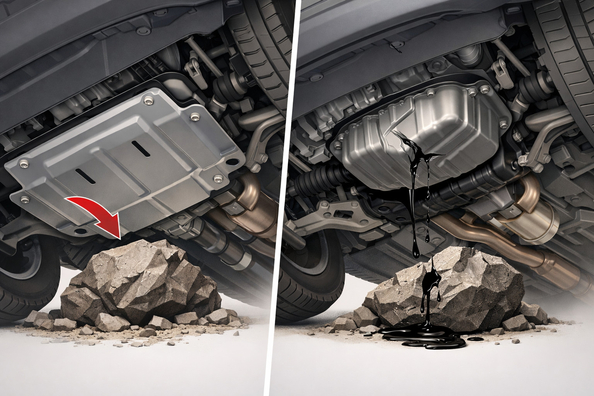
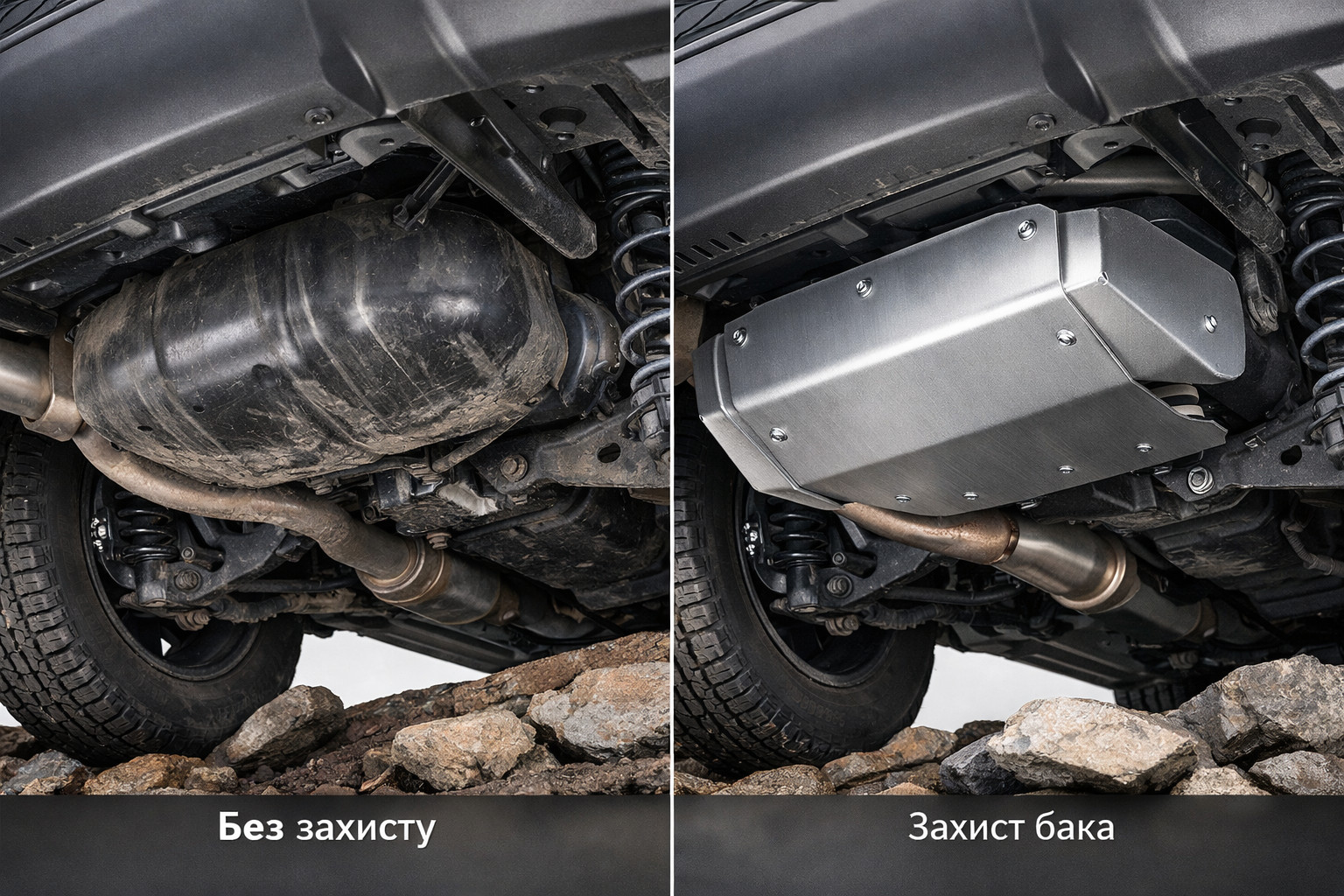
Crankcase protection isn’t for everyone. It really helps where the engine oil pan, the front of the powertrain, or the transmission regularly take hits from below: on dirt roads, in winter ruts, on rocks, potholes, curbs, and tall speed bumps. But if your car mostly drives on smooth asphalt, the benefit of a metal skid plate often turns out to be smaller than the added weight, extra noise, and hassle at the service bay.
The main mistake is simple: installing a heavy metal protection “just in case” without checking whether your car actually faces a real risk of cracking the oil pan or tearing off the factory lower cover. The decision should be based not on trends, but on ground clearance, routes, season, and what’s already installed from the factory.
The underside of a car operates very close to the road, and the most vulnerable components are located there. If an impact hits the oil pan or the front of the assemblies, the consequences can cost many times more than the protection itself. This is especially true for sedans and crossovers with limited clearance and a long front overhang.
The second reason is confusion between a factory plastic undertray and real impact protection. Plastic is often there for dirt, spray, aerodynamics, and airflow management, but it may not survive a hard contact with ice or a rock. Because of this, the driver thinks “the factory already took care of everything,” while in reality the component isn’t protected from a serious hit.
DD Tuning expert comment: the most common mistake is buying the thickest protection without inspecting the car from below. As a result, a city car gains extra kilos, while the driver still doesn’t solve the problem of broken factory plastic or missing fasteners. Before choosing, look not only at metal thickness, but also at clearance, mounting points, and service access.
| Symptom | Likely cause | What to do |
|---|---|---|
| Rattle or dull knock from underneath after hitting an obstacle | Loose fasteners or a deformed shield | Inspect the mounts, straighten or replace the damaged part |
| Lower plastic hangs down, cracks are visible, or clips are missing | The factory undertray is no longer doing its job | Replace the plastic part or switch to a properly selected metal protection |
| Oil puddle, wet oil pan, oil pressure warning light | Impact to the oil pan, crack, or puncture | Do not drive further; tow the car; repair the oil pan; then choose protection according to operating conditions |
| Constant scratches on the lower edge and underbody | Low clearance, long overhang, frequent contact with uneven surfaces | Adjust your driving line and, if hits are regular, install protection |
| No impact marks, but you want to “play it safe” | There may be no real risk | Keep the factory protection if it’s intact; don’t add a heavy plate without need |
What works is what matches your real driving scenario. If the car often sees bad roads, snow, or rocks, crankcase protection takes the hit and can save the oil pan, transmission, or other low-mounted components. For mixed use, a lighter aluminum option is usually more logical; for regular harsh contact, steel—if the vehicle design justifies it.
The second thing that really matters is the design. A proper plate mounts to factory points, doesn’t hang lower than necessary, doesn’t block cooling, and doesn’t force you to remove half the car for an oil change. That’s what separates useful protection from just a heavy sheet of metal.
The “I’ll patch the oil pan and keep driving” approach doesn’t work. Glue, sealant, and similar patches are only a temporary measure if the pan is already cracked. Likewise, don’t expect a thin factory plastic cover to take a hard hit like a structural skid plate.
It’s also a questionable idea to install a universal protection without a precise model fit, or to keep it on random hardware. Such solutions often cause vibrations, rumbling, and problems accessing service points. Another common mistake is doubling up on already sufficient factory protection on a car that rarely sees anything more challenging than city asphalt.
If you have real impacts from below—not just a theoretical fear—then it makes sense to look at crankcase protection for your specific operating conditions. If you’re unsure between steel, aluminum, and plate shape, it’s worth going through the criteria separately in how to choose engine crankcase protection.
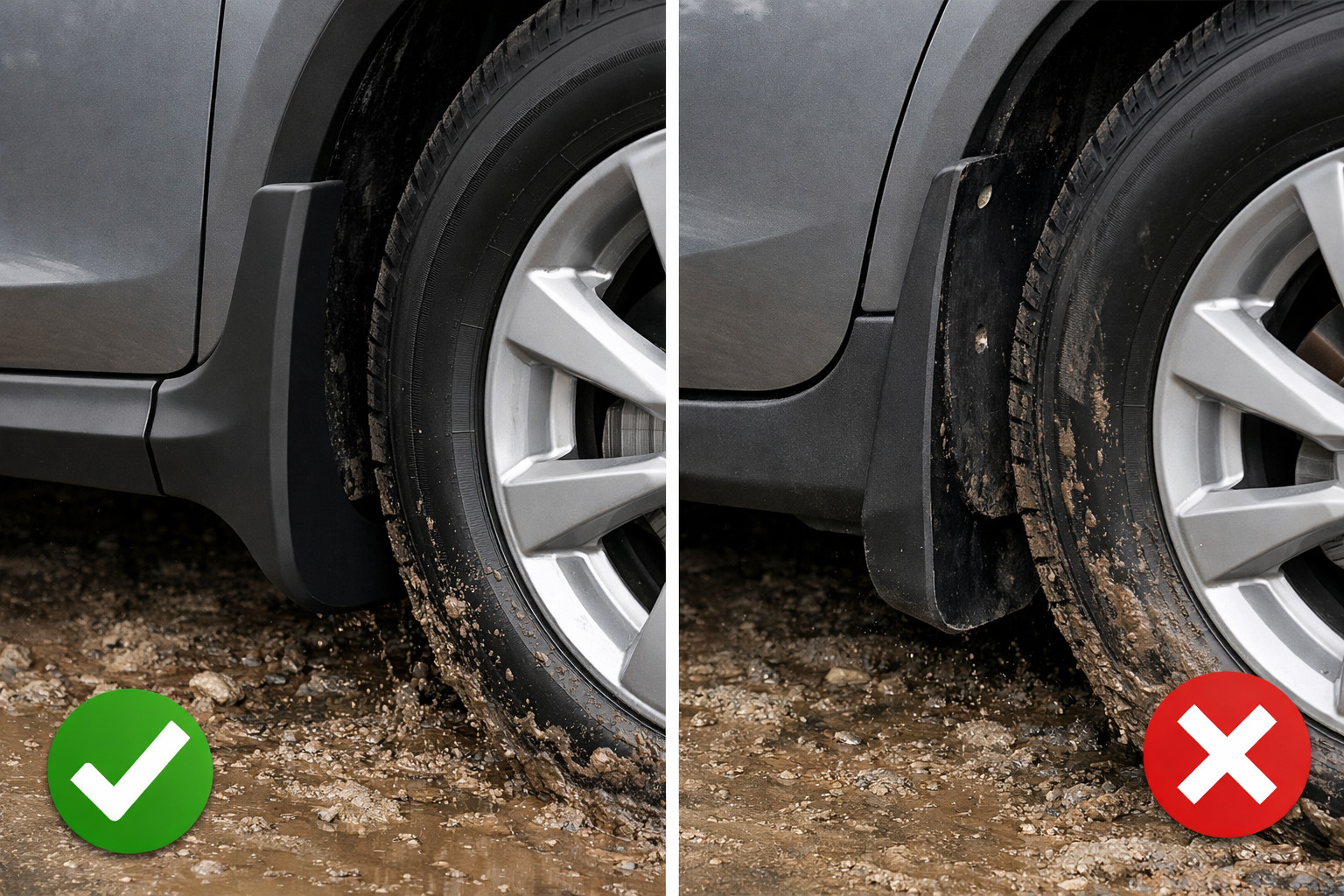
When the issue isn’t the oil pan but the constant slurry of water, salt, and small stones from the wheels, sometimes it’s smarter to complement the car with mud flaps and restore the factory lower cover rather than hanging a heavy metal sheet. If the plastic shield is cracked and hanging, in city use it’s often enough to replace it.
| Solution | When it works | When it’s not worth spending money |
|---|---|---|
| Aluminum protection | Mixed use: city, highway, winter trips, occasional dirt-road driving | If the car drives only on smooth asphalt and has no impact marks |
| Steel protection | Regular strong contact with rocks, ice, ruts, potholes | For a calm city car where extra weight doesn’t pay off |
| Replacing the factory plastic undertray | When the old shield is cracked but there are no real impact loads | If the car is already hitting obstacles with the oil pan |
| Keep the factory setup | When clearance is sufficient, routes are easy, and the underside has no damage | If there have already been hits, dents, or a risk of oil leakage |
| Temporary patch on a damaged oil pan | Only as an emergency short-term measure until repair | As a permanent solution |
From a customer’s experience: a crossover owner came in after several winter hits on packed snow and ice on a rural road. Inspection showed the factory plastic had already cracked, and there were fresh contact marks on the oil pan. In the end, he chose not the heaviest steel, but a properly engineered protection with service access, and after that he stopped catching new hits in the same area.
Crankcase protection is worth installing when the risk of impacts from below repeats—and you can see it in your routes, vehicle geometry, and marks on the underbody. In that scenario it can truly save expensive components. But if the car lives on smooth asphalt and the factory cover is intact and doing its job, a heavy metal skid plate is often extra weight without noticeable benefit.
The smartest choice here isn’t universal—it’s tied to real use: what exactly is getting hit, where the car drives, and whether you need impact protection rather than simply a closed underside. This material is based on real selection experience, installation practice, and real-world use cases—not on the abstract advice “install it for everyone.”
| ✔ | Effectively protects the oil pan, transmission, and other lower components where the car regularly takes hits from below: on dirt roads, in ruts, over rocks, potholes, and curbs. In such conditions, it can save you from costly repairs. |
| ✔ | It is especially useful for cars with low ground clearance, a long front overhang, or a damaged factory underbody cover. In these cases, the risk of hitting the underbody is much higher than in normal city driving. |
| ✔ | It can be a practical solution if the factory plastic shield has cracked or lost its mounts. Then a new properly matched guard restores a real function rather than just covering the underside of the car. |
| ✔ | If the design is matched to the driving conditions, it can reduce the effects of winter impacts, contact with ice and stones. For mixed conditions, the article separately notes that a lighter aluminum version is often a more logical choice than heavy steel. |
| ✔ | A proper guard not only protects the underside, but also preserves service access if it is installed in the factory mounting points and does not block cooling. This makes it more useful in everyday use. |
| ✘ | On a car that mostly drives on smooth asphalt and shows no signs of impacts, the benefit of a metal shield is often minimal. In that case, it adds weight without a noticeable gain. |
| ✘ | A heavy steel guard can bring extra noise and inconvenience during servicing. For calm city driving, this is sometimes a worse option than the factory configuration or a lighter shield. |
| ✘ | An improperly chosen or universal guard often creates vibrations, rattling, and problems with access to service points. If it sits crooked or on random fasteners, there is little benefit from it. |
| ✘ | If the problem is already a punctured oil pan, patches like glue or sealant do not solve it for long. This is only a temporary measure until a proper repair, not full protection. |
Shipping to EU
Wholesale and retail
Own warehouse
Опис продукту
Подарунки не надаються при оформленні покупки у кредит під 0,01% або при покупці частинами.