14.06.2026
284
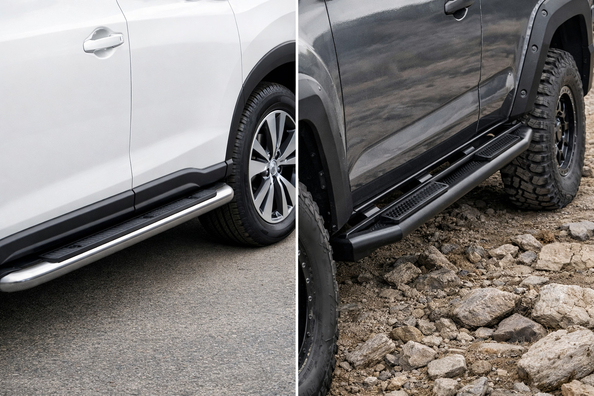
For a daily driver, the choice is usually simple: if the car lives in the city, on the highway, and only occasionally goes out of town, standard side steps are often enough. They’re more convenient for getting in, simpler in design, and don’t make you overpay for protection you may never need.
Rock sliders (heavy-duty steps) make sense when the body rocker truly needs to be protected from contact with ruts, rocks, ice, or stumps. There’s also an in-between format — a hybrid step-slider: it gives you both a step and protection, but costs more, weighs more, and requires more attentive care. The most common mistake here isn’t that people buy “low quality” — it’s that they buy something that doesn’t match their use case.
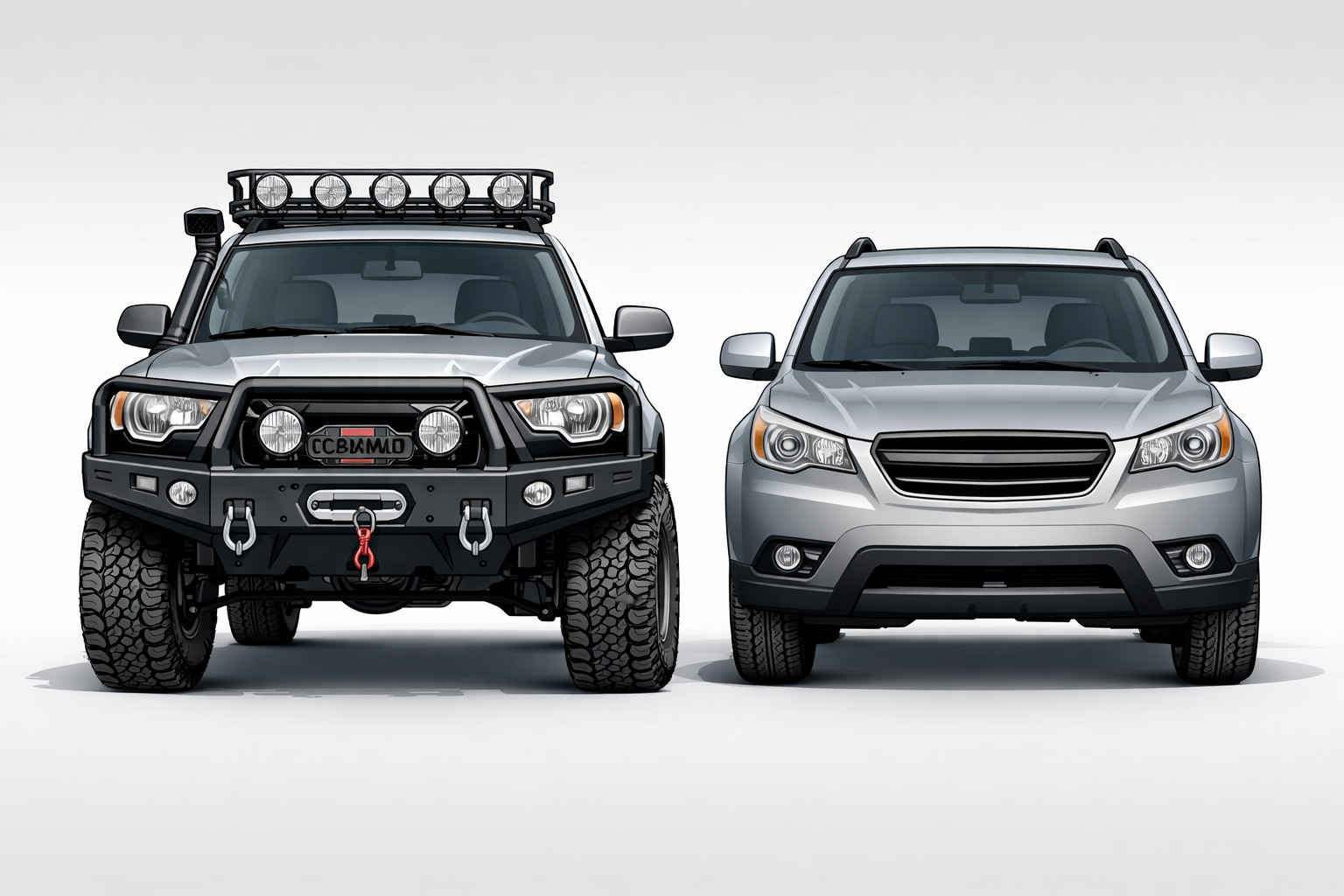
There is no universally better option. A side step is primarily about step-in convenience, especially for crossovers, pickups, family cars, and vehicles with a higher ride height. A rock slider is already a protective element: it should withstand contact and not fold from the first hit.
The problem is that market names are often mixed up. “Heavy-duty” may refer to a true protective slider or just a larger decorative tube. So you should look at metal thickness, mounting method, weight, geometry, and whether it’s actually convenient to use every day — not just how it looks in photos.
| Option | Strengths | Weaknesses | Who it fits |
|---|---|---|---|
| Side steps | Convenient entry, wide foot support, simpler design, usually lower price | Weaker protection, can snag off-road, collect dirt and salt in winter | Daily city driving, highway, family car, tall crossover |
| Rock sliders | Better protect the body rocker, withstand contact with obstacles, useful on bad roads | Heavier, more expensive, not always comfortable as a step, possible knocks with play or ice | SUV, pickup, vehicle with regular trips onto dirt, snow, rocks |
| Hybrid step-slider | Combines a step and protection, suitable for a lifted vehicle | Highest price, complex installation, mechanics and electronics require maintenance | Mixed use: daily vehicle plus regular trips on bad roads |
DD Tuning expert comment: most often, the ones who make mistakes are those who buy rock sliders “just in case” for a car that only ever sees curbs and parking lots. The second typical issue is focusing on looks but not checking where and how the step mounts on their specific model. If the vehicle is driven daily in winter, it’s worth thinking not only about the metal, but also how easy it will be to wash out ice and salt.
This is the most sensible option for most daily vehicles. Typical models are long, so they’re convenient for both the driver and passengers. A wide surface with ribbing or a rubber insert provides solid footing, and in a family scenario you feel that every day, not once a month.
But a standard side step shouldn’t be overrated as protection. In ruts or on rocks it can snag, bend, or simply take an impact differently than a true heavy-duty design. In the city that’s not an issue; on forest roads it can be. In salty climates, steel versions need attention, while aluminum ones are usually calmer in terms of corrosion.
Here the logic is different: the priority isn’t entry comfort, but the ability to carry load and protect the lower part of the body. In a classic design it’s thick steel, around 4 mm, heavy-duty mounts, and noticeable weight — about 35 kg per pair in some solutions. That’s why they’re useful where the rocker truly risks meeting an obstacle.
The downsides are just as straightforward. First, weight. Second, price. Third, as a step they’re not always as comfortable as a wide side step. If the vehicle doesn’t go where you can hit the rocker, this purchase often gives you more metal than benefit. And with poor installation, play, or ice, a heavy-duty design can start knocking.
This is a compromise for those who need both a step and protection. Some of these systems use steel around 3.4 mm thick, and the step drops about 305 mm down to make getting into a tall vehicle easier. For a more aggressive scenario, separate skid plates are sometimes added.
But this is where complexity begins. The design includes not only metal, but also hinges, motors, and wiring. Such systems need regular cleaning and lubrication after off-road use and often in winter. In other words, it’s not just a “better step” — it’s a separate usage format you need to be ready for.
If the vehicle carries a family every day, works in the city, and most mileage is on asphalt, side steps are the more logical choice. They help with entry, don’t complicate life with extra hardware, and usually justify the cost better.
If the vehicle often drives through snowy yards, ruts, field roads, or regularly brushes terrain with its side, rock sliders start to make real sense. Here you pay not for looks, but for the chance not to repair the body rocker itself. For a lifted SUV that’s also used daily, a hybrid step-slider can be a compromise — but only if the owner is ready for more complex service.
A separate case is commercial or utility use. Wide steel steps can be appropriate here specifically as a reliable step in mud, cold, and constant in-and-out. But that’s still not the same as a rock slider meant for impact protection.
| Scenario | Best choice | Why |
|---|---|---|
| City, highway, family trips | Side steps | Provides a convenient daily step without extra weight or complex mechanisms |
| Tall crossover for children or older passengers | Wide side steps | Better foot placement and easier entry |
| Regular snow, ruts, dirt roads | Rock sliders | Protecting the rocker matters more than maximum step comfort |
| Lifted SUV for everyday use | Hybrid step-slider | Gives both protection and a lower step if you can accept the price and service needs |
| Occasional outdoor trips without harsh off-roading | Side steps or a light protective option | A full heavy-duty kit is often overkill |
| Trails, rocks, contact with obstacles | Rock sliders | This is where you need strong mounting and the ability to take an impact |
A more expensive option is justified when it addresses a real risk or a real inconvenience. If you primarily need easier entry, it makes sense to look at side steps. If the vehicle regularly works where the rocker can be hit, it’s worth specifically comparing rock sliders. And if you first need to understand what formats exist at all, it’s useful to browse the step solutions section.
Paying extra makes sense in three cases: the vehicle actually encounters obstacles; the vehicle is lifted and a regular step is already inconvenient; the owner deliberately chooses a hybrid format and is ready to maintain it. In all other scenarios, more expensive doesn’t mean more practical.
From a customer’s experience: the owner of a daily crossover initially wanted rock sliders because he often drove to his country house in winter and feared damaging the body. After selection, it turned out the vehicle almost never sees hard off-road conditions, but children get in every day, so they chose regular wide side steps. In the end, they got easier entry, less dirt on the doors, and no overpayment for protection that, in his driving mode, would hardly have worked.
For a daily vehicle without regular hard driving beyond asphalt, side steps are more often the better choice: they’re more practical, simpler, and more straightforward to live with. Rock sliders are worth buying when you truly risk the body rocker, not just want a more rugged look. A hybrid step-slider is appropriate as a compromise for a mixed scenario, but it’s a solution with a higher price and higher maintenance demands.
The material is based on real selection experience, practice, and real usage scenarios: that’s why the main criterion here isn’t the product name, but how your vehicle is actually driven every day.
| ✔ | Side steps are more convenient for everyday entry and exit, especially on tall crossovers, pickups, and family cars. The wide ribbed surface provides solid footing, which you notice every day. |
| ✔ | They have a simpler design and are usually easier to install than rock sliders or hybrid solutions. This often means fewer complex components and less hassle in use. |
| ✔ | For city driving, highways, and occasional trips to the countryside, side steps are usually sufficient. In such scenarios, there is no point in overpaying for protection that may not be needed. |
| ✔ | Rock sliders really protect the lower body on ruts, rocks, ice, or stumps. They are appropriate where the sill can actually take a hit or snag. |
| ✔ | A hybrid step-slider combines a step and protection, so it suits a lifted vehicle with mixed-use driving. It is a practical compromise if you need both functions at once. |
| ✘ | Ordinary side steps should not be considered serious protection. On forest roads or rocks, they can catch, bend, or take impact differently than a structural design. |
| ✘ | The wide surface of side steps collects snow, dirt, and salt. In winter, this increases the need for care, especially if the steps are steel. |
| ✘ | Rock sliders are heavier and more expensive, and as a step they are not always convenient. If the vehicle does not drive on difficult surfaces, such a purchase is often unnecessary. |
| ✘ | Hybrid systems are the most expensive and the most difficult to install and service. Because of the joints, motors, and wiring, they require regular cleaning and lubrication, especially after off-road driving and in winter. |
Shipping to EU
Wholesale and retail
Own warehouse
Опис продукту
Подарунки не надаються при оформленні покупки у кредит під 0,01% або при покупці частинами.