28.07.2026
200
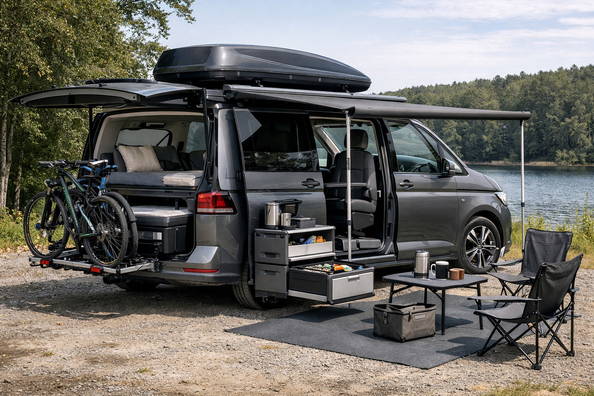
This upgrade plan for the Volkswagen Caravelle T7 is for those who use the minivan as a family vehicle: child seats, a stroller, bags, weekend trips, sometimes bikes or an overnight stop on the road. The main goal here isn’t to “rebuild” the car into a show project, but to make the cabin easier to keep clean, keep luggage from sliding everywhere, and make reconfiguring the interior something that doesn’t take half an hour and two people.
The Caravelle T7 already has a strong factory base: up to 9 seats, three individual seats in the second row, a three-seat bench in the third, and plenty of USB ports for passengers. That’s why the first money is better spent not on deep interior rework, but on protection, sun protection, and luggage logistics. This matters especially because the seats are heavy, and constant sliding along the rails quickly gets old in real life.
For a family use case, the Caravelle T7 has to cover four simple tasks: not trash the cabin with dirt, not overheat kids in the sun, not turn the trunk into chaos, and not force you to remove seats every time you need to fit one big suitcase. Without this, even a very convenient factory layout starts to annoy.
The difference between the short and long wheelbase is important here. In the short version there’s noticeably less room behind the third row, so a family with a stroller and suitcases hits the trunk limit faster. In the long wheelbase, the logistics buffer is better, so some spending on a roof solution or tow hitch can be postponed. And if the vehicle often drives in the city and parks in tight courtyards, a camera and parking sensors deliver more value than any exterior decor.
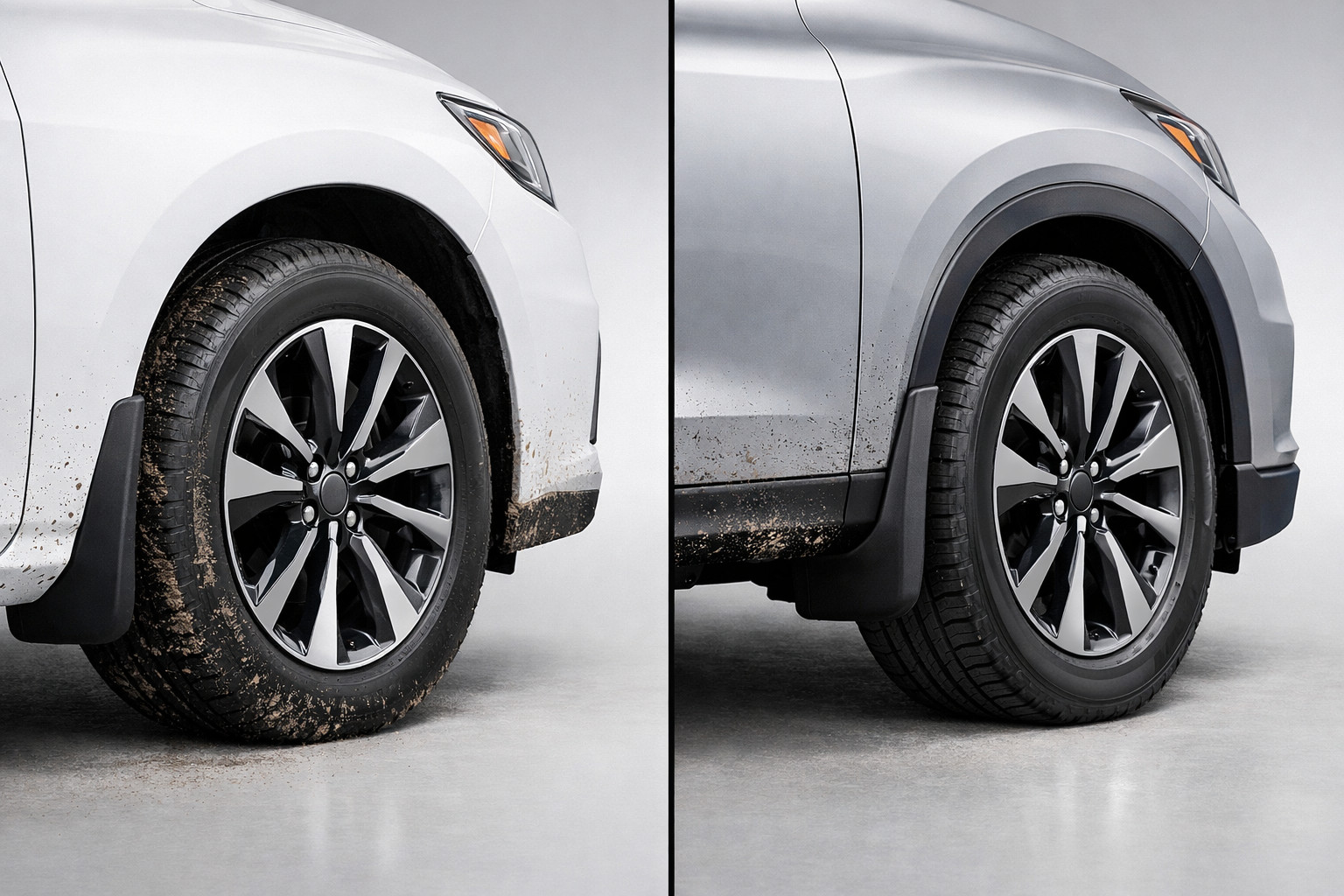
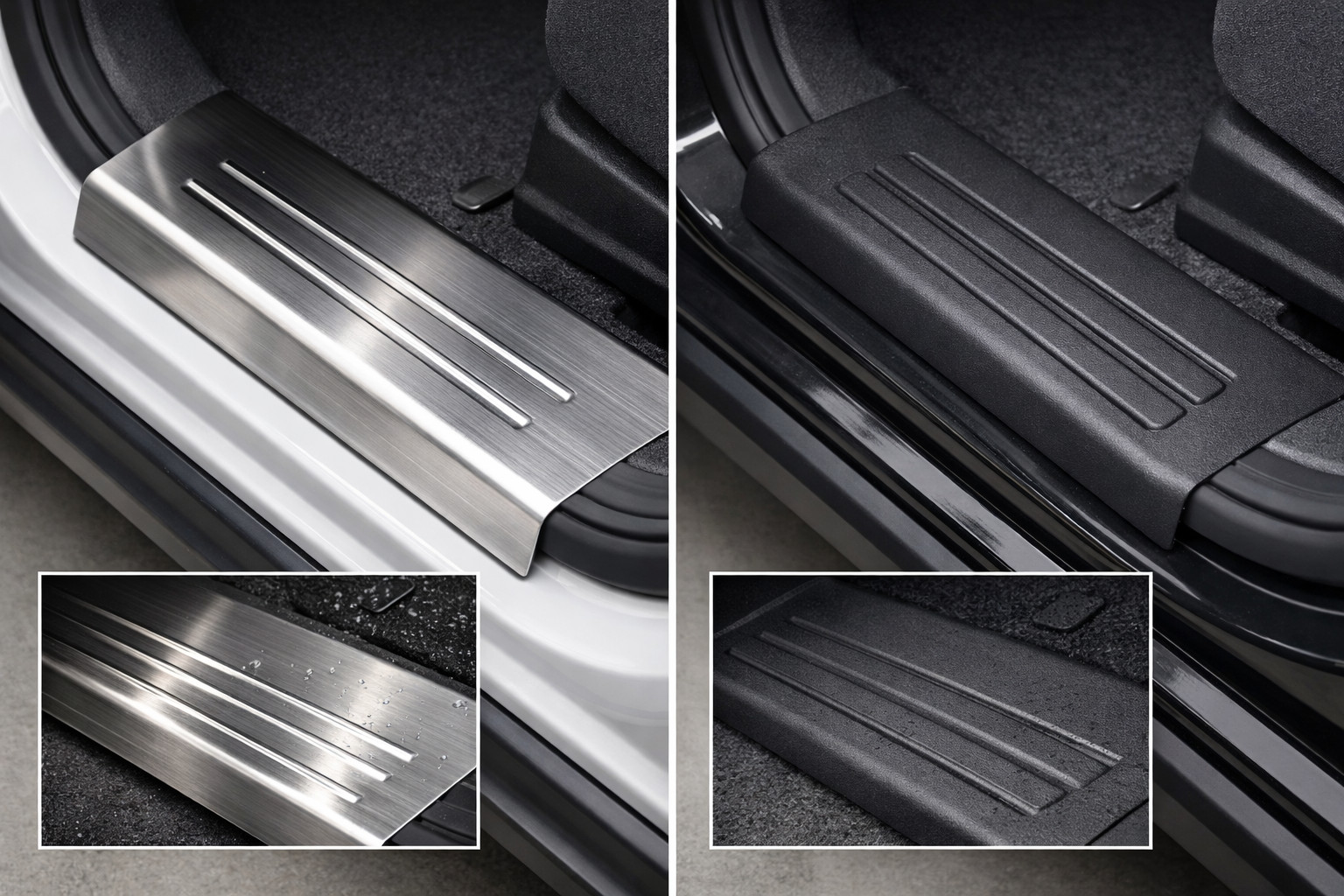
The first step is to protect the interior from what truly builds up every day: moisture, sand, marks from kids’ shoes, food, and imprints from child seats. The practical minimum is: floor mats throughout the cabin, protection under child seats and on seat backs, and if kids often ride in the back—covers or other protection for the middle and rear rows.
The second must-have step is sun protection. For the Caravelle T7, curtains and blackout kits must be chosen strictly for your body type, wheelbase length, and window type. That’s what makes the daily difference on trips: less direct sun, more privacy, less passenger fatigue. Only after that does it make sense to think about where to put seasonal luggage, scooters, or bikes.
The third priority is order in the cargo area. If you have a short wheelbase, don’t expect miracles from the stock space: it’s better to plan cargo-area protection and a placement logic for kids’ items right away. It’s cheaper and smarter than starting with an interior rebuild.
| Upgrade | Why it’s needed | Who really benefits |
|---|---|---|
| Cabin floor mats | Catch water, sand, and dirt after daily driving and outings | All families, especially if kids often get in with wet shoes |
| Protection under child seats and for seat backs | Reduces compression marks, scuffs, and dirt from child seats | Those transporting 1–3 kids and who don’t want to quickly ruin the factory upholstery |
| Curtains or blackout panels | Reduce direct sun exposure, add privacy on the road | Families with kids, long highway trips, trips to the sea |
| Protection and organization for the cargo area | Lets you pack a stroller, bags, and small items separately without dirtying the cabin | Short-wheelbase owners and those traveling fully loaded |
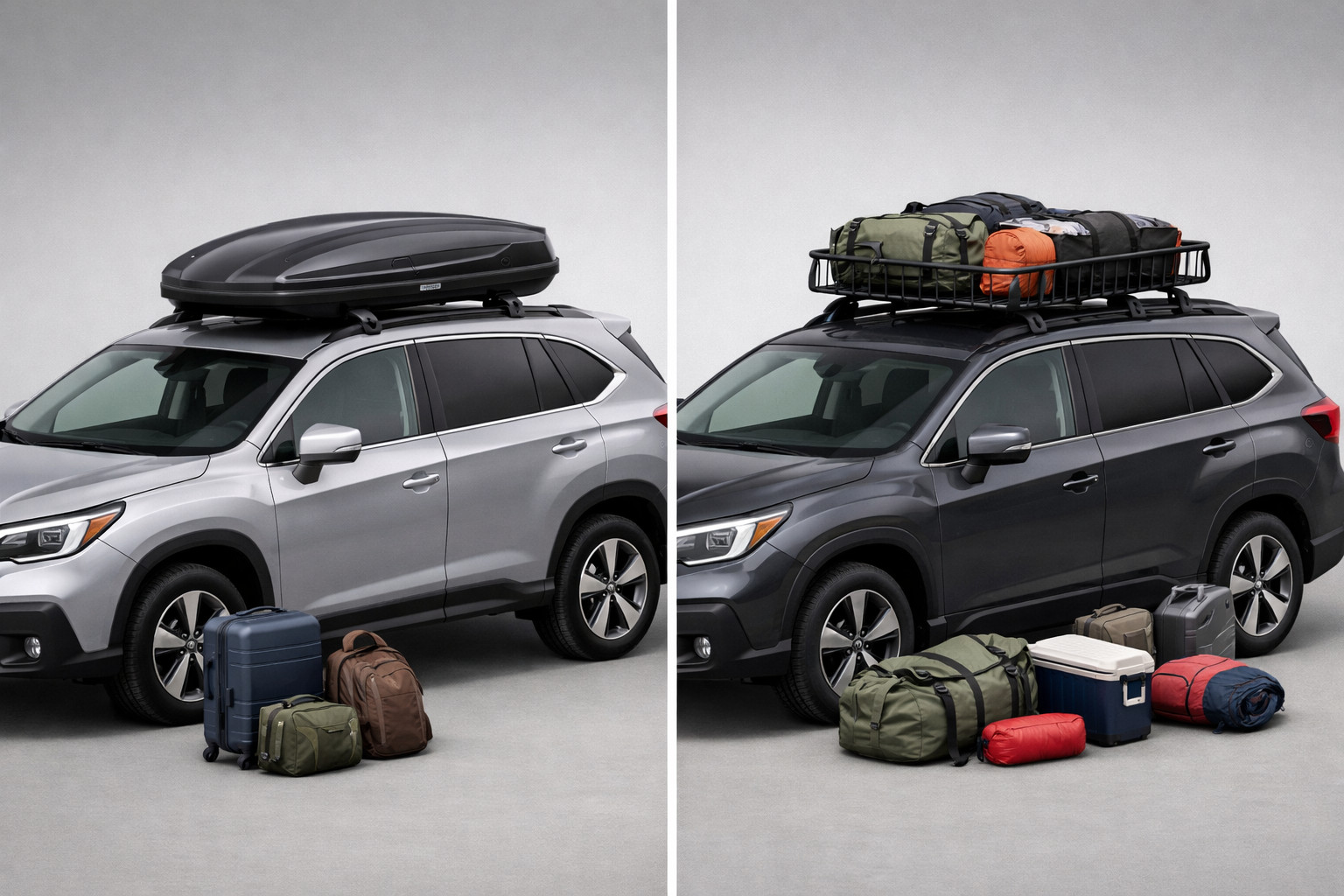
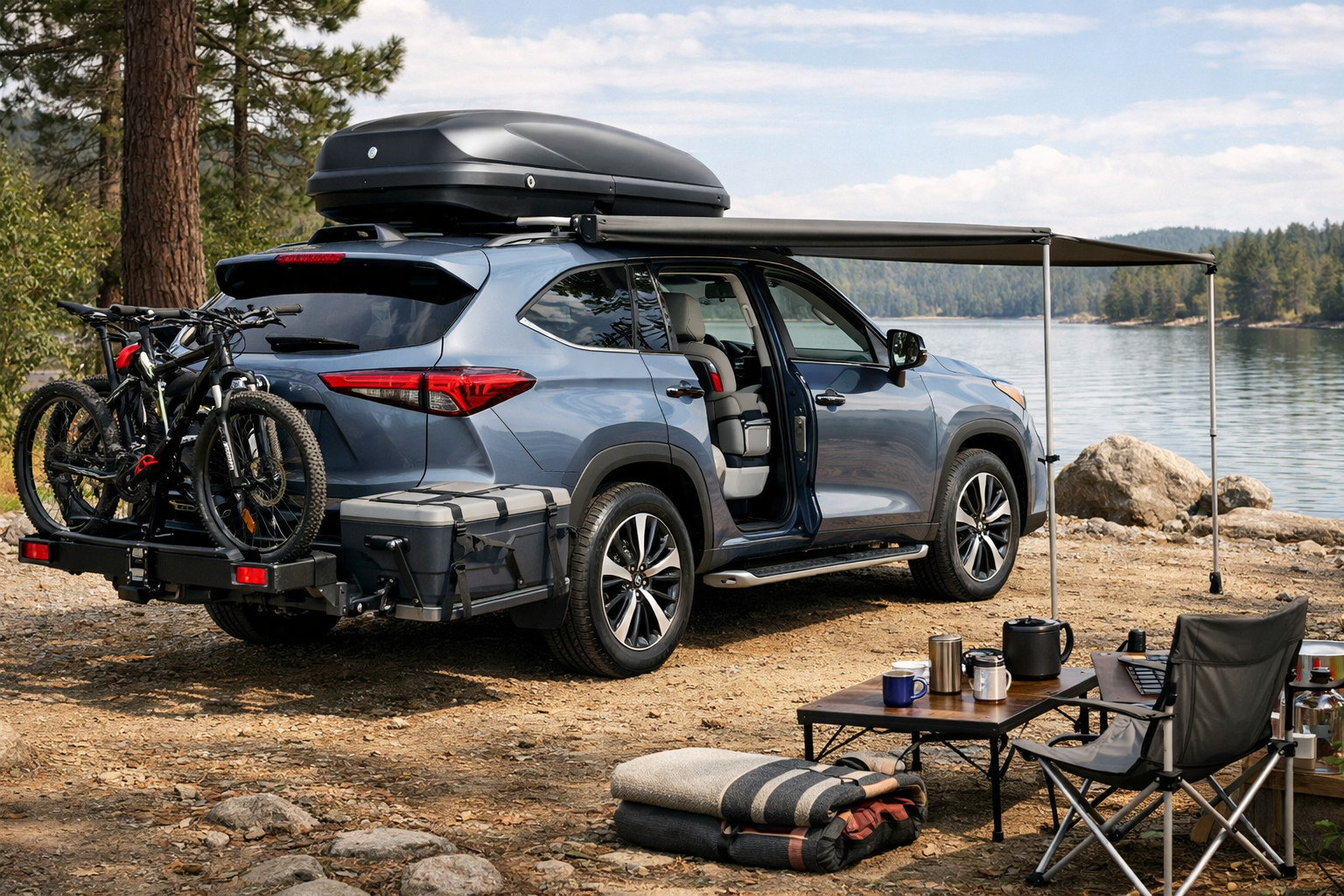
| Roof box | Moves seasonal volume up top: suitcases, light items, gear | Families who regularly go on vacation and fill the trunk to the ceiling |
| Tow hitch or bike-carrying solution | Allows you to carry a trailer or bikes without piling them into the cabin | Those who actually transport 3–4 bikes or use a trailer |
| Camera and parking sensors | Make maneuvering a large body in the city easier | Those who park the Caravelle daily in courtyards, near schools, malls, and offices |
DD Tuning expert comment: the most common mistake is buying accessories not for your exact body, but “by model name.” For the Caravelle T7, wheelbase length, window type, and the real use case are critical: short wheelbase, two kids, and weekly trips is one set of solutions; long wheelbase without a stroller is completely different. The second typical mistake is trying to make the interior weekly-transformable via aftermarket systems, when in real life people use two or three stable configurations.
The second stage starts when the basic issues are solved, but trips are still inconvenient because of how much stuff you carry. For a short-wheelbase Caravelle, that’s often a roof box or an external bike solution. For the long wheelbase, it may be needed later—when long family vacations, sports gear, or the need to carry a lot without removing the third row appears.
If your scenario includes bikes, a trailer, or regular trips to the cottage, it’s logical to consider a tow hitch. But you can’t buy blindly: allowable trailer weight depends on the specific version, and on the hybrid modification it’s lower than on some diesels. The same applies to the roof: you need to confirm load limits before choosing crossbars, a box, and the habit of carrying everything “just in case.”
A separate topic is night trips. A sleeping module in the cabin only makes sense if you actually sleep in the car several times per season. For a typical family Caravelle, it’s not the first purchase, because for most of the year it only eats budget and storage space.
In this group I’d include softer seat covers, thermal curtains for overnight stays, decorative trim pieces, expensive wheels, spoilers, and exterior chrome elements. They can be nice, but they don’t solve the main family pain points: dirt in the cabin, overheating in the sun, lack of space for things, and the complexity of everyday use.
This also includes things people buy “because a minivan should have them.” For example, bulky tables or massive interior modules. If kids actually use them on the road—great. If not, you just get another item that blocks the aisle and makes reconfiguring harder. Likewise, don’t rush into extra charging solutions: the T7 already has plenty of USB ports, so this usually isn’t where functionality is lacking.
The most typical mistake is buying for the picture, not the scenario. In the end the car gets expensive wheels, trim pieces, or a spoiler, but child seats still dent the upholstery, luggage is piled up, and the rear row bakes in the sun. For a family Caravelle, that’s the wrong spending order.
The second mistake is overpaying for “universal transformation.” In theory, the idea of quickly rearranging seats looks great, but in practice the seats are heavy, and weekly sliding on rails quickly gets old. Even worse are non-OEM or DIY solutions: they raise questions about safety and legality and simply don’t deliver the convenience people imagine.
The third mistake is ordering curtains, mats, or protection without checking L1 or L2, as well as window type. For the T7, this is critical. The fourth is buying a roof box before you’ve evaluated parking height, the real need for volume, and the permissible roof load.
| Install first | Can be postponed | Not required |
|---|---|---|
| Mats, protection under child seats, seat-back protection | Full covers for all rows, if the upholstery is still in good shape and kids are careful | Decorative interior trim |
| Curtains or blackout panels matched to your body and windows | Thermal curtains for overnight stays, if that isn’t your regular format | Tinting only for looks |
| Cargo-area organization, especially on the short wheelbase | Roof box, if long trips are rare | Deep rail rework and constant “interior transformation” games |
| Camera and parking sensors, if the vehicle lives in the city | Tow hitch and bike solutions, if bikes or a trailer are needed a few times a year | Spoilers, body kits, expensive wheels |
More expensive upgrades are justified when they remove a recurring problem, not just add options to a list. If you’re unsure whether you really need a box, first check the dimensions and interior logic in the Caravelle T7 review. When it becomes clear that the stock volume isn’t enough on a regular basis, then it makes sense to look for solutions in the roof racks and crossbars category and separately figure out which format fits your exact use case in the article how not to buy the wrong roof rack.
For a family Caravelle T7, three items are expensive but justified under certain conditions: a large roof box for regular vacations, a tow hitch for those who actually carry a trailer or bikes, and a camera + parking sensor package for city use. If trips are long, loading is frequent, and parking is tight, these expenses are felt every day. If these are one-off tasks, it’s better to stick with the basic set and not inflate the budget.
From a customer’s experience: most often people come with the request “we want to make the interior a transformer,” but after a quick breakdown it turns out the main problem isn’t the seats—it’s the mess, the sun, and the lack of space for seasonal items. In a real family scenario, a set of mats, child-seat protection, curtains, and an external luggage solution delivers more benefit than an expensive interior rebuild. With this approach, the vehicle stays convenient both for daily life and for vacation.
For the Volkswagen Caravelle T7 for family trips, the right order is simple: first interior protection and cleanliness, then sun protection and privacy, then cargo logistics, and only after that—roof, tow hitch, camera, or overnight solutions. Style accessories and deep interior transformation are almost always secondary here.
In short, what’s useful for a family is what reduces dirt, makes getting kids in easier, unloads the trunk, and doesn’t force you to constantly wrestle with heavy seats. Everything else should be bought only after an honest check of your scenario. This material is based on real selection experience, hands-on practice, and real use cases—not on a decorative list of accessories.
| ✔ | Floor mats, child seat protectors and back-of-seat covers really address everyday issues with dirt, sand and scuffs. This is especially useful for families with children, where the interior wears out quickly. |
| ✔ | Curtains or blackout panels provide a practical benefit on trips: less direct sun, more privacy and less passenger fatigue. For long journeys and trips with children, this is one of the most useful upgrades. |
| ✔ | Organizing the cargo area makes it possible to keep the stroller, bags and small items separate so they don’t spread around the cabin. On the short wheelbase, this is especially important, because there quickly stops being enough factory space. |
| ✔ | A camera and parking sensors are useful in city driving, where the large body is harder to maneuver in courtyards, near schools or shopping malls. This is a more practical investment than exterior trim if the car is often parked in tight spaces. |
| ✔ | A tow bar or bike-mount solution is justified for those who actually tow a trailer or carry 3-4 bikes. In such a scenario, they free up the cabin and provide more benefit than trying to cram everything inside. |
| ✘ | A deep interior conversion into a “transformer” rarely pays off in a family-use scenario. The seats are heavy, and constantly moving them on rails quickly becomes tiresome in real life. |
| ✘ | Bulky tables, massive cabin modules and decorative elements do not solve the main problems of family use. They can also get in the way of passage and daily transformation. |
| ✘ | A roof box and tow bar make sense only for some, because they need to be selected for a specific version, the permitted load and the actual need. If used only occasionally, they are unnecessary expenses. |
| ✘ | Non-factory or homemade solutions for interior transformation raise questions of safety, legality and convenience. The author explicitly warns against buying such things at random. |
| ✘ | Accessories chosen without considering L1/L2, window type and wheelbase length may simply not fit. For Caravelle T7, this is critical, so a wrong choice means extra costs and disappointment. |
Shipping to EU
Wholesale and retail
Own warehouse
Опис продукту
Подарунки не надаються при оформленні покупки у кредит під 0,01% або при покупці частинами.