29.05.2026
420
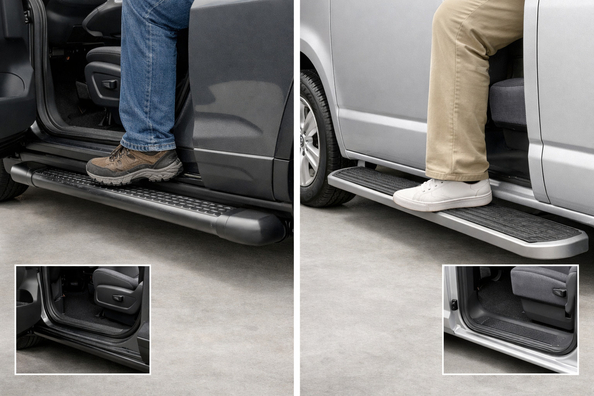
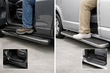
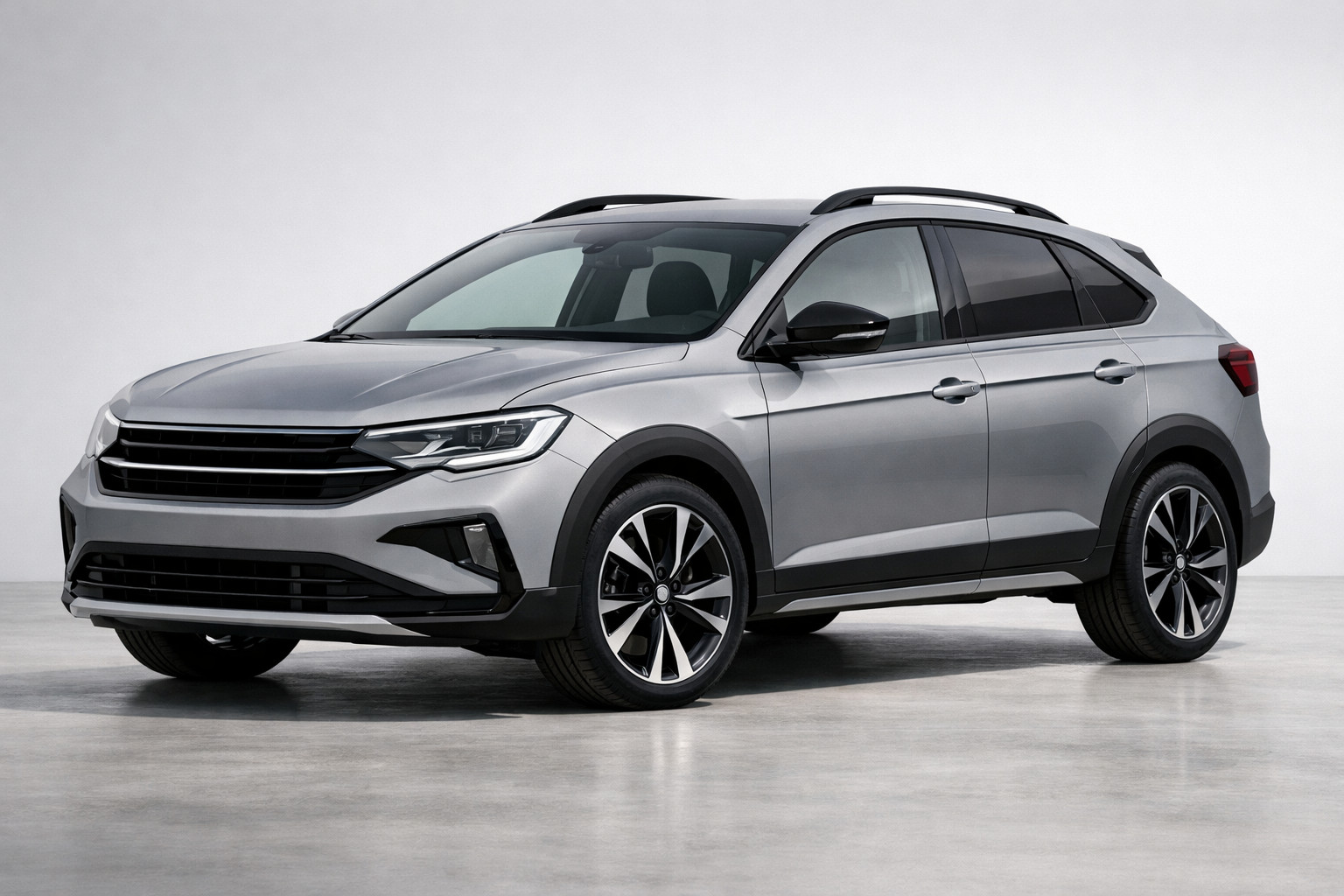
In short, for a crossover or SUV, side steps are bought mainly for everyday boarding: to make it easier for kids, shorter people, and passengers in winter footwear to get in. For a van, the priority is different: a higher entry, a longer door opening, and frequent manual loading, so what matters more there isn’t looks but length, tread pattern, and a solid footing under the whole foot.
That’s where the difference in choice comes from. For a passenger vehicle with a higher body, a wide fixed step most often wins; less often—an electric retractable one. For a van, a long fixed solution by the sliding side door or rear doors is more practical. A narrow tube is a compromise on price and appearance, but not maximum convenience.
The difference starts with entry height. On lower crossovers, the step into the cabin sometimes isn’t that big—around 152 mm—so even a moderately wide step already makes boarding noticeably easier. With a van it’s different: the side step height can be around 393–435 mm, and the side door opening about 1030 mm. So for it, it’s not just about “having something to step on,” but having a long working area that’s convenient to step onto with bags or tools.
The second difference is purpose. On a crossover or SUV, a step more often helps people get in and out without brushing clothing against the dirty body sill. On a van, it works as an access tool: to the passenger row, to the sliding door, or to the cargo area. That’s why van solutions are more often longer and have a more aggressive tread.
The third point is ground clearance. Any external side step takes away part of the underbody geometry. For a city car this is usually acceptable, but for regular trips on bad roads or off-road, a regular side step can turn out to be unnecessary no matter how good it looks in photos.
It’s better to compare not by the shape of the tube or trim, but by five practical criteria.
| Option | Strengths | Weaknesses | Who it suits |
|---|---|---|---|
| Wide fixed step for a crossover/SUV | Stable footing, convenient daily use, easier installation, lower risk of winter issues | Reduces ground clearance, looks bulkier | Families, city vehicles, those who often help kids or passengers get in |
| Long treaded step for a van | Covers the working area by the sliding or rear doors, better for high entry and loading | Requires accurate selection by length and doors, can be heavier and more expensive than short solutions | Passenger and work vans where the step is needed as a functional element |
| Tubular or oval step | Looks simpler, often cheaper, hides less of the side | Narrower footing, more slippery in wet weather, possible noises with poor installation | Those who prioritize budget and a lighter look over maximum convenience |
| Electric retractable step | Clean look when folded, interferes less with ground clearance, very convenient in dry conditions | More expensive, sensitive to mud, ice, and debris, requires more attention | City vehicles where appearance and boarding comfort matter without constant use in mud |
DD Tuning expert comment: Most often people make a mistake when they choose a narrow tubular step for a tall van just because it’s cheaper. In practice you’re not stepping onto a flat surface, but onto a narrow edge, and with bags you feel it immediately. The second typical mistake is choosing only by body length, without considering the door opening and mounting points. If the vehicle drives daily in winter, it’s worth filtering out complex mechanisms first, and only then looking at the design.
This is the most straightforward option for everyday use. A wide platform gives better balance than a tube—especially for kids, older passengers, and anyone climbing into a higher cabin in winter footwear. In practical models, step width can be around 159 mm and tread depth around 6 mm, and that’s what gives the feeling of confident support. For two-door bodies you may see solutions around 1372 mm, for four-door—around 1829 mm, but the exact length always depends on the body.
Another plus is predictability. There are no motors, sensors, or complex kinematics, so in mud and snow this type of step usually wins in everyday reliability. If the vehicle doesn’t do hard off-road driving, this is the least stressful format.
For a van, convenience is defined not so much by shape as by the length of the working area. A short passenger-car approach often doesn’t work here. Depending on layout, there are continuous sections around 1372 mm, split layouts like 1168 and 2464 mm, and for the rear area—around 1778 mm. This isn’t for looks, but to cover the entry zone by the sliding or rear doors.
This type of step is useful for both passenger and work vans. It makes getting into a high cabin easier and really helps when you need to carry a box, tools, or a stroller by hand. If the van is used as a work vehicle, this is often the most practical format.
Its main advantage is a simpler and often cheaper design. But in terms of convenience it’s almost always a compromise. A narrow tube provides a smaller contact area, and in wet weather or slush it feels less secure underfoot than a wide board. For a low vehicle it may be acceptable, but for a van or a heavy SUV the difference becomes very noticeable.
A separate point is noise. If the mounts are chosen or installed poorly, these solutions more often create minor vibrations or squeaks. So a tubular step makes sense when you need a budget compromise, not the best possible footing.
Its strength is obvious: when folded, the body looks cleaner, and the step interferes less with clearance. On some systems, length for a large passenger vehicle body can be around 1880 mm, with a rated load up to 136 kg per side. In terms of feel, boarding is genuinely convenient, because the step drops exactly when needed.
But it’s not universally the better solution. Electrical systems are more sensitive to ice, snow, and debris and require care. For a city vehicle that sleeps in a parking garage and rarely sees mud, it’s a logical premium. For a work van or a vehicle that constantly drives through mud in winter, a simple fixed step is usually smarter.
If the vehicle is a family car used in the city and the main issue is easy boarding, a wide fixed step almost always wins. It works every day, doesn’t require special attention, and provides predictable support without surprises in freezing temperatures.
If it’s a van that often uses the sliding door or is used for deliveries, a long treaded step in the real entry area is better. Here it matters that your foot can land with the whole sole, not hunt for a narrow point of support blindly.
An electric retractable step is worth considering when you’re ready to pay for appearance and a clean body side, not just for the ability to get in more easily. For harsh winter, mud, and daily work use, it’s not the first recommendation.
For regular off-road use, the choice often sounds not like “which step is better,” but “do you need one at all.” If body geometry and capability matter more than boarding convenience, a regular side step can get in the way more than it helps.
| Scenario | Best choice | Why |
|---|---|---|
| City crossover or SUV, family, daily boarding | Wide fixed step | Provides stable daily footing and doesn’t depend on motors or sensors |
| Passenger van with frequent entry through a sliding door | Long treaded step | Covers a long entry zone and works better on a tall body |
| Work van, manual loading of boxes or tools | Long treaded step or a separate rear step | Gives solid footing under load and easier access to the working area |
| Premium city SUV, appearance and clearance matter | Electric retractable step | Almost invisible when folded, and boarding is very convenient when the doors open |
| Daily winter use, snow, mud, outdoor parking | Simple fixed step | Fewer weak points, easier to clean, less dependence on ice and debris |
| Regular trips on bad roads or off-road | Either a minimal fixed option, or no regular steps at all | Body geometry and ground clearance may matter more than boarding convenience |
A more expensive solution makes sense not when you want a “top” setup, but when it truly answers a specific need. An electric retractable step is worth buying if a clean look when folded and maximum everyday clearance are critical. A long model-specific step for a van can also cost noticeably more than a simple tube, but that extra cost is justified if the vehicle actually works through the side or rear doors.
To quickly filter out what you don’t need, you can start with the general category side steps. For a work van it makes sense to look right away at steps for Ford Transit, and for a heavy SUV—steps for Land Cruiser 80: in these collections it’s easier to assess length, step shape, and mounting compatibility.
From a customer’s experience: the owner of a passenger van initially wanted a narrow tubular step because it seemed simpler and cheaper. After measuring entry height and sliding door width, he chose a long treaded option, and the main difference turned out not to be looks, but the fact that you can step onto it with your whole foot even with bags in your hands. In this scenario, a van step works better than a passenger-car style one by shape.
There’s no universal answer here, but the logic is simple. For a crossover or SUV with daily boarding, the most sensible choice is usually a wide fixed step. For a van—a long treaded step in the real entry or loading zone. A retractable electric option makes sense when appearance and clearance matter, but there’s no harsh winter or work use. And for regular off-road driving, regular side steps are something you should weigh carefully at all.
This material is based on real selection experience, hands-on practice, and real use cases—where what matters isn’t loud promises, but entry height, door opening length, installation quality, winter behavior, and how exactly you use the vehicle every day.
| ✔ | A wide fixed step for a crossover or SUV provides stable support during everyday entry. This is especially noticeable for children, shorter people, and passengers in winter footwear. |
| ✔ | For a van, a long ribbed step covers the actual entry area by the sliding or rear doors. It is more convenient to step onto with the whole foot when carrying packages, tools, or a stroller. |
| ✔ | A simple fixed step is usually more reliable in everyday use than more complex mechanisms. In mud, snow, and frost, it depends less on motors, sensors, and maintenance. |
| ✔ | A wide ribbed platform is more practical than a narrow tube. It works better in wet weather and provides more confident support when getting in. |
| ✔ | An electric retractable step is useful where a clean body look and less impact on ground clearance matter. When retracted, it barely gets in the way and does not affect the car’s appearance. |
| ✘ | Any exterior step takes away part of the ground clearance, so on bad roads or off-road it can get in the way. In such conditions, its benefit does not always outweigh the loss of geometry under the body. |
| ✘ | A tubular or oval step is often cheaper and simpler, but as a support it is less convenient. The narrow foot area feels worse, especially on a van or a heavy SUV. |
| ✘ | For a van, it is important to precisely match the length, brackets, and door fitment. If you rely only on the car model, rather than the opening and wheelbase, you can end up with an inconvenient or poor option. |
| ✘ | An electric retractable step is more expensive and more sensitive to ice, snow, and debris. For everyday use in winter or in working conditions, this can create extra problems. |
Shipping to EU
Wholesale and retail
Own warehouse
Опис продукту
Подарунки не надаються при оформленні покупки у кредит під 0,01% або при покупці частинами.